Patanjali
Maharishi Patanjali
c. 2nd century BCE · Indian
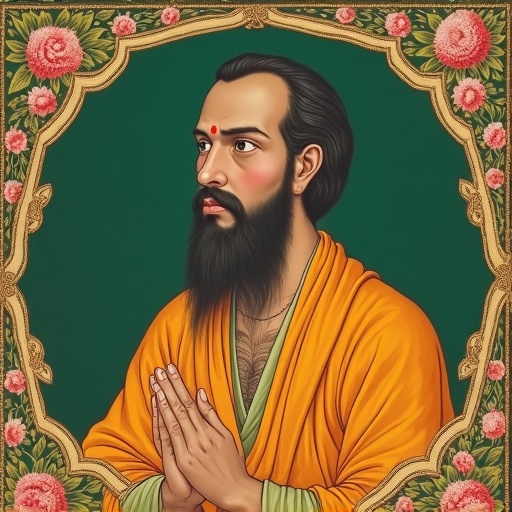
Compiler of the Yoga Sutras — the foundational text of classical yoga. In 196 terse aphorisms he mapped the structure of the mind, the eight limbs of practice, and the path to samadhi. His work has shaped two millennia of yogic practice.
Key works
- Yoga Sutras (trans. Vivekananda 1896)
- Yoga Sutras (trans. Woods 1914)
“Then the seer abides in his own nature.”
Quotes by Patanjali
91 quotes
At other times, the seer is identified with the modifications.
Yoga Sutras 1.4 · identificationPractice and non-attachment are the means to control these modifications.
Yoga Sutras 1.12 · practiceOf these, practice means continuous struggle to fix the mind.
Yoga Sutras 1.13 · practiceThis becomes a firm ground when continued for a long time, without break, and with reverence.
Yoga Sutras 1.14 · steadinessNon-violence, truth, non-stealing, continence, non-greed — these are the yamas.
Yoga Sutras 2.30 · ethicsNon-attachment is the consciousness of self-mastery toward objects seen or heard.
Yoga Sutras 1.15 · detachmentBy making samyama on friendship, mercy, etc., one attains those qualities.
Yoga Sutras 3.23 · compassionBy cultivating attitudes of friendliness toward the happy, compassion for the unhappy, delight in the virtuous, and equanimity toward the impure — the mind is purified.
Yoga Sutras 1.33 · equanimityBy the expulsion and retention of breath, the mind is also rendered steady.
Yoga Sutras 1.34 · breathOr by the contemplation on objects which are not subject to grief, the mind becomes steady.
Yoga Sutras 1.36 · steadinessOr by meditating on the heart that has given up all attachment to sense-objects.
Yoga Sutras 1.37 · detachmentOr by the knowledge that comes from sleep and dreams.
Yoga Sutras 1.38 · insightOr by meditation on whatever appeals to one as good.
Yoga Sutras 1.39 · freedomHis mind becomes capable of attaining anything, from the smallest atom to the infinite.
Yoga Sutras 1.40 · masteryThe yogi whose impressions are stilled, like a clear crystal, takes on the color of whatever is near.
Yoga Sutras 1.41 · stillnessPain — that has not yet come — is to be avoided.
Yoga Sutras 2.16 · discernmentThe cause of that which is to be avoided is the union of seer and seen.
Yoga Sutras 2.17 · discernmentThe seen is composed of the elements and the senses, and is of the nature of illumination, action, and inertia.
Yoga Sutras 2.18 · worldYoga is the cessation of the modifications of the mind.
Yoga Sutras 1.2 (Vivekananda) · yoga