





What is Japa Yoga?
Japa Yoga is a foundational spiritual discipline involving the continuous repetition of a mantra—a sacred word, phrase, or divine name. Derived from the Sanskrit root jap, meaning “to mutter” or “to whisper,” japa transforms speech into meditation. Unlike silent contemplation or visualization practices, japa yoga employs audible or mental sound as the primary object of awareness, training the mind through rhythmic, sustained repetition. The practice appears across Hindu, Buddhist, Jain, and Sikh traditions, serving as both a concentration technique and a devotional offering.
Japa differs from prayer in its repetitive structure and from ordinary chanting in its internalized, meditative quality. Practitioners may recite anywhere from 108 repetitions to thousands daily, often using a mala (prayer beads) to count cycles. The goal extends beyond verbal recitation: sustained japa is said to still the fluctuations of mind (chitta vritti), cultivate one-pointed focus (ekagrata), and in devotional contexts, invoke the presence or grace of the deity whose name is chanted.
Origins & Lineage
Japa yoga’s roots reach back to the Vedic period (1500–500 BCE), where repetitive chanting of Vedic hymns served ritual and meditative functions. The Chandogya Upanishad and Brihadaranyaka Upanishad reference the power of sacred syllables, particularly Om, as instruments of realization. However, the formalization of japa as a distinct yogic path emerges most clearly in the Bhagavad Gita (circa 200 BCE–200 CE), where Krishna declares, “Among sacrifices, I am the sacrifice of japa” (10.25), elevating the practice to supreme status.
Patanjali’s Yoga Sutras (circa 400 CE) prescribe japa of Om with reflection on its meaning as a means to overcome obstacles and attain inner clarity (Sutra 1.28). In the bhakti (devotional) movements of medieval India, japa became central to worship: the 16th-century saint Chaitanya Mahaprabhu championed the congregational chanting of Krishna’s names, while the Shaivite tradition emphasized repetition of Om Namah Shivaya. Ramakrishna Paramahamsa (1836–1886) and his disciple Swami Vivekananda brought japa yoga to Western attention in the late 19th century, framing it as accessible to householders and renunciants alike.
The 20th century saw japa’s popularization through figures like Mahatma Gandhi, who practiced Ramanama japa (repetition of “Ram”), and Neem Karoli Baba, whose devotees recited the Hanuman Chalisa and Ram mantra. Maharishi Mahesh Yogi’s Transcendental Meditation ™, launched in the 1950s, adapted japa principles into a secularized format, though traditional schools distinguish TM’s silent mantra method from classical japa’s more varied forms.
How It’s Practiced
Japa yoga manifests in three primary modes: vaikhari (audible speech), upamshu (whispered or lip movement), and manasika (purely mental). Beginners typically start with audible recitation to anchor attention, progressing toward the subtler mental forms as concentration deepens. The practitioner selects a mantra—often received from a guru in traditional contexts—such as Om, Om Namah Shivaya, Hare Krishna, or a deity-specific bija (seed) syllable like Hreem or Kleem.
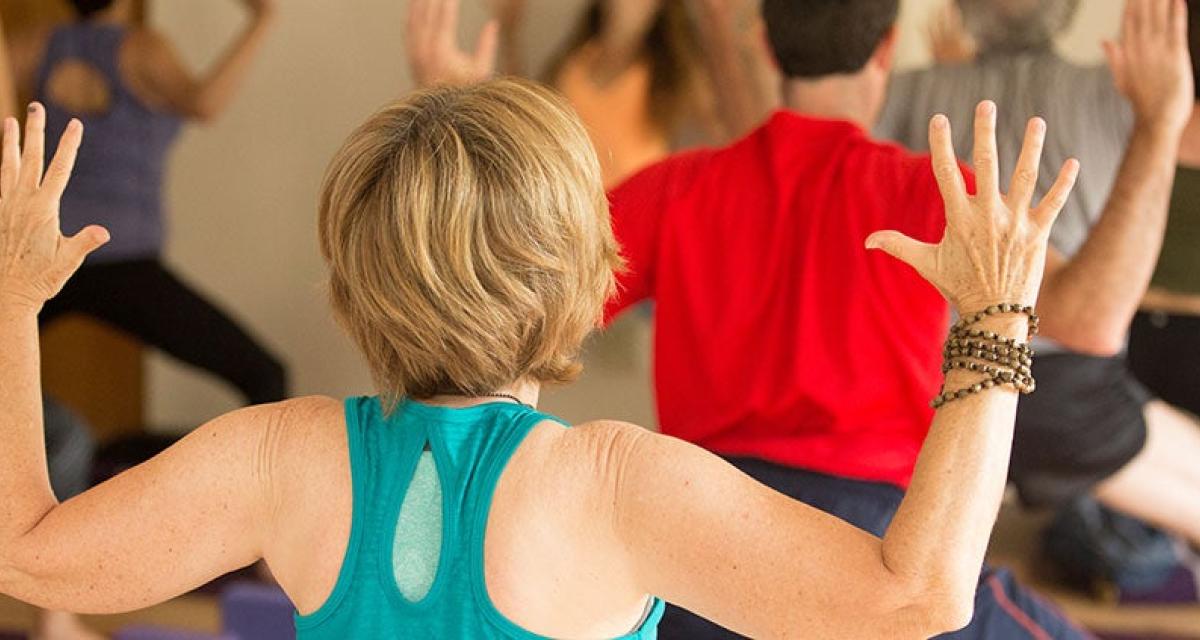
The mala, usually consisting of 108 beads plus a head bead (meru), serves as both counting device and tactile anchor. Holding the mala in the right hand, the practitioner draws each bead between thumb and middle finger with each repetition, never crossing the meru but reversing direction upon reaching it. One complete round equals 108 repetitions; dedicated practitioners may complete multiple rounds daily. Posture is typically seated in a meditative asana—padmasana, sukhasana, or a chair—with spine erect and eyes closed or softly focused.
Breath naturally synchronizes with the mantra’s rhythm. Some traditions prescribe specific breathing patterns; others allow organic coordination. Unlike concentrative practices that forcefully suppress thoughts, japa works by displacement: the mantra gradually occupies mental space, reducing discursive thinking through gentle, persistent return to the sound. Advanced practitioners report the mantra becoming “self-arising,” continuing spontaneously without conscious effort—a state called ajapa japa.
Japa Yoga Today
Contemporary seekers encounter japa yoga through multiple channels. Ashrams in India—Rishikesh, Tiruvannamalai, Haridwar—offer structured programs where japa forms part of daily sadhana alongside asana and scriptural study. Western yoga studios increasingly offer mantra meditation classes distinct from movement-focused sessions. The rise of kirtan (call-and-response chanting) in conscious communities serves as a communal gateway; artists like Krishna Das and Deva Premal have made mantras accessible through musical recordings, though traditional teachers distinguish kirtan’s musical expression from japa’s inward repetition.
Smartphone apps now provide digital malas and guided japa timers, adapting ancient practice to modern lifestyles. Retreats specifically focused on japa yoga occur less frequently than Vipassana or Zen retreats but are offered by lineages like Ananda Marga and the Ramakrishna Mission. The practice appears in hybrid forms: some mindfulness teachers incorporate mantra repetition; certain psychotherapists use japa-like techniques for anxiety management, though these applications often strip devotional and metaphysical contexts.
Common Misconceptions
Japa yoga is not merely mechanical repetition or auto-suggestion. While neurologically, repetition may induce relaxation responses, traditional schools insist japa’s efficacy depends on factors beyond neuroscience: the mantra’s inherent vibrational power (shakti), proper initiation (diksha) in some lineages, and the practitioner’s devotion or concentration quality. The notion that “any word” can serve as mantra contradicts traditional teaching; specific Sanskrit syllables are considered sonically calibrated to subtle energy channels.
Japa is not synonymous with affirmations or positive thinking. Affirmations manipulate belief systems through content; mantras work through sound vibration and tradition holds their power transcends literal meaning. Additionally, japa yoga does not require religious belief in Hindu deities—secular approaches exist—but stripping devotional context may alter the practice’s character and depth. Finally, speed does not equal proficiency; rapid, distracted recitation lacks the attentiveness that defines true japa.
How to Begin
Prospective practitioners can start with a simple, widely-accepted mantra like Om or So Hum (“I am That”), avoiding the need for formal initiation. Commit to five to ten minutes daily, using a mala purchased from a reputable source or counting on fingers. Sit comfortably, close the eyes, and begin audible repetition, allowing the mantra to set its own pace. When the mind wanders, gently return to the sound without self-judgment.
For structured learning, Swami Sivananda’s Japa Yoga (1942) remains the authoritative English-language text, covering philosophy, technique, and mantra selection. The Ramakrishna Mission and Chinmaya Mission offer accessible programs. Those drawn to devotional approaches might explore Bhakti traditions through organizations like ISKCON (International Society for Krishna Consciousness). Working with a qualified teacher helps navigate mantra selection, especially in lineages where initiation matters. Local yoga centers increasingly offer mantra meditation workshops that introduce japa alongside kirtan and pranayama, providing experiential entry points for beginners curious about what japa yoga meaning encompasses in lived practice.