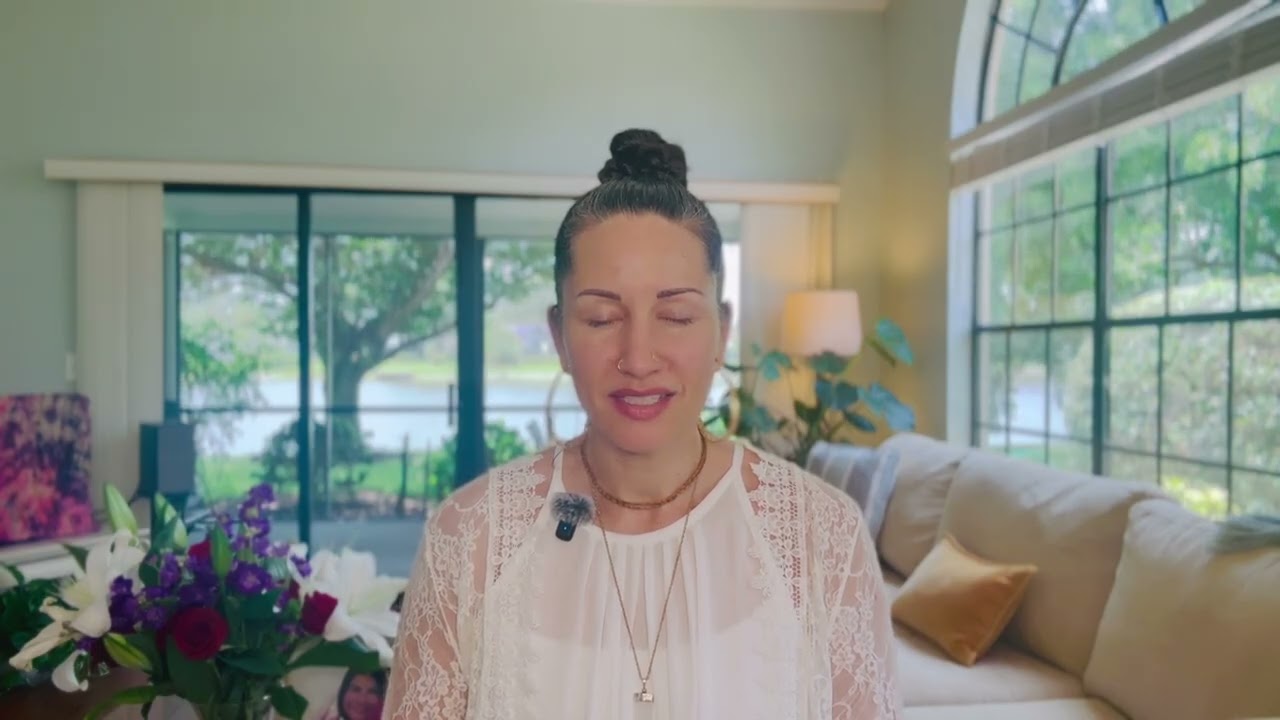
Fleur Chambers' guided morning meditation, published in August 2018 and running just under fifteen minutes, does something most dawn practices skip: it treats the first minutes of the day as a planting season. Chambers guides the listener from settling into a chair or a bed, through the sounds and light of the room, into the breath, then into a single gentle question about why they have shown up this morning. From there the recording offers a set of intentions, which Chambers calls seeds for a great day. Each seed is a quality rather than a task: kindness toward oneself, curiosity, real listening, a willingness to be struck by beauty. The meditation closes by inviting one chosen commitment, sealed with three breaths. It is a compact, carefully paced template for beginning a day on purpose, and its architecture is worth understanding even if you never press play.
Picture the hour before the house wakes. The light is still thin. A car passes somewhere beyond the window, or a bird begins to test its voice. You are sitting upright or lying back with nothing yet asked of you. That is the room Chambers writes for, and the recording makes its intentions plain from the first breath. As the speaker says at the outset, "I woke early to write this meditation so that the sights sounds and feelings of a dawning day could fill me with inspiration." The piece is built around that same act of waking early and paying attention before the day has a chance to pull you away.
The first instruction is not really an instruction. Chambers frames waking as a decision, calling it "this very active commitment of being awake to the possibilities of a new day" that "will set you on a path of expanded awareness and opportunities." That phrasing matters. Most people treat the morning as something that happens to them, a thing they endure until coffee. Chambers asks the listener to treat it as a choice that is already being made, simply by showing up for the practice.
Then comes a permission slip for the body: "you may be seated or lying down whatever feels right for you this morning." There is no posture to get right and no preferred stillness. The meditation makes room for a person who is groggy, aching, or half-asleep, which is precisely who is most likely to listen at that hour.
"Cast your eye around the space you are in, what can you see here or observe that lets you know a new day has dawned." (Chambers, the recording, 0:56)
This is the sensory hinge of the whole piece. Before any breath work, the listener is asked to look and listen outward. The meditation does not prescribe a particular dawn. It offers a menu: perhaps it is "dark and quiet and you can sense the slumbers of others," or perhaps "the morning Sun is rising casting shadows and shapes." It might be birdsong, or "the distant hum of traffic." Chambers asks the listener to absorb whichever morning qualities are present and to notice "any sense of movement of waking up of rising in the world around you." The point is to meet the day as it actually is in your room, not as an idealized sunrise you wish you were watching.
Moving from the environment to the body is a deliberate sequence. Once the eyes are gently closed, Chambers invites a few slow breaths, "allowing any stale air from the night to leave your body." Then the attention narrows in stages. First the air "as it enters your nostrils," then "the air as it leaves your mouth," then "the rise and fall of your chest," and finally "the soft expanse of your belly as the air flows in and out."
That progression, from the small and sharp sensation at the nose to the broader movement of the abdomen, does quiet work. It gives a distracted mind something concrete to track, and it lets the body arrive in the practice before the mind has finished its first list of the day. Notice that Chambers says "noticing" repeatedly rather than "controlling" or "deepening." The verb keeps the listener in the role of observer, which is the posture that makes the rest of the meditation possible.
Here the recording turns personal. At roughly 4:02, Chambers asks the listener, "how are you, what brought you here this morning," and asks that the question be posed "warm heartedly and with genuine interest." Then comes an unusual instruction: take a moment "ensuring that the tone of your response was kind gentle and supportive towards yourself."
This is a small but sophisticated move. The meditation is not only asking what you feel. It is asking you to check the tone in which you answer yourself. Many people who sit down to meditate immediately begin evaluating their performance: am I doing this right, is my mind too busy, why can't I settle. Chambers interrupts that loop before it starts by making the quality of self-address the first thing to get right. The question is not a test. It is an invitation to be a friend to yourself for a minute before the day's demands begin.
The question then returns the listener to the breath, asking "what part is capturing your curiosity." The curiosity word recurs throughout the piece, and it is one of the threads that ties the whole practice together.
With the attention settled, the meditation begins to layer intention onto breath. Chambers asks the listener to lengthen the inhale slightly, "imagining the air as filled with possibilities of this new day: possibilities to see things differently, to respond differently, to interact with the world in new ways." The inhale is no longer just oxygen. It becomes a carrier for openness.
The image then expands. The listener is asked to breathe these possibilities "into your chest your belly your entire being," and to notice "your chest expanding with each new breath." Chambers draws the connection plainly: "this expansion in your body encouraging an expansion in your awareness, an opportunity to interact in a different way with today, an opportunity to be curious and creative." Whatever one thinks of the metaphor, the practical instruction is clear. Let the body's physical opening be the cue for a mental one.
From there, the intention travels. It moves "down your throat into your chest your tummy your hips and pelvis," then flows "into your legs and to your feet and toes," and "across your shoulders and down your arms all the way to your hands and fingers." The sweep through the whole body is less a visualization than a way of making the intention feel bodily rather than conceptual. The recording's summation lands the idea: "a sense of possibility choice creativity and freedom, this is the hope of a new day, your new day."
The central image of the meditation arrives at roughly 7:46. Chambers says: "think of these as seeds that you may plant this morning that may bear fruit mid-morning this afternoon or tonight, allowing yourself to breathe into each of these possibilities as if your breath is watering these seeds and helping them grow."
The seed metaphor is well chosen for three reasons. A seed is planted once and then tended without being pulled up every hour to check its roots. It bears fruit on its own timetable, which is why Chambers names mid-morning, afternoon or tonight rather than promising immediate results. And it is a quality that becomes visible only over time. The meditation is not asking you to achieve these states by eight o'clock. It is asking you to plant them and see what grows.
The seeds that follow are worth taking one by one, because each addresses a different pressure of an ordinary day:
- Kindness to yourself. "May you offer kindness to yourself, not letting the whispers of your inner critic take hold."
- A long-held belief, seen anew. "May you understand a long-held belief you have had about yourself in a new way, and may this understanding create a space and freedom within you."
- The tone of your thoughts. "May the tone of your thoughts brush up against you with a tender touch and a sense of being on your own side."
- Ease while busy. "May you feel a sense of openness and ease even whilst you are busy."
- Curiosity and creativity. "May you be curious and creative, and may this state allow you to respond to people and situations in new and refreshing ways."
- Real listening. "May you really listen, noticing emotions and facial expressions."
- Sensory presence and awe. "May you engage your senses, really noticing colors textures sounds and sense in your environment."
- Rest in movement. "May you notice the constant movement of life and your place within this movement, and rest safely here for a moment or two."
- Openness to serendipity. "May you hear the sweet whispers of the universe, and may you feel safe and guided by its embrace."
Read as a list, the seeds form a loose arc: first you, then your thinking, then the people around you, then the world, and finally a sense of being held by something larger than your to-do list. That ordering makes the recording feel less like a set of wishes and more like a walk through a day.
The first seed is the most pointed. Chambers asks that you "offer kindness to yourself not letting the whispers of your inner critic take hold." The verb "take hold" is doing the work. It implies the critic is always present, speaking softly, and that the morning is an opportunity to decline its influence before it gets a foothold.
The seeds that follow are subtler. The one about "a long-held belief you have had about yourself" does not ask you to drop the belief in a single sitting. It asks you to understand it in a new way, which is a more realistic and more lasting kind of change. And the seed about "the tone of your thoughts" shifts the emphasis from content to tone. You may not be able to control which thought arrives, the recording suggests, but you can notice whether it arrives with a tender touch or a hostile edge. That distinction is one of the most practical things in the piece, and it is easy to miss on a first listen.
Two seeds at the center of the piece turn outward. The first asks that you really listen when you communicate with people, "noticing emotions and facial expressions," and that this "allow you to feel more connected to those around you." Morning is often when we are most rushed, and the meditation proposes that connection begins with attention rather than speed.
"May you engage your senses really noticing colors textures sounds and sense in your environment, may you take a moment to let these sense experiences wash over you." (Chambers, the recording, around 10:38)
The second is the seed of awe. Chambers asks that you be "struck by its beauty," and that this experience "fill you with a deep sense of awe and wonder." Awe is not usually a morning word. It is more often associated with mountains or cathedrals. But the meditation's bet is that the ordinary environment you woke up in, with its shadows, its traffic, and its birds, is enough to produce it, if you take a moment to let your senses do their work.
The seed about "the constant movement of life" and "your place within this movement" carries a related idea. You are asked to rest "safely here for a moment or two," which is a small but deliberate counterweight to the urge to brace against whatever the day brings.
After the final seed, Chambers pauses and asks the listener to breathe into all the possibilities at once. Then the recording turns reflective: "I wonder which one spoke to you most strongly." That question is the hinge into the close. Rather than asking you to remember all nine seeds, the meditation asks you to notice which one resonated. The practice narrows from a field of possibilities to a single point of attention.
From there, Chambers invites "a gentle commitment for today," one that "may relate to how you would like to interact with the world around you, with people or even with yourself." It is worth noticing the phrase "even with yourself." The meditation keeps returning to self-relation as the ground of every other relationship. The commitment is sealed with three deep breaths, and the body is brought back gently, with "slowly finding some gentle movement through your fingers and toes." The closing line is a simple one: "move through your day with attention and intention, aware and awake."
The recording is built to be followed, but its logic is easy to carry without the audio. A few practical steps, drawn directly from the structure, can make it a daily habit:
- Begin in whatever position you are in, and let your eyes travel the room before you close them. Name what tells you the day has started, even if it is only the quiet.
- Follow the breath from the nostrils to the belly, noticing rather than managing it.
- Ask yourself how you are, and check the tone of your answer. Kindness is the standard the recording sets.
- Lengthen the inhale and imagine it carrying possibility into your chest, belly and limbs.
- Choose one seed, not all of them. Pick the quality that spoke to you, and plant it.
- Seal the choice with three breaths, then get up and move through the day with that one seed in view.
If you have the recording, the music credited in its description is "A Pure Embrace" by Christopher Lloyd Clarke, licensed by Enlightened Audio. It is a soft backdrop that sits under the spoken instructions and gives the pauses their room. The description credits the recording to Harvesting Happiness, and it is written and recorded by Chambers.
The most useful next step is to return to the recording on a morning when you have time to sit with it, then try the seed practice for a single day. Notice in the afternoon which seed has sprouted, and which one you forgot. Chambers' own closing words suggest that the practice is less about getting the morning right than about moving through the day "with attention and intention, aware and awake." Start there, with one seed, and let the rest of the day tell you what grew.