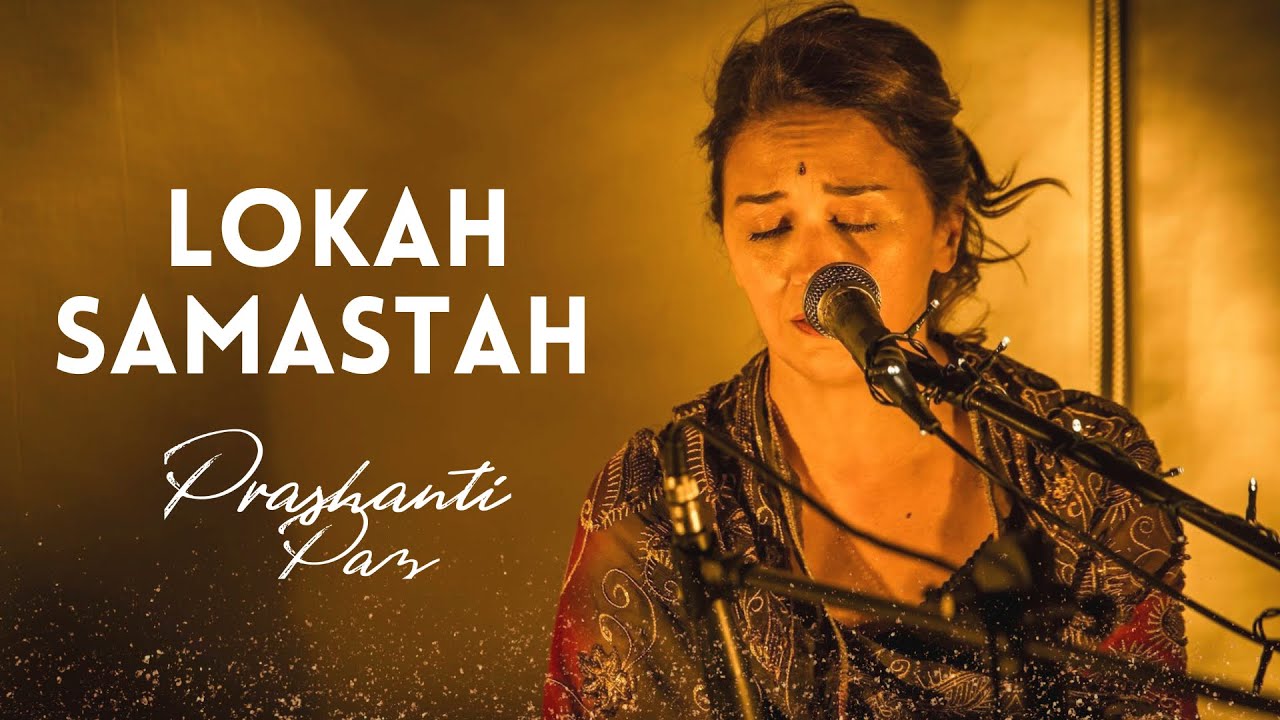
"Abrete Corazón," which translates roughly as "Open Up, Heart," is a sacred icaro: a sung healing chant of the Peruvian Amazon, traditionally used by curanderos during ritual healing work, especially in ayahuasca ceremonies. Prashanti Paz's lyric video, published on her channel in December 2022, presents the song in a form she describes as faithful to the way it was received. The video's description ties the chant to Dr. Rosa Giove, who channeled it and who, in the description's words, defines icaros as "keys" that open energetic points, releasing blockages so that energy can flow. The song is said to activate the heart chakra and to be connected to breath, the lungs, the act of taking and giving, and the blossoming of love. What follows is an attempt to explain the song's lineage, the principles behind it, and the care its making required, drawing only on what the video and its description state.
An icaro is not a song in the way a pop single is a song. The description of this video places it inside a healing system: icaros are described as indispensable elements of traditional Amazonian medicine in Peru, and as the essential means by which wisdom and healing practice are transmitted. The word carries that weight. A chant here is less an artistic product than a working tool, something that belongs to a practice, a lineage and a ceremonial setting.
That framing changes how the music should be heard. In a Western concert hall, a song's value often lies in its composition, its performance and its emotional arc. In the context the description lays out, value lies in function: whether the chant opens what needs opening during a ritual. The description's own metaphor, the key that unlocks a point, is the clearest explanation of that function. A key does not care how elaborate the lock is. It cares whether it fits and turns. An icaro, on this account, is measured by whether it does what it is meant to do in the hands of the person singing it.
This is also why the description puts so much emphasis on provenance. Icaros move through people. They are received, carried, sung and passed on. A version that has been reshaped to suit a new audience is, in this framework, a different object from the one that was received, even if the notes are close. That distinction sits at the center of how Paz presents this recording.
According to the description, the song was channeled by Dr. Rosa Giove. The video's text identifies her as the person who received the chant and who articulated its meaning, including the idea of icaros as keys. The description also notes that Giove co-founded Centro Takiwasi, a research and rehabilitation center in Peru for addiction that works with indigenous Amazonian traditional medicine. That detail places her work squarely in the intersection of ancestral healing knowledge and contemporary therapeutic concern, and it explains why the description asks viewers to consider supporting the center.
The most consequential line in the description concerns timing. Paz writes that she received authorization and blessing from Dr. Giove before Giove left this plane of existence. In other words, the song was not taken without permission or recorded posthumously as an act of appropriation. It was passed on with the teacher's consent, and that consent is presented as the foundation for the project. For a recording drawing on a living Amazonian healing lineage, this is not a small matter. It is the difference between a recording made in relationship and one made in extraction.
Paz states that it was very important to her to honor and respect the chant "in its form and essence, just as she received it," without modifications or personal adaptations. That sentence is the spine of the entire project. Many contemporary spiritual recordings take traditional material and reshape it: adding harmonic layers, changing tempos, reharmonizing melodies for a wider listening public. Paz's description draws a line against that practice for this song.
The credits show how that principle was carried through production. Paz is credited with voice and arrangements, Mara Seijo with flute, and Diego Marchionatti with production, mixing and mastering. The recording was made in two places, The Hague in the Netherlands and Buenos Aires in Argentina, between September and November 2022. The footage, the description says, was shot in the Peruvian Amazon in May 2022. Cover art is credited to Deva Priya, and the video was produced by Alfred Oliveri, edited and directed by Bruno Adamovsky.
There is an intriguing tension in that geography. The chant was rooted in the Amazon, the footage was made there, and the audio was finished in two cities far from the forest. Paz describes feeling accompanied, guided and held throughout the process by Rosa's spirit, whom she says she feels very close to in her own heart. That account is hers, and the video presents it as her experience rather than a claim the reader is asked to verify. What the reader can verify is the sequence the description lays out: authorization, faithful transmission, a recording process organized around not altering the source.
The description attaches specific effects to the song. It says the chant activates the heart chakra and relates to breath and the lungs, to the movement of taking and giving, and to flowering in love. It also expresses the hope that listeners will feel peace, love, and physical, emotional and spiritual healing. These are the intentions the creator names, and it is worth reading them as intentions rather than guarantees. The video itself does not make medical claims, and a responsible reading treats the song as a contemplative object and a listening practice, not a treatment.
Still, the connection between breath and the heart is a useful frame for how a listener might approach the piece. A chant of this kind is built around sustained phrases and the physical act of breathing them. Singing or listening with attention to the breath is one of the oldest ways of tuning attention, and the description's emphasis on breath gives listeners a natural place to start. Rather than waiting for a result, the most grounded approach is to notice what happens in the body and the breath while the song unfolds.
That is also where the "keys" metaphor becomes practical. If an icaro is a key, then the listener's role is not to decode the lyrics as a text to be mastered. It is to be a willing lock. Many people who come to songs of this kind find that the experience asks for less analysis and more permission: to slow down, to let a phrase repeat, to let the body respond before the mind has a verdict.
The description closes by inviting viewers to donate to Centro Takiwasi if they enjoyed the song and wish to support Giove's legacy. That invitation makes the economic and ethical circuit visible. The song's reach is tied to a center working on addiction rehabilitation through indigenous Amazonian medicine, and the description directs attention to that work rather than to the recording's commercial life. For listeners, that is a concrete way to act on the values the piece expresses: respect for the source, reciprocity with the lineage, and gratitude toward the teacher who carried the chant.
There is a broader lesson in the way this recording was presented. In an era when traditional songs circulate instantly across streaming platforms and social feeds, the question of who received a chant, who gave permission, and what was changed in its transmission has become more urgent. The description answers those questions in plain terms, and it does so before the listener presses play. That transparency is part of the work.
If this song has moved you, the most meaningful next step is to listen again with attention to the breath, and then to read the description and its links in full. The details there, from the channeling to the blessing to the donation request, are the context that gives the chant its weight. From there, you can explore the donation page for Centro Takiwasi, learn more about the Amazonian traditions the description names, and consider what it means to receive a sacred song with respect for its origin. The key, as the description puts it, opens only when it is used with care.