BrightStar

Browse All Events

Discover conscious gatherings

events

Yoga
Meditation
Breathwork
Qigong
Tai Chi
Sacred Music
World Music
Medicine Music
Sound Healing
Ecstatic Dance
Popular Destinations
BaliSedonaLos AngelesCosta RicaNew YorkSan FranciscoAustinMiamiJoshua TreeTulum
View All CategoriesView All Destinations

Explore All Features

Powerful tools to grow your events

Platform Features

Smart Dynamic Pricing
Ticket Categories
Assigned Seating
Abandoned Cart Recovery
Visitor Recovery
Donations & Sliding Scale
Affiliate Engine
Ticket Scanner
Coupon Codes
Custom Questions
Ticket Sharing
Upsells & Add-ons
Analytics & Reporting
Email Sequences
Waitlist / Notify / Remind
People & Places
Artists & TeachersEvent OrganizersVenues & StudiosKnowledge BaseGlossaryInspiration
View All FeaturesAbout Us
PricingBlog
Language
Saved events
Browse All Events

events

YogaMeditationBreathworkQigongTai ChiSacred MusicWorld MusicMedicine Music

Popular Destinations

BaliSedonaLos AngelesCosta RicaNew YorkSan Francisco

People & Places

Artists & TeachersEvent OrganizersVenues & StudiosKnowledge BaseGlossaryInspiration

Platform Features

Smart Dynamic PricingTicket CategoriesAssigned SeatingAbandoned Cart RecoveryVisitor RecoveryDonations & Sliding ScaleAffiliate EngineTicket ScannerCoupon CodesCustom QuestionsTicket SharingUpsells & Add-onsAnalytics & ReportingEmail SequencesWaitlist / Notify / Remind
View All FeaturesAbout Us
PricingBlog
Log inFind EventsHost Events
  • Browse All Events
  • For Seekers
  • Yoga
  • Meditation
  • Breathwork
  • Qigong
  • Tai Chi
  • Sacred Music
  • World Music
  • Medicine Music
  • Sound Healing
  • Ecstatic Dance
  • Retreats
  • Workshops
  • All Categories →
  • Bali
  • Sedona
  • Los Angeles
  • Costa Rica
  • Tulum
  • Byron Bay
  • San Francisco
  • Austin
  • New York
  • San Diego
  • Denver
  • Seattle
  • Portland
  • Miami
  • All Cities →
  • Join the Movement
  • Why we list
  • Sell Globally
  • For Creators
  • For Teams
  • For Writers
  • For Teachers
  • For Kirtan Artists
  • For Studios
  • For Festivals
  • For Retreat Centers
  • For Nonprofits
  • Brand Ambassador
  • Free Ticketing
  • Elevate
  • Amplify
  • 500K+ Buyer Network
  • Abandoned Cart Recovery
  • Smart Dynamic Pricing
  • Ticket Categories
  • Recurring Events
  • Assigned Seating
  • Affiliate Engine
  • Waitlist / Notify
  • Ticket Scanner
  • Embed Widget
  • Event Syndication
  • Message Center
  • Integrations
  • Reports
  • All Features →
  • About
  • The Ecosystem
  • Blog
  • Glossary
  • Inspiration
  • Help Center
  • Contact
  • API Docs
  • Brand Assets
  • Careers
  • Press
  • Terms of Service
  • Privacy Policy

Events

  • Browse All Events
  • For Seekers
  • Yoga
  • Meditation
  • Breathwork
  • Qigong
  • Tai Chi
  • Sacred Music
  • World Music
  • Medicine Music
  • Sound Healing
  • Ecstatic Dance
  • Retreats
  • Workshops
  • All Categories →

Destinations

  • Bali
  • Sedona
  • Los Angeles
  • Costa Rica
  • Tulum
  • Byron Bay
  • San Francisco
  • Austin
  • New York
  • San Diego
  • Denver
  • Seattle
  • Portland
  • Miami
  • All Cities →

For Creators

  • Join the Movement
  • Why we list
  • Sell Globally
  • For Creators
  • For Teams
  • For Writers
  • For Teachers
  • For Kirtan Artists
  • For Studios
  • For Festivals
  • For Retreat Centers
  • For Nonprofits
  • Brand Ambassador
  • Free Ticketing
  • Elevate
  • Amplify

Features

  • 500K+ Buyer Network
  • Abandoned Cart Recovery
  • Smart Dynamic Pricing
  • Ticket Categories
  • Recurring Events
  • Assigned Seating
  • Affiliate Engine
  • Waitlist / Notify
  • Ticket Scanner
  • Embed Widget
  • Event Syndication
  • Message Center
  • Integrations
  • Reports
  • All Features →

Company

  • About
  • The Ecosystem
  • Blog
  • Glossary
  • Inspiration
  • Help Center
  • Contact
  • API Docs
  • Brand Assets
  • Careers
  • Press
  • Terms of Service
  • Privacy Policy
BrightStar
Get the app
Download on theApp StoreGet it onGoogle Play
© 2026 BrightStar. All rights reserved.
Inspire

Navaratri and Periods: Why Women Once Took a Break from Puja

Sadhguru
Sadhguru
Oct 17, 2026
9 min read
Watch · 7

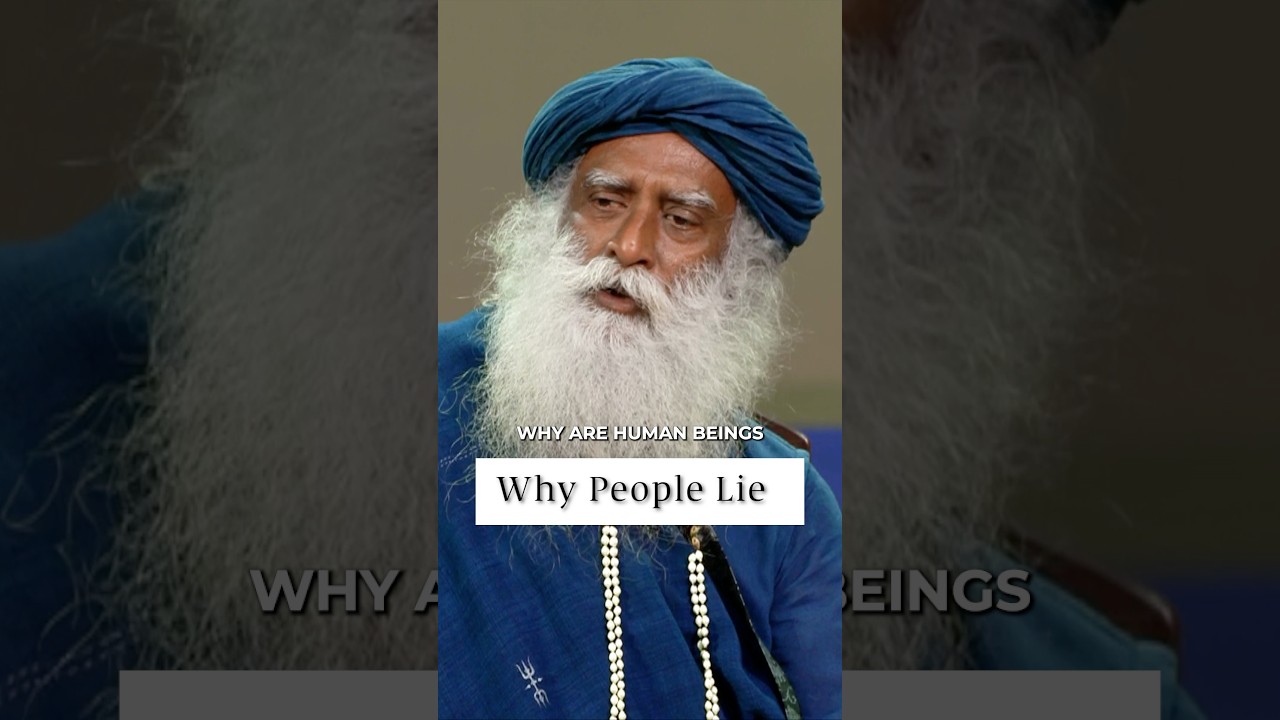
Before an audience, a woman named Swapna asked a question that has been whispered in Indian homes for generations: with Navaratri only days away, can a menstruating woman offer prayers at home, or walk into a temple while she is on her cycle? Sadhguru, answering in a short video published in October 2026, doesn't open with a verdict. He opens with a question of his own, asking a woman listener whether she would want a break, and then rebuilds the old rule from the working life of the household it was made for. His argument is that the restriction was a form of rest, shaped by heavy physical labor, large joint families and a female body that was almost always pregnant or nursing. The logic that made the rule sensible has largely disappeared, he says, and modern women are reading it from the wrong side of history.

Read · 7 sections

What Was the Question Really Asking?

Swapna's question is layered. She wants to know whether the restriction applies to prayer at home, which is the intimate, daily worship of a household altar, and whether it applies to the public act of going to a temple. Sadhguru treats the two as one question about why the custom existed. He begins with the context of the question itself, noting that Navaratri is coming and that the people asking tend to be attached to the traditions they grew up with. Rather than issue a yes or no, he goes after the motive behind the rule.

That is the first useful move in the talk, and it is one many listeners will recognize from their own families. A rule handed down as "don't do this" often survives long after anyone remembers why it was made. Sadhguru insists on the reasons first.

Why Was There Never a Holiday for Women?

The core of his answer is about rest. "There was never a holiday for a woman," he says at the start of his explanation, and he asks the audience to consider the present day as a contrast. "Today is a holiday for everybody. Office and school break means a woman is working overtime." In his telling, the modern weekend and the modern workplace have made the household's labor more visible, because the women who once carried it had no days off at all.

He then describes what a single day of household work looked like in a large family. In his own experience of a joint family, he says, there were over 400 people, which means something like 150 women at the center of the household's work. Some cared for children, some cooked, some cleaned, and the men went out to work in the fields. Sadhguru frames this as a distribution of labor rather than a hierarchy of worth, and he invites listeners to judge it "sensibly without any prejudice."

"Tell me as a woman on those days of the month, would you like a break?" (Sadhguru, 2:38 in the video, responding to the room)

The question is a deliberate move. He is not asking whether women should be made to suffer for their biology. He is asking whether a body under strain every day would welcome a pause, and he answers the question for them.

What Made Puja So Demanding?

This is where the talk gets its texture. Sadhguru describes worship in his grandfather's house as a serious undertaking, a puja room "like a third of this hall," crowded with dozens of gods and goddesses who each had to be satisfied. Women were allotted to specific days for puja, and the work was physical from start to finish. "Puja means you must take some special water, not just some muddy water from somewhere," he says. "Special water from that part of the river." Then came the carrying, the cleaning of the puja room, the arrangement of flowers, and the making of the prasadam, the consecrated food offered to the deity and shared afterward.

He compares this to a process where cooking involved cutting, grinding, lifting and fetching water, not a matter of a microwave. The point is that worship in that world was an elaborate, labor-intensive craft, a little like a complex musical arrangement that requires a rehearsed team to perform. If a woman was in the middle of a physically demanding stretch of the month, the rule excused her from the heavy part.

Sadhguru is specific about what that exemption meant. "So generally she was given break from everything because that's the only holiday she got in a month." It was not, in his framing, a punishment. It was the only interval in the calendar when someone else's expectations stopped.

How Often Did Women Really Menstruate?

The second pillar of his argument is biological, and it is the one that most challenges how we think about the past. Sadhguru says that in earlier generations women did not menstruate every month, because they were often pregnant or nursing children for years at a time. "From the age of 14 to 45 or whatever, if she delivers five, six children, she might have seen maybe a few dozen periods," he says. He estimates that over a reproductive life, most women would have had something like a hundred periods, not the several hundred a modern woman might experience across the same years.

To make the point concrete, he recalls a story: "I met a lady in Syria where after her first period when she was 13 plus, she's never had a period till she's 50, because she always had children and children continuously." It is an anecdote, not a study, and it is offered as an illustration of the pattern rather than as evidence for a general claim. Still, the implication is clear. The monthly break, in his reading, was a periodic relief from a labor schedule that was itself relentless, and the frequency of the cycle was far lower than what women experience today.

This is also where he links the rule to a broader change in the body. "Something of the old is going away and something new is beginning to form in the system," he says, describing the cycle as part of a larger rhythm of renewal rather than an isolated problem to be managed.

What Did the Tigers Have to Do With It?

The talk takes a surprising turn into the danger of the past. Sadhguru describes a world with far fewer people. He cites a figure he says is worth checking, that the population in the early twentieth century was about 1.6 billion, and he contrasts that with a thousand years earlier, when, by his account, the whole planet held only a few hundred thousand people. Wild animals were everywhere, and they were not theoretical threats.

He asks a pointed question about the families of this region before the sixteenth or eighteenth century: "How many families have lost their children to tigers?" He answers it with a claim he urges listeners to verify, that almost every family would have lost one child. Mothers and children went into forests for firewood, food and other daily needs, and the young were the ones who could not outrun a predator. "As it is happening with the wildlife, the older ones will run faster, the younger ones get caught," he says.

Why does this matter to the question of periods? Because, in his argument, the whole structure of women's roles was shaped by survival. Pregnancy and nursing were not optional, the work was exposed and dangerous, and the rule of rest was one part of a system designed to keep a fragile community functioning. He is careful to present this as context rather than a complete explanation of every practice, but he treats it as essential to understanding why the custom looked the way it did.

Is the Break Still Relevant Today?

Sadhguru's conclusion is practical, even gentle. "Giving you freedom even not to pray is a tremendous relief," he says. "You don't have to cook for your family. You don't even have to serve God on that day. Live everybody alone. Take care of yourself." He reframes the old rule not as a restriction placed on women but as a permission, a recognition that a body in its monthly cycle deserves a pause.

Then he makes his most provocative claim. "We are looking at it from the wrong side of history, wrong side of times in which we are." The modern worry, in his view, comes from applying a rule designed for a world of constant labor, frequent pregnancy and predatory danger to a world in which most women are not in that situation. Periods now happen every month for most healthy women, and the freedom he describes is no longer tied to a survival economy. His final words in the segment are blunt: "So you can go wherever you want."

It is worth noticing what he does not say. He does not cite scripture in this excerpt, and he does not offer a ritual procedure for a woman who wants to pray during her cycle. The answer is a reading of the custom's purpose, not a legal code. For readers who want to act on his guidance, that distinction matters, and so does the fact that the video is a single answer in a longer conversation.

Where to go from here

If this question touches your own household, the most useful next step is the one Sadhguru models: ask what a rule was for before deciding whether it still serves. Talk with the elders in your family about who carried the work of worship in their homes, how many hands it took, and what they remember about the days when the break was taken. Their answers will often reveal the logic better than any single verdict could.

For a fuller view, watch the complete video and listen to how he moves from the personal question to the historical one. Sadhguru's Sadhguru 360 series, which releases new episodes each Purnima on his YouTube channel, covers many questions of this kind in the same direct, conversational style. Whatever you decide about Navaratri this year, the talk offers a way of thinking that goes beyond the question itself: look at the conditions that produced a practice before you judge whether it belongs to the present.
Comments

Loading the conversation…

Transcript

[0:01] Namaskarum Sguru. I am Swapna from Fiji

[0:04] and I have a question on Sapna from

[0:07] Fiji.

[0:08] >> Fiji.

[0:08] >> Fiji Islands. Yes. Uh Namaskarum. I have

[0:12] a question on um the quality of being

[0:15] feminine as Navaratri is uh coming in

[0:18] one or two days. I would like to know if

[0:21] it is okay for menstruating women to do

[0:25] offer prayers in our homes while we are

[0:27] on our menstruation cycle or

[0:32] is it okay to go to a temple and offer

[0:36] our prayers um while we on a cycle

[0:40] whether it is okay or not okay and if

[0:42] you can shed some light on this please.

[0:45] Thank you. The Indian origin people in

[0:48] Fiji are still two centuries ago

[0:55] when you went there from India. You're

[0:57] still in the same place. Other Indian mo

[1:00] women have moved on.

[1:07] [applause]

[1:11] Say uh you must understand this why

[1:14] these things were spoken in the past.

[1:18] One important thing is

[1:21] see

[1:23] there was never a holiday for a woman.

[1:26] You must understand this

[1:29] even now in many homes it's still true.

[1:32] Today is a holiday for everybody. Office

[1:36] and school break means a woman is

[1:39] working overtime.

[1:41] Okay, maybe man is pitching in a little

[1:44] bit today, but those days it wouldn't be

[1:47] so. And there was not just one woman in

[1:49] the house. Generally, there were

[1:52] multiple women because joint families

[1:56] and stuff. I have been in a joint family

[1:59] there were where there were over 400,

[2:01] you know, people. So nearly about 150

[2:06] plus women are there.

[2:08] So out of this some are taking care of

[2:11] children, some are cooking, some are

[2:13] cleaning, some are doing things. The I

[2:15] mean distribution of labor is happening

[2:17] because men go out and work in the

[2:19] fields and stuff. Women take care of

[2:21] these things

[2:23] and uh

[2:26] see uh I know uh there are some

[2:28] feminists but let us look at this

[2:31] sensibly without any prejudice.

[2:34] Tell me as a woman on those days of the

[2:38] month, would you like a break?

[2:41] >> Especially if it's hard physical work

[2:43] that you're doing.

[2:44] >> Hello.

[2:45] >> If it's very hard physical work because

[2:48] everything was physical in those days.

[2:50] Cooking was not like uh you know you put

[2:53] it in the microwave.

[2:55] Not like that. There's cutting,

[2:58] grinding, lifting, bringing water, a

[3:01] enormous amount of physical labor. So

[3:04] those days they said you don't enter the

[3:06] kitchen you

[3:08] be now puja worship you're talking about

[3:12] see in my grandfather's place and all

[3:15] that puja room is like a third of this

[3:18] hall huge there are so many gods to be

[3:21] satisfied

[3:23] yes dozens and dozens of gods and

[3:26] goddesses

[3:27] the day a woman is allotted to do puja

[3:31] because different days different women

[3:33] are allotted. So that cuz puja is a

[3:35] strenous process to do. Puja means you

[3:38] must take some special water not just

[3:40] some muddy water from somewhere. Special

[3:43] water from that part of the river. You

[3:45] carry it, bring it, clean the puja room,

[3:48] prepare all these things, put flowers,

[3:50] make the prasadam, this that a whole lot

[3:53] of work. This is worship is not simply

[3:59] okay. It was a it was an elaborate

[4:01] process.

[4:02] So again she got a break if she's at

[4:06] that time of the month she doesn't have

[4:08] to do it. So generally she was given

[4:11] break from everything because that's the

[4:13] only holiday she got in a month. There

[4:16] are no Sundays, Mondays, Fridays,

[4:18] nothing for her. Every day is on and on

[4:21] and on. At least when she's in a way a

[4:25] woman is molting when this is going on.

[4:27] You know something of the old is going

[4:29] away and something new is beginning to

[4:31] form in the system. And above all women

[4:35] did not have periods every month in

[4:37] those days because they had children and

[4:39] they were nursing the children. So 2 3

[4:42] years they wouldn't have if they have

[4:44] periods it's only for a few months and

[4:47] again they're pregnant and it will go on

[4:49] in her life from the age of 14 to 45 or

[4:53] whatever if she delivers five six

[4:56] children she might have seen uh maybe a

[5:00] few dozen periods. I want you to know I

[5:03] met a lady in Syria

[5:07] where after her first period when she

[5:10] was 13 plus she's never had a period

[5:13] till she's 50 because she always had

[5:15] children and children continuously

[5:18] no you may say oh my god now at that

[5:21] time at that time I want you to

[5:23] understand even in the beginning of 20th

[5:25] century the population on the planet was

[5:28] only 1.6 6 billion. Today definitely is.

[5:31] Oh my god.

[5:33] All right. So if you look back a

[5:36] thousand years ago, what was our

[5:38] population? It was in a few hundred

[5:40] thousand across the planet. So there's

[5:42] not enough human beings, only wild

[5:44] animals everywhere. And they pick up

[5:46] your babies and go away whenever they

[5:48] want. Yes.

[5:50] How many people in the you know before

[5:54] let's say 18th century or before 16th

[5:57] century in this country how many

[6:00] families have lost their children to

[6:02] tigers? Just find out the stat

[6:05] statistics are astounding

[6:08] because almost every family would have

[6:10] lost one child to the tigers.

[6:13] Today you're worshiping the tigers

[6:14] because their numbers have diminished.

[6:17] But when they were breeding well

[6:20] they were just eating all over the

[6:22] place. There was enough wildlife but

[6:25] people had to go into the forest for so

[6:27] many things. And you know suppose a

[6:29] mother and child goes into the forest to

[6:31] pick something. When the tiger comes the

[6:34] child doesn't run as fast as a mother.

[6:37] So child goes. As it is happening with

[6:40] the wildlife, the older ones will run

[6:43] faster, the younger ones get caught. You

[6:45] know the same thing. If you look at the

[6:47] stats, it's astounding number of

[6:50] children picked up. So most women did

[6:54] not have a few dozen periods in their

[6:57] life or maybe let us say a 100 periods

[7:00] in her entire reproductive life. So

[7:03] those days they said take a break from

[7:06] cooking, from worship, from your man,

[7:08] from everything. But today that's not

[7:11] the case.

[7:12] For most of the time women are not in a

[7:15] reproductive process that is not needed.

[7:18] So now this period is being looked at as

[7:21] a big thing because it's happening every

[7:23] month. It was never happening every

[7:25] month for most healthy women. It was

[7:28] happening once in a way. So those days

[7:30] they said a break don't have to do

[7:32] anything. Giving you freedom even not to

[7:36] pray is a tremendous relief.

[7:39] Hello. You don't have to cook for your

[7:41] family. You don't even have to serve God

[7:43] on that day. Live everybody alone. Take

[7:45] care of yourself. Isn't it a wonderful

[7:47] process?

[7:49] We are looking at it from the wrong side

[7:52] of history, wrong side of times in which

[7:55] we are. So you can go wherever you want.

[8:02] [applause]

Sadhguru
ArtistSadhguru

Indian yogi, mystic, and founder of the Isha Foundation. Through his programs (Inner Engineering, Bhava Spandana, Samyama) and books, he has introduced millions worldwide to a cont…

View profileWebsite
Explore Topics
NavratriMenstruation-and-pujaSadhguruWomen-in-hinduismJoint-family-history

Got Questions?

Frequently Asked Questions

Sadhguru addresses this directly in his answer to a question from Fiji, reframing the old restriction as a break rather than a ban. He argues that the rule was designed for women who carried heavy household labor and who rarely had periods in the first place, so the logic that made it sensible has largely changed. His own conclusion is that women can go wherever they want, though he does not give a ritual procedure in this excerpt.
In Sadhguru's explanation, the rule gave women a rest from one of the most demanding parts of household life, because puja required carrying special river water, cleaning the shrine, arranging flowers and preparing prasadam. He describes the exemption as the only holiday a woman got in a month, since there were no weekends for her. He frames it as a form of relief rather than a judgment about women.
Yes, according to Sadhguru, because women were often pregnant or nursing children for years at a time. He estimates that across a reproductive life from around 14 to 45, many women would have had only a few dozen periods, and he tells the story of a woman in Syria who had no period from her first until about 50. He presents these as observations and illustrations, not as a complete statistical study.
He describes a joint family with over 400 people, roughly 150 of them women, who divided the work of cooking, cleaning, child care and other tasks while the men worked in the fields. He argues that in that setting a woman had no holiday at all, and that today's office and school breaks often mean women are working overtime. He asks listeners to consider the question sensibly, without prejudice.
He argues that a rule created for a world of constant physical labor, frequent pregnancy and real dangers such as tigers no longer matches the conditions most women live in now. Periods now happen every month for most healthy women, so the original reason for rest has shifted. He calls the modern worry a misreading of the past rather than a fair reflection of its purpose.
In this short excerpt, Sadhguru explains the reasons behind the custom through history, labor and biology rather than by quoting scripture. He describes the practice from his own family's experience and from a broader view of how life was organized. Readers who want the textual basis would need to look at the full talk or other sources he discusses elsewhere.
The question from Fiji asked about both, and Sadhguru answered them together by focusing on the purpose of the rule. He did not draw a separate line between the household shrine and the temple in this excerpt. His point is that the break was about rest from the work of worship, so the distinction matters less than what the custom was meant to protect.

Continue Reading

More from Sadhguru

View All
A Week of Gatherings Across Malaysia and Singapore
Inspire

A Week of Gatherings Across Malaysia and Singapore

A 2:53 montage of October 2026 gatherings in Singapore and Kuala Lumpur, with fragments on Asia, intelligence, choice, and the Kannada word …

1 min read
Identity and Deception: Why We Lie to Ourselves
Inspire

Identity and Deception: Why We Lie to Ourselves

Identity creates mental vortexes that trap our energy and intelligence, compelling us to lie to protect who we think we are. Breaking this c…

1 min read
Speak Up or Stay Silent? A Guru Nanak Guide to Impact
Inspire

Speak Up or Stay Silent? A Guru Nanak Guide to Impact

Should you speak up or stay silent? SathPaal Singh's Guru Nanak-rooted test asks where impact lies, not who is right, from workplace clashes…

1 min read
Sacred Music for Sacred Forests: Chanting for Trees in Rishikesh
Inspire

Sacred Music for Sacred Forests: Chanting for Trees in Rishikesh

A short kirtan clip from Rishikesh ties chanting to forest protection. Proceeds from the 19 October concert support GoDharmic's Dharma Fores…

1 min read

Keep exploring

Continue your journey

More wisdom and gatherings from across the BrightStar directory.

More Articles

Browse the full library of teachings, interviews, and guides.

Back to all articles →

Teachers & Artists

Explore the lineages, musicians, and guides of the conscious world.

Explore artists →

Find an Event

Kirtan, retreats, sound baths, breathwork, festivals — happening soon.

Browse events →
