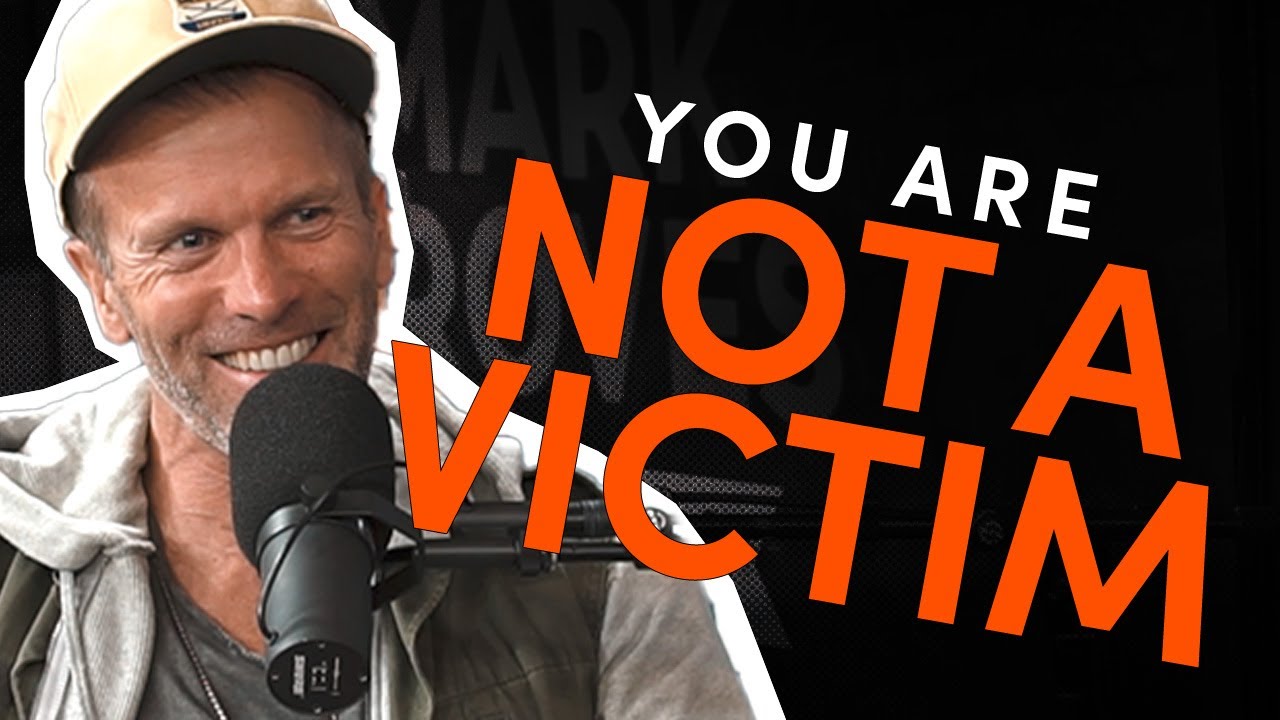
Mark Groves sketches two hand-drawn stick figures on screen, then draws a gap between them and asks his viewers to look at it. In an eight-minute video posted to his channel in November 2024, under the title "Why Avoidant partners NEED you to LEAVE them," the relationship coach makes the claim most people would rather not hear: the avoidant partner may need you to leave, and that departure may be the thing that finally forces both people to heal. His argument is that the anxiously attached partner's habits of chasing, caretaking, and over-communicating are not neutral kindness. They are the mechanism that keeps the avoidant partner from ever having to move toward intimacy on their own. Groves frames the pattern as a double bind between two nervous systems, one that cannot tolerate distance and one that cannot tolerate closeness. From there he moves through the anxious partner's need to "stand" in their own center, the regulation tools he recommends for building capacity, the difference between a boundary and an ultimatum, and the childhood roots he links to believing you deserve inconsistency.
He opens with the line itself, flat and unhedged: "avoidant people need you to actually leave them now." (0:00) He anticipates the objection that this sounds uncompassionate, and he does not dodge the context. He acknowledges that avoidance often comes from trauma or "fractured attachments with their parents," and he says plainly, "we can contextualize all the reasons that people constantly have one foot kind of out the door in relationship." But his pivot is structural. "At the end of the day you're the one in relationship with them," he says, and the anxious partner is the only person in the room whose behavior they can actually change.
This is the core of the video's logic. Groves is not arguing that avoidant people are bad or that they should be punished. He is arguing that a dynamic has two halves, and that the anxious half is the one most people can work on directly. He adds an observation that will feel familiar to many readers: if you started out securely attached in a relationship with an avoidant person, you "usually end up anxious." Most people who end up with avoidant partners, he suggests, are anxiously attached to begin with, which makes this "a massive area of growth" for them.
The whole video rests on a simple diagram. In a healthy relationship, Groves says, "both people would be turning towards each other." In an avoidant dynamic, "one person is moving towards and the other person is moving away." (0:47–0:54) The drawing is crude, and he admits as much, but the geometry carries the argument. A pursuer moving toward someone who is backing away produces motion without meeting. The chaser feels closeness is always one step out of reach, and the avoider never has to decide whether to turn around.
Groves makes this personal with a story about his own early relationship with his wife. He describes realizing that his anxious way of being was crowding her out:
"I wanted her to come towards me but she couldn't come towards me because I was always taking up all the damn space with my anxiously attached way of being. I was always chasing her so she didn't have a chance to catch me."
— Mark Groves, "Why Avoidant partners NEED you to LEAVE them" (1:20)
The point of the story is subtle and worth sitting with. Chasing feels like love, and often it is. But it also removes the other person's room to choose. When the anxious partner stops pursuing, Groves argues, "there's now a space between here that has never existed." That new space is the first place where the avoidant partner could move toward them without being pulled.
Groves compresses the whole dynamic into one sentence: "anxiously attached people are afraid of space, avoidantly attached people are afraid of closeness so you have this double bind." (1:39) The anxious partner's nervous system reads distance as a threat, a sign that the relationship is slipping. The avoidant partner's nervous system reads closeness as a threat, and as intimacy tightens, "they start to freak out and then they run."
What makes the bind so sticky is that each person's fear produces exactly the behavior that confirms the other's fear. The anxious partner pursues, which intensifies the avoidant partner's need for distance. The avoidant partner withdraws, which intensifies the anxious partner's sense that they must hold on tighter. Groves describes the exhaustion this creates, the sense of endlessly chasing and being run from, and he argues that it is the ongoing cycle, not any single fight, that wears people down.
He also connects the anxious side to a skill most people were never taught: self-regulation. When an anxious partner's system gets activated, Groves says, they "don't know how to sit in their feelings without leaving themselves and pursuing." Early dating, in his telling, is where this shows up most clearly, in the hours spent wondering where you stand because someone hasn't texted back. The remedy he proposes is not to eliminate the anxiety but to build tolerance for it, so the feeling no longer forces action: "you can learn to hold your capacity for that anxiety to increase it so that it doesn't cause you to act."
Whatdoesitmeanfortheanxiouspartnertotakeastand?
The video's most forceful instruction is that the anxious person "needs to take a stand." (2:08) Groves is careful to say that this stand is not a punishment aimed at the avoidant partner. It is the anxious partner declining to keep abandoning their own center. In his words, the anxious person has to say, in effect, "I'm no longer leaving my center for you. I'm no longer getting out and chasing you and pursuing you." (5:25)
He speaks directly to avoidant viewers as well, and he does not spare them. He says that avoidant people are "masters at friends with benefits, situationships, one night stands," and that this behavior can "masquerade as confidence and awareness and self-worth." His critique is that this self-worth is easy to maintain when no one is close enough to test it. "That type of self-worth is fragile," he says. The anxious partner's firmness, in his framing, is a form of care: it "calls out" the avoidant partner's escape routes at the moment they would otherwise run.
Taking a stand also changes the anxious partner's own habits. Groves says that if you are someone who has been dancing this cycle, you will have to "learn skill sets to help you regulate." Standing firm is not an act you perform once. It is a set of patterns you rebuild.
Howcanyoubuildthecapacitytoholdaboundary?
Groves names specific practices, and he is blunt about why they matter. He lists cold showers, meditation, breath work, hiking, and time in nature as ways to "increase your capacity." The cold-shower example is the most vivid. "Your body's going I'm going to die," he says, "and you're not going to die. You're actually completely safe in that water almost all the time." (5:38) The value, in his reasoning, is repetition: each time you feel the alarm and discover you are safe, you learn to monitor the sensation without acting on it.
He extends that logic to the inner work of standing still. "What you start to learn through meditation through breath work through hiking through being in nature is how to stand more still in yourself." (6:13) The goal is not to become unfeeling. It is to be able to feel the anxiety, the urge to reach out, the story about what the silence means, and to stay put long enough for the urge to pass. For the anxious partner, this is what makes a boundary holdable. Without it, a boundary collapses the first time the phone stays silent.
Isleavinganultimatumoraboundary?
Groves anticipates the objection that his advice is an ultimatum, and he takes it head-on. The line he proposes is something like: if you can't stand still with me and meet these needs in order to create something between us, then I have to go. (6:20) "Isn't that an ultimatum?" he asks, and then answers his own question: "Sometimes boundaries are ultimatums when you've been in this" kind of dance. (6:28)
The distinction he is drawing is useful even for readers who disagree with the rest of his argument. A boundary states what you will do with your own life. An ultimatum tries to force another person's behavior. Groves's position is that after a long period of chasing and being run from, the line between the two blurs, and the anxious partner has to make a clear, self-directed decision rather than an open-ended hope. Whether the avoidant partner responds with change, or with more distance, the decision belongs to the person who has been carrying the cycle.
The video's final movement turns inward. Groves says that if you keep relating to people who are inconsistent, you have to "develop a belief in yourself that you're worthy of inconsistency." (6:54) He is describing a belief that does not announce itself. It shows up as tolerance for mixed signals, as a sense that being chosen sometimes is enough.
He traces this belief back to childhood. "It's probably because your parents were unreliable," he says, pointing to caregivers who promised to show up and didn't, or who were never quite present to a child's emotional life. (7:08) He imagines a child who wanted a father to see them more, or a mother to be more attuned, and who learned to caretake everyone else's feelings in order to stay connected. The adult version of this child, in Groves's account, believes that if someone else is not okay in the relationship, they themselves are not okay. "If you don't have them you're not safe," he says, and then adds the correction he thinks adults need to hear: "as an adult that's not actually true."
This is where the video's title and its inward turn meet. The anxious partner's "stand" is not only about the avoidant partner's behavior. It is about the anxious partner's relationship with their own feelings, and with the old story that safety depends on someone else staying close. Groves frames the adult's job as refusing to keep dancing "in this crap," which he calls the moment of taking a stand. (7:46)
Wheretogofromhere
If this video made you recognize yourself in the chaser's seat, the most useful next step is to watch the full piece on Groves's channel and notice which of his examples land in your own body. Pay particular attention to the distinction between the anxious partner's "stand" and a punishing withdrawal, because the video's argument depends on that difference. Groves also points viewers to a free resource on his site, a "Relationships Toolkit" that he describes as a walkthrough of "The Top 5 Skills you need to Thrive in Your Relationships."
Treat the video as one teacher's framework rather than settled science. Attachment language is widely used in popular relationship advice, but the specific claim that an avoidant partner needs to be left in order to heal is Groves's interpretation, and it is worth weighing against your own experience and, where the stakes are high, against a licensed therapist. Read his stick-figure diagram as a prompt to ask a question: when you move toward someone, what are they being asked to do, and what space have you left them to choose?
Mark Groves is a human connection specialist, keynote speaker and writer who helps people show up fully in their relationships, their leadership and their lives.
In Mark Groves's video, the claim is that an avoidant partner may need the anxious partner to stop chasing and, if necessary, leave, because the avoidant partner's healing requires the anxious partner to heal too. Groves says the anxious partner's pursuit gives the avoidant partner no space to move toward them, so changing that pattern is the only lever the anxious partner controls.
Groves describes a double bind: anxiously attached people are afraid of space, while avoidantly attached people are afraid of closeness. Each person's fear produces the behavior that confirms the other's fear, so the cycle of pursuing and running keeps repeating.
Groves acknowledges that a boundary can look like an ultimatum to the other person. He says that after a long cycle of chasing and withdrawing, boundaries are sometimes experienced as ultimatums, and the anxious partner has to make a clear, self-directed decision about what they will do with their own life.
Groves recommends practices such as cold showers, meditation, breath work, hiking, and time in nature. He argues that repeatedly feeling alarm and discovering you are safe builds the ability to monitor anxiety without acting on it, which makes boundaries sustainable.
In the video, Groves suggests that believing you deserve inconsistency often traces back to parents who were unreliable or emotionally absent. He says a child who learned to caretake others to stay connected may grow into an adult who feels unsafe when someone else is not okay, and he argues that this belief is not actually true for adults.
The video presents Groves's own framework and interpretation rather than a summary of clinical studies, and it does not cite research. Readers should weigh the advice against their own experience and consult a licensed therapist for serious relationship concerns.
Groves suggests that the anxious partner stop taking up all the space, sit with the anxiety rather than acting on it, and stand still in their own center instead of pursuing. He frames this as a practice of building regulation skills over time rather than a single decision.