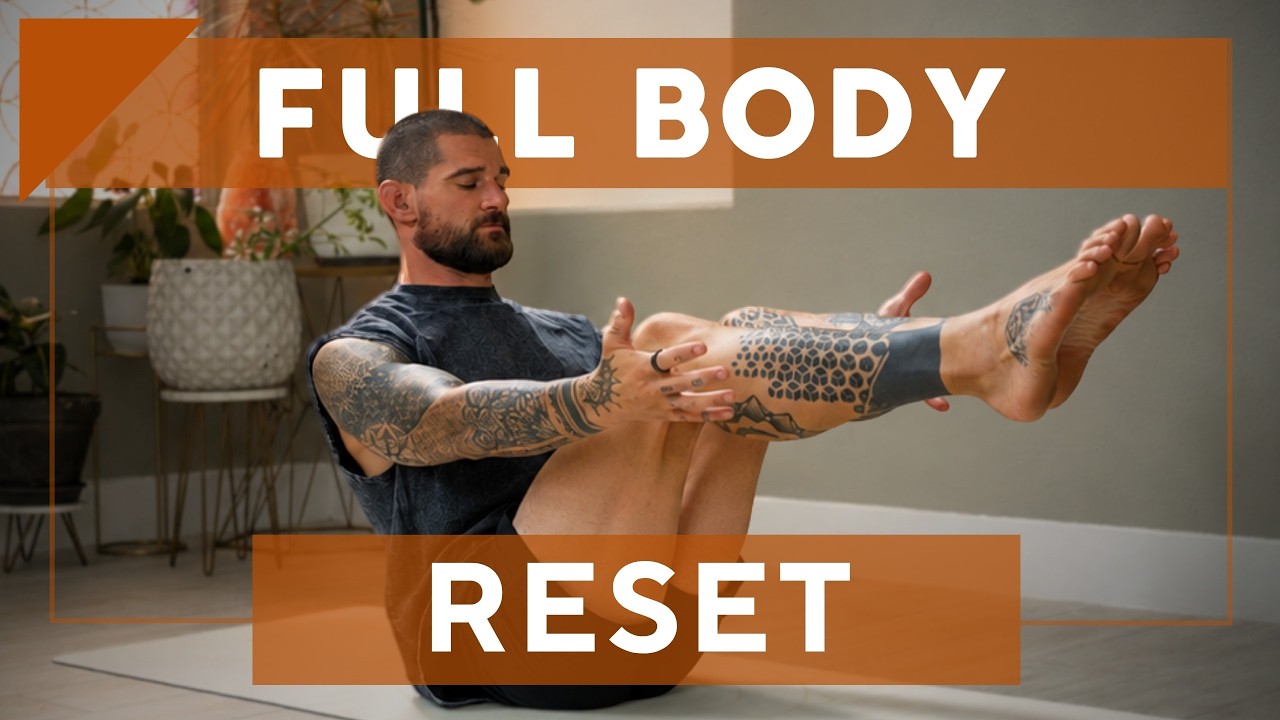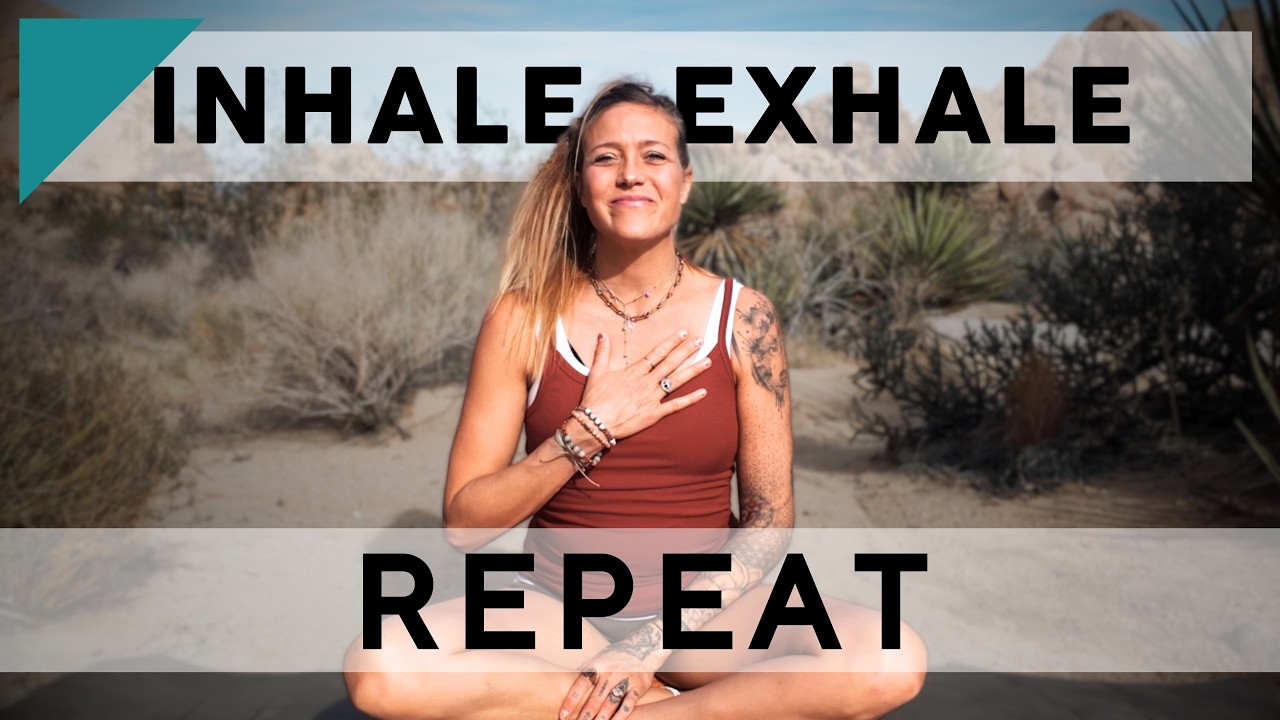
Some back pain arrives like a verdict. You rise from a long flight, a desk chair, or a day spent hunched over a laptop, and the lower back or the stretch between the shoulder blades announces itself before you have taken a step. The yoga teacher Bre Niedhammer and her partner Flo, who lead the Breathe and Flow channel, have built a short answer to that moment: a silent, seven-minute practice meant to ease stiffness through slow, unhurried movement, with no instructions spoken over the top. It is a small piece of work, and it rewards being treated as one.
This article draws only on what the video's own title and description tell us. The practice itself is not transcribed here, so the poses, sequencing, and cues you will meet on screen are the place to find the detail. What follows is an account of what the practice is designed to do, why a silent format matters, and how to approach it so the seven minutes do real work.
The video, titled "7 Minutes to Help Your Back Feel Better," is a guided-by-visuals session rather than a lecture. The channel's description frames it as "a silent 7-minute yoga practice" that gives you "a simple way to move gently, release tension, and help your back feel better without any talking or distractions." The stated aim is modest on purpose: to loosen what feels tight and to leave you feeling better than when you started, not to fix a condition.
That modesty is worth taking seriously. Yoga content often promises transformation. This one promises a few minutes of intentional movement, and it is honest about its scale.
Most guided practice asks you to listen while you move. A cue arrives, you adjust, a breath is counted, and part of your attention goes to the voice. Removing the voice changes the job. With no one telling you what to feel, you have to notice the body directly: where the stiffness sits, how much a movement can open before it resists, how the breath responds.
The description leans into exactly that. "Follow along at your own pace and let the movement do the work," it says. Pace is the variable a silent format hands back to you. A stiff back often punishes hurry. Slowing down, and letting each motion finish before you start the next, is the practical heart of a gentle session.
The description names four situations: "after sitting, traveling, training, or a long day." Each one has a different flavor of stiffness, and it is worth knowing which applies to you.
- After sitting. Prolonged sitting tends to leave the back less mobile and the hips and chest tight. A short session can serve as a reset before you return to a desk or get back behind the wheel.
- After traveling. Cramped seats and hours in transit can make the body feel locked in place. Seven unhurried minutes at the destination can be a way to come back into your frame.
- After training. Hard sessions in the gym or on the road leave muscles fatigued and tight. Gentle movement afterward is a different job than the workout itself.
- After a long day. When the day has been mostly mental, the body often carries it as tension. A quiet practice gives that tension somewhere to go.
The safest and most useful frame is the one the video's own language suggests: gentle, intentional, and unforced. A few principles follow naturally from the material and from the basic logic of stretching the back.
- Move inside the range that feels like release, not strain. "Gently" is the operative word in the description.
- Let each movement breathe. Without spoken cues, the breath is your own timing device.
- Stop if something sharpens rather than loosens. A practice built for ease should never ask you to push through pain.
- Treat the seven minutes as a beginning. The description places this session inside a broader life of practice, not as a cure.
The description also places the video inside a larger ecosystem. It points viewers toward a membership called The Wolfpack Path, described as "a guided, self-paced practice with structure, intention, community, and no interruptions." It also mentions retreats, teacher trainings, and a family-focused channel, Little Wolf Yoga. These are the channel's own offerings and are presented as such; nothing in the material suggests the practice requires any of them.
The channel's about text describes Breathe and Flow as offering "a functional, yoga-inspired approach to movement and conscious living," blending "strength, mobility, breath, awareness, and philosophy." It calls the work "yoga as a way of life, grounded in the body, shaped by awareness, and lived over time." That final phrase is the most useful key to this short video. A seven-minute back practice is not a shortcut around a daily discipline. It is one small, repeatable moment inside one.
"This is yoga as a way of life, grounded in the body, shaped by awareness, and lived over time."
Watch the practice once without any expectation, then a second time with attention on how your back responds to each movement. If the session helps, let it become a repeatable habit after the situations the description names: the desk, the flight, the training block, the long evening. The video is a starting point for a body-first kind of attention, and the detail of its movements is best learned by doing them. Find the full video on the Breathe and Flow channel to follow the practice itself.