Most people who practice yoga—sometimes for years—hit a wall that no amount of new classes solve. You show up, you move, you breathe, and something still feels unclear. The issue isn't your body or your discipline. It's that without structure holding your practice together over time, you keep returning to the mat as if starting fresh, over and over. Every morning becomes another decision: what class? what do I need? where do I go? That friction, that constant choosing, breaks momentum before it can deepen into change.
The deeper problem is one of clarity itself. Not physical clarity alone—though that matters—but clarity about your life and what you're building. The practice that clears scattered energy does more than warm up the body; it returns you to yourself without requiring you to start from zero.
Why Starting Over Every Time Drains Your Practice
There's a cycle many practitioners recognize: you're consistent for a while, then momentum drops. You start over. The cycle repeats. Nothing is wrong with you. What's missing is the structure that holds practice across days and weeks, the scaffold that lets you step into something already in motion rather than igniting the spark alone each time.
When there's no clear path beneath your feet, every practice becomes a decision rather than a return. You're not deepening—you're starting the engine again. Over months or years, this wears on the nervous system in a way that contradicts why you came to practice in the first place. The remedy is straightforward: build clarity into the structure itself, so the practice carries you forward automatically.
How Intention Anchors You Before Movement Begins
The practice opens on the back, in a relaxed position, with a simple instruction: feel how your body is supported by the ground. Before you begin moving, before breath work or sun salutations, you check in with what is actually here. From that knowing of what is, you set an intention.
This intention isn't about achieving something or pushing toward a goal. It's simpler and more radical: being yourself fully, feeling yourself more. When you know where you're starting, you can decide where you want to go. Without that anchor, practice drifts into habit.
The Role of Breath in Organizing Your System
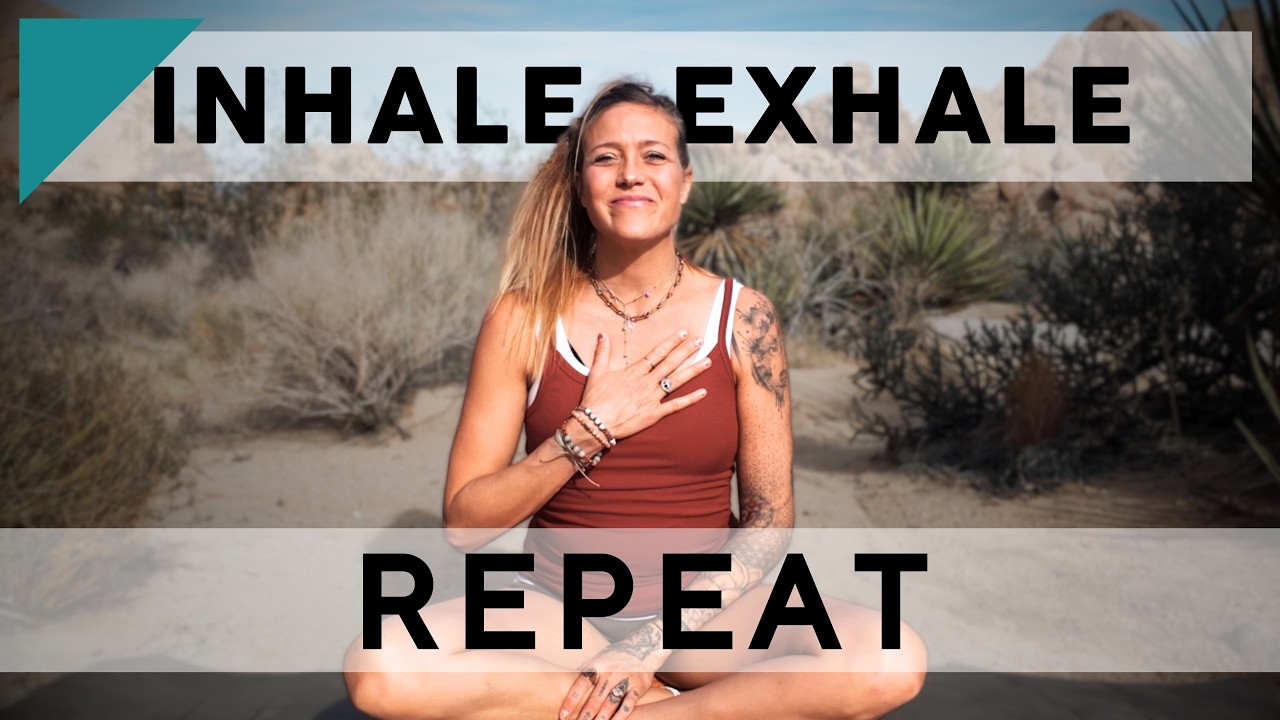
Throughout this practice, breath becomes the thread that ties awareness to movement. You're asked to keep the lips closed and breathe through the nose, or to set up Ujjayi—that subtle ocean-like sound created by slightly narrowing the throat. The breath isn't ornamental. It's the actual mechanism that tunes your nervous system, that tells your mind where your body is, that bridges the gap between intention and action.
When breath is conscious, movement becomes conscious. When movement is conscious, your energy organizes itself rather than scattering.
Grounding the Feet: Where Clarity Begins
Much of the practice focuses on the feet and legs—not as an afterthought, but as foundational. There's a long sequence on the toes: hopping on the spot for a full minute, heels lifted, working the bounce and recoil through the bottoms of the feet. This activates what's called the deep front line—the connective tissue and muscle chains that run from the big toe through the inner arch, up the inner legs.
Why does this matter? Because the feet are your literal ground. When you activate them fully, when you feel them rebounding, you signal to your nervous system that you're supported. The body stops bracing. Energy that was locked in protective tension releases. Clarity rises from the ground up.
Mobility That Prepares Without Exhausting
Before deeper poses, the practice warms up the wrists, spine, and hips through functional, repetitive movement: cat-cow cycles, gentle wrist circles in all directions, hip mobility in tables and downward dog. The rhythm is unhurried. You're invited to explore, to feel into each direction, to recognize that to not do anything is also a choice—both on the mat and off it.
This is not advanced asana training. It's preparation that respects the body's actual architecture: joints moving through their actual ranges, tissues warming gradually, the nervous system settling rather than being asked to perform.
What Happens When Awareness Becomes the Practice
Toward the middle of the practice, the instruction shifts subtly but completely. You're in downward dog, and instead of being told to go deeper or hold longer, you're reminded that your awareness—your breath, your intention—is what carries you deeper into the experience. Awareness is the actual practice. The poses are the container.
Later, in forward folds, there's an intentional choice offered: you can hold a yin-style stretch, cultivating plasticity—the ability of tissues to change length and stay lengthened—or you can keep moving dynamically, bouncing forward to work elasticity and youthfulness. The difference isn't subtle. One is passive restoration; the other is active renewal. The practice doesn't prescribe which one is better. It offers both and trusts you to know what your body needs.
How Scattered Energy Becomes Organized
The path from scattered to clear isn't mysterious. Scattered energy is what happens when your nervous system doesn't have clear directions, when awareness is pulled in ten directions at once. Organization comes from:
- Sensing what is already true—checking in before you move, so intention comes from reality, not fantasy.
- Breathing consciously—linking awareness to the physical body through the breath, so your mind stops wandering.
- Activating your foundation—grounding through the feet and legs so your nervous system registers safety.
- Moving with purpose—each sequence having a reason, warming you toward deeper work rather than just filling time.
- Trusting awareness more than effort—letting consciousness do the work, not muscle alone.
When all these work together, something shifts. Your body feels lighter. Your energy feels held rather than leaking everywhere. Clarity rises naturally.
The Real Practice Happens Off the Mat
The yoga happens on the mat. The practice happens in your life. The deeper work is learning how to return without starting over—to step into a rhythm that carries you, to make decisions from clarity rather than confusion, to meet your days with awareness instead of reactivity.
What most people are actually looking for isn't a perfect downward dog or a flexible spine. It's clarity about who they are and what matters. The practice clears the body so the mind can settle. The mind settling so the heart can speak. The heart speaking so you can actually live your life.
Where to go from here
You don't need a new class tomorrow or a more advanced practice. You need structure that holds you. A clear path you step into each day, not a new decision each time. A rhythm shared with others moving in the same direction. Instruction that guides you deeper into yourself, not away from yourself. That's what separates a practice that works from a practice you eventually abandon. The difference isn't willpower. It's architecture.