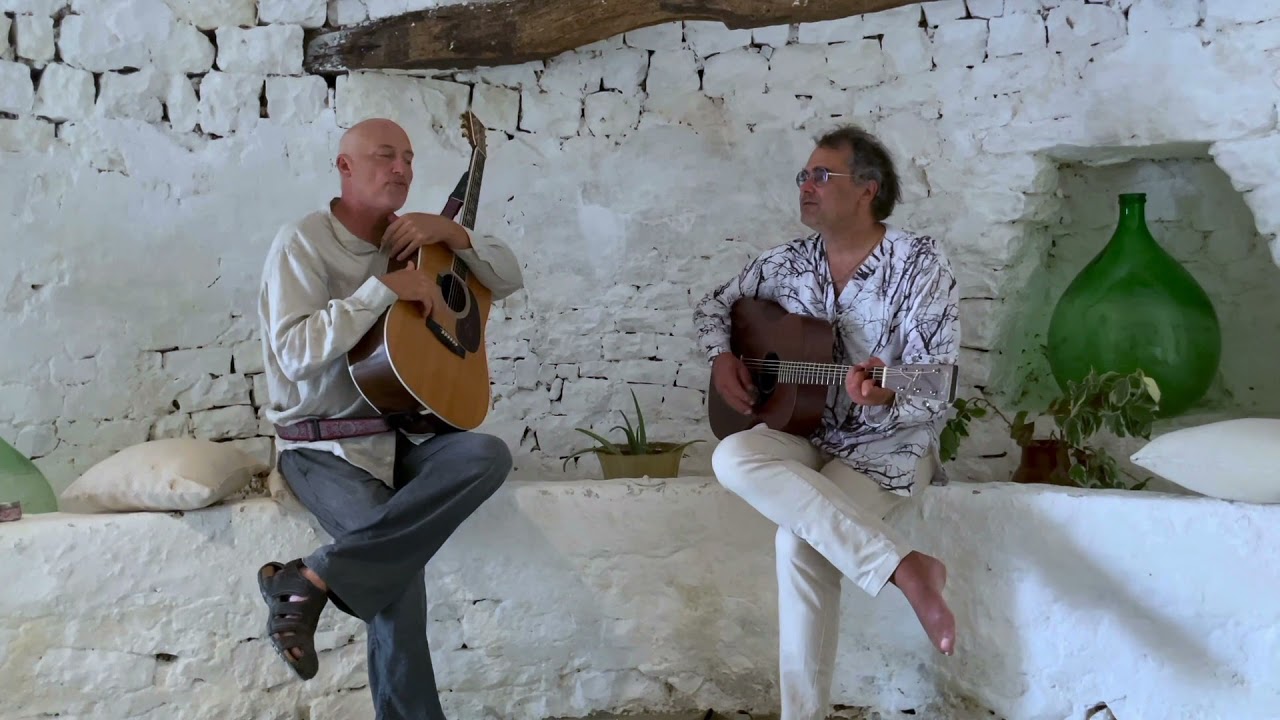
In 2013, amid the gathered sound and devotion of Bhakti Fest, kirtan artist Jim Beckwith led a chant dedicated to Kali, the Hindu goddess of transformation and liberation. The four-minute excerpt, later uploaded to YouTube, captures a moment of participatory devotional music-making—a tradition where sound, breath, and collective intention converge to create what practitioners understand as both an artistic and spiritual experience. The chant, "Om Mata, Om Kali," would later appear on a forthcoming album, one addition to a body of recorded work that spans six CDs, each designed to bring the transformative practice of kirtan into listeners' homes, studios, and meditation spaces.
To understand what unfolds in those four minutes requires first understanding kirtan itself—a form that many Western audiences encounter through yoga studios or spiritual festivals but may not fully grasp in its depth and tradition. Kirtan is a call-and-response devotional chant rooted in Hindu and Hindu-adjacent spiritual traditions. Unlike concert music, where performers and audience occupy separate roles, kirtan is fundamentally participatory. The lead singer—the kirtan artist—offers a mantra, a divine name, a spiritual phrase, and the gathered community responds, repeating and building upon what has been offered. This back-and-forth, often accompanied by harmonium, drums, or other percussion, creates a shared soundscape, a collective meditation made audible.
The practice traces its lineage back centuries, to traditions of bhakti—the yoga of devotion—that emerged across India. In the bhakti view, liberation is not achieved through knowledge alone or through ascetic renunciation but through love and devotion offered to the divine. Song, sound, and chanting become the vehicles for this devotion. Over time, kirtan evolved into a sophisticated musical and spiritual form, with its own melodic structures, harmonic conventions, and ways of building momentum to create spaces for deeper states of consciousness.
What distinguishes kirtan from a traditional concert or recital is its explicit spiritual aim. The beauty of the singing matters—performers like Beckwith bring genuine musicianship to the form—but the beauty serves a purpose beyond aesthetic pleasure. The repetition of mantra, the rhythmic structure, the harmonic consonance, the invitation to join in: these elements are arranged intentionally to calm the discursive mind, to shift the nervous system toward parasympathetic activation, to create openings for states of presence or absorption that Hindu philosophy calls samadhi.
The specific invocation Beckwith chose—"Om Mata, Om Kali"—addresses the Hindu goddess Kali, a figure whose Western representation has long suffered from misunderstanding. Popular culture often presents Kali as fearsome destruction; the Sanskrit word "kali" is sometimes translated as "the black one" or "time." But in the devotional traditions from which kirtan emerges, Kali is understood quite differently: as a liberator, a dissolver of illusions and ego-structures that bind consciousness, a fierce embodiment of compassionate power. To invoke her name repeatedly, to call "Om Mata" (mother) and "Om Kali" (recognizing her divine essence) is to open oneself to the possibility of radical transformation, to ask for liberation from what obscures one's true nature.
Kali also represents what is sometimes called the "dark" aspect of divinity—not dark in a moral sense but dark as in what lies beyond the reach of ordinary perception or thought. She embodies paradox: creative and destructive, fierce and compassionate, terrible and liberating, all simultaneously. This paradoxical quality makes her an apt focus for devotional practice, because the approach to the divine often requires moving beyond logic, beyond dualistic thinking, into direct experience and surrender.
The choice to record and release this particular chant—to announce that it is "coming on the next CD"—suggests its significance within Beckwith's practice and teaching. Artists working in kirtan often develop relationships with particular deities, particular musical styles that feel true to their own spiritual understanding and musical gift. That Beckwith returns to Kali, that he structures recordings around her invocation, suggests a deepening, ongoing dialogue with this aspect of the divine as he understands it.
Bhakti Fest, where this performance took place, represents a specific moment in the globalization and adaptation of Hindu spiritual practices in the West. These festivals bring together teachers, musicians, and practitioners to share in intensive devotional practice. A typical Bhakti Fest features kirtan artists offering performances across multiple stages, yoga classes, workshops on Hindu philosophy or chanting technique, and informal gatherings of singers and musicians.
The festival functions simultaneously as a cultural repository—preserving and transmitting traditional knowledge—and as a marketplace where artists build visibility and audiences. For kirtan performers, a festival appearance serves multiple purposes: an opportunity to perform for a receptive community, to teach and transmit the practice, to connect with other musicians working in similar territory, and to build recognition for recorded work.
That this 2013 performance was documented and later uploaded speaks to the digital infrastructure now surrounding spiritual music. What was once an ephemeral moment—sound arising in time, vibrating through a particular gathering of people, then dissolving—has become a persistent digital artifact, accessible to anyone with internet access long after the festival concluded.
The YouTube video description directs viewers to vibedeck.com, where Beckwith's recorded catalog can be sampled and purchased. The reference to "6 CDs" suggests an artist who has committed to this path over an extended period, creating multiple full-length projects rather than testing the waters with a single release. This body of work tells its own story: of someone for whom kirtan is not a side venture or a passing interest but a central dedication.
In the kirtan world, albums serve functions distinct from those in popular music genres. They function as spiritual practices—recordings meant to be listened to repeatedly, to be chanted along with, to accompany meditation or yoga practice. The goal is not novelty or commercial appeal but depth, accessibility, and transformative potential. An artist might record the same mantra or chant multiple times across different albums, each version serving a different purpose: one version might be longer and more meditative; another might be shorter and more energetic; still others might use different instruments or be arranged for group singing.
The decision to release "Om Mata, Om Kali" as an excerpt from an upcoming album, with the full version presumably arriving later, follows a pattern common in kirtan communities: building anticipation, offering a taste, inviting listeners into deeper dialogue with the work.
What becomes apparent when engaging with kirtan recordings is that sound is understood as having intrinsic spiritual properties. This is not a modern New Age notion but a principle deeply embedded in Hindu and tantric philosophy: the idea that certain sounds, certain vibrations, have the capacity to affect consciousness directly. The Sanskrit mantra—a combination of sounds believed to have specific effects when repeated—is the central technology of this approach.
"Kali" is itself a mantra, carrying within itself the vibration understood to invoke the presence and blessings of the goddess. Repeated aloud or internally, over and over, the mantra becomes a focal point for attention, a way of directing consciousness toward the object of devotion. The melodic structures within which this mantra is embedded—the harmonic accompaniment, the rhythmic pacing—serve to reinforce and amplify this effect.
This understanding of sound and vibration as spiritually potent distinguishes kirtan from secular music therapy or from entertainment music more broadly. While kirtan may indeed produce relaxation and psychological benefits, its explicit aim is not stress reduction or pleasure but spiritual transformation. The artist functions not as an entertainer but as a facilitator of practice, using their training, discipline, and dedication to create a container within which others might access deeper states of consciousness and connection.
The availability of this Bhakti Fest excerpt on YouTube marks a significant shift in how spiritual practices are transmitted in the contemporary world. Historically, access to these practices required proximity—to a teacher, to a community, to a place where the tradition was being held alive. You had to travel to a festival or studio, had to find a teacher willing to work with you, had to integrate yourself into a lineage and a community structure.
Digital platforms have fundamentally democratized this access. Anyone anywhere can now listen to kirtan, can begin to chant along, can expose themselves to the vibration and intention embedded in these recordings. This has obvious benefits—vastly expanded access—but also genuine losses. There is no teacher to offer guidance, no community to hold the practice, no direct lineage transmission. The practice risks becoming decontextualized, stripped of the philosophical and cultural framework that gives it meaning.
Yet artists like Beckwith persist in releasing recordings, in performing at festivals, in making their work available through digital platforms. This suggests a belief that even decontextualized exposure to the practice has value, that even brief encounter with the sound and intention can catalyze something, open something, plant a seed that might grow into deeper practice for some listeners.
For those curious about this particular recording, vibedeck.com offers access to Beckwith's full catalog. For those interested in exploring kirtan more broadly, Bhakti Fest and other regional bhakti festivals continue to be gathering places where live practice can be experienced. The Om Kali chant, released initially as a four-minute excerpt, points toward a longer recording, presumably available as the album is completed and released. For serious practitioners, seeking out such recordings and integrating them into personal practice represents one pathway. For casual listeners, simply hearing the chant—allowing the sound to enter the nervous system—represents another. Both are valid entry points into a tradition that understands sound as a technology of transformation.