Transcript
[0:03] respected uh
[0:06] Bishop uh as my spiritual
[0:10] brother and respected
[0:15] mayor and my
[0:18] friend these two young ladies sisters
[0:22] love uh two
[0:25] sisters and then some respected teachers
[0:30] and also I think
[0:33] leaders and spiritual brother
[0:41] sisters indeed I'm very very
[0:44] happy be
[0:47] here actually this is first
[0:50] time although New York
[0:52] City quite number of
[0:55] occasion I visit different part of New
[0:59] York City
[1:00] but this is first
[1:05] time I think not uh my sort of
[1:10] negligence but no
[1:17] invitation so this time I received
[1:22] invitation
[1:24] so
[1:26] naturally when we receive some
[1:28] invitation
[1:31] and if you re if you refuse that it is
[1:36] foolish so happy to accept that
[1:39] invitation and come and meet some new
[1:43] people and make new
[1:46] friend uh and also have opportunity to
[1:50] share some of my own sort of
[1:53] belief uh
[1:56] thoughts uh on the basis of my own
[1:58] experience
[2:03] so I'm very
[2:05] happy then
[2:07] also the as soon as I my uh plan touch
[2:13] down uh I straight to the state senators
[2:18] Senate chamber and I
[2:21] met
[2:23] uh I think full
[2:26] of friend friendship or full of friendly
[2:33] spere
[2:38] so so I expressed
[2:43] there one joke I mentioned
[2:47] there I always have since my childhood I
[2:52] have the sort of habit I always feel
[2:56] more closer to the weaker s side so I
[2:59] express the Republicans are minority so
[3:03] I have some sympathy towards
[3:10] [Applause]
[3:15] them and then all the Republican members
[3:19] you see very I think stand up and
[3:24] express joyful then I told them this is
[3:28] joke not serious
[3:41] so I think that is really greatness of
[3:44] democratic
[3:46] system one time one party another time
[3:50] another
[3:51] party so I think this is very very
[3:54] healthy
[3:57] side very good although I think two
[4:00] parties see seems not much big
[4:05] differences but simply name
[4:09] democ
[4:10] Republicans but some competition that's
[4:13] good that's he
[4:22] side
[4:25] then uh this is my last day
[4:30] of this time sort of my visit here to
[4:34] the United States to the United States
[4:36] to the United
[4:38] States and now tomorrow early tomorrow
[4:41] early morning I
[4:44] leaving to my home second home
[4:48] India and overnight stop at
[4:53] London
[4:55] so almost now 2 weeks in this country
[5:01] uh I had many
[5:04] occasion uh meeting with
[5:07] public and also
[5:10] some uh students or
[5:14] professors some
[5:17] scientist uh I also learned some new
[5:23] things so indeed I'm very very satisfied
[5:30] and also many occasion meeting with
[5:33] media people very
[5:39] friendly so and also the having the
[5:43] opportunity to share some of my
[5:52] thought so
[5:55] the my main talk everywhere
[6:00] whether in America whether in
[6:03] India whether in
[6:06] Africa everywhere in Europe everywhere
[6:10] Japan
[6:11] everywhere uh I always
[6:15] talk
[6:18] uh the best way effective
[6:22] way to
[6:24] bring Inner
[6:27] Strength with
[6:29] that inner calmness or inner
[6:33] peace and with that we can handle all
[6:37] problem more
[6:40] realistically more
[6:43] effectively so I
[6:45] believe H
[6:48] heartedness Compassionate
[6:50] Heart is a key
[6:53] factor for Meaningful
[6:57] life and also
[7:00] for one's own
[7:03] health the C mind one very very crucial
[7:07] crucial
[7:10] Factor
[7:12] uh according to my own
[7:16] experience when I had medical checkup
[7:21] from time to
[7:23] time the
[7:25] doctors found my physical condition is
[7:30] very
[7:31] good so of course my
[7:36] life not happy
[7:40] one lot of
[7:43] difficulties at age
[7:46] 16 I
[7:48] lost my
[7:50] freedom and age
[7:53] 24 I lost my own
[7:56] country then last 50 50 years
[8:02] constant heartbreaking
[8:05] news
[8:08] always some cases some positive news
[8:12] otherwise most
[8:14] cases bad news sad
[8:19] news but then
[8:22] comparatively my mental
[8:26] state quite okay quite calm
[8:31] so now this
[8:33] shows uh I think some impact in my
[8:39] health so some
[8:42] people consider dama have some kind of
[8:46] healing
[8:47] power that's
[8:49] nonsense uh if I truly have sort of
[8:52] healing power then the
[8:56] surgery which remove my gold a golden
[8:59] gold bladder gold bladder gold
[9:02] bladder that should not take
[9:06] place
[9:08] uh so that
[9:11] means uh very clear I have no healing
[9:15] [Laughter]
[9:20] power so logically it is rather foolish
[9:24] if anyone have some healing power then
[9:28] firstly use himself or
[9:35] herself so I think the Peace of Mind
[9:38] really makes differences about our
[9:42] health and day to-day's
[9:45] life more
[9:48] happier and once own inner
[9:52] happiness inner calmness also creates
[9:56] some peaceful atmosphere
[10:00] that also many other people
[10:04] enjoy so through that way we can create
[10:07] more happier
[10:09] Society something like one
[10:13] family that we really
[10:16] need
[10:18] money
[10:20] power may not bring
[10:24] that that
[10:26] thing can bring only through
[10:30] sincere compassionate
[10:35] attitude even animals I think sometimes
[10:39] I think we should we we can learn more
[10:43] things from animal rather than human
[10:46] being the
[10:49] animals they don't care whether that
[10:51] person is Rich or
[10:53] poor whether this whether that person is
[10:55] this color that color this religion or
[10:57] that religion or non-believer
[11:00] they do not know don't care but they
[11:04] care very
[11:05] much other person s of attitude
[11:09] affection affection affectionate
[11:12] attitude
[11:14] sinere not lying not cheating that these
[11:20] animals also very much appreciate like
[11:24] dogs
[11:26] cats and some birds also
[11:30] so here I have still is one
[11:34] question whe the mosquito have the
[11:36] ability to appreciate of others
[11:41] affection that still I don't
[11:43] know add some small
[11:47] insect they may not have the
[11:50] ability their brain size is too small so
[11:54] they only s they equipped for just day
[11:58] to-day day today survival of dous life
[12:02] that's all but many cases the even
[12:06] animals also have the have sort of
[12:10] appreciate others truthfulness
[12:15] honesty
[12:17] compassion so then
[12:20] we human
[12:23] being suppose we have much more
[12:26] intelligence
[12:30] if that
[12:33] intelligence
[12:35] destroyed or negligence about this Basic
[12:39] Value which even other animal also
[12:43] appreciate if that we neg or
[12:50] minimize it is
[12:52] not the
[12:55] intell intelligence sort of
[12:57] act it isci foolish
[13:01] I think basically our nature I believe
[13:05] more
[13:09] compassionate one clear sign
[13:11] is
[13:13] firstly we
[13:15] everybody come from mother's
[13:18] womb and we survived with mother's
[13:24] milk so at that time immense affection
[13:29] from our
[13:34] mother and our side also totally relign
[13:38] on mothers on
[13:41] mother at that time we have no idea who
[13:43] is that
[13:46] person but we do appreciate
[13:49] affection smile closeness feeling so
[13:54] then we trust
[13:56] that totally rely on that
[14:00] so according medical
[14:03] doctor after birth next few weeks Ma's
[14:09] physical
[14:11] touch is very crucial factor for proper
[14:16] development of
[14:18] brain of the
[14:23] child then uh obviously I think in this
[14:31] Hall some people there oh yes oh that
[14:35] very strong light you I cannot
[14:37] see yes yes
[14:41] yes
[14:42] so I think in this uh
[14:47] Hall perhaps 2
[14:50] 3,000
[14:52] 3,000
[14:57] H or I near nearly 300,000 I mean I mean
[15:02] 3,000 nearly
[15:04] 3,000 my English
[15:07] [Laughter]
[15:13] dangerous uh so now nearly 3,000 people
[15:19] here I think if we examine those
[15:24] individual
[15:25] who at the young age
[15:30] who receive maximum affection from our
[15:34] mother their mental
[15:36] state comparatively much more
[15:39] stable and more important such
[15:43] people greater
[15:45] potential to show affection to other
[15:50] greater ability greater ability greater
[15:52] ability to show affection to other
[15:59] and I think 24 hours such people are
[16:02] more happier more
[16:05] calm may not dist their mind
[16:10] easily then those people I think there
[16:13] must be
[16:15] some at young
[16:17] age lacking that affection and worst
[16:22] case some
[16:26] abuse then
[16:30] abuse from the emotionally nearest
[16:36] person then they really
[16:39] lost
[16:43] affection so instead of feeling
[16:46] affection but fear
[16:49] distress as a
[16:52] result those people who had such
[16:55] experience at the young age
[17:00] I
[17:01] think may find more difficult to feel of
[17:06] others
[17:09] pain so as a result such people their
[17:13] mind constantly some kind of in deep
[17:17] inside some kind of
[17:20] fear insecurity uh insecurity as a
[17:24] result
[17:26] small sort of problem can
[17:30] disturb much their
[17:34] mind then
[17:37] another the
[17:38] according the medical
[17:42] scientist they
[17:44] say uh
[17:48] anger hatred or constant anger hatred
[17:54] fear is actually eating our immune
[17:58] system
[18:03] more Calm
[18:04] Mind compassionate
[18:09] mind can
[18:11] increase this immune
[18:14] system so there's one particular s
[18:17] of particle in our body what call
[18:22] that I think it's there's a technical
[18:25] term for part of the immune system
[18:27] there's a Cell It's looks like a tail I
[18:29] think it's called TZ I don't know T I
[18:33] don't know so one occasion in the in
[18:37] medical sort of conference conference
[18:39] they actually show some
[18:41] picture I remember that picture there
[18:45] some uh something
[18:49] uh um it
[18:53] um it looks bit like a kind of a tpol
[18:56] yeah M so at at the top something there
[19:02] so those
[19:04] uh animal who lacking the infection or
[19:11] lack
[19:13] of infection of
[19:16] surrounding much less that shorter
[19:19] shorter the tail is
[19:22] shorter and then animal two
[19:26] animal uh
[19:29] another
[19:30] animal just licking licking
[19:35] licking uh that immense sort of
[19:40] effect on others
[19:43] they uh did this
[19:46] matter so that actually you
[19:49] demonstrated at one
[19:54] conference
[19:56] so just a discussion with
[20:00] uh some medical scientist or
[20:02] psychiatrist psychotherapist
[20:04] psychotherapist at Boston University
[20:07] Harvard University yes Harvard
[20:09] University you see weard Medical School
[20:12] uh Harvard Medical School you we uh
[20:16] attaches these points like
[20:19] that so these
[20:22] are now
[20:24] scientifically I say make
[20:27] clear for phys physical health mental
[20:31] state is very crucial
[20:35] Factor
[20:36] so so
[20:39] therefore the concept of w heartness
[20:44] concept of or compassionate
[20:48] attitude or
[20:50] compassion is not simply religious
[20:55] matter it's a universal value
[21:00] uh whether accept religion or not that's
[21:04] up to
[21:05] individual of
[21:07] course uh those people who
[21:12] sincerely
[21:14] practice On's own
[21:21] faith their faith immense help to
[21:25] increase this deeper value
[21:31] so I one my commitment
[21:34] is uh
[21:36] promoting religious
[21:39] Harmony
[21:42] uh so
[21:44] I fully committed about that and
[21:48] sincerely respect or appr appreciate of
[21:52] other
[21:53] Traditions so some my Christian
[21:56] friend consider me as a good Christian
[22:02] one time in Australia one my public talk
[22:06] on Christian minister introduced me and
[22:10] while he introduced he described me as a
[22:13] good
[22:14] Christian like
[22:16] that so
[22:20] uh and
[22:21] some uh Indian Northern
[22:25] India in Jammu Kashmir state
[22:30] traditionally uh some
[22:34] Muslim even they
[22:36] touch one non Muslims sort of
[22:41] clothes sometimes they
[22:45] wash then never eat
[22:52] together but last now uh nearly 50 years
[22:58] I
[22:59] passing through this
[23:01] area so then those Muslims invite me I
[23:05] always as I mentioned earlier I always
[23:08] accepted their
[23:09] invitation so you see having meal with
[23:12] them all very
[23:15] delicious so you see uh I have no
[23:19] feeling of sort of
[23:20] differences uh
[23:23] so it really benefit to both s i myself
[23:28] also feel oh we are same same human
[23:31] being we are same sort of believer and
[23:36] believer or what call I mean we are same
[23:39] who accept some deeper human
[23:44] values they also feel very close with
[23:49] me if we remain on the basis of Faith
[23:54] they are Muslim we are
[23:57] Buddhist remain distance
[23:59] what
[24:02] use more
[24:04] worry more feeling of
[24:07] isolation then it can translate
[24:12] frustration anger then
[24:17] violence any violence violent
[24:21] action is mutual
[24:26] destruction so like that so the
[24:29] religious
[24:32] Harmony of course the one's own
[24:36] tradition have a certain sort of
[24:39] philosophical view that's our own
[24:42] business some my Christian
[24:45] friend one Christian
[24:48] brother uh who always showing interest
[24:53] about
[24:54] Buddhism uh
[24:57] yes uh there are common practice
[25:00] practice of compassion practice of
[25:02] forgiveness tolerance contentment self
[25:06] discipline common
[25:08] practice there are common practice so we
[25:12] can
[25:12] share in these common sort of
[25:16] practice we also can learn from
[25:20] Christian brother sister sort of some
[25:22] practice very
[25:24] useful and especially the Christian
[25:27] brother sisters very much
[25:29] involved uh in the Social Service in the
[25:34] form of
[25:36] education and
[25:37] health some remote area in
[25:41] India some missionary
[25:47] workers is really the dedicated
[25:50] well-being of the local tribes or local
[25:53] poor people local
[25:56] community uh
[25:59] sometimes we
[26:01] Buddhist Buddhist monks nuns
[26:05] traditionally remain Monastery or
[26:10] Nary not much contact with service R
[26:16] community
[26:17] community so
[26:19] there uh we have to
[26:22] learn the
[26:24] experience from other
[26:27] tradition so similarly some Buddhist
[26:30] technique quite useful for some
[26:33] Christian
[26:35] practitioner certain technique for one
[26:39] single single pointed
[26:43] mind like that and some method some
[26:46] technique promotion of love and
[26:49] compassion forgiveness like
[26:51] that so you say one one occasion that
[26:55] late uh Catholic brother cuz he also
[26:59] showing interest about Buddhist concept
[27:01] Buddhist unique concept of
[27:04] emptiness then I since I know him we
[27:09] know very well so I told him this is
[27:12] Buddhist business not your
[27:19] business that I I think you see his side
[27:22] also he can say about God creator that's
[27:27] uh KAS the Christian business not
[27:29] Buddhist business like that so in the
[27:32] philosophical field there's differences
[27:34] but that's
[27:36] better in order to
[27:40] satisfy variety of people these
[27:43] different approach is
[27:47] necessary so in human
[27:50] history at different time different sort
[27:53] of geography where
[27:56] area these different teachings you see
[27:58] develop it suit for variety of people so
[28:02] it is necessary now look even dependent
[28:06] Community basically Buddhist but still
[28:09] some Muslims there some Christian also
[28:13] there so this
[28:15] shows variety among the
[28:20] people so one my or main commitment is
[28:24] promotion of religious Harmony so so all
[28:28] religion you see carrying the same
[28:31] message or same
[28:35] potential so but my main sort of effort
[28:39] is uh
[28:41] without touching religious concept
[28:44] simply using
[28:47] scientific datas and our common
[28:51] experience and on that basis make known
[28:55] make clear public or
[28:59] we have this inner value is immense
[29:04] beneficial now for example I often is
[29:07] telling people this Glo global economic
[29:12] crisis many people
[29:14] Disturbed and of course Ordinary People
[29:17] also you see get some sort of impact in
[29:20] their daily
[29:22] life uh but here I believe and of course
[29:28] you have to
[29:29] watch you have to sort
[29:32] of check check up check check
[29:38] that those
[29:41] people
[29:44] who
[29:46] think only money value right uh always
[29:52] think about money money money like
[29:54] that no other interest no other sort
[30:00] vales
[30:04] values and
[30:06] someone who not only I mean who also is
[30:10] accept value of
[30:12] money certainly without money you can't
[30:16] you can't survive you can't
[30:18] work important but beside money value
[30:23] material value the other
[30:26] value such as happy family compassionate
[30:31] family compassionate
[30:34] Community uh inner
[30:37] peace those people now two people two
[30:40] kind of people I think this Global CR
[30:44] economic crisis I think most hit those
[30:48] person who think only money value I
[30:51] think hit
[30:53] most they I think get much disturbances
[31:00] then the other one other one yes no
[31:02] money crisis there but still very happy
[31:06] in their family in their
[31:11] community
[31:13] so so that really makes differences so
[31:18] therefore the in modern
[31:22] time I think basic modern education
[31:25] system itself
[31:28] pay attention only brain
[31:32] development not enough pay attention
[31:36] about inner
[31:41] value I think when about thousand years
[31:44] ago the separate education institution
[31:48] started in
[31:50] Europe uh at that time I think moral
[31:54] ethics
[31:56] these take care by church and
[32:02] family so at that time separate newly
[32:06] developed education
[32:09] institution take care
[32:11] only brain or
[32:14] education now in modern society
[32:17] eventually the religious sort of
[32:21] influence or also little the
[32:26] decrease and also Family Values also
[32:30] decline then the education institution
[32:36] alone have the
[32:39] responsibility so therefore many
[32:42] occasion I express and also many people
[32:46] agree now we in modern education system
[32:50] we need
[32:52] some lesson of moral
[32:56] ethics then how
[32:58] how to put
[33:00] to that we need more research
[33:05] work
[33:08] uh on on the basis of universal
[33:13] value and including some scientific
[33:15] findings these things so that my main
[33:19] sort of
[33:20] commitment whereever I
[33:23] go I touch this subject and make known
[33:28] uh or share with public the please
[33:33] pay more attention about our inner
[33:37] value and that value is
[33:40] concerned not difference of color not
[33:43] difference of
[33:44] social
[33:46] background whether rich or poor no
[33:48] differences and also not not depend on
[33:52] faith even without faith these human
[33:56] good quality by birth already
[34:00] there in fact compassion the seed of
[34:04] compassion is biological
[34:07] factor we are social
[34:10] animal and on top of that the very Way
[34:14] We Grown
[34:15] Up need others
[34:19] care in order to develop others sort of
[34:23] enthusiasm
[34:26] caring emotionally
[34:29] there's the need something that's
[34:31] affection with
[34:33] affection then all these
[34:38] C cat
[34:42] care one I think
[34:45] example uh one occasion
[34:51] my night night long flight long flight
[34:58] uh I noticed two couple with two
[35:03] children one I think
[35:06] maybe uh 5 six years
[35:09] old it's so better or easier to
[35:13] manage one much smaller very difficult
[35:18] to manage
[35:20] that so they
[35:25] uh they when the after I think after
[35:30] take
[35:30] off I think uh 2 3
[35:35] hours they
[35:37] both father mother both take care about
[35:42] that young young young
[35:46] child
[35:48] uh then after 4 5 hours a father just as
[35:56] slept no sign of bation about the
[36:02] child the mother whole night till next s
[36:08] of morning whole night taking care about
[36:14] that difficult
[36:17] child crying and make noise even other
[36:22] passenger who want to little bit
[36:24] peaceful sleep much disturbances
[36:29] so the mother whole night is taking
[36:33] care then next morning I notice M's eye
[36:38] become very
[36:39] red like that so this shows biological
[36:44] factor mother have tremendous sort of
[36:48] affection and willing to sacrifice
[36:51] mother's
[36:54] own wellbe uh willing to I mean face
[36:58] any difficulties any sort of sort of
[37:03] problems so that's a human nature so
[37:07] that is the seed of compassion but I
[37:11] think it is important to know uh that
[37:15] compassion is
[37:19] oriented towards Kasa towards attitude
[37:23] others attitude or others
[37:26] action so therefore
[37:28] that so long others attitude
[37:31] friendly towards you that kind of
[37:35] compassion can
[37:37] maintain as soon as their attitude
[37:40] change then that compassionate
[37:43] attitude could turn
[37:47] hatred so
[37:49] therefore and also naturally that kind
[37:53] of affection cannot extend towards
[37:56] neutral people and particularly your
[37:58] enemy site whose attitude is negative to
[38:02] yourself so that is biased limited much
[38:08] mixed with
[38:12] attachment however that take as a
[38:16] seed
[38:17] then through
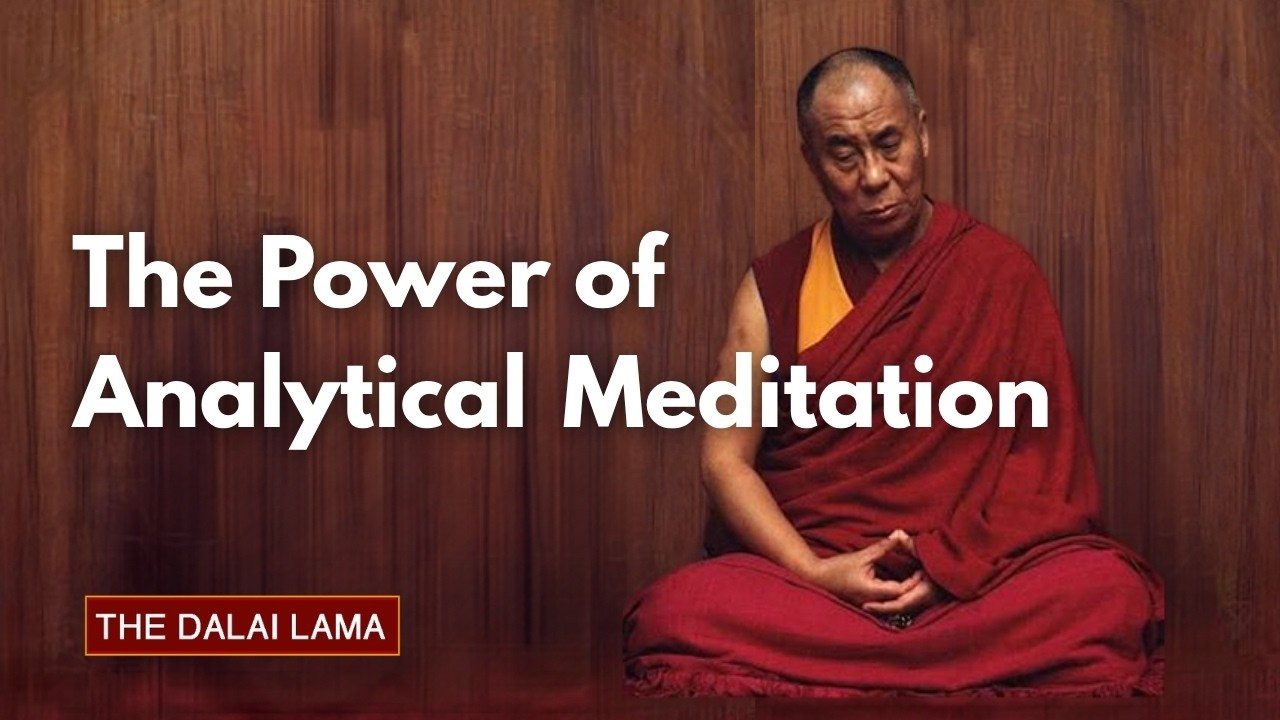
[38:21] awareness usually I call Buddhist call
[38:24] analytical
[38:25] meditation analyze values of
[38:29] compassion and negativeness of anger or
[38:36] discrimination through these sort of
[38:38] awareness you
[38:40] develop uh you can develop new
[38:45] conviction now for example all human
[38:49] being all sentent
[38:52] being uh By Nature want happiness do not
[38:56] want suffering
[38:59] therefore every sented being or
[39:02] particularly every human being have the
[39:04] right to overcome
[39:07] suffering use that reason to develop
[39:11] sense of
[39:12] concern for oneself
[39:16] also s of of the care or
[39:22] cherishing cherishing ones cherishing
[39:26] oneself not on based of you yourself
[39:30] kind not that way but simply I have
[39:34] right to overcome
[39:36] suffering because of that because of
[39:39] that I have right to overcome suffering
[39:43] and desire so
[39:45] therefore that's s of the
[39:48] reason 100% same to other people
[39:52] also by Nature they do not want
[39:55] suffering and therefore they have every
[39:58] right to overcome
[40:00] suffering using that sort of reason that
[40:04] logic then develop sense of concern of
[40:07] well-being of other including your
[40:10] enemy as far as their attitude is
[40:13] concerned big different friend friendly
[40:16] attitude enemy negative attitude neutral
[40:20] people neutral
[40:22] nothing but as far as right is concerned
[40:26] all are same human being Sam sented
[40:28] being same have the right to overcome on
[40:32] that level develop sense of concern that
[40:35] unbiased
[40:38] compassion uh not oriented towards
[40:42] attitude but oriented towards
[40:45] being or person or people person like
[40:50] that and
[40:53] unbiased and
[40:56] infinite not based on
[40:59] attachment so when I talk Universal
[41:04] compassion having me
[41:07] compassion the universal value is mainly
[41:11] that kind of
[41:14] compassion unbiased compassion that I
[41:17] think through
[41:19] education we can develop
[41:23] that so compassion in because of
[41:26] difficult period of
[41:29] difficult time now my own exper my own
[41:31] little
[41:33] experience during now
[41:36] last UH 60
[41:39] years and difficult particularly
[41:42] difficult
[41:43] period most reliable friend is within
[41:47] byself that's
[41:52] compassion and anyway Jeep
[41:58] [Laughter]
[42:00] uh other external means uh sometimes
[42:05] quite
[42:07] expensive but and also uh with effort is
[42:13] come uh develop with effort but these
[42:17] inner value from birth we already
[42:20] have so no need because of the special
[42:24] effort to borrow to develop so simply
[42:29] pay more attention and recognize these
[42:32] are valuable
[42:37] thing so that's my main talk so those
[42:41] people uh who who feel some sort of
[42:47] Interest my talk then please pay more
[42:53] attention and further analyze yourself
[42:58] uh
[42:59] investigation on
[43:02] experiment then you gain more I think
[43:06] deeper
[43:08] experiences then those people who may
[43:12] not uh sort of much of the interest uh
[43:17] then no
[43:19] problem uh after our
[43:22] talk uh when you go outside forget all
[43:27] these things no
[43:29] problem
[43:32] then uh then carry
[43:36] your endless problem you involv that way
[43:41] then no problem but no problem I will
[43:43] leaving tomorrow
[43:46] so
[43:48] I I I'm going to say
[43:54] bye-bye thank you now some
[43:57] [Applause]
[44:07] question thank you thank you thank you
[44:09] now some questions some
[44:14] questions there seems to be a lot of
[44:17] confusion about your visit here uh why
[44:21] did so many news
[44:24] sources and even your own new New York
[44:28] office said that your visit was
[44:31] cancelled
[44:33] oh
[44:35] oh
[44:37] firstly I received
[44:41] invitation then in principle I
[44:45] accepted then I received
[44:48] some uh ority complain
[44:52] request I do I should go should not go
[44:55] there
[44:57] because this is
[45:00] controversial some
[45:03] allegations
[45:05] then
[45:07] uh we carry further
[45:13] investigation then
[45:15] finally uh including this organization
[45:20] sort of
[45:21] teacher and his some
[45:24] friend came to see me
[45:30] and I discuss I
[45:36] observed uh
[45:38] basically they are
[45:41] carrying some some kind of movement
[45:44] about
[45:47] ethics then as I mentioned
[45:51] earlier it is my moral
[45:53] responsibility to support any movement
[45:58] by any
[46:00] person who carry who are working for
[46:05] ethics because the today's world many
[46:10] problem
[46:12] essentially our own
[46:16] creation and nobody want more problem
[46:20] but due to lack of Ethics lack of
[46:24] principle this unwanted man-made problem
[46:30] happen whether politician whether a
[46:33] businessman whether religious person
[46:36] whether
[46:37] anyone moral principle is very essential
[46:42] like B
[46:43] bone so
[46:46] therefore I F I I feel it is my moral
[46:51] responsibility but at the same
[46:54] time uh these allegation
[46:58] so when I met them personally in Dam
[47:02] Sala I told
[47:04] them friendly very
[47:08] openly as far as your sort of work for
[47:12] promotion of Ethics I fully
[47:16] support it is my moral
[47:19] responsibility but at the same time
[47:21] those allegations you must make very
[47:24] clear
[47:27] if you have if you done something wrong
[47:31] you must accept you must
[47:33] admit and change make
[47:36] correction if you not done make
[47:40] clear all these allegations truthfully
[47:45] honestly
[47:47] openly
[47:49] transparently then some
[47:52] media I always telling media
[47:55] people the media people should have long
[48:00] nose as
[48:01] long
[48:06] as as long as wait wait
[48:10] wait as long as elephant
[48:14] Nos and smell in front
[48:19] behind that's very
[48:21] important and make clear to the public
[48:26] what's going on
[48:28] with a
[48:30] politician or with the
[48:32] [Laughter]
[48:36] mayor or religious
[48:39] people the Bishops or
[48:42] myself must s of
[48:46] watch and make clear public inform
[48:51] public provided must be very
[48:55] honest unbi
[48:59] objective that's
[49:01] important sometimes you see one company
[49:05] financing a newspaper and that newspaper
[49:08] report a little bit CU of the uh little
[49:14] bit
[49:16] biased uh I think not as biased as
[49:20] Chinese
[49:21] [Laughter]
[49:25] propaganda but some you see little sort
[49:29] of bias of version also happening that
[49:34] must avoid they must be honest
[49:38] truthful uh uh so now I think in front
[49:44] of I think the public I want to
[49:48] tell uh because of the media people
[49:52] please carry continuously thorough
[49:55] investigation
[49:57] all these because of the uh spot where
[50:02] you have some doubt
[50:05] investigation and those concerned people
[50:07] site also made clear all your
[50:12] work must be
[50:17] transparent so that's my view so I feel
[50:22] no problem come here meet people and
[50:26] talk
[50:28] because of some
[50:29] criticism remain distance not much use
[50:32] come face to face and
[50:37] talk frankly
[50:41] bluntly Toth always
[50:46] truth so more talk more investigation
[50:50] truth become more clear clear
[50:53] clear like that
[50:57] so that's my
[50:59] [Applause]
[51:08] answer um next question I
[51:11] struggle being
[51:13] eess being eess being
[51:16] selfless um in the here and now without
[51:21] material attachment in the western
[51:24] technological and material Society
[51:28] can you
[51:29] advise how to do
[51:39] this that's easy to
[51:43] talk but difficult to
[51:46] practice and I
[51:49] think
[51:50] individual T I think some can do that
[52:06] and many years
[52:08] ago uh in
[52:11] Barcelona uh there's one big uh
[52:16] tble mon or
[52:19] something so there when I visit
[52:23] there one Catholic monk came
[52:29] uh his body not very big quite small I
[52:34] think smaller than me in any case uh
[52:37] then also his English very poor I think
[52:41] poorer than my than me uh so I have more
[52:46] proud to talk uh with him with my broken
[52:52] English
[52:55] so so I was
[52:57] told the
[52:59] organizers I'm going to meet one cattle
[53:02] monk who
[53:04] spent 5 years in the
[53:08] mountain very much hermit
[53:12] life uh very little hot
[53:16] meal bread tea like
[53:21] that so
[53:23] then I met him I asked him I was told
[53:29] you spent 5 years in the mountain in
[53:32] Hermit
[53:33] life what kind of
[53:36] practice and he
[53:40] answered
[53:42] meditation of Life of love when he
[53:47] mentioned that in his eyes some
[53:51] significant sort of impressive sort of
[53:55] expression
[53:57] wonderful so some then I later I call
[54:02] him modern Miller raer M I think some
[54:07] some may no the which century I think
[54:13] 13th um late 14th century late 11th or
[54:16] 12th century 12th century 12th century
[54:20] yes 12th
[54:21] century very famous
[54:25] hermit remain
[54:27] remote mountain
[54:30] mountain almost
[54:32] like animal like that wild animal wild
[54:36] animal like
[54:40] that so among B and ref Community also
[54:45] some
[54:47] individual practice that way but that's
[54:50] a difficult and Ordinary People that's
[54:54] impractical I think
[54:57] better remain in the
[55:00] society and carry some productive work
[55:04] in the
[55:06] meantime see the uh some kind
[55:10] of uh cultivate compassion and also try
[55:16] to increase in your own
[55:20] society and your own personal lifestyle
[55:24] more contented one
[55:27] more simple
[55:28] way some Christian monks nuns in their
[55:32] Monastery or Nary their way of life very
[55:35] simple the
[55:37] Simplicity
[55:40] wonderful so such things I feel more
[55:45] practical meantime you should be
[55:48] something useful in the society that I
[55:51] think
[55:53] better yes then next question um it is
[55:57] my understanding that China is
[56:00] propagating lies about Tibetan culture
[56:03] and you these lies are meant to these
[56:08] lies are meant to induce fear and moral
[56:13] outrage against you and the Tibetan
[56:16] people and the lies effectively change
[56:19] the history of Tibet in the minds of
[56:22] millions of Chinese people there seems
[56:25] to be a tendency for people to
[56:28] passionately and
[56:31] fearfully change their individual
[56:34] understanding of history is there a
[56:36] compassionate way to introduce new
[56:39] information to people specifically
[56:42] information that strongly conflicts with
[56:45] their internal
[56:48] representation of an entire
[56:52] culture now this
[56:55] moment uh
[56:57] uh since recent time I appeal I'm
[57:01] appealing to World
[57:03] community and just this morning I had
[57:06] one Kasa interview CNN CNN interview CNN
[57:10] interview I also used
[57:13] mentioned uh I take this
[57:17] opportunity uh I appealing to World
[57:21] Community now they investigate
[57:25] thoroughly
[57:26] that Tibetan people are really happy or
[57:31] not
[57:33] insidebet
[57:35] because
[57:39] the the very reason we carry this
[57:43] struggle is We Believe according
[57:48] information which we
[57:50] received
[57:53] uh the things are not happy
[57:58] not only just unhappiness but big tietan
[58:02] people very much sort of grieving or
[58:05] because of the resentful resentment
[58:08] because of threat of tietan uni cult
[58:12] Heritage and to
[58:17] Spirit the uh some time back about 15
[58:21] years ago one part new party secretary
[58:26] in autonomous of
[58:28] Tibet when he
[58:31] came one party meeting he
[58:34] mentioned the ultimate source of threat
[58:38] Tibet separate from man and China is
[58:41] Tibetan Buddhism Buddhist
[58:46] Faith so in this hardliner chin
[58:52] communist among the Communist also there
[58:55] are more Lial
[58:57] more realistic also there uh but these
[59:01] hardliners eye the so long
[59:05] Tibetan unique cultural heritage
[59:08] including Tibetan unique
[59:10] language and
[59:12] script and tietan Buddhist Faith so long
[59:17] these remain there they see is a source
[59:21] of threat of
[59:23] Separation so their top most conern is
[59:26] how to keep debate in their hand so
[59:31] therefore they deliberately carry some
[59:34] sort of systematic
[59:36] policy so that bring resentment from
[59:42] side for example about 2 years ago I bet
[59:46] one
[59:48] tiet whose personal things very well
[59:53] personal situation a personal situation
[59:55] very well he told me uh with his
[1:00:01] profession he got he got very good
[1:00:05] salary and facility for his children
[1:00:10] about education and his sort of
[1:00:14] accommodation these things he mentioned
[1:00:17] excellent no
[1:00:20] worry then he said he mentioned to me he
[1:00:24] expressed to me being as a
[1:00:27] debet mentally
[1:00:30] emotionally some kind of suppression
[1:00:35] there then tear in his
[1:00:41] eyes so that is the
[1:00:43] situation to pattern we have our own
[1:00:47] culture long
[1:00:51] history the Chinese
[1:00:53] hardliners dismiss these things
[1:00:55] considered Tibet very backward they come
[1:00:58] to Tibet as a Liberation as
[1:01:06] Liberator so so that's
[1:01:14] problem so I appeal please go to Tibet
[1:01:21] investigate uh and you can ask I mean
[1:01:25] you should ask Chinese
[1:01:27] officials I want free access
[1:01:32] access without any restriction without
[1:01:35] Chinese police without Chinese security
[1:01:39] personel just I think about 10 I mean I
[1:01:44] think about 2 weeks ago one German
[1:01:47] delegation German Parliament delegation
[1:01:49] about four four of them allowed to visit
[1:01:54] Lassa later
[1:01:57] they told they all their visit all their
[1:02:01] program fixed
[1:02:03] arranged uh they have no free access
[1:02:08] access and always company with Chinese
[1:02:11] security person such things is
[1:02:14] useless the the very reason why people
[1:02:18] go there is to see the
[1:02:21] reality uh then with Chinese or forces
[1:02:25] with Chinese intell
[1:02:27] intelligent
[1:02:28] people people cannot express
[1:02:32] freely so I think that's is very very
[1:02:34] important the other day also I mentioned
[1:02:38] that please go to Tibet and sometimes
[1:02:41] quite expensive so those people those
[1:02:44] people who find it little difficult then
[1:02:47] you can borrow some
[1:02:50] money then perhaps you can get some
[1:02:55] articles some Ancient One in Tibet then
[1:02:58] you can
[1:03:02] sell so so the point is now China
[1:03:08] belongs to
[1:03:11] world the CH it is absolutely wrong the
[1:03:15] Chinese
[1:03:16] government headed by hardliner full
[1:03:20] world is
[1:03:21] wrong they cannot full the Chinese
[1:03:25] government for them own interest for
[1:03:27] their own image must
[1:03:30] open must let more people come to Tibet
[1:03:35] let them see the
[1:03:38] reality if the
[1:03:40] reality majority of Tibetan people are
[1:03:42] really feel
[1:03:45] happy then our information which bases
[1:03:50] of our struggle then become
[1:03:53] wrong then we must apologize to the
[1:03:57] Chinese our action is wrong because on
[1:04:01] the basis of wrong
[1:04:02] information if our information is
[1:04:06] correct then Chinese policies basis of
[1:04:10] information is wrong then they should
[1:04:13] apologize so that's the point
[1:04:16] now there is no no point to talk with
[1:04:21] Chinese
[1:04:23] officials uh we want this this we want
[1:04:26] that and Chinese say there's no problem
[1:04:30] there's no
[1:04:31] issue that's the point so no use to
[1:04:36] discuss and let's show world the reality
[1:04:41] of
[1:04:43] Tibet so please uh ask Chinese
[1:04:47] missions you want to go to Tibet and see
[1:04:52] yourself and some media people go there
[1:04:57] I think that's very important not only
[1:04:59] in a few place but enterre Tibet and
[1:05:02] different places some people go to amdu
[1:05:05] area some people go to aam area some
[1:05:07] people go to uz area like
[1:05:10] that I think that's the only way make
[1:05:14] clear what's the
[1:05:16] reality then if there's no problem good
[1:05:20] most
[1:05:22] happy uh if there's problem we have to
[1:05:25] find Ways and Means to solve that
[1:05:29] problem like that and our stand is very
[1:05:33] clear we are not seeking
[1:05:36] separation for people's with China for
[1:05:39] our own interest dep Mally
[1:05:43] backward spiritually very
[1:05:46] Advanced culturally also we quite
[1:05:52] some not only ancient culture but also
[1:05:55] very relevant today
[1:05:57] world so
[1:06:00] therefore
[1:06:02] uh if Chinese
[1:06:06] government allow us meaningful autonomy
[1:06:10] implementation of genuine autonomy which
[1:06:13] Chinese Constitution
[1:06:16] provided then we are very much willing
[1:06:19] remain within the people
[1:06:21] China for
[1:06:24] develop material development
[1:06:26] China getting much more sort of develop
[1:06:29] or economy very
[1:06:32] successfully so it is our own interest
[1:06:35] like that so that's our
[1:06:40] position and last uh meeting with
[1:06:43] Chinese officials in October our last
[1:06:49] meeting
[1:06:51] there as Chinese asked at seventh
[1:06:55] meeting
[1:06:56] at last meeting that eighth
[1:06:59] meeting
[1:07:01] we uh SED we
[1:07:04] sended the what say all point which we
[1:07:10] want uh so
[1:07:14] memorandum in written form handed over
[1:07:17] to
[1:07:18] them then before my delegation reach
[1:07:21] dhala the Chinese consult official
[1:07:24] denounced that uh memorandum so now up
[1:07:28] to
[1:07:29] them so now up to World Community you
[1:07:33] have to judge whether there's problem or
[1:07:36] not if there's
[1:07:39] suffering there's destruction about
[1:07:42] better
[1:07:43] spirit I think many people including
[1:07:45] many
[1:07:47] scientist now appreciate about the P
[1:07:51] knowledge right about mind about emotion
[1:07:57] so cultural heritage or
[1:08:00] knowledge is something useful for world
[1:08:05] for modern world like that now next
[1:08:08] question um I think this is the final
[1:08:12] question do you think spiritual leaders
[1:08:17] today face more resistance to their
[1:08:21] teaching than say Jesus or Buddha did in
[1:08:25] their times
[1:08:30] I don't
[1:08:32] know I think during Buddha's time and
[1:08:36] Jesus Christ time also there's lot of
[1:08:41] [Laughter]
[1:08:43] resistance I think more resistance than
[1:08:45] today I think at that time even Jesus
[1:08:48] Christ he his own s life you see there
[1:08:52] then was a
[1:08:54] sacrifice but Buddha's life also you
[1:08:58] there lot of
[1:08:59] resistance from non- Buddhist and
[1:09:02] sometimes you see argument or
[1:09:05] debate and after Buddha also you
[1:09:09] say through generations a lot of debate
[1:09:13] between non Buddhist and
[1:09:18] Buddhist so resistence is not
[1:09:23] new but now today I think
[1:09:28] generally I think I really feel out of
[1:09:31] six billion human
[1:09:33] being uh over 6 million human being I
[1:09:36] think majority are not that much serious
[1:09:40] about religion Buddhist
[1:09:43] also they may claim I'm
[1:09:46] Buddhist I come from Buddhist family but
[1:09:49] in the day to-day's life not much
[1:09:53] serious as a Christian I think
[1:09:56] in the church there a few moment they
[1:10:00] remember God but outside church when
[1:10:04] their real
[1:10:06] life begins begins not much bother about
[1:10:11] religion about Hell or
[1:10:13] Heaven but more bother about money or
[1:10:16] power like that isn't it so
[1:10:20] therefore uh this is not necessarily I
[1:10:24] think the described as a
[1:10:29] resistance I think one thing important
[1:10:32] is uh sometimes even Buddhist tradition
[1:10:38] also they fail to bring essential
[1:10:44] part and make relevance day to his
[1:10:49] life so religion
[1:10:52] sometimes uh I think firstly sometimes
[1:10:56] people
[1:10:59] religion uh in the form of
[1:11:03] ceremony and some Kasa rituals
[1:11:08] rituals and depend case also sometimes
[1:11:12] like
[1:11:13] that
[1:11:15] then the fail to bring the
[1:11:21] essential uh and also the essential part
[1:11:25] makes relevance day today
[1:11:28] life I think that's very
[1:11:31] important ritual
[1:11:34] ceremony as part of religion but not
[1:11:37] that important important is the
[1:11:40] essence bring bring Outlook right
[1:11:47] correctly look and try human being as a
[1:11:51] brother
[1:11:53] sisters now from theistic viewpoint
[1:11:56] because monotheistic monotheistic
[1:11:59] monotheistic
[1:12:00] Viewpoint all come from One Source
[1:12:04] God so in true sense we are brothers
[1:12:09] sisters if you look serious
[1:12:12] that oh then there's no basis of killing
[1:12:15] each other isn't
[1:12:18] it
[1:12:21] yeah then
[1:12:23] also you see coner
[1:12:27] God full compassion infinite compassion
[1:12:31] infinite
[1:12:32] love so then faithful person totally
[1:12:37] because of the dedicated your own life
[1:12:39] to
[1:12:40] God so that means you must follow God's
[1:12:45] example love Infinite love
[1:12:48] compassion nobody say our God is so full
[1:12:52] of anger full of hatred nobody say that
[1:12:57] isn't
[1:12:58] it if someone say God full of hatred
[1:13:02] then better to little distance from
[1:13:06] God but God describe as infinite Love
[1:13:11] full of compassion that the more closer
[1:13:15] with God the person should be more
[1:13:20] compassionate like that if we these are
[1:13:23] the essential part essential teaching
[1:13:25] essential teaching so must sort of
[1:13:29] relevant in our day life then very
[1:13:33] useful so that's I think
[1:13:36] important thank you that's all
[1:13:42] [Applause]