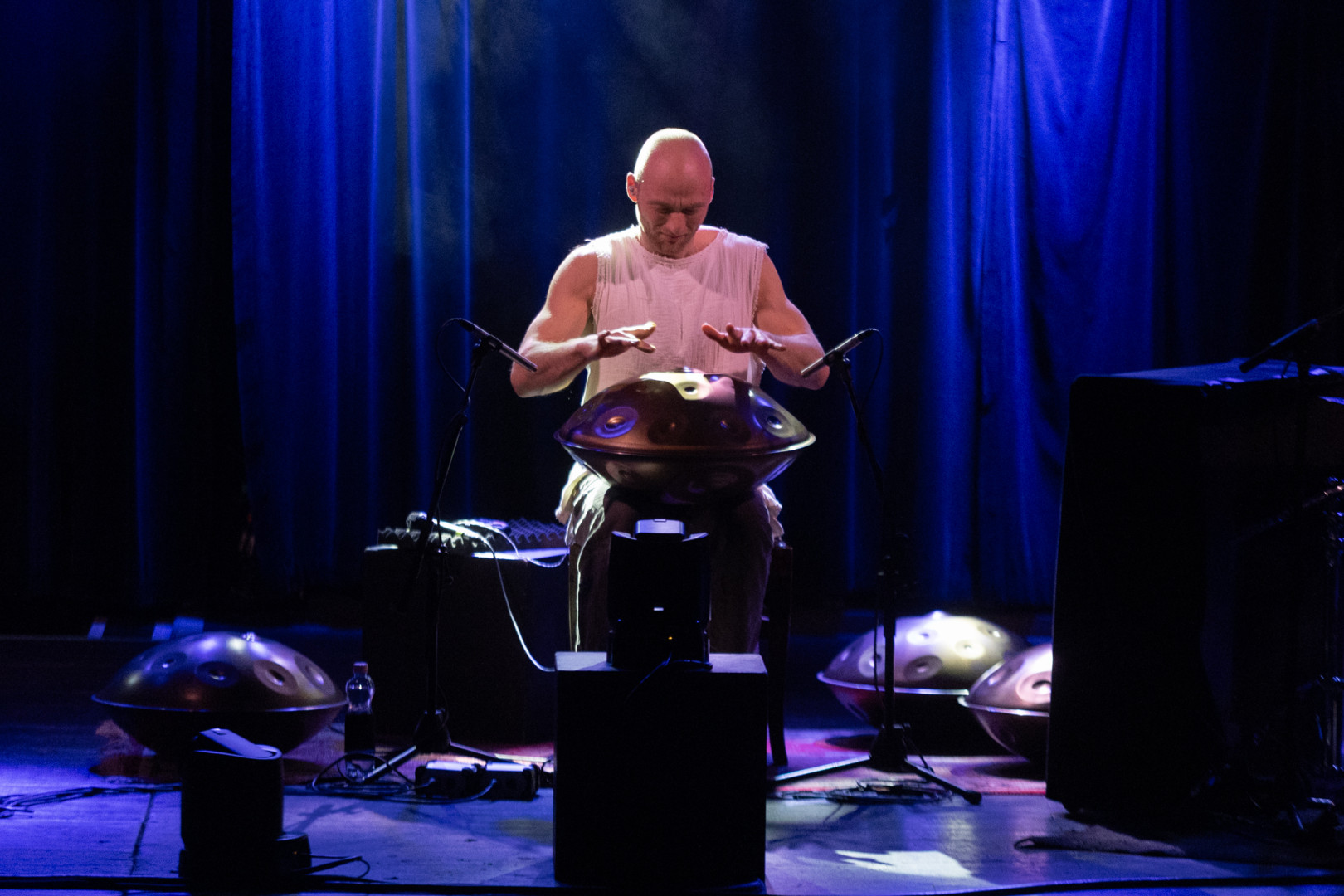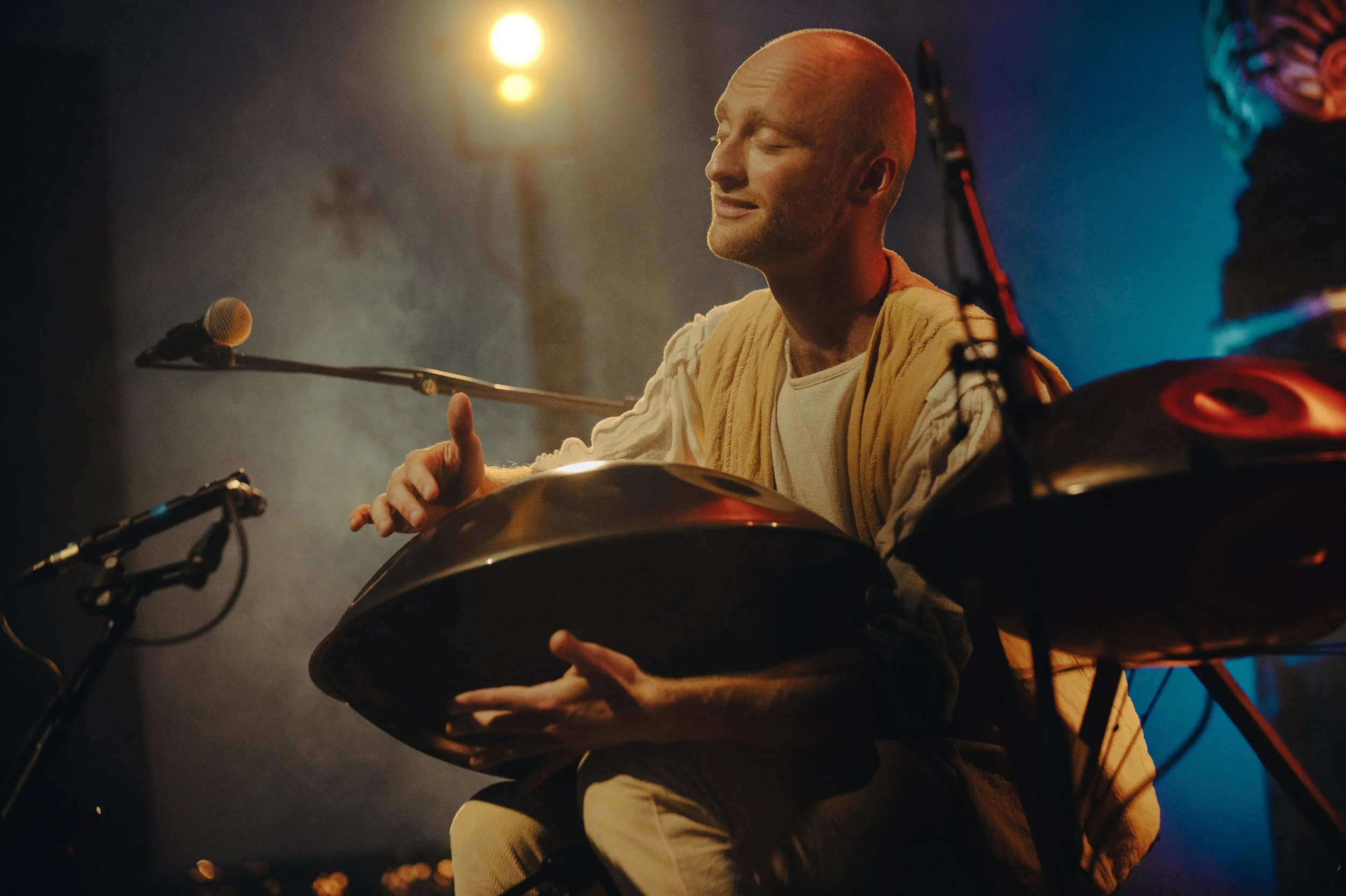

Malte Marten calls himself a handpan player at its core, and Path to Inner Peace is a good place to hear what that means. His story begins in 2014, when a video of the duo Hang Massive led him to sell the beatmaking and DJ equipment he owned and buy his first handpan. He played on the streets of Berlin, toured from 2015 to 2020 with his former duo Yatao, and in 2021 started his solo project. Released on June 6, 2025, this eight-track album belongs to the busy solo period that followed. Roots of Hope arrived three weeks later, and Healing Frequencies 2 and Venturis came near the end of the year.
That context matters. The album is not a debut, and it is not a late-career summation. It is a compact statement from an artist who had already spent years performing, teaching and building a following. For a newcomer, it is the most practical entry point into his catalogue, a clear picture of his sound in a single sitting.
The handpan carries this record. Its round, resonant tones are the center of the music, and the materials do not list other instruments or vocalists, so it is best heard as a solo-instrument album rather than an ensemble piece. Do not expect verse-chorus structure or melodic hooks. The pacing is slow and deliberate, built from long tones and gradual shifts.
The mood is contemplative rather than virtuosic. His own channel describes the music as music to relax and release, and the recordings are built around stillness rather than display. There is a rhythmic patience here that feels constructed rather than improvised, which fits a player who came to the handpan from beatmaking. The skill shows in restraint: what he leaves out, how long he lets a note sit, how little he hurries.
That openness is also the album's risk. Listeners who want driving grooves or dance-floor energy will find it too slow, and those who prefer varied song structures may find the sameness a challenge.
I can't responsibly point to individual tracks by title. The available information confirms the album's eight-track length, but it does not list the track names, and inventing them would do you a disservice. So here is a way of listening instead.
Treat the opening track as the thesis. In an album like this, the first piece sets the tempo and the register of attention, and it tells you quickly whether the approach suits you. Give the middle of the sequence your most patient listening, because that is where gradual shifts become noticeable if you let them. Then pay attention to how the album closes. At eight tracks, the record is short enough to hear as a single arc, and the ending is where that arc either settles or lingers. Open the album on Spotify, note which moments land for you, and trust your own ear over any list I could give you.
The materials name no formal tradition for his work, and it would be wrong to file him under bhakti, kirtan or a devotional lineage. The more accurate frame is the modern handpan lineage that begins with the Hang, the instrument in the video that set him on his path. Within it he works as a player-teacher.
That teaching side shapes how the music should be heard. The Malte Marten Method, which he describes as a way of accessing deep feelings and expressing them musically rather than only playing notes, suggests that these recordings are demonstrations of feeling made audible. He says he teaches from experience, not from rules, so the lineage is personal and practice-based rather than doctrinal. Frequency-based naming runs through much of his catalogue, though not necessarily this album, and it is best taken as a stylistic choice rather than a scientific claim.
This album suits listeners who are looking for quiet: people winding down after a loud day, people moving through a hard stretch who want something steady, and anyone new to the handpan who wants to know what the instrument sounds like in unhurried hands. He has said that what moves him most is hearing that his music helped people through personal challenges and brought them clarity, and the album is best suited to a listener in that kind of reflective moment.
It will also appeal to people curious about playing. The instrument's accessibility is part of his story, since he and his duo co-founded the YataoShop as a place for first steps. If hearing the album makes you want to try, his YouTube channel and online courses are the better next step than another record.
It is a poorer fit for anyone who wants energy, variety or a lecture-style spiritual teacher.
Choose a time without obligations, ideally the evening. Use headphones or a quiet room so the resonance of the instrument can be heard clearly, and play the eight tracks in order without skipping. Put the phone elsewhere. Sit or lie down and let the first track pass before you judge the pace.
If you want to use it for meditation or rest, that fits how he describes the music, but no official pairing for yoga or ceremony is given, so treat any such use as your own experiment. If the album works for you, Roots of Hope is the natural next record.