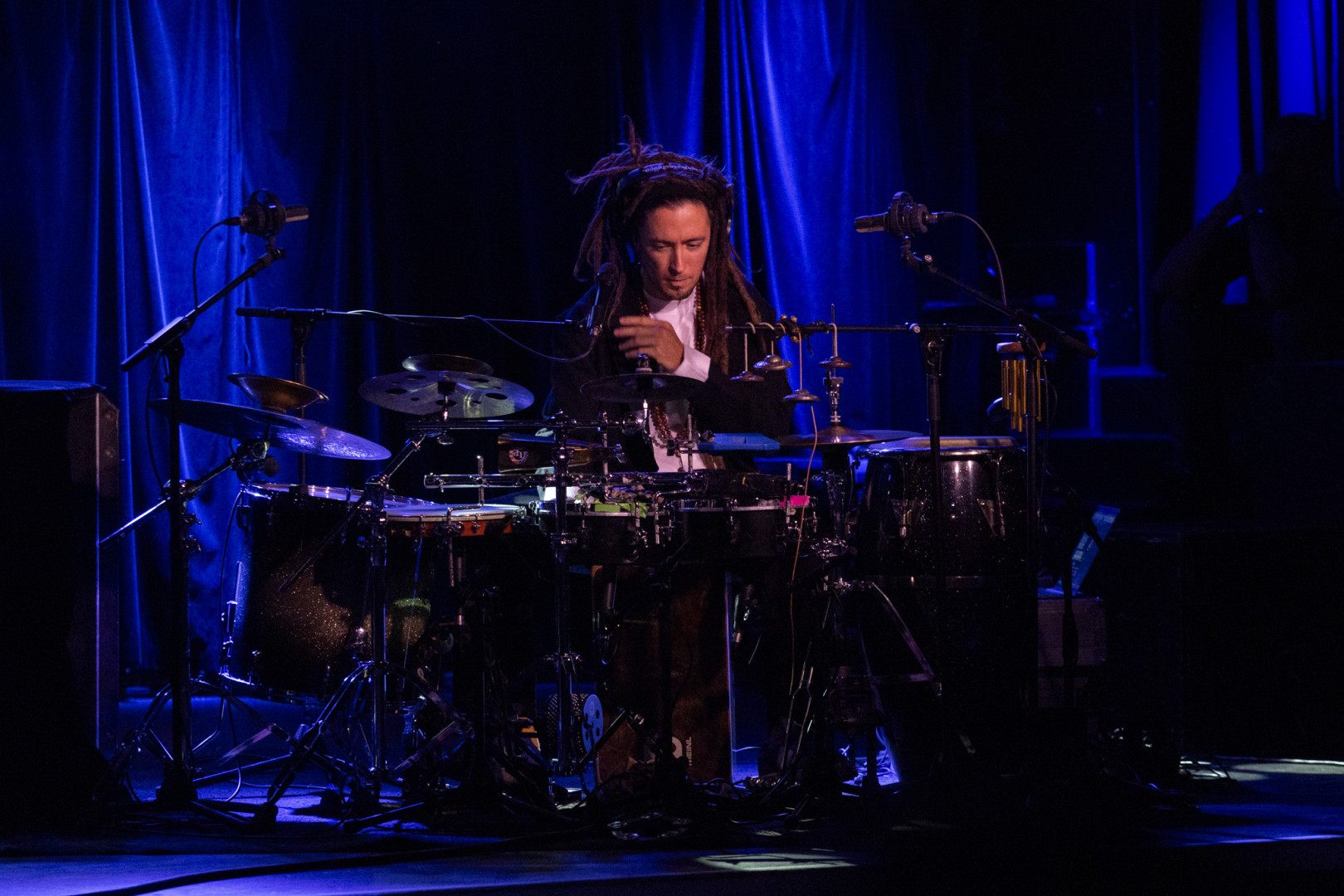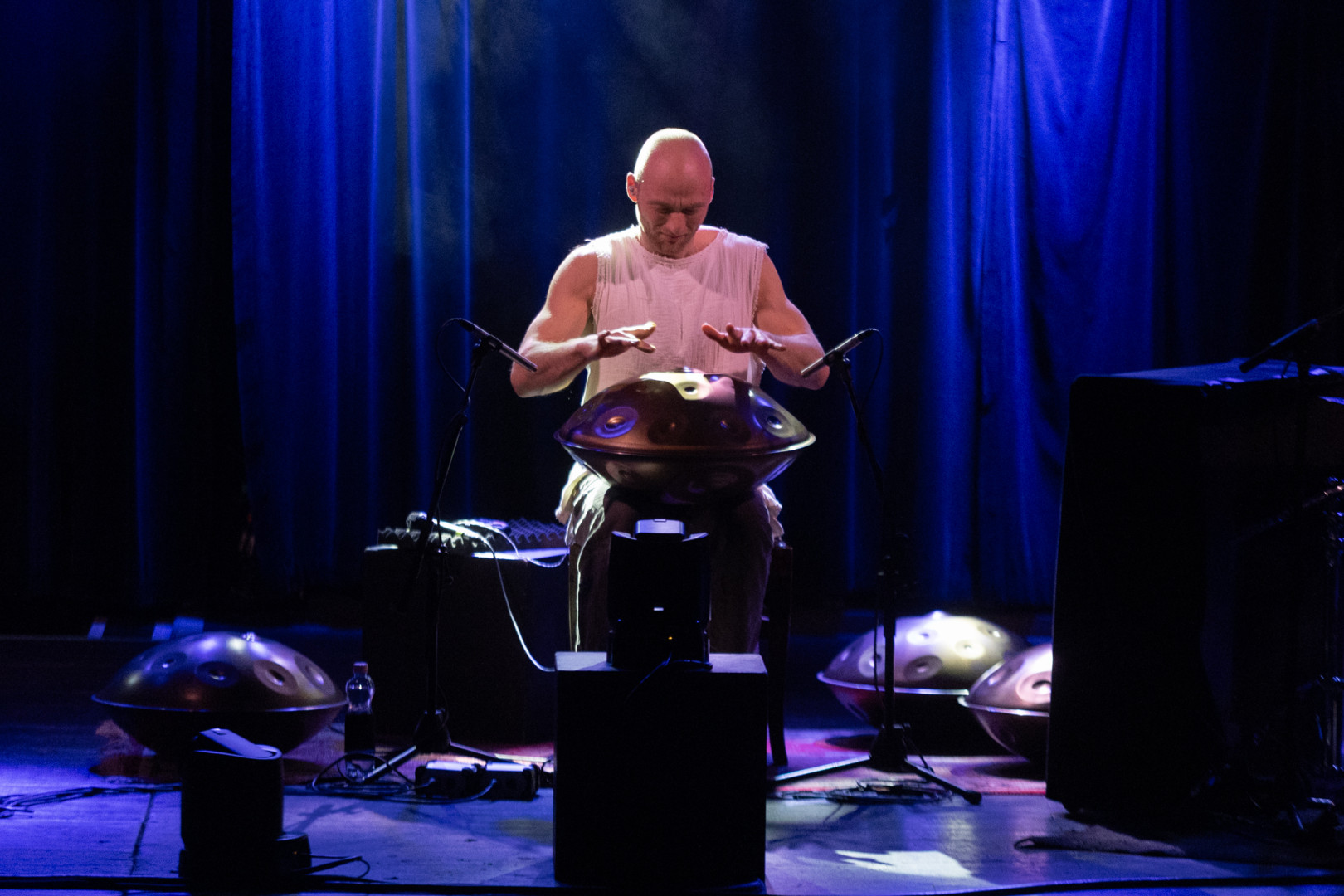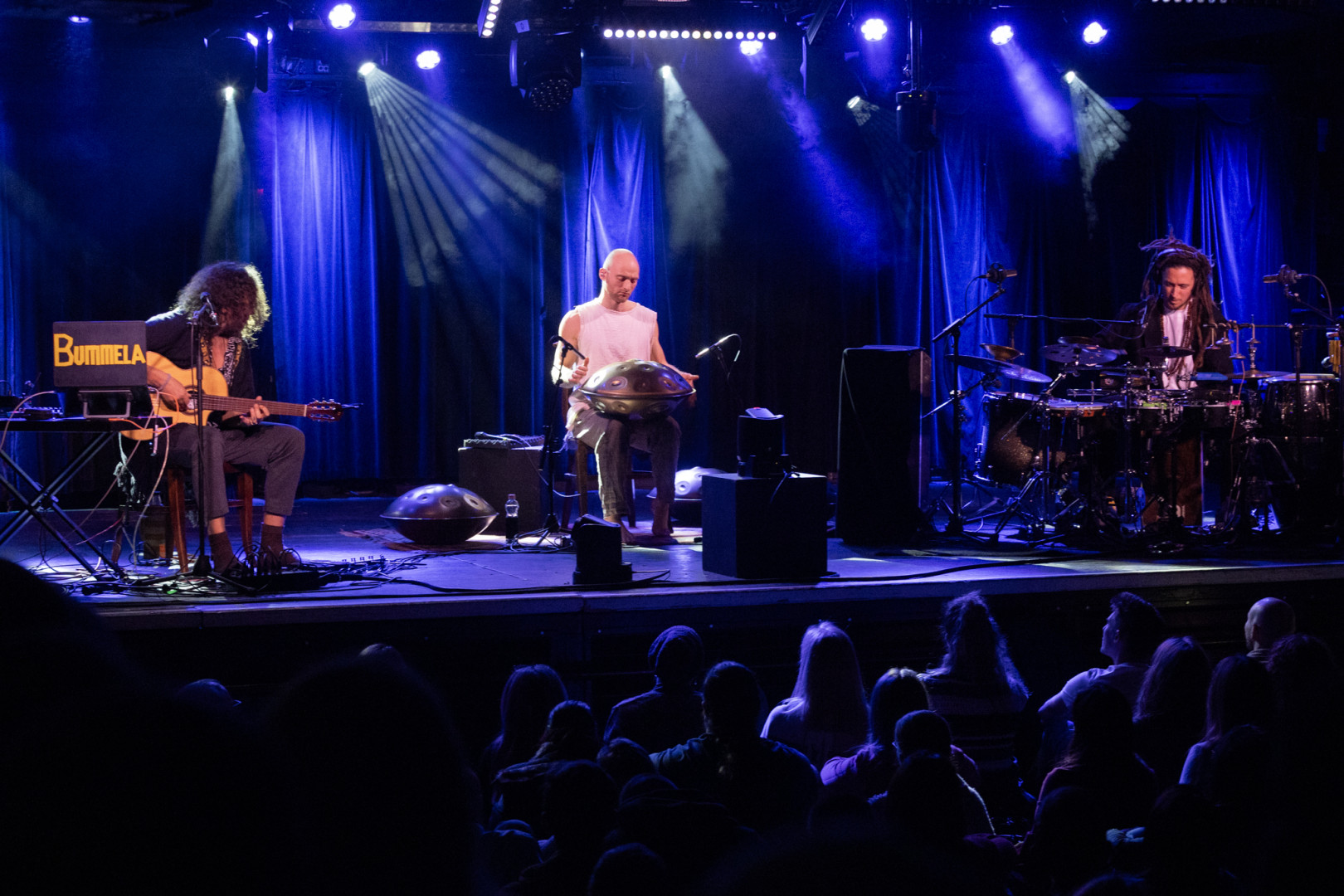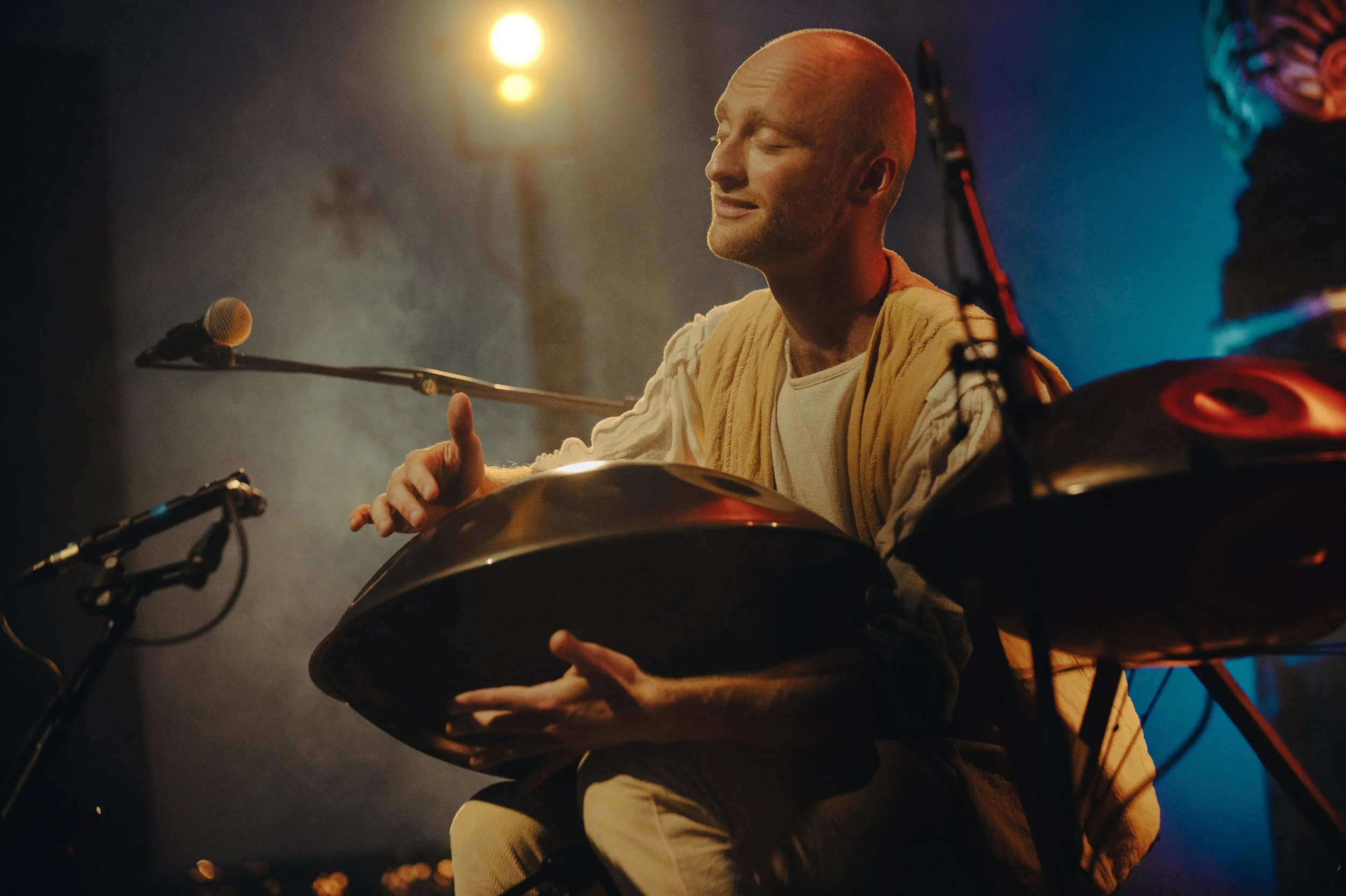

The music of Malte Marten is built around a single instrument. The handpan's round, resonant tones carry almost every release in his catalogue, and the materials list no other instruments or vocalists on his records. This is handpan-centred music rather than band or ensemble music, and the absence of voice is part of its character. Nothing asks for your attention with a lyric or a hook.
Pacing is slow and deliberate. Long tones ring out and decay, and the changes between them are gradual. You will not find verse-chorus structures or melodic payoffs engineered for repetition. The texture is open, with space between phrases, and the effect is closer to watching light move across a room than to following a song. His YouTube channel describes the music as music to relax and release, and that is an accurate summary of the tempo and mood.
There is a detail in his history that helps explain the feel. Before the handpan, he worked as a beatmaker and DJ, and he sold all of that equipment to buy his first instrument. The rhythmic patience in his releases, a sense of pulse that has been built rather than improvised, sounds like a producer's ear applied to an instrument that rewards restraint.
The materials name no formal tradition, guru or teacher for Malte Marten, and it would be wrong to assign one. He is not presented as a kirtan singer, a mantra practitioner or a folk musician. The most accurate frame is the modern handpan lineage, which for him begins in 2014 when he came across a video of the duo Hang Massive. That video set his path in motion.
Within that lineage he works as a player-teacher. He describes himself as a handpan player at his core, and also as a musician, teacher and visionary. His approach to teaching is hands-on, and he says he teaches from experience, not from rules. That makes his lineage personal and practice-based rather than doctrinal. After starting out playing on the streets of Berlin, he built a career through touring, recording and teaching.
Two things stand out. The first is the Malte Marten Method, which he says has helped more than 5,000 students. It is about accessing deep feelings and expressing them musically, not only playing notes. That feeling-first orientation sets it apart from technique-first handpan courses.
The second is the frequency-based naming of his releases. Fourteen singles came out in 2025 alone, many tagged 777 Hz, 999 Hz or 1111 Hz, including Healing Frequency (999 Hz), Higher Calling (1111 Hz) and Calm Whispers (999 Hz). This convention is the clearest signature in his output, and it is also the feature most likely to divide listeners. The tags are a stylistic choice. Anyone expecting them to function as scientific claims may find the framing overstated.
The main collaborator in the record is Yatao, his former duo. From 2015 to 2020 they toured together, and over those years teaching became a passion alongside performing. The duo gave workshops and retreats and co-founded the YataoShop, a place for people to take their first steps with the instrument. The duo's musical project ended in 2021, when Malte began his solo project and funded his first solo studio album through crowdfunding. Hang Massive is an influence of a different kind: the video that started everything, rather than a working partnership.
Start with Path to Inner Peace, an eight-track album released on June 6, 2025. It gives a clear picture of his sound in one sitting. Roots of Hope, released June 27, 2025 with twelve tracks, is the natural next step. If you want to test the mood first, the single releases tagged with frequencies work as short, one-track listens.
Healing Frequencies 2, released November 11, 2025, runs to thirty tracks. It suits long sessions or background use, and it rewards listeners who already know the handpan in his hands. Venturis, released November 25, 2025 with twelve tracks, reflects his most current direction.
What may surprise you is how little happens, on purpose. If you expect high-BPM energy or driving grooves, this will feel too slow and open-ended. The catalogue is also large, and listeners who prefer varied song structures may find it repetitive over a long stretch. Used for rest or meditation, though, that sameness is the point. The materials do not designate tracks for yoga or ceremony, so those pairings are a matter of your own testing. The slow tempo may suit cooldown or savasana better than dynamic sequences.
In the conscious-music world, Malte Marten occupies the quiet, instrumental, ambient end. His roughly 816,500 Spotify followers and video reach on YouTube and Instagram show how far that approach has traveled. Many handpan players are either performers or teachers, but he has been both from early on, and that dual role defines his position.
He also sits at the point where the music meets the practical question of how to learn it. Newcomers who want to play will often find his YouTube channel and online courses more useful than any album. He says what moves him most is hearing that his music has helped people through personal challenges and brought them clarity. His upcoming calendar, running from Stadtcasino Basel on November 10, 2026 through Admiralspalast in Berlin on March 15, 2027, suggests the stillness is now filling concert halls, including the city where he once played on the street.