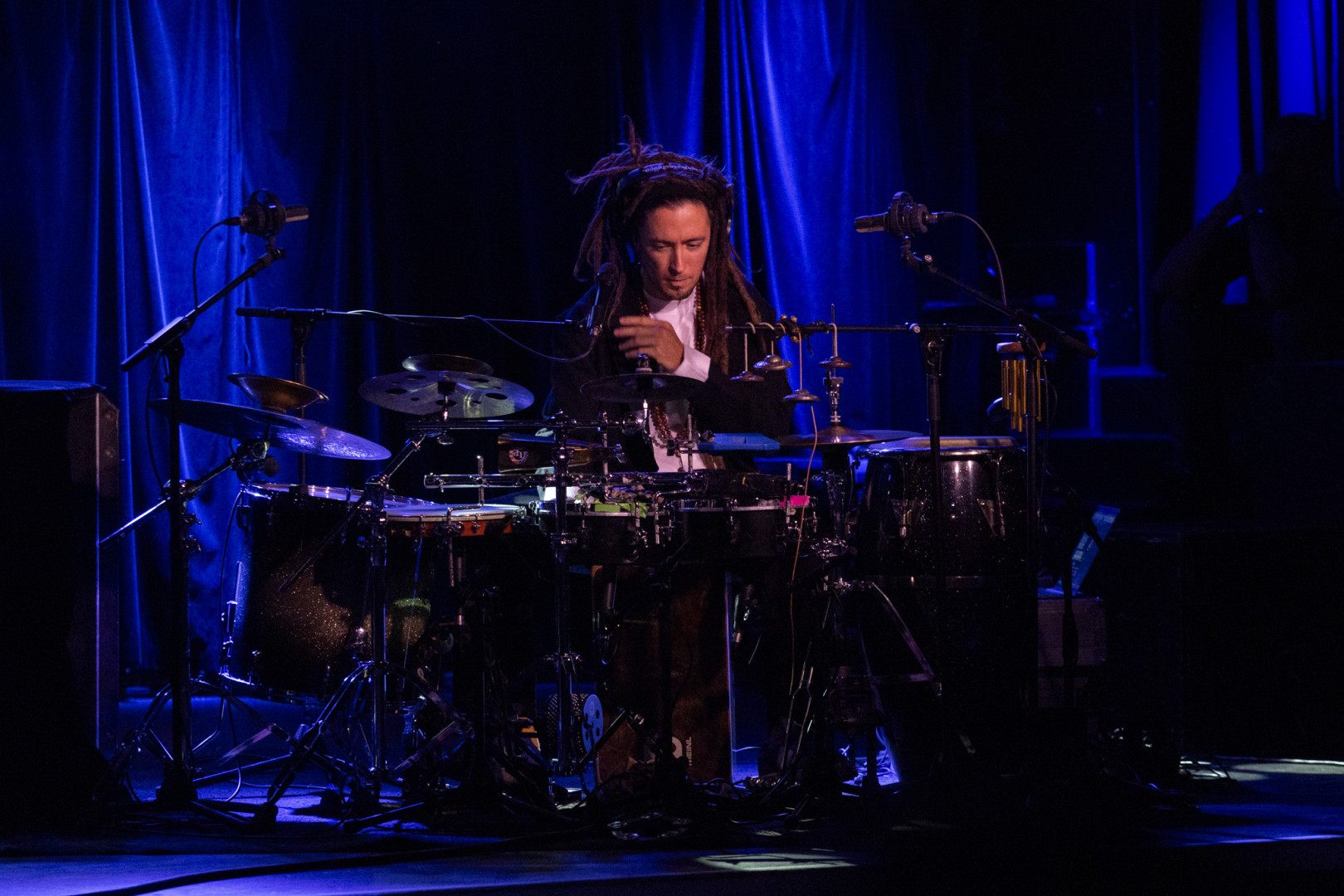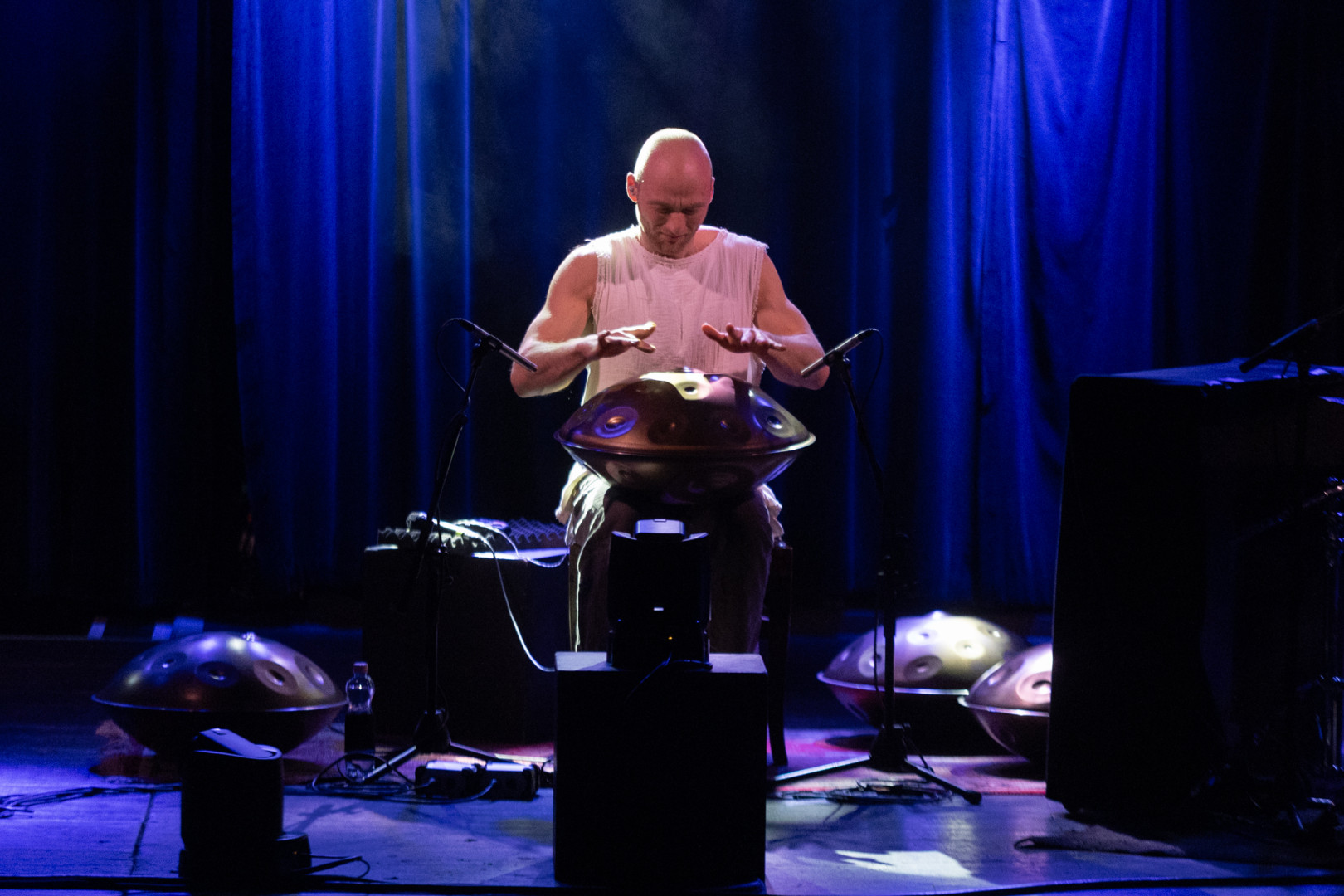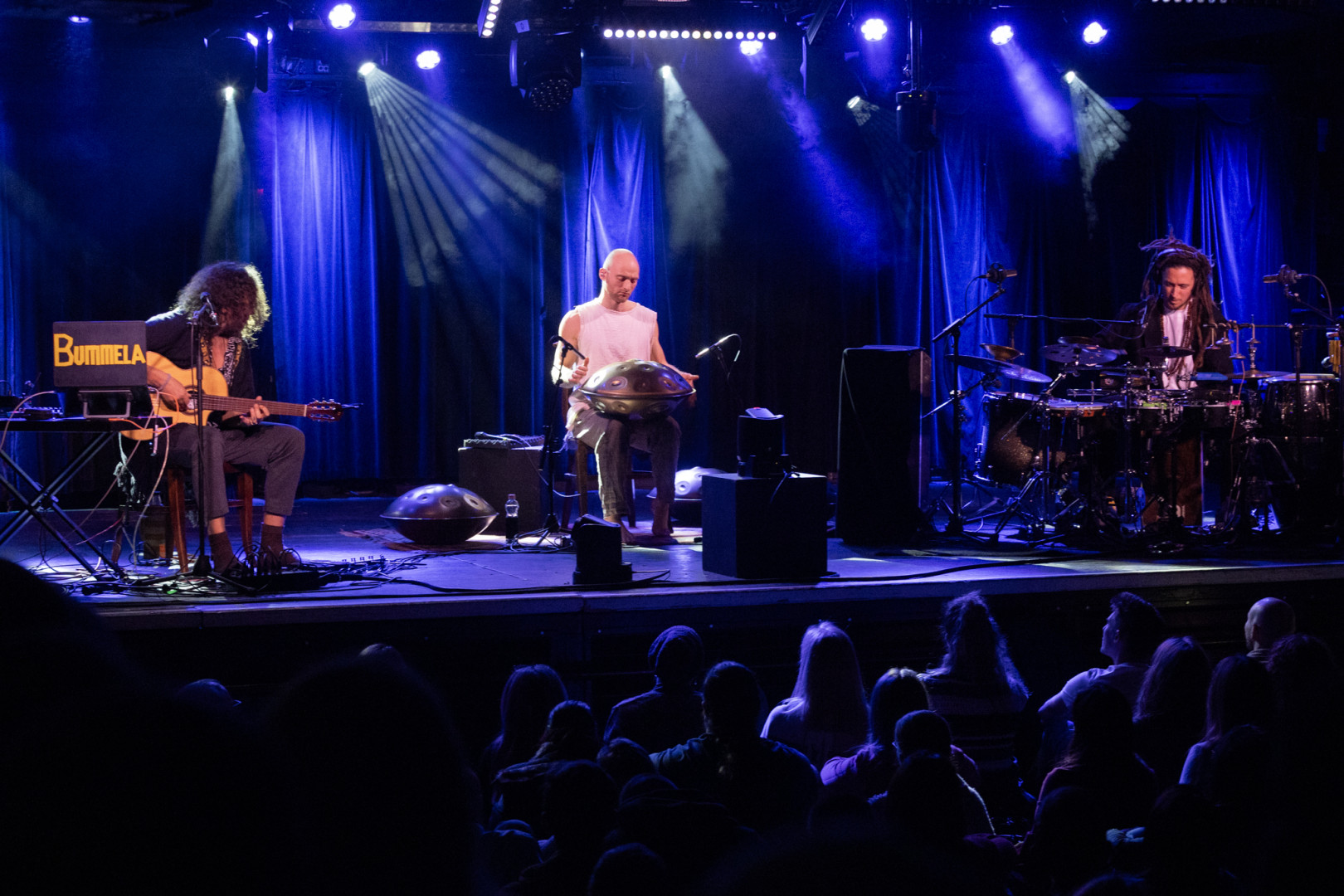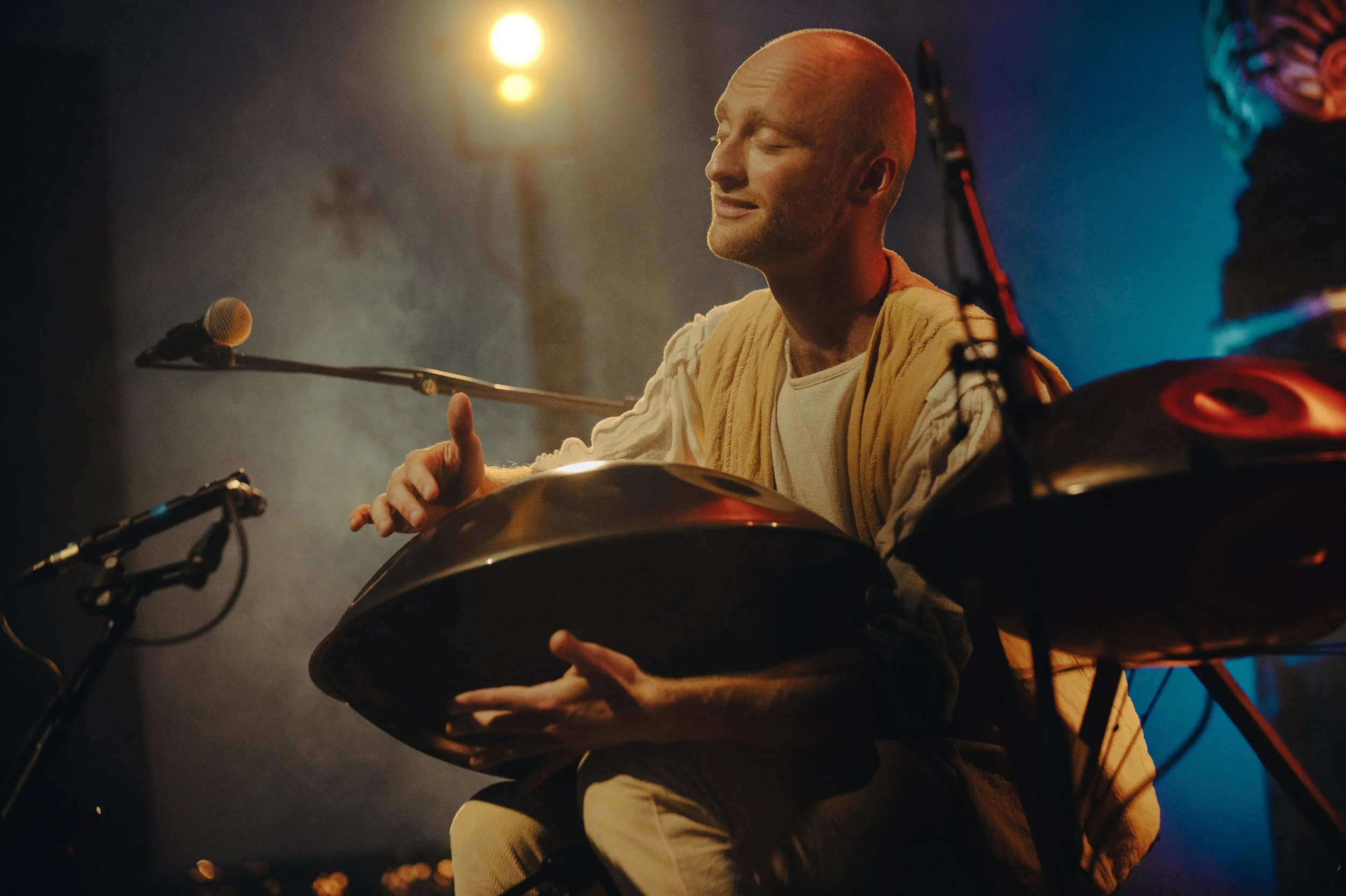

Malte Marten teaches through online courses and retreats, and the available materials are candid about how little they say regarding the texture of a given day. Group sizes, schedules and session structure are not published, so anyone wanting a precise picture should check his site. What can be said comes from how he frames the work: hands-on, heart-open and free of pressure. His own summary is "I teach from experience, not from rules."
That sentence sets the terms. A session is not built around drilling patterns or working through a graded syllabus. The emphasis falls on playing and listening, with students guided toward something felt and then toward sounding it on the instrument. The pace is likely to be unhurried, consistent with the slow, open-ended character of his recorded music. This is an inference from the stated approach and the sound of the work, not a reported account of any particular retreat.
His teaching grew out of practice rather than the other way around. From 2015 to 2020 he toured with the duo Yatao, and teaching became a passion alongside performing. Workshops and retreats followed, along with the YataoShop, which the duo co-founded as a place for people to take their first steps with the instrument. The teaching therefore carries a working musician's habits: it is shaped by what happens when people actually pick up the instrument.
The dominant theme is expression. In the Malte Marten Method, which he says has helped more than 5,000 students, the handpan is treated as a vehicle for feeling rather than a set of notes to master. The method is described as being about accessing deep feelings and expressing them musically, "not only playing notes."
A second theme is clarity. He has said that what moves him most is hearing that his music helped people through personal challenges and brought them clarity. That is a statement about outcomes he values, and it suggests the teaching is oriented toward inner relief as much as instrumental skill. His YouTube channel's phrase for the music, "relax and release," points the same way.
A third is accessibility. The YataoShop was conceived for first steps, and no prerequisite is listed for his courses. The newcomer is the assumed student, not an afterthought. A fourth, still forming, is community: the plans for Handpan Houses suggest shared practice may become more central. Details of those plans are not given, so they should be treated as intention, not fact.
He does not publish a list of set questions, so what follows is drawn from the method's logic rather than quoted. The central question is what you are actually feeling, and whether you can let it reach the instrument without correcting it first. A related one is what changes when the aim shifts from playing correctly to playing honestly. For students used to measuring progress by accuracy, that is a real displacement, and it asks them to tolerate not knowing whether they are "doing it right."
The record does not document his humor, his use of story, or any reliance on scripture, and none should be assumed. Nothing in the materials suggests scripture plays a role; his emphasis is on playing and feeling more than discourse. What the materials do support is an aesthetic of stillness. His recordings are described as built around stillness rather than display, with long tones and gradual shifts instead of hooks. It is reasonable to expect silence to matter in the teaching as it does in the music, but that remains an expectation, not a report.
One detail from his origin adds texture. He sold his beatmaking and DJ equipment to buy his first handpan, and his releases carry a rhythmic patience that sounds built rather than improvised. The biography also notes he played on the streets of Berlin, which suggests a musician who learned to hold attention without a stage.
It lands most clearly for beginners and for people drawn to the instrument as a route to calm, release or emotional processing. Students with prior handpan experience may still find value in the retreat format, where the emphasis on playing and listening is easier to see.
It will fit less well for several kinds of student. Those who want a rule-based, technique-drilling teacher may be disappointed, and students from technique-driven backgrounds may find the feeling-first orientation a genuine adjustment, which is the point of the method and also its main tradeoff. Anyone wanting a structured theory curriculum should confirm course content before enrolling. People who want a lecture-heavy spiritual teacher will find little discourse. Skeptics may also balk at the frequency-tagged titles in his music, such as 777 Hz, 999 Hz and 1111 Hz. These are a stylistic choice, and anyone expecting them to be treated as scientific claims may find the framing overstated.
Claims should also be weighed with care. The 5,000-student figure and the description of the "world's first handpan teacher training" come from his own materials, and the latter in particular is worth confirming with him directly. No awards or press coverage are recorded.
The bio names no formal tradition, lineage or teacher, and none should be assigned. The most accurate frame is the modern handpan world that begins with the Hang, the instrument in the Hang Massive video that set his path in motion in 2014. Within it he works as a player-teacher, and his lineage is personal and practice-based rather than doctrinal. That fits his own words: experience, not rules.