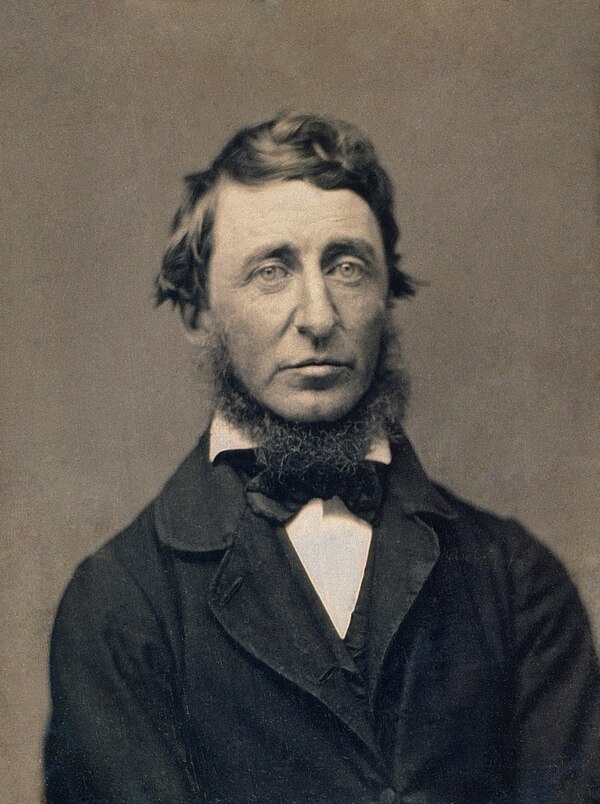
Finding Heaven in the Here and Now
Henry David Thoreau's assertion that "the only true heaven is here on earth" invites us to reconsider our understanding of paradise and fulfillment. Rather than seeking an elusive realm beyond our current existence, Thoreau urges us to recognize the beauty and potential of our immediate surroundings. This perspective challenges the tendency to defer happiness to a future time or place, emphasizing the importance of presence and awareness in our daily lives.
In a world often preoccupied with aspirations and distractions, Thoreau's words resonate with a profound simplicity. They remind us that heaven is not a distant dream but a tangible reality that can be accessed through mindful engagement with the present moment. This teaching encourages us to cultivate a deeper appreciation for the earth and our experiences within it, suggesting that true contentment arises from our relationship with the world around us.
The image / the metaphor
At first glance, Thoreau's quote evokes a vivid image of heaven as a state of being that is not confined to traditional notions of paradise. The phrase "here on earth" grounds the concept of heaven in the physical world, suggesting that our earthly experiences hold the key to spiritual fulfillment. The verbs chosen—"is" and "here"—imply a sense of immediacy and presence, inviting us to recognize that heaven is not a future promise but a current reality waiting to be embraced.
Diving deeper into the metaphor, we can see that Thoreau's vision of heaven is intertwined with the natural world. He implies that the beauty of nature, the richness of human connection, and the simple joys of life are all manifestations of this heavenly existence. By framing heaven as something accessible in our everyday lives, Thoreau encourages us to shift our focus from external pursuits to the internal landscape of our hearts and minds, where true contentment resides.
In the speaker's tradition
Thoreau's perspective is deeply rooted in the tradition of transcendentalism, which emphasizes the inherent goodness of nature and the importance of individual intuition. This philosophy aligns with concepts such as dharma, which speaks to the path of righteousness and living in harmony with one's true nature. Thoreau's call to find heaven on earth resonates with the idea of kenosis, or self-emptying, where one must let go of preconceived notions of happiness to fully experience the present moment.
In his seminal work, "Walden," Thoreau explores the themes of simplicity and self-reliance, illustrating how a deep connection to nature can lead to spiritual awakening. He writes about the transformative power of solitude and contemplation, suggesting that by immersing ourselves in the natural world, we can uncover the divine within our earthly existence. This connection to nature serves as a reminder that heaven is not a distant goal but an integral part of our everyday lives.
Living the teaching
Consider a modern scenario where Thoreau's teaching can be applied: a busy professional who feels overwhelmed by the demands of work and life. This individual may find themselves constantly striving for a promotion or a more prestigious title, believing that such achievements will bring them happiness. However, by embracing Thoreau's wisdom, they can learn to appreciate the present moment—finding joy in their daily interactions, the beauty of their surroundings, and the simple act of being alive. This shift in perspective can transform their experience, allowing them to recognize that heaven exists in the here and now.
Another application of this teaching can be found in relationships. Imagine a couple facing challenges in their communication, often caught in cycles of misunderstanding and frustration. By practicing presence and mindfulness, they can learn to engage with each other more deeply, appreciating the nuances of their connection. In these moments of genuine interaction, they may discover that their relationship holds the potential for a kind of heaven—one built on love, understanding, and shared experiences. This practice of being fully present can foster a sense of peace and fulfillment that transcends the difficulties they face.
A reflection
As we contemplate Thoreau's assertion that "the only true heaven is here on earth," we are invited to reflect on our own lives and the ways in which we seek fulfillment. Are we often caught in the trap of deferring happiness to a future time or place? In what ways can we cultivate a deeper appreciation for the present moment and the beauty that surrounds us? Let us consider this question: How can we actively engage with our environment and relationships to uncover the heaven that exists right here, right now?


