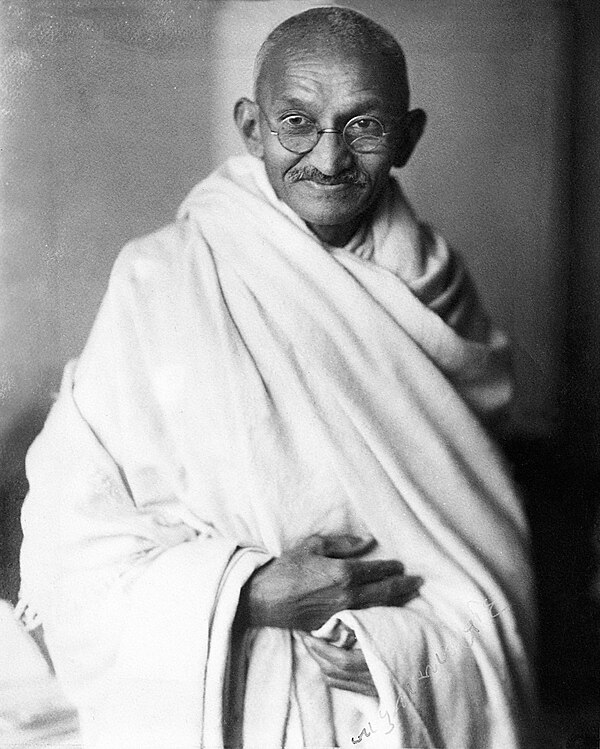
The Unity of Faith: Gandhi's Vision of Interconnectedness
Mahatma Gandhi's profound assertion, "I am a Hindu, a Moslem, a Christian, a Buddhist, and a Jew," encapsulates a vision of spiritual unity that transcends the boundaries of individual faiths. In this statement, Gandhi invites us to recognize the shared essence of humanity that exists within diverse religious traditions. This perspective is not merely an intellectual exercise; it is a call to embrace the interconnectedness of all beings, urging us to cultivate compassion and understanding in a world often divided by dogma and sectarianism.
In a time when religious differences can lead to conflict and misunderstanding, Gandhi's words resonate with a timeless truth. They challenge us to look beyond the labels that often separate us and to seek the common ground that unites us as seekers of truth. By embodying the principles of various faiths, Gandhi exemplifies a holistic approach to spirituality that encourages inclusivity and respect for all paths. This teaching is not just relevant to interfaith dialogue; it is essential for fostering a more harmonious world.
The image / the metaphor
The imagery in Gandhi's quote is striking in its breadth and depth. By identifying with multiple faiths, he employs a metaphor of spiritual pluralism that suggests a tapestry woven from the threads of diverse beliefs. Each faith represents a unique perspective on the divine, yet together they form a richer understanding of existence. The verbs "am" and "is" in his declaration imply a state of being that transcends mere acknowledgment; they suggest an active participation in the spiritual lives of others, embodying their teachings and values.
Diving deeper into this metaphor, we can see that Gandhi's statement reflects the concept of "sunyata," or emptiness, found in Buddhist philosophy. Just as sunyata teaches that all phenomena are interconnected and devoid of inherent existence, Gandhi's embrace of multiple religions illustrates the idea that our identities are not fixed but fluid. This fluidity allows for a more profound engagement with the world, encouraging us to see ourselves in the experiences of others and to recognize that the divine can be approached through various lenses.
In the speaker's tradition
Moreover, Gandhi's perspective can be likened to the teachings found in the Upanishads, where the essence of the self (Atman) is understood to be one with the ultimate reality (Brahman). This non-dualistic view aligns with his assertion that to embrace the identities of others is to recognize the shared divinity that exists within all of us. By seeing himself as part of various faiths, Gandhi embodies the principle of "kenosis," or self-emptying, which invites us to let go of our ego-driven identities in favor of a more expansive understanding of our place in the world.
Living the teaching
In our contemporary world, Gandhi's teaching can be applied in various contexts, particularly in the realm of interfaith dialogue. For instance, consider a community event where individuals from different religious backgrounds come together to share their beliefs and practices. By embodying Gandhi's spirit of inclusivity, participants can foster an environment of mutual respect and understanding. This not only enriches the individuals involved but also strengthens the fabric of the community, demonstrating that unity can emerge from diversity.
On a more personal level, this teaching can be applied in our relationships with others, especially during moments of conflict or misunderstanding. Imagine a situation where a friend holds beliefs that starkly contrast with your own. Instead of allowing these differences to create a rift, one might approach the conversation with an open heart, seeking to understand their perspective. By recognizing the shared humanity in each other, we can cultivate empathy and compassion, transforming potential discord into an opportunity for growth and connection.
A reflection
As we contemplate Gandhi's profound declaration, we are invited to reflect on our own relationship with the diverse tapestry of beliefs that surround us. How can we embody the spirit of unity that Gandhi espoused in our daily lives? In what ways can we open our hearts to the teachings of others, allowing their wisdom to enrich our own spiritual journeys? These questions encourage us to explore the depths of our interconnectedness and to embrace the beauty of our shared humanity.


