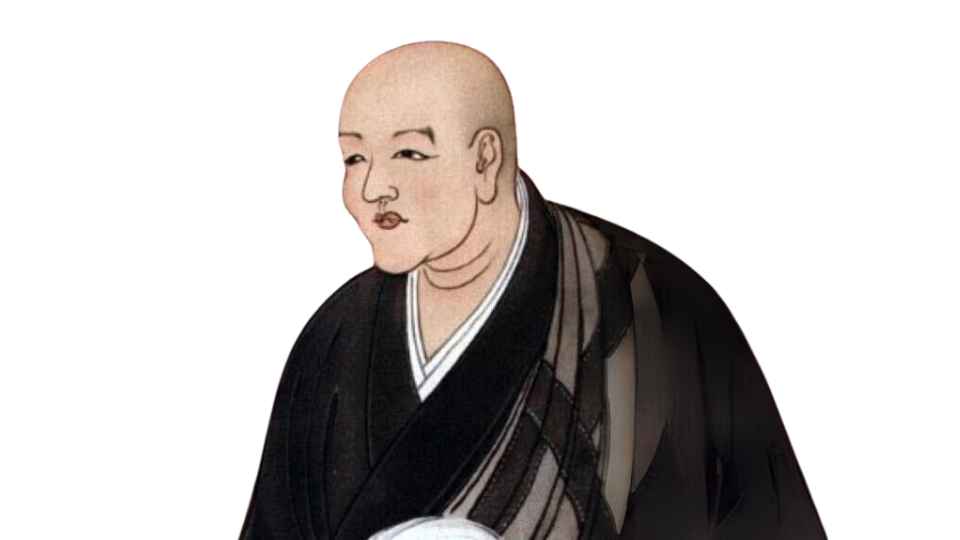
Embracing the Paradox of Existence
Dōgen's assertion that "birth is understood as no-birth" invites us to reconsider the very nature of existence and the cycles of life. This profound statement challenges our conventional understanding of birth as a definitive beginning, suggesting instead that it is intricately woven into the fabric of emptiness. By exploring this paradox, we are encouraged to delve deeper into the essence of our being, recognizing that life is not merely a series of separations and beginnings but a continuum of interconnectedness. This contemplation holds significant implications for how we perceive our lives and our relationships with others.
In a world that often emphasizes the importance of beginnings—birthdays, new ventures, and fresh starts—Dōgen's words serve as a gentle reminder of the impermanence that underlies all phenomena. The notion of no-birth invites us to embrace the fluidity of existence, where every ending is also a beginning, and every birth is a return to the source. This understanding can liberate us from the rigid confines of our identities and the expectations we place upon ourselves, allowing us to experience life with greater openness and acceptance.
The image / the metaphor
The imagery of "birth" and "no-birth" evokes a sense of duality that is central to Dōgen's teachings. Birth, often associated with joy and newness, contrasts sharply with the concept of no-birth, which suggests a state of emptiness or absence. The verbs chosen here—"understood"—imply a cognitive process, inviting us to engage with these concepts not just intellectually but also viscerally. This interplay between birth and no-birth creates a felt sense of tension, urging us to explore the spaces in between, where life unfolds in its myriad forms.
In the speaker's tradition
Within the Zen tradition, Dōgen's insights resonate with the teachings of emptiness and interdependence found in various Buddhist texts. The concept of dharma, or the natural law that governs existence, underscores the idea that all things arise in relation to one another, devoid of independent essence. This interconnectedness is further illuminated through the practice of kenosis, or self-emptying, which invites practitioners to let go of their attachments and preconceived notions of self. In this context, Dōgen's assertion becomes a call to awaken to the profound truth that our identities are not fixed but rather fluid expressions of the greater whole.
In his seminal work, "Shobogenzo," Dōgen elaborates on the nature of reality and the importance of direct experience. He emphasizes that understanding the nature of birth and no-birth is not merely an intellectual exercise but a lived experience. This aligns with the teachings of prajna, or wisdom, which encourages us to perceive the world as it truly is, free from the distortions of our attachments and desires. By engaging with these concepts, we can begin to cultivate a deeper awareness of our existence and the interconnectedness of all life.
Living the teaching
Consider a modern scenario where the teaching of "birth as no-birth" might resonate: the experience of loss. When we lose a loved one, we often grapple with the finality of death, perceiving it as an end. However, if we embrace Dōgen's perspective, we can begin to see that this loss is not merely an ending but a transformation. The essence of the person we loved continues to exist within our memories, our actions, and the impact they had on our lives. This understanding can provide solace, allowing us to honor their presence while recognizing the ongoing cycle of life and death.
In the realm of relationships, the teaching can also manifest in moments of conflict or misunderstanding. When we encounter difficulties with a partner or friend, we may feel as though the relationship is at a standstill or even coming to an end. Yet, if we approach these challenges through the lens of no-birth, we can recognize that every conflict is an opportunity for growth and transformation. By letting go of fixed notions of how the relationship should be, we open ourselves to the possibility of renewal and deeper connection, allowing the relationship to evolve rather than stagnate.
A reflection
As we contemplate Dōgen's profound assertion that "birth is understood as no-birth," we are invited to reflect on our own experiences of beginnings and endings. How might our understanding of life shift if we embraced the fluidity of existence, recognizing that every moment is both a birth and a no-birth? In what ways can we cultivate a deeper awareness of the interconnectedness of all beings, allowing this understanding to inform our relationships and our approach to life's challenges? These contemplative questions can guide us toward a more profound engagement with the teachings of Zen and the essence of our shared humanity.


