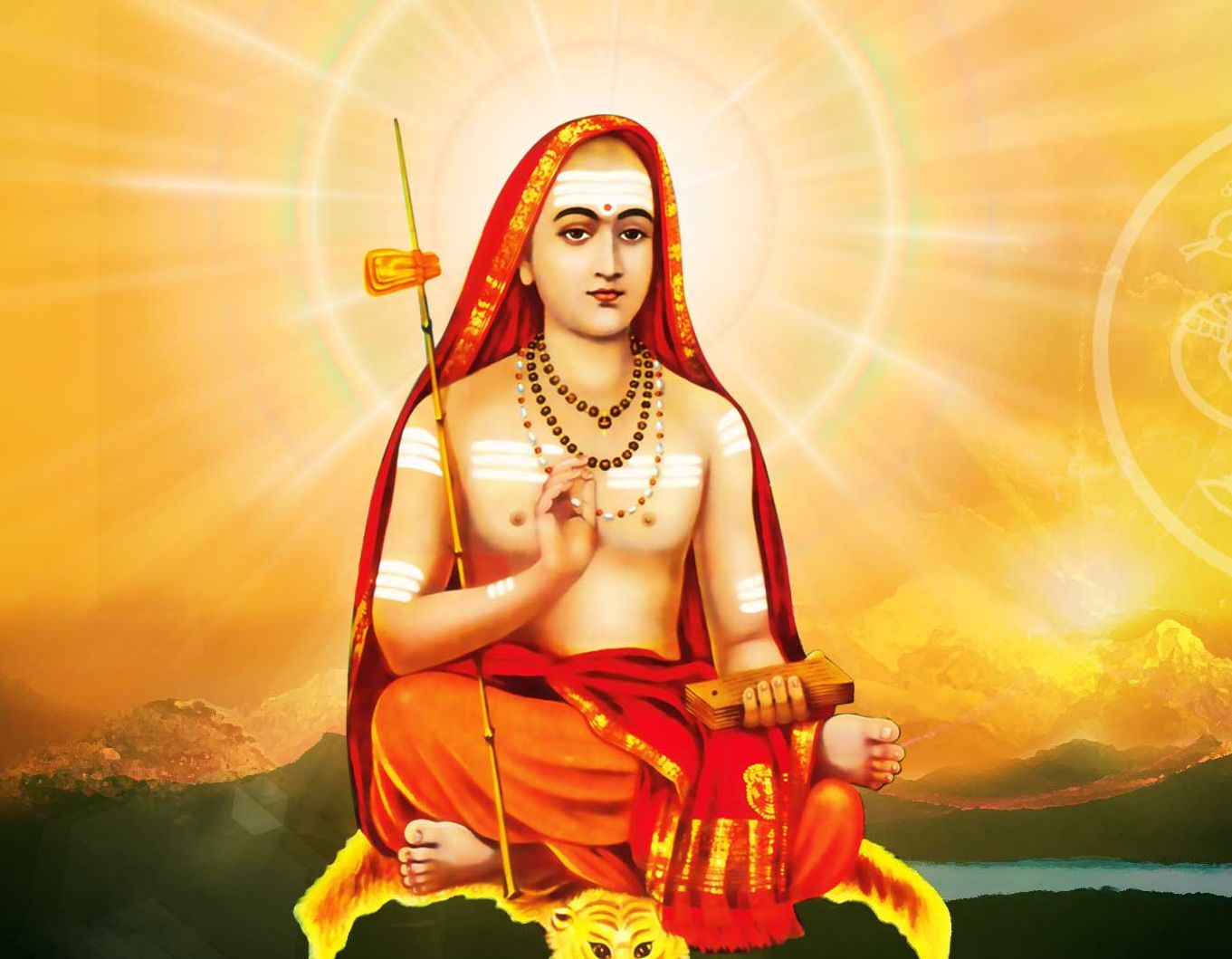
The Essence of Reality: Unveiling Brahman
In the profound assertion, "The supreme truth is — Brahman alone is real," Adi Shankara encapsulates the essence of Vedantic philosophy, inviting us to explore the nature of existence itself. This statement serves as a cornerstone for understanding the non-dualistic perspective that defines much of Indian spiritual thought. The stakes are high, as this inquiry into the nature of reality not only shapes our understanding of the universe but also influences how we navigate our lives, relationships, and inner selves.
To grasp the weight of Shankara's declaration, we must delve deeper into the implications of Brahman as the singular reality. In a world rife with distractions and illusions, the quest for truth becomes a spiritual imperative. Shankara's teachings challenge us to discern the transient from the eternal, urging us to recognize that the myriad forms of existence are but reflections of a singular, unchanging essence. This exploration is not merely academic; it is a transformative journey that can lead to profound inner peace and clarity.
The image / the metaphor
At its core, the quote presents Brahman as the ultimate reality, a concept that transcends the limitations of language and thought. The term "Brahman" evokes a sense of vastness and unity, suggesting an infinite source from which all existence emanates. The verb "is" in this context serves as a powerful affirmation, grounding the statement in a present, immediate reality that invites contemplation. This imagery evokes a sense of stillness, a quiet space where the noise of the world fades away, allowing us to connect with the essence of being.
Delving deeper into the metaphor, we can see Brahman as the ocean of consciousness, with individual beings representing the waves that rise and fall upon its surface. While the waves may appear distinct and separate, they are ultimately composed of the same water, illustrating the non-dualistic nature of existence. This metaphor invites us to reflect on our own lives, recognizing that beneath the surface of our individual experiences lies a shared essence that connects us all. In this way, Shankara's teaching encourages us to look beyond the ephemeral and embrace the eternal truth of our interconnectedness.
In the speaker's tradition
Adi Shankara's teachings are deeply rooted in the Vedantic tradition, which emphasizes the pursuit of self-realization and the understanding of one's true nature. Central to this philosophy is the concept of *Maya*, the illusion that veils our perception of reality, leading us to identify with the transient aspects of life. By recognizing Brahman as the only true reality, we begin to dismantle the illusions that bind us, allowing for a deeper understanding of *Dharma*—the ethical and moral principles that guide our actions in alignment with this ultimate truth.
In his seminal work, the *Brahmajnanavalimala*, Shankara articulates the path to liberation through knowledge (*jnana*), emphasizing that true wisdom arises from the realization of Brahman. This echoes the teachings found in other Vedantic texts, such as the *Upanishads*, where the quest for understanding the self and its relationship to the cosmos is paramount. By situating his teachings within this rich tradition, Shankara invites seekers to engage in a transformative journey that transcends mere intellectual understanding, leading to experiential realization.
Living the teaching
Consider a modern scenario where the teaching of Brahman as the sole reality can be applied: a moment of conflict in the workplace. When faced with disagreements or misunderstandings, one might feel overwhelmed by the chaos of differing opinions and emotions. However, by reflecting on Shankara's assertion, we can cultivate a sense of detachment from the transient nature of these conflicts. Recognizing that beneath the surface of our individual perspectives lies a shared essence can foster compassion and understanding, allowing us to navigate the situation with grace and clarity.
In the realm of personal relationships, this teaching can also illuminate our interactions with loved ones. Imagine a disagreement with a partner that feels insurmountable. By remembering that Brahman is the underlying reality, we can shift our focus from the surface-level conflict to the deeper connection that binds us. This perspective encourages us to approach the situation with empathy, recognizing that our true essence is rooted in love and unity, rather than the fleeting emotions that may cloud our judgment. In this way, Shankara's wisdom becomes a guiding light in our daily lives, reminding us of the profound truth that lies beneath the surface of our experiences.
A reflection
As we contemplate the depth of Shankara's assertion, we are invited to reflect on our own understanding of reality. How often do we find ourselves caught in the illusions of the material world, identifying with transient aspects of our lives? In what ways can we cultivate a deeper awareness of the underlying unity that connects us all? This contemplation serves as a powerful reminder to seek the eternal amidst the ephemeral, guiding us toward a more profound understanding of our existence and our place within the cosmos.


