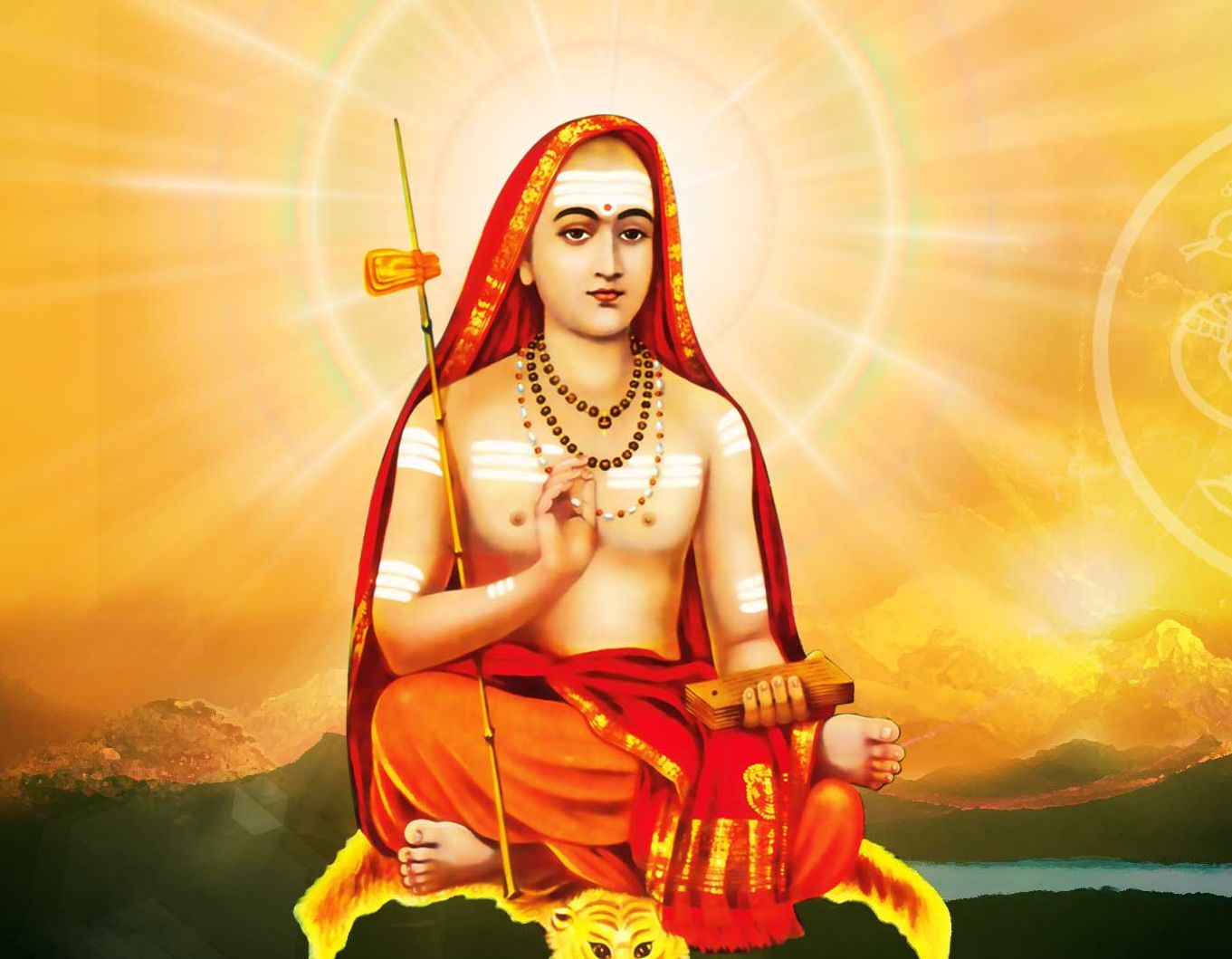
Adi Shankara's assertion that "that state alone is the highest in which the mind no longer wavers" invites us to explore the profound depths of mental stillness. In a world rife with distractions and incessant thoughts, this quote serves as a beacon, illuminating the path toward a state of unwavering clarity and peace. The stakes are high; our ability to navigate life's complexities hinges on our capacity to cultivate a mind that is steady and resolute.
In this context, Shankara's words resonate deeply within the framework of Vedanta, a philosophical tradition that emphasizes the importance of self-realization and the understanding of the ultimate reality, Brahman. The quest for stillness is not merely an abstract pursuit; it is a transformative journey that leads us to the essence of our being. By examining the nature of the mind and its tendencies, we can begin to appreciate the significance of achieving a state where wavering thoughts no longer dictate our experience.
The image / the metaphor
The imagery in Shankara's quote evokes a sense of calm and stability, akin to a tranquil lake reflecting the sky without disturbance. The phrase "the mind no longer wavers" suggests a profound stillness, where thoughts, like ripples on water, cease to disrupt the surface. This stillness is not a passive state; rather, it is an active engagement with the present moment, where clarity emerges from the depths of silence.
Diving deeper into the metaphor, we can envision the mind as a vessel navigating the turbulent waters of life. When the mind wavers, it is akin to a ship tossed by waves, struggling to find its course. In contrast, a steady mind is like a well-captained vessel, navigating with purpose and direction. This metaphor underscores the importance of cultivating inner stability, allowing us to respond to life's challenges with grace and wisdom.
In the speaker's tradition
Within the Vedantic tradition, Shankara's teaching aligns closely with the concepts of prajna, or wisdom, and dhyana, or meditation. Prajna represents the insight that arises from a still mind, while dhyana serves as the practice that cultivates this stillness. The interplay between these concepts reveals that achieving a state of unwavering clarity is not merely a mental exercise but a holistic approach to life that encompasses both understanding and practice.
Moreover, Shankara's emphasis on stillness resonates with the notion of sunyata, or emptiness, found in Buddhist philosophy. Both traditions recognize that the cessation of mental fluctuations leads to a deeper understanding of reality. In the Vivekachudamani, Shankara articulates the importance of discernment (viveka) in recognizing the transient nature of thoughts, guiding us toward the realization of our true self beyond the mind's incessant chatter.
Living the teaching
Consider a modern scenario where the teachings of Shankara can be applied: a busy professional facing the daily grind of work-related stress. In moments of overwhelming pressure, the mind may race with thoughts of deadlines, expectations, and responsibilities. By consciously practicing stillness—through techniques such as mindfulness meditation or deep breathing—one can cultivate a state of mental clarity that allows for more effective decision-making and a greater sense of peace amidst chaos.
In the realm of relationships, the application of this teaching becomes even more poignant. Imagine a conflict arising between partners, where emotions run high and communication falters. By embodying the principle of unwavering stillness, one can approach the situation with a calm demeanor, allowing for thoughtful dialogue rather than reactive outbursts. This practice not only fosters healthier interactions but also deepens the connection between individuals, as they navigate challenges with a shared commitment to understanding and compassion.
A reflection
As we contemplate Shankara's profound insight, we are invited to reflect on our own mental states. What practices can we incorporate into our daily lives to cultivate a mind that no longer wavers? In moments of uncertainty or turmoil, how can we return to stillness and clarity, allowing our true selves to emerge? This contemplative inquiry serves as a guiding light on our journey toward the highest state of being.


