




What is Sri Aurobindo’s Integral Yoga?
Sri Aurobindo’s Integral Yoga is a systematic spiritual practice developed by Indian philosopher-yogi Sri Aurobindo Ghose (1872–1950) that seeks the transformation of the entire being—physical, vital, mental, and spiritual—rather than escape from earthly existence. Unlike classical yoga systems that pursue liberation (moksha) through withdrawal from the world, Integral Yoga aims to bring divine consciousness down into matter itself, creating what Aurobindo called the “supramental” transformation of human life on Earth. The practice synthesizes elements from various yoga traditions—including jnana (knowledge), bhakti (devotion), and karma (action)—while adding a unique evolutionary dimension that views spiritual development as the next stage in cosmic evolution.
Origins & Lineage
Sri Aurobindo Ghose was born in Calcutta in 1872 and educated in England from ages 7 to 21, returning to India in 1893 with virtually no knowledge of Indian languages or spirituality. After working as an administrator and becoming involved in the Indian independence movement, he experienced a profound spiritual awakening in 1908 while imprisoned in Alipore Jail. Between 1908 and 1910, he had a series of transformative experiences that shifted his focus from political revolution to spiritual evolution.
In 1910, Aurobindo withdrew to Pondicherry (then French territory) where he spent the remaining 40 years of his life developing Integral Yoga through intensive practice and prolific writing. His major works articulating the philosophy include The Life Divine (1914–1919), The Synthesis of Yoga (1914–1921), and Savitri (1950), an epic poem of nearly 24,000 lines. In 1914, he met Mirra Alfassa (1878–1973), a French spiritual seeker who became known as “The Mother” and his closest collaborator. After Aurobindo’s death in 1950, The Mother continued developing the practical applications of Integral Yoga until her own death in 1973, establishing the Sri Aurobindo Ashram in Pondicherry and founding Auroville, an experimental township, in 1968.
How It’s Practiced
Integral Yoga has no fixed technique, liturgy, or prescribed sequence of exercises. Aurobindo deliberately avoided creating a rigid system, emphasizing that each practitioner must find their own path suited to their nature. The practice centers on several core elements: aspiration (a persistent call to the divine), rejection (a conscious refusal of movements contrary to spiritual growth), surrender (offering oneself to the divine will), and consecration (dedicating all actions to the divine).
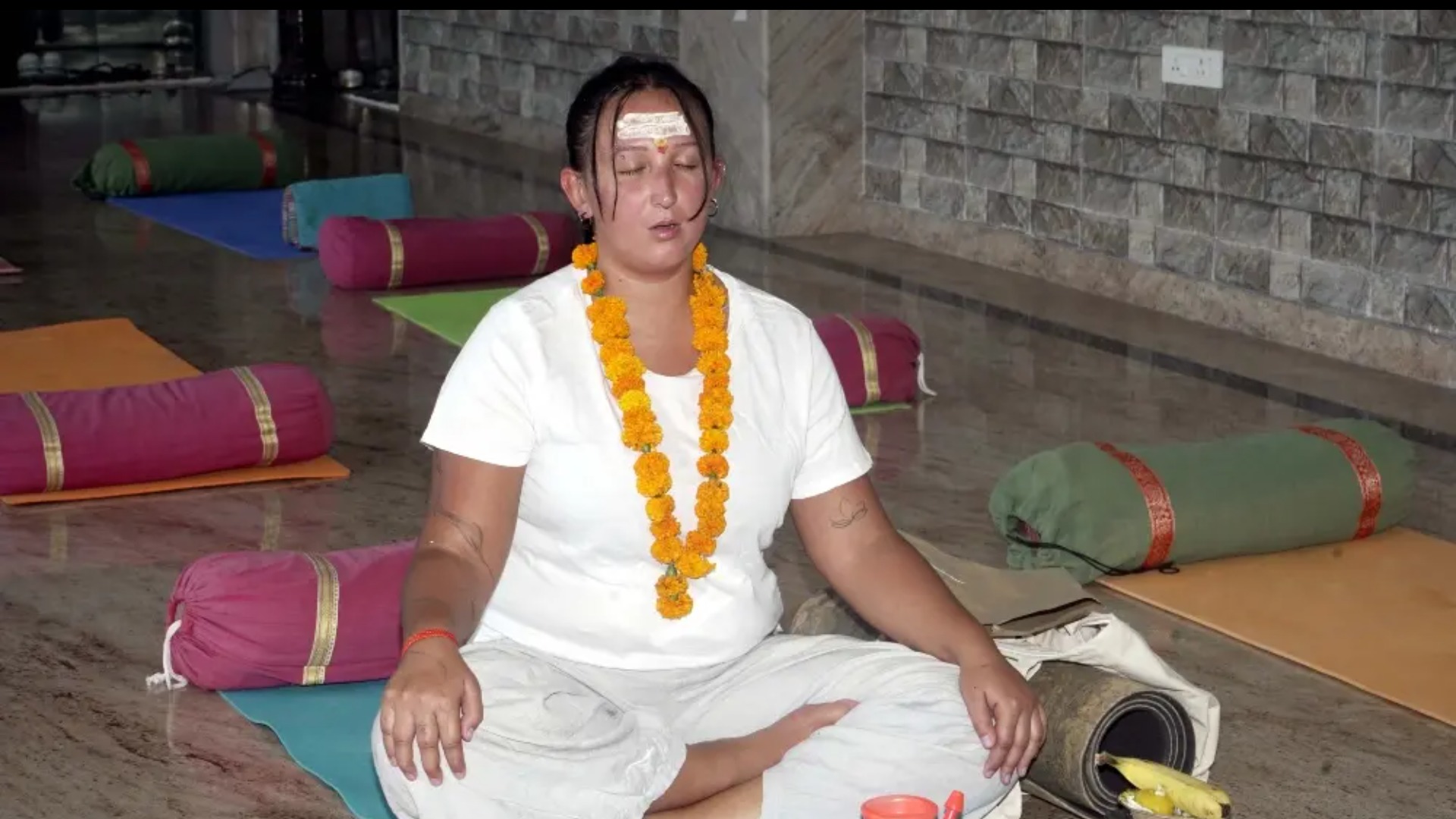
Practitioners typically begin with concentration and meditation to quiet the ordinary mind, followed by what Aurobindo called “opening” to higher consciousness. Unlike traditions that emphasize seated meditation exclusively, Integral Yoga can be practiced throughout daily activities—work becomes a form of karma yoga, relationships become opportunities for psychic growth, and even sleep can become a field of conscious development. There is no monastic requirement; practitioners may live ordinary lives while maintaining inner spiritual work.
The Mother developed more structured practices including a system of physical culture and what became known as “Mother’s Agenda,” detailed records of her explorations in cellular transformation. Some practitioners work with Aurobindo’s written works as contemplative texts, while others focus on silent meditation or active service in communities like the Sri Aurobindo Ashram.
Sri Aurobindo’s Integral Yoga Today
Contemporary practitioners encounter Integral Yoga primarily through three channels: the Sri Aurobindo Ashram in Pondicherry, India (established 1926), which maintains a residential community of several hundred members; Auroville, the international township near Pondicherry with approximately 3,000 residents from over 60 nations; and autonomous study groups and centers worldwide, particularly in India, the United States, and Europe.
Unlike commercial yoga studios or structured meditation programs, there are no certified teacher training programs or franchised Integral Yoga centers (not to be confused with Swami Satchidananda’s unrelated “Integral Yoga” organization). Seekers typically engage through reading Aurobindo’s collected works, attending talks at affiliated centers, or visiting Pondicherry. The Sri Aurobindo Society, founded in 1960, coordinates educational and cultural activities globally. Online platforms now offer access to Aurobindo’s complete works, audio recordings, and discussion forums, though the tradition maintains that written study must be accompanied by practice.
Common Misconceptions
Integral Yoga is not a physical exercise system; it contains no asanas (postures) or pranayama (breathing techniques) in the conventional sense, though practitioners may incorporate these from other traditions. It is not psychotherapy or self-improvement methodology, despite Aurobindo’s psychological insights. The goal is not personal empowerment, stress reduction, or enhanced productivity.
The term “integral” does not mean eclectic synthesis of various practices; rather, it refers to the inclusion of all parts of the being in the transformative process. Aurobindo was critical of what he termed “spiritual shopping,” the mixing of incompatible systems. Additionally, Integral Yoga differs fundamentally from Advaita Vedanta’s emphasis on the illusory nature of the world—Aurobindo affirmed matter as real and capable of divine transformation.
Some confusion exists with Sri Swami Satchidananda’s “Integral Yoga International,” founded in 1966, which is a separate organization with different teachings despite the similar name.
How to Begin
Prospective practitioners should start with Aurobindo’s writings rather than secondary interpretations. Letters on Yoga provides accessible, practical guidance drawn from his correspondence with disciples. The Mother (a short book by Aurobindo) and The Mother’s Conversations offer complementary perspectives. For those preferring systematic philosophy, The Synthesis of Yoga outlines the theoretical framework, though it is dense.
Visiting the Sri Aurobindo Ashram in Pondicherry or Auroville allows direct exposure to living communities of practice, though neither accepts casual tourists; sincere inquiry is expected. Many cities with significant Indian diaspora populations host Sri Aurobindo study circles. The SABDA (Sri Aurobindo Bhavan Digital Archive) website provides free access to the complete works. Integral Yoga requires sustained self-application rather than guru-disciple initiation, making it accessible but demanding for independent practitioners.