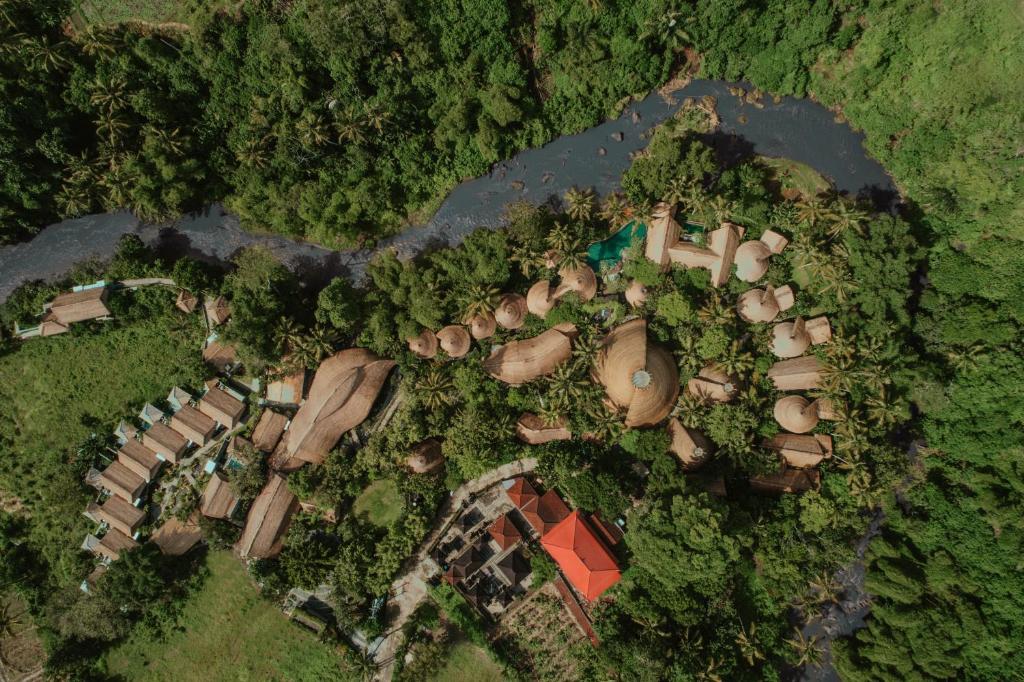
In a dense urban landscape where the pace rarely slows, Fivelements Habitat stands as a deliberate sanctuary—a physical and philosophical space designed to interrupt the rhythm of city life and invite practitioners into deeper self-awareness. Located in Hong Kong, the retreat center represents a particular vision of wellness that refuses the compartmentalization typical of mainstream health culture: the body, mind, spirit, and diet are not separate concerns to be addressed in isolation, but interconnected dimensions of a single integrated practice.
What Does a City Sanctuary Actually Offer?
Fivelements Habitat operates on the premise that transformation doesn't require retreat to a remote ashram or mountain sanctuary. Instead, the center creates a contained environment within the urban fabric—a deliberate departure from the surrounding city that allows for genuine inward work without geographic displacement. This model acknowledges a practical reality: not everyone can disappear for weeks, but many can carve out sustained time for practice within their existing geography.
The center's programming weaves together several distinct but complementary modalities. Movement practices form a cornerstone, grounding the work in embodied experience. Yoga, in its various forms and lineages, provides the structural foundation—disciplines that have for millennia addressed the relationship between physical form and consciousness. Yet Fivelements Habitat expands beyond asana and pranayama to include what the center calls "creative expression," a deliberate broadening of what counts as transformative practice.
How Do Sacred Arts Deepen Wellness Practice?
The inclusion of sacred arts signals an understanding that transformation occurs through channels beyond the purely physical or psychological. Sound, music, visual creation, and ritual—the domains of sacred arts—address dimensions of human experience that anatomy and cognitive science, while valuable, cannot fully contain. These practices operate at the threshold between the rational and the transcendent, offering practitioners a way to access and integrate states of consciousness that thought alone may never reach.
The programming also emphasizes "self-awareness" as an explicit aim. This is not the surface-level self-improvement of productivity hacks, but rather the systematic cultivation of witness consciousness—the capacity to observe one's own patterns, conditioning, and assumptions with increasing clarity. In a city environment saturated with distraction and external stimulus, this inward turn becomes both more difficult and more necessary.
Why Does Plant-Based Nutrition Matter in Integrated Wellness?
The inclusion of plant-powered nutrition as a central pillar reveals a sophisticated understanding of how the body and consciousness interact. Food is not peripheral to wellness—it is a primary technology of transformation. The choice of plant-based cuisine reflects both a physiological principle (that what we consume shapes our cellular and energetic bodies) and an ethical commitment (that wellness extends to include right relationship with all sentient life).
Fivelements Habitat describes its nutritional offerings as "rejuvenating" and "innovative," suggesting both the restoration of depleted systems and the integration of contemporary nutritional understanding with traditional wisdom. In Hong Kong's cosmopolitan context, this approach positions plant-based eating not as restriction or deprivation, but as an intelligent technology of vitality—available to anyone, regardless of geography or cultural background.
What Makes Integrative Wellness Different?
The term "integrative" appears deliberately throughout Fivelements Habitat's framing. Rather than offering isolated wellness treatments—a yoga class here, a juice cleanse there—the center proposes that genuine transformation requires coherence across multiple dimensions of life. Movement informs awareness; awareness transforms relationship to food; food supports the nervous system's capacity for meditative depth; sacred arts bridge rational and transcendent understanding. Each element strengthens and amplifies the others.
This approach stands in contrast to much contemporary wellness culture, which often treats health as a collection of optimizable systems—calories burned, nutrients absorbed, stress hormones reduced—rather than as an integrated lived experience. Fivelements Habitat positions wellness as fundamentally about consciousness: the depth of awareness one brings to each practice, each meal, each moment. The body improves not merely through exercise, but through being touched by genuine attention.
How Does Urban Setting Shape the Practice?
Hong Kong's position as a global financial and cultural hub shapes what Fivelements Habitat can offer. The city's populations include practitioners from multiple traditions, multiple language backgrounds, multiple wellness lineages. An urban sanctuary necessarily becomes a meeting point where various forms of yoga, various sacred traditions, and various nutritional philosophies can coexist and cross-pollinate. This is different from a retreat center that might specialize in a single lineage or approach.
The urban location also means the sanctuary must actively create what nature provides elsewhere—stillness, coherence, protected space. City sanctuaries require more deliberate design, more careful boundary-setting, and more conscious facilitation. They become powerful precisely because they interrupt rather than continue the surrounding environment's momentum.
What Is the Actual Work of Self-Exploration?
Central to Fivelements Habitat's mission is "self-exploration"—a term suggesting that wellness is not about being fixed or improved according to external standards, but about deepening one's own understanding of who and what one actually is. Self-exploration implies curiosity, investigation, and a fundamental trust in one's own capacity for insight. It positions the practitioner not as a client receiving treatment, but as a conscious being engaged in their own unfolding.
In this model, a yoga class is not primarily about gaining flexibility or strength (though these may occur). Rather, it is an opportunity to observe how the body-mind organizes itself around challenge, restriction, and opening. Sacred arts become a laboratory for exploring non-rational forms of knowing. Plant-based cuisine becomes a daily practice in noticing the relationship between what is consumed and how consciousness responds. Over time, such sustained attention catalyzes genuine transformation—not because external protocols are imposed, but because the practitioner's own awareness becomes increasingly refined and responsive.
Where to go from here
Fivelements Habitat represents an emerging model of urban wellness: integrated rather than fragmented, consciousness-centered rather than symptom-focused, and rooted in the understanding that transformation requires coherence across movement, awareness, creative expression, and nourishment. For practitioners in major urban centers—individuals who cannot easily access remote retreat spaces but who feel called to serious practice—the sanctuary model offers a practical pathway to genuine depth. The work of self-exploration, undertaken with steady attention and supported by skilled facilitation, remains available to anyone willing to show up, tune in, and allow their own consciousness to guide the unfolding.


