In the Vedic Hindu tradition, fire holds a sacred place as the direct intermediary between the human and the divine. The Agni Hotra ceremony is one of the highest expressions of this understanding—an ancient ritual practice that harnesses the transformative power of flame for healing, purification, and environmental renewal. The name itself carries its meaning: "Agni" refers to fire, while "Hotra" translates to healing. Together, they form a practice thousands of years old, preserved within the sacred Hindu texts and still performed today at spiritual centers around the world.
What Is Agni Hotra?
Agni Hotra is a Vedic fire ceremony designed to energize and purify the environment while simultaneously healing the participants and those living in the surrounding area. Unlike casual fire rituals, Agni Hotra is considered one of the highest forms of Vedic practice—a sophisticated technology of consciousness that works on multiple planes simultaneously. The ceremony involves offerings made to a sacred fire at specific auspicious times, particularly around lunar transitions.
The ritual is rooted in the understanding that fire is not merely a physical element but a purifying and transformative force that can affect the subtle energetic atmosphere of a place and the beings within it. By performing Agni Hotra with intention and proper method, practitioners believe they activate healing frequencies that ripple outward into the environment and into the bodies and minds of all nearby.
The Vedic Foundation and Ancient Origins
Agni Hotra originates from the sacred Vedic Hindu texts, making it one of humanity's oldest continuous spiritual practices. The Vedas, composed thousands of years ago, contain detailed instructions for fire ceremonies and their cosmological significance. In this worldview, the five elements—earth, water, fire, air, and space—are not separate from human consciousness but intimately connected to it. Fire, in particular, is understood as the principle of transformation, digestion, and purification at every level.
The Vedic understanding of Agni extends beyond the physical flame. Agni is also the digestive fire within the body, the metabolic process that transforms food into nourishment, and the metaphorical fire of wisdom that burns away ignorance. The Agni Hotra ceremony honors all these dimensions simultaneously, making it a whole-system practice for purification and healing.
Timing, Ritual, and Sacred Geometry
The Agni Hotra ceremony is typically performed at auspicious times, particularly on the day before the Full Moon, when the lunar energies are at a peak of intensity. This timing is not arbitrary; it reflects a deep Vedic understanding of how celestial cycles influence earthly and human affairs. The Full Moon is traditionally considered a time of heightened receptivity, increased vital force, and accelerated transformation.
The ceremony itself involves precise offerings made to the fire with specific mantras and intentions. Each element of the ritual—the materials offered, the words spoken, the timing of each action—has been refined over centuries to create a coherent energetic structure. This precision is characteristic of Vedic technology; just as a musical instrument must be tuned correctly to produce harmony, a fire ceremony must be performed correctly to generate its intended effect.
Healing on Multiple Levels
One of the most striking aspects of Agni Hotra is its multi-dimensional healing capacity. The tradition teaches that the ceremony heals on several levels simultaneously: the physical environment, the participants themselves, and the broader community in the area.
- Environmental purification: The ritual is believed to clear stagnant or discordant energies from a space, lifting the vibrational frequency of the location. Many practitioners report a palpable shift in the atmosphere during and after the ceremony.
- Physical healing: The ash produced by the Agni Hotra fire, known as vibhuti, is considered sacred and is sometimes used for its purifying properties. Some traditions attribute healing properties to this ash.
- Subtle body activation: Participants often experience shifts in their internal energy channels, the nadis. The fire ceremony is said to activate dormant energetic pathways and accelerate the flow of prana (life force) through the body.
- Collective elevation: The ripple effect of the ceremony extends beyond the immediate participants to benefit everyone in the surrounding area, creating a field of healing and positive influence.
Agni Hotra in the Modern Retreat Context
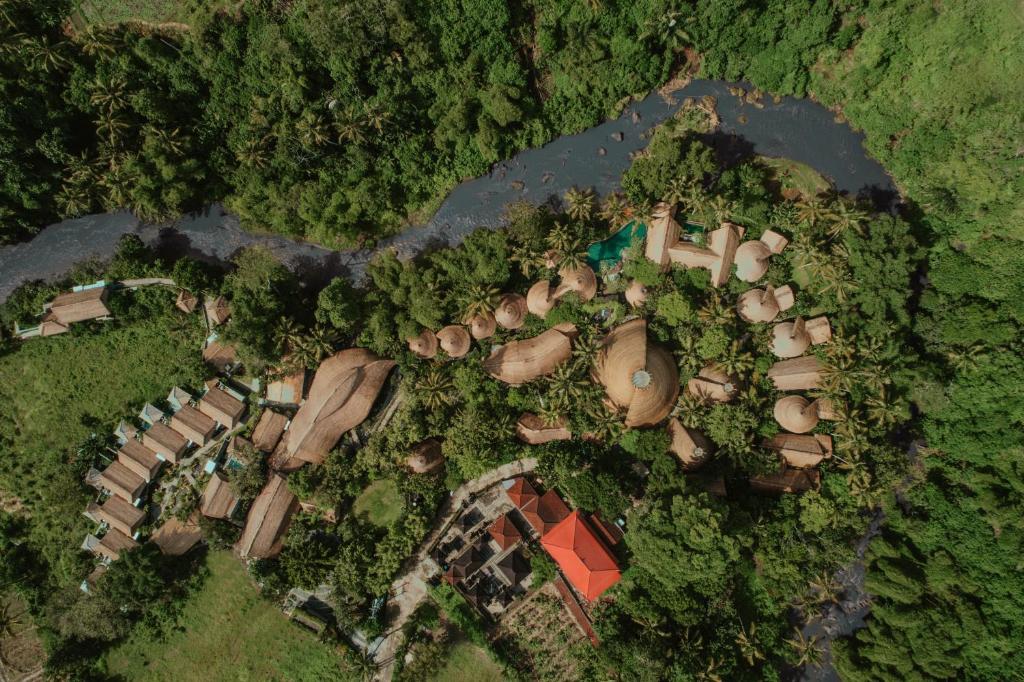
Today, Agni Hotra continues to be performed at spiritual retreat centers and ashrams around the world, including at Fivelements Puri Ahimsa in Bali, where the ceremony occurs typically each month on the day before the Full Moon. In these modern contexts, the ritual serves as a bridge between ancient Vedic wisdom and contemporary seekers interested in holistic healing and spiritual practice.
At such centers, the ceremony often becomes a focal point of the retreat experience—a moment when the community gathers in shared intention, when the ancient and the immediate become one, and when the purifying power of fire, sound, and sacred timing work together to shift consciousness and environment alike.
Why Agni Hotra Remains Relevant
In an age of environmental stress, information overload, and disconnection from natural and cosmic rhythms, Agni Hotra offers something increasingly rare: a technology of purification that is both ancient and actively alive. It acknowledges that healing is not only a personal, isolated matter but a collective phenomenon. The smoke that rises from the ceremonial fire carries intentions and transformations upward; the ash that remains grounds these blessings into the earth.
The ritual also serves as a reminder of the interconnectedness between human action and environmental consequence, between individual consciousness and collective healing. By performing Agni Hotra with full awareness and intention, practitioners participate in a lineage of fire-keepers stretching back millennia, actively contributing to the purification and elevation of their own being and the world around them.
Where to go from here
If you are drawn to Vedic practices and fire ceremonies, seek out centers that perform Agni Hotra with authentic lineage knowledge and proper technique. Many ashrams and retreat centers in India, Bali, and other spiritual hubs offer opportunities to participate. Approach the ceremony with openness and reverence, understanding that you are participating in one of humanity's oldest technologies of consciousness and healing. If you cannot attend a live ceremony, study the Vedic texts and the philosophy behind Agni Hotra to deepen your understanding of fire as a sacred principle in both ancient wisdom traditions and your own inner life.


