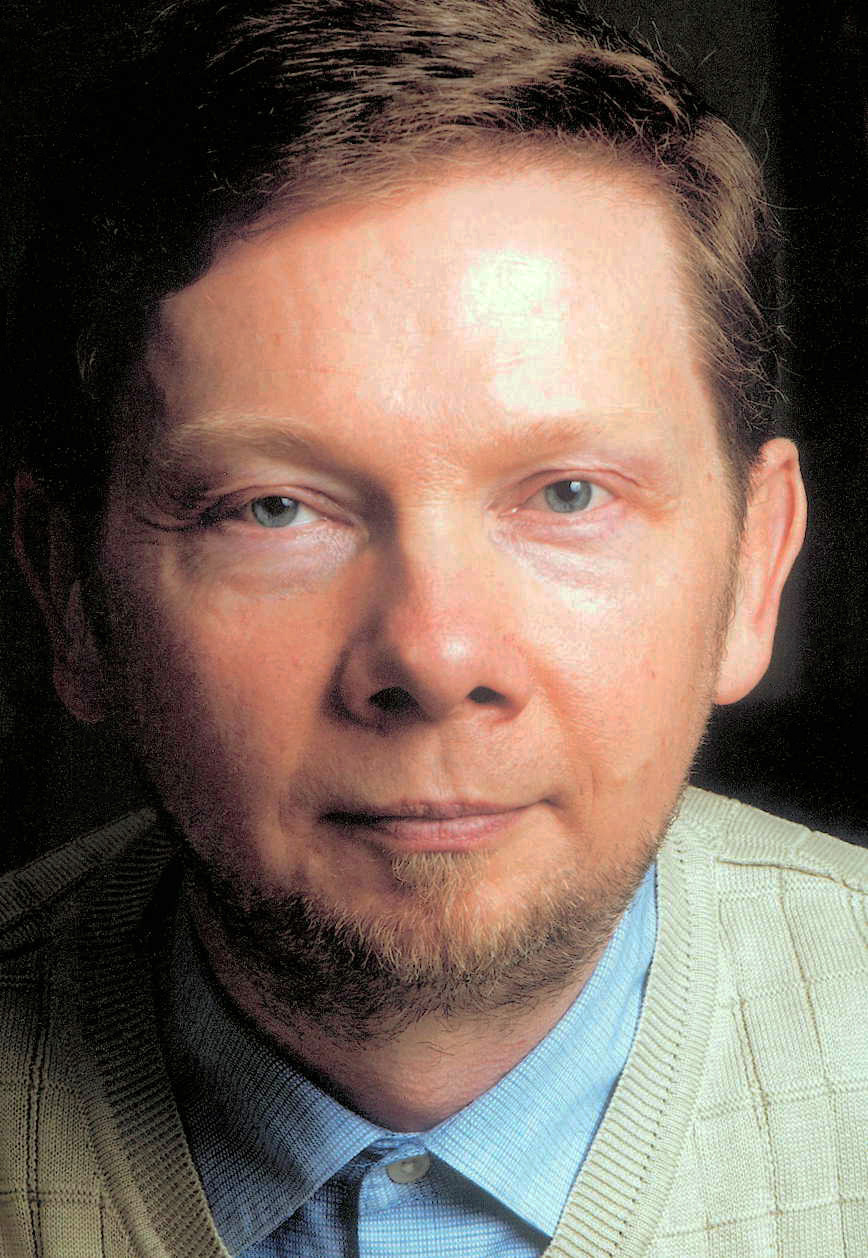
Almost everyone has made the resolution. This week, you will be more patient with the people at work, less sharp with your partner, quicker to hold the door. By Thursday the effort has become a performance, and by the weekend you are back to where you started, irritated and a little ashamed of it. In a short excerpt from a longer session, Eckhart Tolle argues that the resolution was aimed at the wrong target from the start. Kindness, in his sense, is not a behavior you install through willpower. It is what emanates from a person who is connected to the deeper dimension of themselves, which he calls the timeless being underneath the personality. Buddhism names this quality loving kindness, or metta. The Greek of the New Testament calls it agape. And the order of operations, he says, is the reverse of what most of us assume: the state comes first, and the behavior follows from it.
Tolle's answer begins with a plain logical point. Effort that comes from the surface of the personality is effort that depends on the personality's mood, memory and self-image, and all of those shift constantly. The excerpt puts it bluntly: you cannot behave differently for long if the state of consciousness you act from has not changed. Behavior is the visible edge of something underneath it. Trying to fix the edge while leaving the source untouched is why the resolution collapses, usually at the first provocation.
This is also why he frames the problem as a question of where you are working from, not what you are working on. The surface person, in his vocabulary, is the historical self: the accumulated story, the reactions, the wants and fears that carry over from yesterday. The deeper dimension is the timeless consciousness that is present whether or not the story is running. Most of us live almost entirely from the first and assume it is all there is.
The phrase is usually read as a moral instruction: improve yourself, then improve the world. Tolle reads it as a more demanding and more interesting instruction, and he starts by naming what it rules out. It means you stop demanding that others behave differently. Most of our frustration with the world takes the form of a standing demand that other people change first. The phrase, in his reading, removes that demand from the table, because the only change you can actually make is in your own state.
"It starts with you accessing a different state of consciousness. Then you behave differently. You no longer demand that others should behave differently. And so you become the change."
Tolle, in the video (approx. 6:00 mark of the excerpt)
Notice the sequence. He is not saying that changed behavior eventually changes you, which is the familiar habit-formation story. He is saying the access to a different state comes first, and the behavior is a consequence. The change he describes is therefore not a project to be completed. It is a shift in the ground you act from, and it can happen in a moment, even though its effects on conduct unfold over time.
One of the sharpest distinctions in the excerpt concerns the relationship between what you do and how you do it. Tolle is careful not to dismiss the external. What you do with your life, he says, is relatively important. The arc of a career, the choice of a vocation, the work of raising children or building something: these matter. But they are not where the decisive weight sits.
"What is absolutely important is how you do what you do."
Tolle, in the video (approx. 1:21)
He then defines the "how" with a precision that is easy to skim past. The how means what state of consciousness you bring to the doing, and what the underlying state of consciousness is out of which the doing arises. It is a question you can ask in the middle of any task, at the sink, on a call, in a meeting that is going badly. Two people can perform identical actions, and the actions can carry completely different weight depending on the ground beneath them. That is the substance of the claim, and it is why the excerpt treats a seemingly private inner condition as the thing that governs public effects.
The aim, as he puts it, is to have the two dimensions come together: the surface person rooted in the deep, timeless being, so that the deeper consciousness can inspire and empower the temporary person and its mind. He describes what happens when that rooting occurs. The person becomes less heavy, and less limited, though every person keeps limitations. He calls the great art of living the ability to live from the depth of your being while still acting in the world and on it.
This is the distinction the video's title points to, and it deserves to be taken seriously. Niceness is a set of surface behaviors: courtesy, accommodation, a pleasant tone, the avoidance of conflict. It is often a managed performance, and performances are expensive to keep up. Loving kindness, as Tolle uses the term, is something else. It is a goodwill toward other humans and other life forms, and he groups it with empathy and compassion as qualities that arise from depth rather than from technique.
He is also clear that the word "love" here is not the conventional kind. He describes it as spiritual love, a deeper love than the emotional currents we usually mean. Because it comes from the deeper dimension, it does not need to be maintained the way niceness does. It emanates. That verb is the hinge of the whole talk: kindness is not produced like a product on a shelf, it radiates from a person who is connected to something beyond their personality, in the same way warmth radiates from a source without being manufactured on the spot.
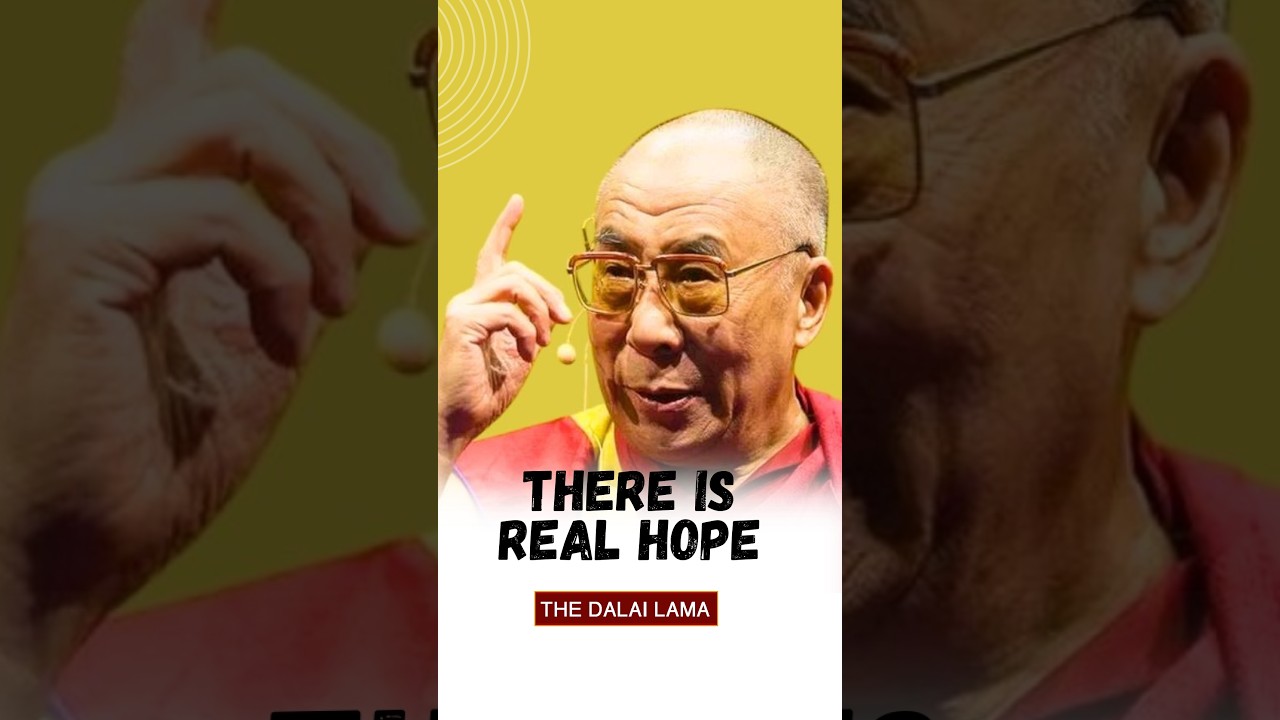
"What emanates from you is what the Dalai Lama called kindness, what some traditions called love."
Tolle, in the video (approx. 4:44 mark, paraphrasing the Dalai Lama's phrase "My religion is kindness")
This framing also changes how we should evaluate our own kindness. If niceness is the measure, we will grade ourselves on whether we did the right things and feel guilty when we fell short. If loving kindness is the measure, the question becomes whether we are rooted in the state from which kindness could arise at all. The first is a checklist. The second is a practice of presence.
Tolle draws on three traditions to point at one quality. In Buddhism it is often called metta, and the excerpt uses loving kindness as its English rendering. In the New Testament, the word for the same quality in the original Greek is agape. And the Dalai Lama's line, that his religion is kindness, is offered as a bridge between them. The point of the comparison is not that these traditions are identical in their doctrines. It is that they converge on a quality that is recognized as coming from a source deeper than conduct.
For a reader approaching this from outside any tradition, the practical consequence is the same. Whatever word you use, the quality Tolle describes is not something you can fake for long. It shows up in the way a person listens, the way they hold a difficult moment, and the way they meet a stranger who is rude to them. It is the thing that remains when the performance drops away.
The excerpt does not offer a technique in the strict sense, and the video itself notes that the full session goes much further. But its logic suggests a simple orientation. Before you decide how to act toward someone, notice the state you are acting from. Are you demanding that the other person change so that you can feel at ease? Are you working from the historical self, with its accumulated reactions? Or can you, even briefly, rest in the timeless consciousness that is present under the story?
Tolle's claim is that this noticing is not a detour from the work of living well. It is the work. The doing will continue, and it matters. But the quality of the doing is determined by the state beneath it, and that state is available to be reconnected with at any point in the day.
If this excerpt landed, the most useful next step is to watch the full session, where Tolle develops these ideas at greater length, and to return to the short passages where he distinguishes the relative from the absolute. Try a small experiment over a single day: when you notice the urge to make someone behave differently, pause and ask what state you are speaking and acting from. You are not trying to become kinder by effort. You are noticing whether the kindness you want has a source to come from.
Tolle's larger point is that the world is not transformed by people who demand that it change. It begins in people who have accessed a different state and then act from it. That is a more modest starting point than most resolutions, and it may be the only one that holds.