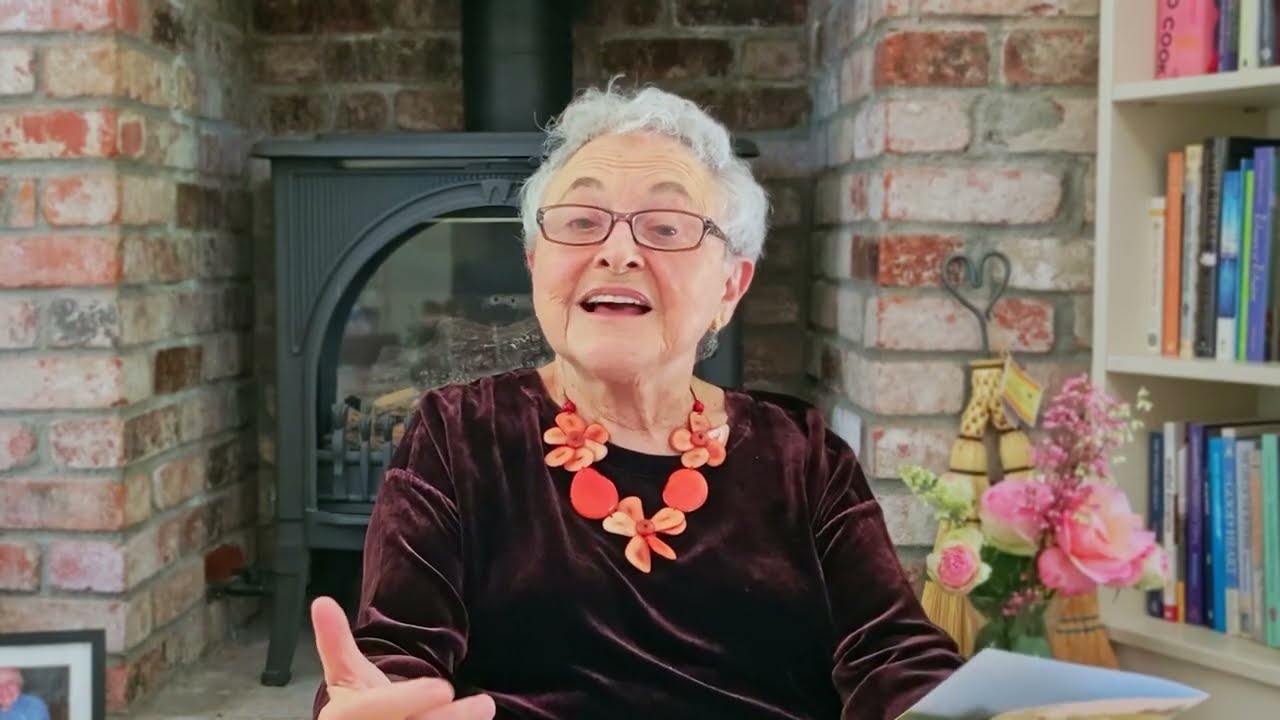
Jack Kornfield tells a Zen love story as a vehicle for exploring the central koan of Buddhist practice: "Who is your true self?" Rather than offering abstract philosophy, Kornfield uses narrative—a story embedded in Zen tradition—to demonstrate how love, awakening, and the dissolution of fixed identity intersect. The story operates as lived wisdom, revealing that enlightenment is not escape from the world or relationships, but a deepening of how we understand and meet one another from our most authentic, undefended place.
Kornfield draws on Zen storytelling tradition to illustrate a core teaching: that awakening fundamentally shifts how we understand ourselves and relate to others. While the specific narrative may be rooted in classical Zen literature—texts that have transmitted insight across centuries—the point is not literary appreciation. The love story functions as a koan, a paradoxical teaching device meant to short-circuit intellectual understanding and point directly to lived experience.
In Zen tradition, a koan is not a riddle to be solved through logic but an invitation into direct seeing. When Kornfield frames the ultimate koan as "Who is your true self?"—as noted in the video's central quote—he is asking practitioners to move beyond the constructed identities we inhabit (professional roles, family narratives, personality patterns) and recognize something more fundamental. A love story told in this context becomes a mirror: it asks where the boundary between self and other actually lies, and what happens when that boundary softens through genuine meeting.
Love, in the context of Zen teaching, is not romantic sentimentality. It is the willingness to meet another person—or oneself—without the filters of fear, judgment, and defensive armor. Kornfield has spent decades teaching that the heart is as crucial to awakening as the mind. His work at Spirit Rock and in his teaching on "Opening the Heart of Forgiveness" reflects this: true insight requires emotional and relational honesty, not just meditation on emptiness.
The love story Kornfield tells demonstrates this principle in action. When two people encounter each other from their most genuine place—stripped of pretense and protective strategies—something shifts. The usual walls of self and other become more permeable. In this permeability, the questioner's identity becomes less fixed. You cannot maintain a rigid sense of "I" when you are truly present with another being. This is why love and enlightenment point to the same ground: both require a relinquishment of the defended self.
This central question cuts to the heart of Buddhist practice. Most people live from a constructed self: a bundle of habits, stories, and patterns accumulated over time. We believe this construction is who we are. But Buddhist psychology and contemplative inquiry reveal that this apparent solidity is more fluid than it seems. Thoughts arise and pass. Emotions come and go. Even the sense of being a unified "me" shifts depending on context and condition.
When Kornfield asks "Who is your true self?" he is not asking for a new answer to memorize. Rather, he is inviting genuine inquiry. The koan works precisely because it cannot be answered intellectually. The invitation is to sit with the question directly, to notice what assumptions you make about identity, and to observe what remains when those assumptions are questioned. Zen tradition suggests that this inquiry itself—not an answer—leads to awakening.
The love story serves as a container for this inquiry. In the encounter between two people who see each other clearly, the layers of constructed identity fall away. What emerges is not a "self" but an alive responsiveness, presence unmarked by fixed concepts. This responsiveness is what Zen points to as "true nature" or "Buddha-nature"—not a thing to attain but the ground that was always here.
Kornfield trained in Thailand, India, and Burma under masters like Ajahn Chah and Mahasi Sayadaw—teachers rooted in Theravada tradition, which values direct meditation experience. Yet Zen koans, which come from a different Buddhist lineage (Mahayana), serve a similar function: they bypass the conceptual mind. The rational, analytical mind is useful for many things, but awakening requires a mode of knowing that is more direct, less filtered through language and logic.
A story, especially one with emotional and relational texture like a love story, engages the whole person. It is not a dry doctrine to accept or reject. Instead, it invites you into the world of the story, to feel the tensions and resolutions within it. This engagement can crack open habitual patterns of thinking. A moment of genuine connection or vulnerability in a story can suddenly make abstract teachings concrete: "Oh, this is what non-self means. This is what meeting another person from authentic presence feels like."
Kornfield has emphasized throughout his career that practice is not meant to be escape from the world. Rather, it is meant to ripen how we show up in life, especially in relationships. The love story he tells is not mystical or removed from human experience. It speaks to the possibility of genuine meeting between partners, family members, friends—anyone we encounter.
When we are defended and identified with a fixed self-image, we cannot truly see or be seen. We project our stories onto others. We react rather than respond. We miss the actual person in front of us. But when practice has softened the armor of self, something becomes possible: we can be present, curious, and responsive. We can listen without immediately filtering through our agenda. We can speak our truth without protecting an image. In this space, real love—understood as the willingness to meet another being authentically—naturally flowers.
This applies whether you are in a romantic relationship, raising children, working with colleagues, or simply walking down the street. The koan of true self is not abstract. It is lived in how you meet each moment and each person. The love story Kornfield tells is a teaching about this: about what becomes possible when we stop clinging to a fixed identity and instead rest in responsive presence.
Though Kornfield trained primarily in Theravada Buddhism under Southeast Asian masters, his teachings often weave in Zen sensibilities—particularly the emphasis on direct seeing, paradox, and the limits of conceptual knowledge. This reflects the breadth of Buddhist tradition and the way authentic teachers draw from multiple streams.
The masters under whom Kornfield studied—Ajahn Chah especially—taught in a way that is functionally very similar to Zen. Ajahn Chah's teaching emphasized simplicity, presence, and the dissolution of fixed views. Stories, humor, and direct pointing were his methods. So when Kornfield employs a Zen love story and the koan form, he is working within a lineage of teaching that has always used narrative and paradox to point toward awakening.
This cross-pollination is not eclectic confusion but rather a recognition that different Buddhist traditions point to the same ground of truth. The methods differ, but the direction is the same: toward a seeing that is not mediated by fixed concepts, toward a freedom that is not an escape but a full presence to what is.
If this teaching resonates, the next step is not to chase the story intellectually but to bring the inquiry into your own life. Who do you understand yourself to be? Notice the stories you tell about your identity. In moments of genuine connection with others, what shifts? Where do the boundaries between self and other become less fixed?
Kornfield's full teaching is available through his courses and books, particularly those exploring forgiveness, the heart, and the integration of meditation with daily life. His book The Wise Heart and his courses on "Opening the Heart of Forgiveness" and "Living Beautifully" continue this exploration in depth. For ongoing practice and teaching, his monthly community gatherings through "The Year of Awakening" offer both instruction and the lived context of practice in community—which itself is a form of the love story Kornfield points to here.
The invitation is simple: let the koan work on you. Not as something to solve, but as something to live into.