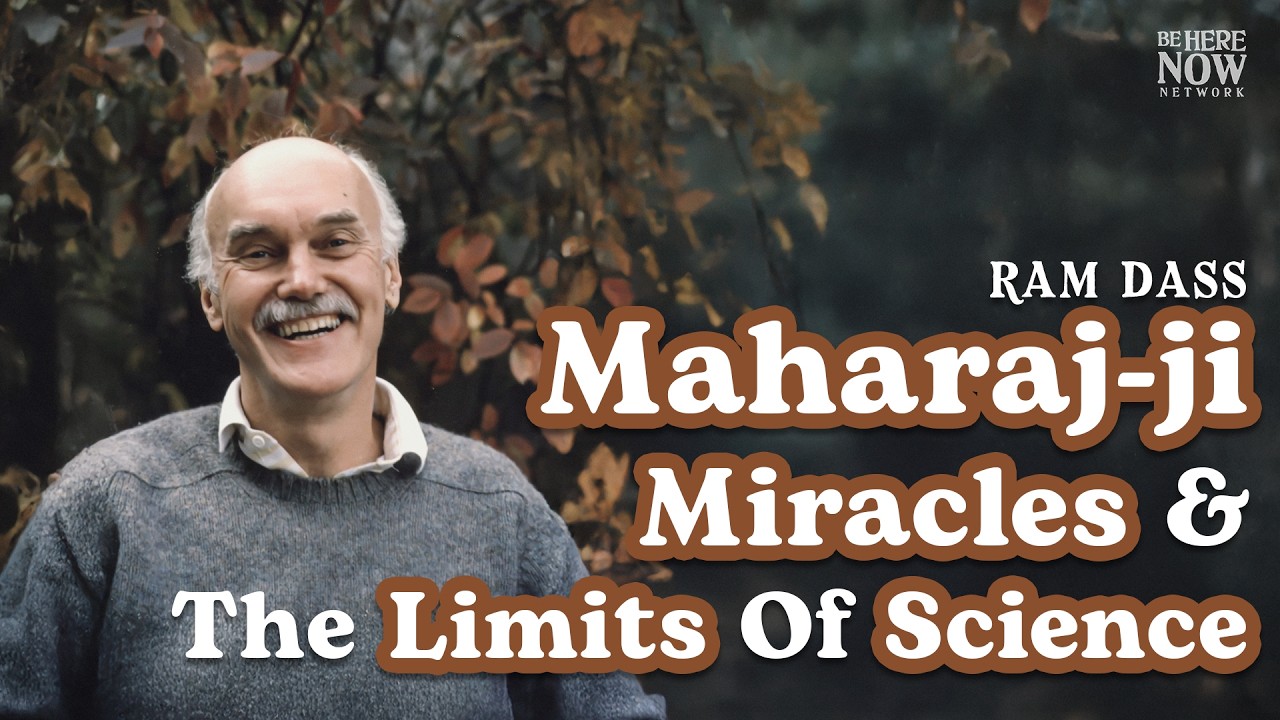
On the riverbank at Varanasi, also called Banaras or Kashi, fires have burned continuously for thousands of years, and the dying come there on purpose. That is the scene Ram Dass opens with in a short clip from his Here and Now Podcast, Episode 314, "An Exercise in Spiritual Awakening," released by the Be Here Now Network. He describes streets crowded with people who are "nothing more than skin and bones," some of them lepers, some cancerous, some deformed, all sitting with begging bowls near the burning ghat. In the course of nine minutes he makes a case that most of us have the logic backward: dying is not an interruption to spiritual life but its test and its culmination, and the way you have lived determines how conscious you will be at the end.
The ghat is the stone platform at the edge of the Ganges where bodies are cremated and the remains are given to the river, "bones and all," as Ram Dass puts it (0:02 in the clip). Many of the people he describes have a few rupees tied to their loincloth, enough to pay for the wood for their own funeral fire. They have traveled to Banaras to die because, in the tradition he is describing, it is an auspicious place to do so.
What struck him was the radiance in their eyes. He is careful to say he did not understand it at first. The city's dying, in his account, are not waiting in despair. They have arranged their last hours around a specific belief: if the body is burned on that ghat with the purity of one's own heart, Shiva will come and breathe the name of Ram into the ear of the dying person, and liberation happens in that moment. Ram Dass says that beings with "third eye" vision can see this process unfolding around the ghat.
Whydidthedyinglookathimwithpity?
On his first trip to India, Ram Dass walked through those streets full of pity for the people he saw. The reversal unsettled him. He was, as he tells it, "healthy and wealthy," and yet the sick and weak looked back at him with pity (1:46 to 2:07). "They were so right here that I couldn't handle their right here-ness," he says. He went back to his hotel and hid. He admits he was taking a lot of drugs at the time and that this may have fed the paranoia.
He returned later, after time in the temple had given him a different frame, and understood the pity differently. The people on the ghat were clear. They had spent their lives getting ready for the moment of death. He, by contrast, was "roaming around the world lost in samsara." The pity, in his reading, ran in the other direction. This is one of the most useful turns in the clip: the people who look most vulnerable may be the ones who have done the most work.
DidadevoteereallyseeMaharajjisitupinthefire?
Ram Dass then tells the story of his own guru, Maharajji, at the moment of his death. When Maharajji left his body, there was a fire in the temple compound, and the devotees were distraught at losing him in physical form. One devotee sang through the night beside the fire, shouting the names of Ram, in what looked to everyone like ecstasy that had tipped into breakdown. The next day, when asked what had happened, he said: "Didn't you see it?" In his telling, Maharajji was sitting up, smiling and laughing, while Ram was pouring ghee over his body so it would burn faster, and the devas and angels were raining flowers from above (4:06 in the clip).
Another devotee, an old woman, reported that Maharajji lifted himself on one elbow and looked at her. Ram Dass does not pretend these accounts are verifiable. He poses the question plainly: was the trauma of losing a guru producing hallucinations, or had these people entered a plane of consciousness where they saw how things actually are? "From where I'm sitting, I suspect it was the latter," he says (4:57). His reasoning is that we are caught in an egocentric view of our own plane of reality, which seems more real than it is. Death, in this view, is "just moving from one dream plane to another."
For a reader who does not share his cosmology, the useful point is not whether the vision was literal. It is the observation that the moment of death can be read as a moment of heightened perception, and that the state in which someone dies may matter more than the drama around them.
Isyourwholelifereallypreparationfordying?
This is the claim at the center of the clip, and Ram Dass states it directly:
"Looked at from one point of view, one's entire life is a preparation for dying. And the way the work you've done in this lifetime will determine how conscious you are at the moment of death." (approximately 5:20 in the clip)
He frames the goal as a particular kind of letting go. At death, the task is "not to cling back to Earth, but to go forward, leave your body, let it go, and just go towards and into the light." The clip makes clear that this is not a matter of a single good death. It is the accumulated result of how a person has spent their attention, their attachments, and their practice. The spiritual work of a lifetime, in other words, is rehearsal for the final moment, whether or not we know we are rehearsing.
That reframing is practical. If dying is the exam, then the questions being asked are the ones the rest of life keeps putting to us: what we cling to, what we fear losing, how easily we can release what is no longer serving. The ghat-dwellers in Banaras had made that preparation the organizing purpose of their lives. Most of us have not, which is why Ram Dass asks his listeners to take the question seriously now.
WhatdidHuxley'sdeathteachaboutlettinggo?
To illustrate what a conscious death can look like, Ram Dass turns to Aldous Huxley's novel Island, which he says was in some sense a blueprint for Huxley's own death. He describes a doctor sitting with his dying wife, and he reads the passage aloud, in which the doctor coaches her gently toward the light:
"Lightly, my darling. Lightly. Even when it comes to dying, nothing ponderous or portentous or emphatic. No rhetoric. No tremolos... Of course, no theology and no metaphysics. Just the fact of dying and the fact of the clear light. Throw away your baggage and go forward." (approximately 7:21 in the clip)
The passage's key image is the quicksand: "quicksands all about you sucking at your feet trying to suck you down into fear and self-pity and despair. That's why you must walk so lightly." The dying woman sees herself from a corner of the room, "brighter, brighter," and her face breaks into an intense smile. The doctor tells her, "Now you can let go... Leave it there like a pile of worn-out clothes."
Ram Dass says that when Huxley himself died, his wife Laura sat by his bedside, and Huxley, by Ram Dass's account, took LSD and wrote on a pad, "I don't feel any feeling in my thighs," and then watched himself leave his body, fully conscious. Ram Dass also recalls Huxley once telling him that people are drawn to diamonds and rubies because they remember the astral planes where such raw pebbles came from, and that "it's just the memory that's pulling them that makes those things so precious." He offers this as a window into Huxley's delight in what he calls "the play of God."
The lesson Ram Dass draws from these stories is less about technique than about posture. Lightness, release, and the refusal of theatrics are what make a death conscious. Whether one believes in astral planes or not, the instruction to travel light is one anyone can test against their own life.
Wheretogofromhere
This clip is a short excerpt, and the fuller conversation is in Ram Dass's Here and Now Podcast, Episode 314, "An Exercise in Spiritual Awakening," which the Be Here Now Network produces. The Be Here Now Network also publishes related series, including Krishna Das's Pilgrim Heart Podcast, Sharon Salzberg's Metta Hour Podcast, and the Mindrolling Podcast with Raghu Markus, on its sub-channel Be Here Now Podcast Network 2.
For readers who want to act on the idea rather than just consider it, the most concrete step is the question Ram Dass implies throughout: what in my life am I holding on to that I will need to release? Spend time with that question before it becomes urgent. The people at the ghat, in his telling, had already answered it.
Be Here Now Network is the creator of Heart Wisdom with Jack Kornfield, a podcast exploring consciousness, spirituality, and personal transformation. With 313 episodes, they have c…
In the clip, he argues that the work a person does across a lifetime determines how conscious they will be at death. The aim is to be able to let go and move toward the light rather than cling to earthly life. He frames dying as a condition that can deepen spiritual work.
Ram Dass describes Varanasi (Banaras or Kashi) as an auspicious place to drop the body, where the dying are cremated on the Ganges ghats. According to the belief he describes, a death there with a pure heart calls forth Shiva, who breathes the name of Ram into the dying person's ear, bringing liberation.
Ram Dass recounts that during the fire in the temple compound at Maharajji's death, one devotee sang through the night and later reported seeing Maharajji sitting up, smiling and laughing, while the devas rained flowers. Ram Dass says he suspects the devotee entered a plane of consciousness where he saw reality more clearly, rather than hallucinating from grief.
Ram Dass reads from Huxley's novel Island, in which a doctor helps his dying wife let go with the words 'Lightly, my darling. Lightly.' The passage urges release from fear, self-pity, and despair and describes leaving the body like a pile of worn-out clothes. Ram Dass presents it as a model of a conscious death.
The clip suggests that preparation is cultivated throughout life by practicing release and noticing what you cling to. Ram Dass points to the Banaras ghat dwellers, who had organized their lives around readiness for death. He asks listeners to take this seriously now rather than waiting for a crisis.
This excerpt comes from Ram Dass Here and Now Podcast Episode 314, 'An Exercise in Spiritual Awakening,' published by the Be Here Now Network. The clip is a short segment of that longer conversation.