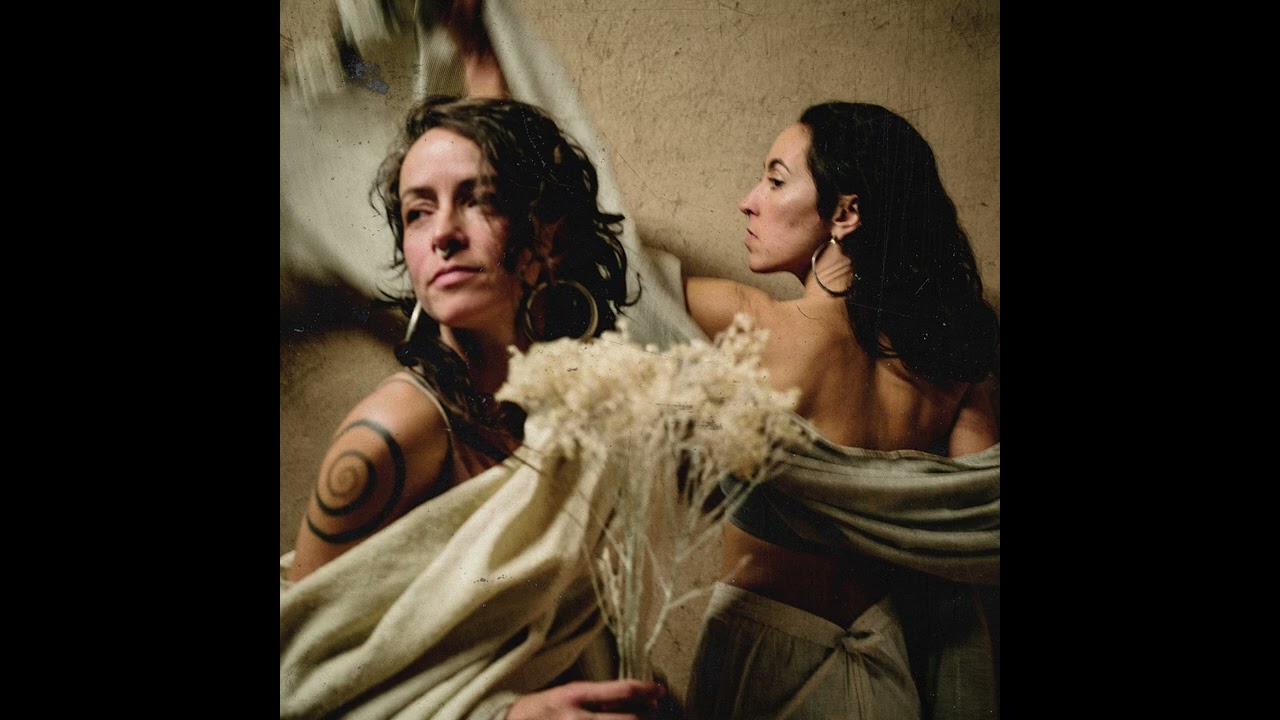
A four-minute song can hold a whole argument about how to live. "Wise Innocence," the title track from Alicia Mathewson's album of songs and chants, makes one such argument in plain language: the openness a child brings to a backyard can survive adulthood, provided it is joined to what experience teaches. The video, directed by Kevin Lasit with cinematography by Michael F. DuBois, opens on a memory and moves steadily toward an instruction. Its central phrase, "wise innocence," is never defined in a dictionary sense. It is instead built up, verse by verse, until the listener understands it as a practice rather than a state of mind.
The phrase arrives in the chorus, sung in a repeated call: "I want some wise innocence flowing through my blood." The grammar matters. Wisdom and innocence are not presented as opposites to be traded, one for the other, as adulthood is often imagined to trade wonder for caution. The song asks for both to flow at once. "Innocence" here means something close to the capacity to meet the world without a closed fist. "Wise" means that this openness has been tested by experience and has not been naive about it.
The verses prepare this distinction before the chorus names it. The opening lines, sung over an unhurried pulse, go back to the young self: "remember when we were young and we felt so free in our backyards." The memory is specific and physical. There are shells "down by the sea," butterflies, dancing "around." Then comes the line that carries the song's first promise: "don't you know that what was lost it can be found." The song does not say the freedom is gone for good. It says the freedom was lost and can be found again, which is a different claim, and a more hopeful one.
The second verse is where the song turns honest. "We all get hurt," it says plainly, "we all lose and watch people fall away." There is no attempt to cushion this. The song acknowledges the cost of living in a body among other bodies, and then offers an inventory that sounds almost like a prayer of acceptance: "we got a heart a mind a body and we're going to die someday."
Mortality is the hinge of the piece. The song's response to it is not despair but urgency, and the lines are worth reading closely because they are sharper than the gentle melody suggests:
"So why not breathe in, look up, sing out, play hard, have yourself a ball, 'cause this precious life is short, so don't make yourself small."
— "Wise Innocence," second verse, as sung in the video (around 1:25)
Notice the sequence of verbs. Breathe, look up, sing out, play hard. These are the body's own gestures of freedom, the same ones a child uses without thinking. The argument is that mortality is not a reason to retreat into caution but a reason to stop shrinking. "Don't make yourself small" is the song's most pointed injunction, and it reframes self-protection as a form of diminishment. The wisdom in wise innocence, in other words, is partly the recognition that holding back also costs something.
Each chorus ends the same way: "I know that wise innocence is the best place to start." The repetition is the spine of the song, and its function is almost pedagogical. The chorus is less a feeling than a claim that the listener can test. Start here, it says, with openness joined to wisdom, before you try to fix the world, before you decide who you are, before you have resolved your losses.
It is worth noticing what the chorus does not say. It does not say wise innocence is the destination, or the reward for spiritual work completed. It says it is the place to start. That modesty keeps the song from becoming a slogan. The listener is invited to begin, which means the song is written in the grammar of practice: something you return to, not something you achieve once.
The final verses shift from memory and mortality to something closer to direct address. "Let yourself see all that's true," the song instructs, and then adds a line that nearly reverses the usual logic of self-improvement: "just what you see, it's always been for you." The implication is that the truth the listener needs is already available in ordinary perception. Nothing has to be added. Something has to be allowed.
The most striking line in the song follows: "you are a creative being with a unique vibration." The phrasing is generous and direct. The song does not claim the listener is special in a competitive sense. It claims that each person carries a frequency no one else has, and then names what that frequency is needed for: "we need your heart, your voice, your love, your explorations." The word "explorations" is telling. It frames the individual life as an inquiry rather than a performance.
From there the song tightens into a kind of call to arms, and its tone changes in a noticeable way. "Don't give up, don't give in, don't you walk away," it urges. Then: "it's time now, child, to rise and be who you were born to be." The word "child" recurs deliberately. The song has been pointing back at childhood since its first line, and now it addresses the listener as a child, as if to say that the child is not behind us but is the one being called on to stand up.
Repetition is doing structural work here, and it is the kind of work that rewards close listening. The song moves through a clear sequence: a verse of memory, a chorus of invitation, a verse of loss, a chorus again, then a verse that turns toward the listener's own creative life, a chorus, and finally a closing section that loosens the words and lets the melody run down into syllables. Near the end the lyrics dissolve into fragments of the refrain, and the song fades on the sounds of its own key phrases rather than on a conclusion.
That dissolution is a deliberate choice, and it matches the content. A song about returning to childlike openness ends by losing its sentences and keeping only the sound, the way a child at play is absorbed in the moment rather than in the meaning of the game. The closing gesture argues the point without stating it: the wisdom is not something you carry out of the song as a sentence. It is the state the song hopes you are in when it stops.
The song's argument is compact enough to fit in a chorus and demanding enough to take a lifetime. Keep the openness you had in the backyard. Admit that you will be hurt, that people will leave, that you will die. Do not let those facts make you small. Begin from the place where your wonder and your hard-won sense meet, because that meeting is, in the song's words, the best place to start.
What makes the piece worth returning to is its refusal to pretend that innocence survives untouched. The song knows the cost. Its wisdom is that it does not ask you to be naive again. It asks you to be open with your eyes open, which is harder, and which the song treats as the more mature form of freedom.
Listen to the full track once without reading the lyrics, then again with the lyrics in front of you, and notice where the chorus lands differently the second time. The album it comes from is titled Wise Innocence, Songs and Chants, and the track is available for download through the artist's Bandcamp page, as listed in the video's description. If the phrase has stayed with you, try the song's own exercise: name one thing from your own early freedom that you have let go of, and ask what it would take to bring one piece of it back, with the wisdom you now have.