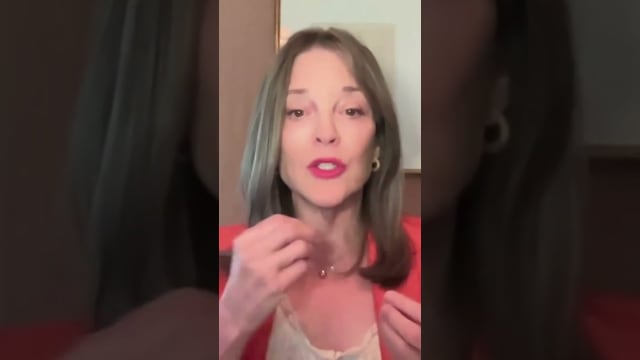
Picture the ritual most people know by heart. The vision board is pinned up, the affirmations are memorized, the evening visualization is practiced until it feels almost routine, and the thing you asked for still isn't here. In a 13-minute video titled "What To Do When Manifesting Isn't Working," published May 15, 2025, the teacher Wendy Perrotti argues that the problem usually isn't effort. The method is the mismatch. Drawing on her own history of manifesting things she never forced, and on years of reading across ancient wisdom traditions, New Thought writers, and modern manifestation teachers, she names ten elements she says are present whenever people manifest. She is firm that these are not steps, a process, or a system. They are conditions for living in what she calls a "manifesting state," and that distinction changes almost everything about how the work feels.
Perrotti opens with a confession many readers will recognize. She says she has believed in manifesting "since before I even knew that it was a thing," because she had manifested plenty across her life, "big things, small things, things that I knew were mine that actually came true." Then something went wrong. "Every time I tried to manifest something, nothing," she says. The harder she worked and the more carefully she followed the systems she had learned, the worse things got. "It actually seemed that I got less lucky, like less synchronous things happened to me." (Opening segment, 0:00)
That detail matters, because it reframes the usual self-blame. If the method were simply weak, you'd expect the same results with more discipline. Instead, Perrotti describes a feedback loop in which straining made the experience thinner, not richer. The emotional tone of "I must make this happen" can crowd out the openness that lets unexpected things arrive.
Her response was to go back to the record. She describes reading the Vedic and Hindu traditions, the Taoists, and the Greek Hermeticists, then the American New Thought movement, with names like Napoleon Hill, Norman Vincent Peale, and Earl Nightingale and Claude Bristol, and finally contemporary voices including Esther Hicks and Marianne Williamson. Her finding was tidy and honest: "There were consistencies, but not one consistent system for manifesting." (2:04)
She then made a move worth borrowing. Rather than asking which system was correct, she asked what was happening in the moments when she had manifested something without any system at all. She calls this "organic manifesting," the things that "just seem to happen like magic in our lives." Her reasoning is rooted in her coaching work: "no two people's growth evolution looks the same." The elements of growth recur across people, but the way each person lives with them varies enormously. Why would manifesting be different? (2:57)
From that comparison she distilled ten elements. The most useful reading of her approach is that the ten form a shared vocabulary, not a checklist. You don't complete them in order. You notice where you're already strong and where you're thin, and you let the weak spots shape your attention.
The first element, space, is where Perrotti is most pointed. "I don't know many women, especially women over 50, who have enough of this in their lives," she says at about 3:54, and she means space on several planes. There is physical space: uncluttered rooms, and a place "where you can just go off and be by yourself." There is mental space, which she calls "a big one." All of those circulating thoughts and to-do lists, the things that "should happen," swirl through the mind and crowd out anything new.
"The first and most important element to live in a manifesting state is to create physical and mental space for yourself."
— Wendy Perrotti, "What To Do When Manifesting Isn't Working" (YouTube, May 15, 2025)
It's easy to hear this as a lifestyle suggestion. Read it instead as a claim about attention. If the mind is always full, nothing new can register. Every visualization and affirmation competes with a backlog of obligations. Creating space is not a reward for having manifested already; it is the precondition.
The second element is self-awareness, and Perrotti specifies the kind she means: awareness of "what your patterns are in life," your habits and beliefs, the limiting ones and the ones that serve you, and the daily routines that quietly run the show. She adds the word objective for a reason. Around 5:05 she explains that this awareness "can't be part of your system of self-judgment." You have to be able to look at a pattern and say, "Okay, there they are. These things exist for me."
The payoff is that you don't need to fix anything yet. "You don't have to do anything about them," she says. "You don't even have to know what to do about them yet." Many manifesting frustrations come from treating the discovery of a limiting belief as proof of failure. Objective awareness lets the pattern be information instead of an indictment.
This is where Perrotti most directly departs from popular advice. The third element is clarity about a future state, and she says it "really trips us up" because we assume it means knowing precisely what we want. "You don't," she says at about 5:33. Sometimes the strongest thing to hold is "the feeling state that we're moving toward."
Her questions are the practical core of this idea: "How do I want to feel about myself? How do I want to feel about my life? How do I want to experience the world around me?" She says, "That is enough," and goes further, calling feeling-based clarity perhaps "the most powerful way of all to live in a manifesting state."
She adds a condition that is easy to miss. Clarity must align with what she calls your "openhearted soul self," the version of you that has the greatest benefit and impact on the world. She is explicit that this does not require a Nobel Peace Prize, a fortune given away, or a life of penniless martyrdom. It means "living wholeheartedly fully as yourself," and pointing your desires toward whatever lights that version of you up.
The fourth element is having a system for fear and obstacles. Perrotti's point is that the things she had manifested organically were never frictionless. She reminds listeners that those synchronicities came from work: "You took action to get there and I guarantee you that you faced fears and obstacles along the way." Having some way to meet obstacles, rather than being ambushed by them, keeps momentum alive. (About 7:09)
Notice that this is a system for working with difficulty, not for producing outcomes. That distinction runs through the whole video. The goal is not to eliminate friction so the universe can deliver. The goal is to stay steady when friction shows up.
The fifth element is consistent focus through repetition, and Perrotti's observation is quietly radical. "You do this all the time, all day, every day, in a default state." You repeat thoughts, habits, and actions constantly. The question isn't whether you're repeating something. It's "which of those are serving you and moving you closer to the life that you're trying to manifest and which of those are undermining you?" (About 7:52)
Seen this way, a vision board is only as powerful as the repeated thought patterns around it. If your default inner monologue says the thing you want is impossible, the board is competing against a louder, more frequent message.
The sixth element is visualization, which Perrotti describes as present in "every single wisdom culture" and every system she studied, and in any organic manifesting she has seen. The mechanism she offers is intuitive: "We need to tell our subconscious and preconscious mind what to point us toward." We do that through the senses, by picturing, and by feeling into the emotion. (About 8:36)
She frames visualization as a filter. "You're filtering for the reality that you're telling your brain to filter toward." Visualization, in her account, doesn't conjure objects from nothing. It changes what you notice, which opportunities register, and what you consider reachable. That is a more modest and more testable claim than many manifesting books make.
Here the transcript excerpt thins out, so I'll describe only what the speaker says clearly and won't assign numbers to the later items. Around 9:31 she turns to a feeling of being aligned and connected to something larger. For some people, she says, that is "God or your religion"; more broadly, it is a sense of belonging to a greater whole. Around 10:19 she says that wanting different results means taking different action. The actions "have to be different," and they need to reach a little beyond what's comfortable.
Then the video pivots to a tension many striving people feel. At about 10:58 she voices the familiar objection: "I'm working so hard on this thing, how could I possibly let go of it?" Her answer is that letting go releases the grip, not the goal. She pairs it with "a sense of inner trust," which she presents as central, along with gratitude for what is already present.
"These 10 elements, they are not steps, they are not a process, and they're not a system. But when we can learn to live with them as a part of our lives, just kind of the way we do business every day, we live life in what I would call a manifesting state."
— Wendy Perrotti, "What To Do When Manifesting Isn't Working" (YouTube, May 15, 2025)
That final sentence is the thesis. Perrotti is not offering a faster technique. She is describing an orientation in which manifesting becomes less a project and more a way of conducting ordinary days. She closes by saying that when these elements are present, "things really get juicy," and personal growth becomes easier.
Taken together, the ideas suggest a practical reading that doesn't require a new routine. Start with one honest question: where is space missing? Notice one pattern without judging it. Choose a feeling you want more of rather than a rigid outcome. When a fear arrives, have a response ready. Pay attention to which repeated thoughts you're rehearsing. Let visualization do the work of filtering attention rather than forcing a result. Take one action slightly outside your comfort zone. Then loosen your grip on the timeline.
The deeper lesson, and the reason this video speaks to the midlife audience Perrotti addresses, is that "not working" often signals that you've been trying to manage the outcome from the outside. Living in a manifesting state moves the work inward, toward the conditions that make room for things to arrive.
If you're stuck, don't start by adding another technique. Start with the first element: create physical and mental space, even a small amount. Keep a simple, non-judgmental log of the patterns you notice, and ask Perrotti's feeling-based question each morning: how do I want to feel today? Watch the full video for the elements she covers in more depth and for the closing items this excerpt doesn't reach. Her own framing is worth keeping close: you're not doing it wrong, you're just not doing it right for you.