
BrightStar

Browse All Events

Discover conscious gatherings

events

Yoga
Meditation
Breathwork
Qigong
Tai Chi
Sacred Music
World Music
Medicine Music
Sound Healing
Ecstatic Dance
Popular Destinations
BaliSedonaLos AngelesCosta RicaNew YorkSan FranciscoAustinMiamiJoshua TreeTulum
View All CategoriesView All Destinations

Explore All Features

Powerful tools to grow your events

Platform Features

Smart Dynamic Pricing
Ticket Categories
Assigned Seating
Abandoned Cart Recovery
Visitor Recovery
Donations & Sliding Scale
Affiliate Engine
Ticket Scanner
Coupon Codes
Custom Questions
Ticket Sharing
Upsells & Add-ons
Analytics & Reporting
Email Sequences
Waitlist / Notify / Remind
People & Places
Artists & TeachersEvent OrganizersVenues & StudiosKnowledge BaseGlossaryInspiration
View All FeaturesAbout Us
PricingBlog
Language
Saved events
Browse All Events

events

YogaMeditationBreathworkQigongTai ChiSacred MusicWorld MusicMedicine Music

Popular Destinations

BaliSedonaLos AngelesCosta RicaNew YorkSan Francisco

People & Places

Artists & TeachersEvent OrganizersVenues & StudiosKnowledge BaseGlossaryInspiration

Platform Features

Smart Dynamic PricingTicket CategoriesAssigned SeatingAbandoned Cart RecoveryVisitor RecoveryDonations & Sliding ScaleAffiliate EngineTicket ScannerCoupon CodesCustom QuestionsTicket SharingUpsells & Add-onsAnalytics & ReportingEmail SequencesWaitlist / Notify / Remind
View All FeaturesAbout Us
PricingBlog
Log inFind EventsHost Events
  • Browse All Events
  • For Seekers
  • Yoga
  • Meditation
  • Breathwork
  • Qigong
  • Tai Chi
  • Sacred Music
  • World Music
  • Medicine Music
  • Sound Healing
  • Ecstatic Dance
  • Retreats
  • Workshops
  • All Categories →
  • Bali
  • Sedona
  • Los Angeles
  • Costa Rica
  • Tulum
  • Byron Bay
  • San Francisco
  • Austin
  • New York
  • San Diego
  • Denver
  • Seattle
  • Portland
  • Miami
  • All Cities →
  • Join the Movement
  • Why we list
  • Sell Globally
  • For Creators
  • For Teams
  • For Writers
  • For Teachers
  • For Kirtan Artists
  • For Studios
  • For Festivals
  • For Retreat Centers
  • For Nonprofits
  • Brand Ambassador
  • Free Ticketing
  • Elevate
  • Amplify
  • 500K+ Buyer Network
  • Abandoned Cart Recovery
  • Smart Dynamic Pricing
  • Ticket Categories
  • Recurring Events
  • Assigned Seating
  • Affiliate Engine
  • Waitlist / Notify
  • Ticket Scanner
  • Embed Widget
  • Event Syndication
  • Message Center
  • Integrations
  • Reports
  • All Features →
  • About
  • The Ecosystem
  • Blog
  • Glossary
  • Inspiration
  • Help Center
  • Contact
  • API Docs
  • Brand Assets
  • Careers
  • Press
  • Terms of Service
  • Privacy Policy

Events

  • Browse All Events
  • For Seekers
  • Yoga
  • Meditation
  • Breathwork
  • Qigong
  • Tai Chi
  • Sacred Music
  • World Music
  • Medicine Music
  • Sound Healing
  • Ecstatic Dance
  • Retreats
  • Workshops
  • All Categories →

Destinations

  • Bali
  • Sedona
  • Los Angeles
  • Costa Rica
  • Tulum
  • Byron Bay
  • San Francisco
  • Austin
  • New York
  • San Diego
  • Denver
  • Seattle
  • Portland
  • Miami
  • All Cities →

For Creators

  • Join the Movement
  • Why we list
  • Sell Globally
  • For Creators
  • For Teams
  • For Writers
  • For Teachers
  • For Kirtan Artists
  • For Studios
  • For Festivals
  • For Retreat Centers
  • For Nonprofits
  • Brand Ambassador
  • Free Ticketing
  • Elevate
  • Amplify

Features

  • 500K+ Buyer Network
  • Abandoned Cart Recovery
  • Smart Dynamic Pricing
  • Ticket Categories
  • Recurring Events
  • Assigned Seating
  • Affiliate Engine
  • Waitlist / Notify
  • Ticket Scanner
  • Embed Widget
  • Event Syndication
  • Message Center
  • Integrations
  • Reports
  • All Features →

Company

  • About
  • The Ecosystem
  • Blog
  • Glossary
  • Inspiration
  • Help Center
  • Contact
  • API Docs
  • Brand Assets
  • Careers
  • Press
  • Terms of Service
  • Privacy Policy
BrightStar
Get the app
Download on theApp StoreGet it onGoogle Play
© 2026 BrightStar. All rights reserved.
Inspiration

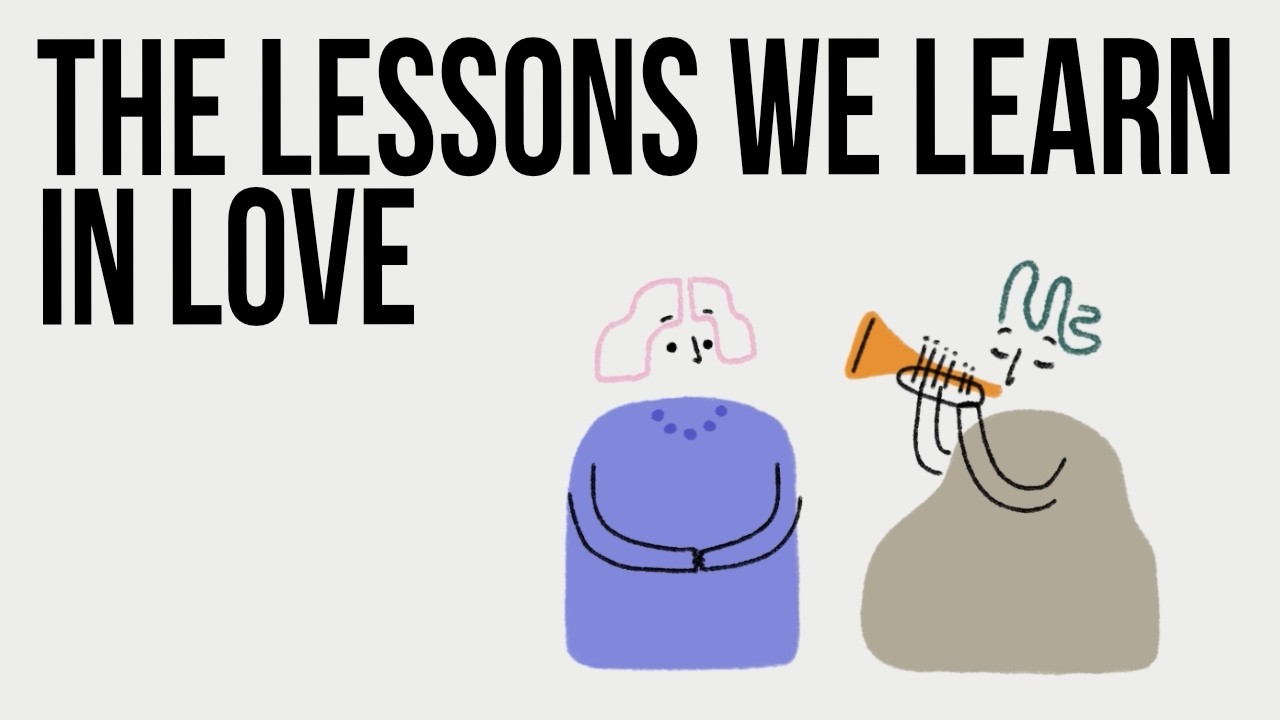
Why Adults Behave Like Children in Love

The School of Life
The School of Life
Oct 7, 2026
6 min read
Watch · 7

At 11 p.m., lying in bed beside someone you chose to build a life with, it feels simple: they are cruel, inattentive, or actively sabotaging the relationship. They won't communicate clearly. They're theatrical, absorbed in their friendships, unable to sit still or be present. They're not trying. They're mean. The diagnosis feels airtight.

But morning arrives with a different possibility—one that doesn't excuse the behavior but makes it suddenly legible. Your partner isn't choosing chaos. They're still operating under survival instructions written decades ago, in a house you never entered, by rules that made perfect sense when they were small. The strategies were brilliant then. The problem is that they never stopped.

Read · 6 sections

The Genius of Childhood Adaptation

Children are exquisitely attuned to their environment. From infancy, part of the mind scans the nursery or the bedroom and poses a question below conscious language: What will I need to do to survive here? This isn't melodrama. For a young person whose security depends entirely on adults, survival and belonging are identical.

In stable homes, the answer can be reassuring: nothing at all. Mom and Dad contain their own crises. The grownups are grownup. But often, something is fundamentally wrong. A parent is depressed—curtains drawn, days spent in bed. A father has rage episodes. A sibling is gravely ill. A family loss from before you were born has frozen the household in grief that no one names. A parent's marriage is unhappy, and there's a peculiar silence about it.

The child can't articulate what they perceive. They don't have the language for family systems or psychological damage. But with what feels almost like awe-inspiring precision, they grasp what their caregivers need and become it. This isn't consciously learned behavior; it's more like the way a body digests food—it happens on another floor of the mind. But it happens.

What Forms Do These Strategies Take?

The repertoire is wide. Some children become the little comedian, the one who makes a depressed parent laugh until tears come—not from happiness, but from relief that the heaviness has lifted, even briefly. Some learn to manage a parent's emotional fragility by never outshining them, by retiring early from ambition. Some become caretakers of a parent's marriage, absorbing the role of emotional counselor to an adult who should be supporting them. Others become invisible, learning that the safest strategy is to take up no space and make no noise.

Some become seductive, using charm as currency. Some learn to cope entirely alone, never asking for help because asking meant burdening people who were already drowning. Some learn to impress, believing that achievement and excellence will finally earn the security they need. The specific strategy depended on what the household demanded. The precision with which a five-year-old could read an adult's unconscious needs was, in a way, genius.

The Problem of Strategies That Outlive Themselves

These adaptations worked. The child survived. They made it to adulthood. That alone speaks to their effectiveness. The difficulty is that they never turned off. Decades pass. The household that created the need dissolves. The parents age, die, or are finally laid to rest. The borders of that emotional territory are redrawn or erased entirely. And yet the strategy continues, unchanged, deployed in an entirely different context—a marriage, a partnership, an adult romantic relationship where the original logic has become toxic.

A 35-year-old person who cannot relax around their spouse, who flinches when touched, who keeps themselves perpetually at a distance—this might be someone whose father attempted suicide when they were seven and succeeded when they were sixteen. Staying emotionally guarded was sound strategy then; it was survival. Now it's preventing intimacy.

Someone who cannot eat properly, who polices their own consumption, whose mouth is always controlled—this might be someone raised by two parents who were emotionally engulfing, who couldn't tolerate their child having needs because they needed the child to buoy up their own mood. Closing the mouth was sensible strategy then. Now it's a form of self-harm.

The behavior we label as madness, cruelty, or passive aggression in our partners is rarely those things. It's almost always a defense mechanism that has outlived its purpose by decades, still running its algorithm in a world that no longer requires it.

From Rage to Compassion

The shift in perspective isn't meant to excuse harmful behavior. It's meant to reframe it. When you're furious with your partner, the speaker suggests there is "no greater generosity than to wonder: what did they need to do to survive?" They're not being mean. They have a strategy, and they've forgotten what time it is and who you are. The person in front of you isn't the threat that the strategy was designed to handle. But the strategy can't tell the difference.

This reframing opens a door that rage locks tight. It's the difference between You're cruel and You learned to protect yourself in a way that now protects you from me. One is a character judgment. The other is a diagnosis—and diagnosis can lead to healing.

The Symmetry Most Couples Miss

There's one more turn in this analysis, and it's the one most couples resist: the error is unlikely to be only on one side. You probably irritate your partner just as much with your own old strategies. Both people in a relationship may be trying to stay safe in the present using the weapons of yesterday. A person who can't relax around physical touch might be paired with someone whose strategy is to pursue connection aggressively, or to withdraw to prove independence—both potentially rooted in their own childhood logic.

Neither person is wrong. Both are right, in a way—right about what they learned they had to do. The problem is that they're fighting ghosts from different houses in different decades. The partner in front of them is being treated as if they were the parent, the sibling, the family system that created the original threat.

Where to Go From Here

The work begins with curiosity. Not excusing, but understanding. When conflict arises, instead of asking Why are they like this? ask What did they need to survive? The answer usually makes the behavior less personal and more humanizing. This doesn't mean accepting harmful treatment; it means recognizing that the person you chose is not your enemy. They're someone trying to stay safe using the only tools they have.

The same applies inward. What old strategy are you running? What child's logic are you still operating from? These patterns didn't form in a vacuum; they formed because they worked, because they saved you. Honoring that—while also recognizing that the emergency is over—is the beginning of conscious love.
Comments

Loading the conversation…

Transcript

[0:04] Behind so many of the troubles of our

[0:06] love lives lies a mystery. Why do they

[0:09] behave as they do? Why won't they signal

[0:11] their intentions clearly? Why they so

[0:14] theatrical, so focused on their friends,

[0:16] so unable to relax?

[0:18] It isn't that we lack explanations for

[0:19] these sort of problems, especially after

[0:21] 11:00 at night. It's very clear what

[0:23] they're up to. They're not trying.

[0:26] They're mean. They're stupid. They're

[0:28] out to ruin our lives.

[0:30] But the next morning, there might be

[0:33] another angle. They're behaving as they

[0:35] are because they're still behaving like

[0:39] the very clever children they once were.

[0:43] All children are exquisitely sensitive

[0:45] to what their families need from them.

[0:48] From the earliest days, a part of the

[0:49] mind scans the environment, the pink

[0:52] nursery or the scuffed bedroom, and

[0:54] asks, "What will I need to do to survive

[0:58] here?"

[0:58] In some lucky cases, the answer is

[1:01] nothing at all. Mom and Dad contain

[1:03] their crises. The grownups are grownup.

[1:06] But often, something has gone wrong. A

[1:09] sadness keeps mother in bed with the

[1:10] curtains drawn. Last week, father

[1:12] destroyed the living room. There's a

[1:14] sibling next door with tubes coming out

[1:15] of his tummy. There's an older sister

[1:17] who died before we were born, and the

[1:19] sadness has never stopped.

[1:21] We couldn't have explained any of this

[1:22] at five, any more than we could explain

[1:25] how we digested lunch. Most of what goes

[1:27] on in the mind happens on another floor.

[1:29] And yet, part of us grasped, with

[1:32] awe-inspiring precision, what our

[1:34] caregivers needed, and worked out

[1:36] exactly what we had to be to make it

[1:39] through. Small people can't pack their

[1:42] bags and find a flat across town. We're

[1:44] only here because we once adapted.

[1:48] The strategies varied. We had to be

[1:50] cheerful, the little man who made Mommy

[1:52] laugh till she cried. We had to take

[1:54] Dad's mind off his unhappy marriage. We

[1:56] had to retire early from success. We had

[1:58] to be innocent. We had to be seductive.

[2:01] We had to cope alone. We had to impress.

[2:03] We had to disappear.

[2:05] There was near genius in all these

[2:07] strategies. It isn't easy when you're

[2:09] the size of a chair to work out that

[2:11] what your father needs is that you never

[2:13] threaten to exceed him.

[2:15] The problem isn't that our strategies

[2:17] aren't clever.

[2:18] It's that they go on far too long. They

[2:21] outlive their uses by decades. Deployed

[2:24] long after the home that required them

[2:26] has been disbanded, its rulers laid to

[2:29] rest, and its borders redrawn.

[2:31] Why at 35 can someone not relax around

[2:34] the person they married and built a life

[2:36] with? Why do they flinch when touched?

[2:39] Perhaps because keeping yourself at bay

[2:41] was a good strategy when your father

[2:43] made his first attempt on his life when

[2:44] you were seven and succeeded on the eve

[2:47] of your 16th birthday. What's the logic

[2:49] of never eating enough?

[2:51] Perhaps because closing your mouth was a

[2:53] sensible strategy when two engulfing

[2:55] parents in the next room couldn't stop

[2:57] needing you to buoy up their mood.

[3:00] The behavior we crossly call mad in our

[3:03] partners is seldom that. It's usually a

[3:06] clever defense that's run far too long.

[3:10] Brilliant in the second year of primary

[3:12] school and poisoning every chance of us

[3:15] reaching a 10th wedding anniversary.

[3:18] When we're next furious with our

[3:19] partner, there's no greater generosity

[3:22] than to wonder

[3:23] what did they need to do to survive?

[3:26] They're not being mean. They've got a

[3:28] strategy and they've forgotten what the

[3:30] time is and who we are.

[3:33] The error is unfortunately unlikely only

[3:35] to be on their side. We probably

[3:37] irritate them just as much with our own

[3:40] old strategies.

[3:42] Both people in a couple may be trying to

[3:44] stay safe in a present with the weapons

[3:48] of yesteryear.

The School of Life
ArtistThe School of Life

Watch more from The School of Life on YouTube.

View profileWebsite
Explore Topics
Childhood-traumaAdult-relationshipsAttachment-patternsEmotional-intelligencePsychology-of-love

Got Questions?

Frequently Asked Questions

Adults often operate from childhood survival strategies that became ingrained during formative years. If a parent was depressed, volatile, or emotionally unavailable, a child developed coping mechanisms—becoming a peacemaker, disappearing, managing the parent's emotions—that were brilliant for survival then but now run on automatic in romantic relationships, often preventing the very intimacy they claim to want.
The strategies that kept a person safe as a child can poison adult love. Someone who learned to flinch from touch because emotional danger was present may now flinch from their partner's affection. Someone who learned to stay invisible might now withdraw in a marriage. These aren't character flaws; they're defenses that have outlived the threat.
Almost always, they're unaware. The behavior that looks cruel or careless is usually a defense mechanism running on old programming. They've forgotten what time it is and who you are. Understanding this shift from blame to diagnosis opens the possibility of compassion rather than contempt.
Understanding is the first step, not the cure. When both partners recognize that they're each trying to stay safe using old strategies, conflict becomes a shared problem to solve together rather than proof that one person is broken. This reframe can transform couples from adversaries into allies.
This is common—couples often trigger each other's old strategies simultaneously. Both people may be trying to stay safe in the present with weapons from the past. The key is recognizing that you're not enemies; you're two people with different survival instructions now living in a world where those instructions create conflict.
Notice when you feel compelled to act in certain ways despite wanting something different. If you can't relax, can't ask for help, can't show vulnerability, or can't accept success, these are often signals that a childhood strategy is still running. The strategy made sense in the original context; recognizing it allows you to question whether it serves you now.

Continue Reading

More from The

View All
Heartbreak as an Impossible Curriculum: Why We Fail at Love
Inspire

Heartbreak as an Impossible Curriculum: Why We Fail at Love

Relationships demand mastery with nearly no training. Discover why heartbreak is less about personal failure and more about civilizational n…

1 min read
Heartbreak as Education: Why Betrayal Builds Better Lovers
Inspire

Heartbreak as Education: Why Betrayal Builds Better Lovers

When someone has survived severe heartbreak, they often return to love with profound gratitude and responsibility—making them the most atten…

1 min read
Awareness Beyond the Person: The Direct Path to Universal Consciousness
Inspire

Awareness Beyond the Person: The Direct Path to Universal Consciousness

At Monte Sahaja, a seeker discovers that consciousness itself—not the person—is the unchanging witness of all experience. A radical shift in…

1 min read
The Longing Behind the Glass: Why We Reach for Relief
Inspire

The Longing Behind the Glass: Why We Reach for Relief

Alcohol and other substances offer a fleeting escape—but what people are really seeking is freedom from themselves, a spiritual longing misp…

1 min read

Keep exploring

Continue your journey

More wisdom and gatherings from across the BrightStar directory.

More Articles

Browse the full library of teachings, interviews, and guides.

Back to all articles →

Teachers & Artists

Explore the lineages, musicians, and guides of the conscious world.

Explore artists →

Find an Event

Kirtan, retreats, sound baths, breathwork, festivals — happening soon.

Browse events →