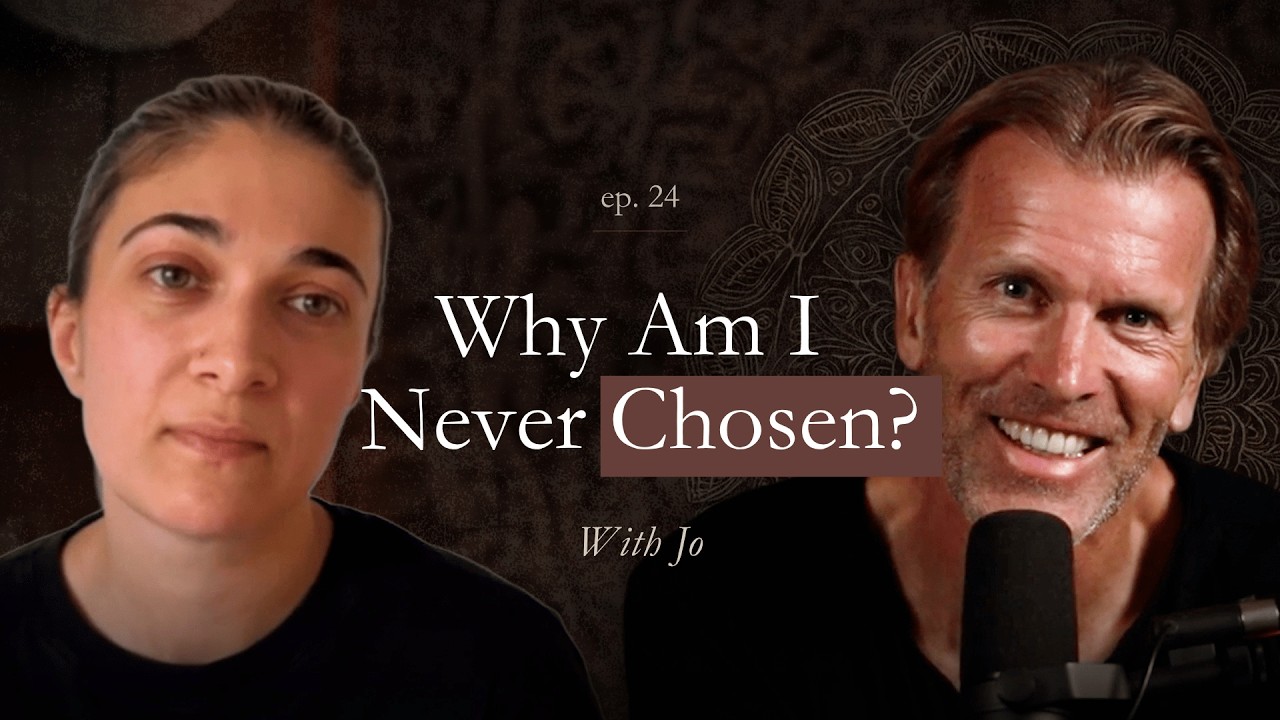
Transcript
[0:00] Hi, this is Peter Cone and you're
[0:02] listening to finding freedom. In this
[0:04] episode, I get to speak to Sha in the UK
[0:06] on a topic that I feel plagues the
[0:08] majority of human beings, which is the
[0:10] belief that you are not where you're
[0:12] meant to be and as a result have not
[0:14] accomplished as much as you should have,
[0:16] resulting in a feeling of exhaustion, a
[0:18] lack of fulfillment, and perhaps worse,
[0:20] the concern that it's going to continue,
[0:22] which gives you the impression of a
[0:24] future with worst case scenarios and a
[0:26] feeling of mild to severe constant
[0:28] anxiety. If you feel that you might
[0:30] perhaps not quite be who you are or
[0:33] where you should be, then this
[0:34] conversation is for you. And I hope just
[0:36] like we see with Sean that it will
[0:38] remove all fear or anxiety and help you
[0:40] to find more freedom.
[0:43] >> First of all, thank you for the
[0:44] opportunity. I've um watched a lot of
[0:47] your content, probably too much to be
[0:48] honest, but I've watched a lot of it.
[0:50] And uh yeah, to to be here with you is a
[0:53] you know, a great opportunity and I
[0:54] really want to thank you for the time
[0:55] that you've given me to do this.
[0:57] >> You're welcome. Thank you for the kind
[0:58] words.
[0:59] >> Yeah, for sure. Um, yeah. So, I think
[1:02] for me personally, the main issues that
[1:03] I've been dealing with for I mean
[1:05] decades is like a bit of selfworth, bit
[1:09] of self-confidence, and then and then
[1:11] the fear of loss, fear of abandonment,
[1:13] and then with that an anxious attachment
[1:15] style that's come from that.
[1:17] >> Yeah. [snorts]
[1:17] >> So, I came I grew up in Paul Dorset,
[1:19] southwest coast of England. happy
[1:21] family, mother, dad, mother, father, for
[1:24] uh older sister. And basically, uh my
[1:27] dad was a long distance truck driver,
[1:29] very close relationship for the you
[1:31] know, the first decade or whatever. And
[1:32] when but basically when I turned 13, he
[1:34] had an affair with my mom's best friend.
[1:37] And I never saw him again. That was that
[1:39] was the last time I ever saw him.
[1:41] >> Got it.
[1:41] >> That was like a very like gut-wrenching
[1:43] thing to go through as a 13-year-old to
[1:45] have a very happy family.
[1:47] >> Yeah. Um, and then have that uh
[1:49] experience with your dad. I mean, I get
[1:51] emotional talking about it. I will try
[1:52] and keep
[1:52] >> That's okay. This is why we're here.
[1:54] We're we're here. Listen, I can already
[1:56] tell what's going on in your body. I
[1:58] want you to relax. You're in a safe
[1:59] space. You can have all the emotions you
[2:01] want. Some of the stories you probably
[2:02] heard are, you know, not to in any way
[2:05] dismiss yours, but
[2:06] >> yeah,
[2:07] >> you know, people are sharing some really
[2:09] very human but very tragic stories, and
[2:11] I'm I'm here for it. We're all here. So,
[2:14] you you feel whatever you feel. You're a
[2:16] you're a beautiful sensitive man and I I
[2:18] want to encourage you to, you know, not
[2:20] deny that. Okay. It's safe here.
[2:22] >> Yeah. And then there's the other
[2:24] listening to you about the about the
[2:25] Navy still saying deal with it and I'm
[2:27] like sure deal with it and then but you
[2:29] know you have to like lean into it and
[2:31] understand where it's coming from.
[2:32] Right.
[2:32] >> Yeah. So so my dad left um at 13 years
[2:36] of age never saw him again.
[2:38] >> He actually died about two or three
[2:40] months ago. Um I did reach out to him
[2:43] once in a very brief conversation just
[2:45] before that. Um but obviously I think
[2:48] throughout my whole life I suppressed
[2:50] that and I thought you know it didn't
[2:51] matter you know I it was okay. Um
[2:55] >> but I'll go back to that story. So that
[2:56] so he left at uh 13 and then my mom's
[2:59] next partner was basically an abusive
[3:01] man. Terrible terrible abusive man to a
[3:04] to a child basically in terms of just
[3:06] like bullying and things like that. I
[3:08] actually left home at 16 and I went off
[3:11] to join um get get straight out in the
[3:14] workforce and I had a very uh good great
[3:17] opportunity to work for a very
[3:18] successful well-known cosmetic company
[3:21] um which became another family to me in
[3:23] a way.
[3:24] >> Okay.
[3:25] >> Yeah. And so basically the UK company
[3:27] got transferred over to the Canadian
[3:29] side of it. So that was another loss in
[3:31] a way. Even though it was a a company,
[3:34] the people to be transferred somewhere
[3:36] else was like another loss. So there is
[3:38] that abandonment and fear of loss thing
[3:41] that really creeps into my life.
[3:42] Specifically in relationships, it
[3:44] happens.
[3:44] >> Okay.
[3:45] >> When I'm in a relationship and I'm in a
[3:46] new relationship now with a beautiful
[3:48] woman. She's the love of my life to be
[3:49] honest with you. So but I do find that I
[3:52] am al always waiting for something to
[3:54] happen. And then that sense of anxiety
[3:57] in me that you know when's the shoe
[3:58] going to drop? when's the next what's
[4:00] going to happen, so to speak. So, I, you
[4:03] know, although I'm a positive
[4:04] individual, I definitely think I'm
[4:05] coming from a a place of fear and that
[4:08] really manifests in my body as like
[4:12] as anxiety um can be debilitating a
[4:15] little bit. Um
[4:16] >> Yeah.
[4:17] >> Yeah. And it definitely has a big effect
[4:18] as well.
[4:19] >> Yeah.
[4:20] >> And then just one more piece to add to
[4:21] the story as well is that
[4:23] >> Sure. Before I left the UK, um when I
[4:26] was about 28, I found out that my sister
[4:32] um we didn't share the same father.
[4:34] Basically, didn't and and so the real
[4:37] dad came back from Canada, actually over
[4:40] to the UK to be with my mom. And so all
[4:42] of a sudden, there was this happy family
[4:44] for my sister and that now has her dad
[4:46] back and then this family. And I just
[4:48] felt like, okay, well, I'm on the
[4:50] outskirts cuz I don't have a dad and you
[4:52] do.
[4:52] >> Yeah. So again, it's just that
[4:54] separation of of self, I think.
[4:56] >> No, I get it. So when the her father
[4:59] came back, was that the the abusive
[5:01] father or was there a different man in
[5:03] between?
[5:04] >> Different man. Yeah, different man. It
[5:06] was actually um
[5:07] >> Okay.
[5:08] >> Yeah, it was before my real dad
[5:10] actually. It was basically my mom at
[5:12] high school and two men basically and
[5:14] and let my dad was was um Yeah, let my
[5:18] dad think that they were both children
[5:20] were hers.
[5:21] >> Is Got it. Got it. Got it. Got it. Okay.
[5:23] So, when your dad left at 13 and then
[5:25] you said until you left at 16, she
[5:27] brought someone else back, but that
[5:29] wasn't the father of your sister. That
[5:31] was just someone else she knew. But he
[5:33] was the the one that was a little
[5:35] abusive and a bully to you.
[5:36] >> Yeah. Yeah. For sure. He basically was
[5:39] with her for 10 years and and eight of
[5:41] those years he was having an affair
[5:42] behind her back.
[5:44] >> Okay.
[5:44] >> And he was very Yeah. And I I mean I was
[5:46] living in the same house and he was very
[5:48] not necessarily physically abusive
[5:50] although he did try to fight me in terms
[5:53] of like trying to get me outside and
[5:56] challenge me so to speak but just very
[5:57] like jealous of my mom's attention to me
[6:00] and
[6:01] >> made her choose between me and him
[6:04] >> and she got it you know those kind of
[6:06] >> and so the bullying was it so that was
[6:07] more verbal and emotional like can you
[6:10] remember what were some of the things
[6:11] that you recall that might have stung or
[6:14] hurt the most? anything that comes to
[6:15] mind?
[6:17] >> Yeah, just just little things like not
[6:19] not closing the cupboards correctly. Um,
[6:22] >> yeah,
[6:23] >> you know, flushing the toilet in the
[6:24] middle of the night or or treading on
[6:26] the caky stair to wake him up.
[6:29] >> Just things like that basically. Yeah, a
[6:32] lot of kind of very controlling.
[6:34] >> Yes. But for you the experience
[6:36] obviously there was a lot of
[6:39] concern for what you might do and the
[6:41] ramifications the consequences like
[6:43] getting in trouble um etc etc. Right.
[6:46] >> Exactly. Yeah. Yeah.
[6:48] >> Okay. Well um first of all I'm happy
[6:51] that you're with a beautiful partner and
[6:52] that you love her dearly. That's that's
[6:54] good news. Um so I just want to
[6:56] acknowledge that and everything that you
[6:58] shared thus far really helps me to get a
[7:00] a sense of you know your conditioning
[7:02] right which is what we're looking at.
[7:04] You've obviously hurt me enough to
[7:06] recognize first of all, you know, you're
[7:09] quoting some of my quotes, um, which
[7:11] helps, you know, to a certain degree,
[7:13] right? Like what happened happened or
[7:15] the Navy Seals deal with it.
[7:17] >> That is great. And I com commend you
[7:20] like, you know, I'm wanting to try and
[7:21] integrate those, but it's really
[7:23] important that we we look at both sides,
[7:25] right? There is the human being. So
[7:28] really the human really is the equipment
[7:30] where you've got all of this programming
[7:32] wiring fears where you've been hurt,
[7:34] insecurities, inadequacies. We we want
[7:37] to make space for that. And the being or
[7:39] the soul is more what we're sort of
[7:41] awakening, living from now, you know,
[7:43] that's what I call that 2.0 world,
[7:45] right?
[7:46] >> Yeah.
[7:47] >> So what I can hear is there's a little
[7:49] bit of also denial um of your humanity,
[7:52] right? like you you said in your video,
[7:55] you know, you're 55 and you feel like
[7:58] you're not where you should be or you
[8:00] haven't accomplished as much with your
[8:01] life and there's a lot of comparisons
[8:03] and you know, as you've often heard, I'm
[8:06] sure comparison is the thief of joy. So,
[8:08] we're always going to find evidence for
[8:10] why our life isn't as good as or is not
[8:13] where we're meant to be, right? So,
[8:14] that's
[8:15] >> you're totally in alignment with every
[8:17] human being's conditioning. So that's
[8:19] okay
[8:21] because you've listened to a lot of my
[8:23] stuff and you touched on worth and
[8:25] abandonment.
[8:27] If you were to try and articulate in
[8:30] language what some of the prisons might
[8:32] be that you're stuck in based in words,
[8:35] what what what would Sean think? What
[8:38] what might you have as a view of
[8:40] yourself?
[8:43] Yeah, I mean definitely the fear of loss
[8:47] and abandonment um is definitely a big
[8:50] one for me.
[8:52] >> So let's look at that one to start,
[8:54] right? So the fear of loss and
[8:55] abandonment first of all is part of the
[8:57] human condition. Everybody at some point
[8:58] is going to experience loss, right? It
[9:01] might be later in life. For you, for me
[9:04] it was quite early.
[9:05] >> Yeah.
[9:06] >> But I want you to consider the fear of
[9:08] loss and abandonment. And abandonment we
[9:10] can put to one side because no kid is
[9:11] saying I feel abandoned right
[9:15] is really secondary tertiary meaning
[9:17] it's a byproduct of something deeper
[9:20] right so you're 13 your dad's doing what
[9:22] he's doing the long haul truck driving
[9:24] but you're close you love your dad he
[9:26] loves you as far as you know happy
[9:28] family nothing wrong
[9:30] so loss is the experience or the story
[9:34] after the fact but what did that that
[9:37] 13year-old really feel when his dad left
[9:41] cuz he's not like oh I lost my dad like
[9:44] what what was his experience as best as
[9:46] you can presence?
[9:48] >> Yeah. Scared. I think scared would be
[9:50] the the right word. Yeah.
[9:52] >> Yeah.
[9:52] >> Yeah.
[9:53] >> Yeah. And what what if you could That's
[9:55] beautiful. If you could maybe look at
[9:57] it. What were you scared of?
[10:01] >> Yeah. I think it was the unknown.
[10:04] >> Yeah.
[10:04] >> Yeah. I remember consoling
[10:08] Yeah. not knowing what to do, consoling
[10:10] my mom.
[10:11] >> Yeah.
[10:12] >> Mom. Yeah.
[10:14] >> Yeah. Feel it like that. There's a lot,
[10:16] right, for a 13-year-old. Like you're
[10:18] confused, you're scared.
[10:20] >> H Yeah, definitely. Just um Yeah.
[10:24] Wondering why, not understanding. Um
[10:27] >> Yeah.
[10:27] >> Yeah. Not knowing what's going to
[10:28] happen.
[10:30] >> And trying to console your mom. Like
[10:32] what? Give me a description of a
[10:35] 13-year-old wanting to try cuz you're
[10:37] such a sweetheart. I can see to console
[10:40] your mom. What What did you feel
[10:44] both as a form of responsibility as an
[10:47] emotion for yourself if you're charged
[10:49] with now taking care of your mom?
[10:53] [clears throat]
[10:53] >> Yeah. I wonder if you put it right just
[10:55] to make her better basically. I mean,
[10:57] the the the memory is on the bed where
[11:00] she's just rocking and incontrollable
[11:02] and just trying to, you know, be there
[11:04] for her and make it better for her.
[11:07] Trying to fix it, I think.
[11:09] >> Yeah. And so, you're trying to fix it,
[11:10] but let's look at that like, you know,
[11:12] you know, you're a 55 year old man.
[11:14] You've traveled around the world. You've
[11:15] obviously been working, as you said,
[11:17] from about 17.
[11:19] >> You know, if I were to say, "Hey, can
[11:20] you go and either make some eggs and
[11:22] toast?" You're on it. If you could fix
[11:24] the gate, you probably got it. You know,
[11:26] like meaning you've got these qualities
[11:28] and attributes now that gives you
[11:29] confidence to handle certain things. But
[11:31] at 13, you see this grown woman rocking
[11:34] back and forth,
[11:36] tearary, upset, angry, whatever she's
[11:38] going through. What What is your feeling
[11:41] when you're there trying to console? How
[11:44] do you feel?
[11:45] >> I'm scared.
[11:46] >> Yeah.
[11:47] >> Yeah.
[11:48] >> Yeah.
[11:48] >> That's
[11:49] >> because what are you what are you under
[11:50] the impression? What are you saying is
[11:52] in that moment is your responsibility?
[12:00] >> I mean, I don't think it's consciously
[12:02] at the moment, but I think that I,
[12:05] you know, now have to step up and to
[12:07] fulfill the void that my dad is going to
[12:09] leave.
[12:10] >> Something like that, right? Like that
[12:11] there's suddenly this escalated
[12:14] m maturation that you're supposed to
[12:16] take on. You're 13, but all of a sudden
[12:18] it's like, "Oh I'm the now man of
[12:21] the house or it's up to me, right?"
[12:25] >> Yeah, for sure. Yeah.
[12:27] >> But you're 13, right? So now think about
[12:29] that. So I want you to be able to tap
[12:31] into the feeling if you're 13 and you're
[12:34] trying to manage something that we could
[12:36] argue is really the task of a 30 plus
[12:40] year old at least, right?
[12:43] >> What how do you feel in that situation?
[12:50] How do I feel in that situation?
[12:52] >> Yeah. So, you're being asked to do
[12:54] something that anybody could argue is
[12:56] not what a 13-year-old should be doing.
[12:58] So, you're being put in a situation that
[13:01] is not appropriate for who you are.
[13:04] >> Yes.
[13:05] >> So, how does that like again I'm leading
[13:07] the witness a little bit here, but it's
[13:09] you've done a very good job of
[13:10] protecting yourself, but I can see how
[13:12] much you hold on to. M
[13:13] >> you're scared for sure, but when there's
[13:16] a job that you're thinking you're meant
[13:19] to do, but you're really not capable of
[13:21] doing, what what's that differential
[13:24] feel like?
[13:28] >> Yeah. It's like a lack of um
[13:32] a lack of confidence, a lack of a lack
[13:34] of um
[13:35] >> yeah,
[13:35] >> belief to be able to do it.
[13:37] >> Yeah. Perfect. So what I want you to
[13:39] consider is what we're revealing here is
[13:42] the part of you that feels hopeless or
[13:44] powerless.
[13:47] >> Right? Remember that moment in that
[13:49] room. Did you not both feel scared but
[13:51] also powerless to really do anything?
[13:53] You weren't equipped.
[13:57] >> Totally. Yeah.
[13:59] Completely powerless for sure.
[14:01] >> Now feel that. How does that feel in
[14:04] your body as you tap into that?
[14:07] >> Yeah. Yeah, I feel sorry for that kid.
[14:10] >> Yeah, talk more about that.
[14:19] >> Yeah, something that um yeah, you know,
[14:22] something that somebody shouldn't have
[14:24] to go through.
[14:26] Um,
[14:26] >> yeah,
[14:26] >> you know, compassion for,
[14:29] >> you know, just being shoved into a
[14:32] position that's completely foreign and
[14:34] scary and not knowing what the outcome's
[14:38] going to be.
[14:40] >> Yeah. No, I can really see that.
[14:44] And you can see what he was going
[14:46] through, right? Like how much pressure
[14:48] he was under.
[14:49] >> Yeah, for sure.
[14:52] >> Yeah.
[14:53] >> Yeah. And how can you see that that has
[14:57] shown up and continued through your
[14:59] life? Where have you also felt that?
[15:03] >> Yeah, I think it's probably like I
[15:05] wasn't able to fix it. So that was
[15:09] like that was the doubting of myself. So
[15:13] I think that's continued
[15:16] >> continued in um
[15:19] you know when I get success maybe I
[15:20] don't feel like I'm worthy of it so to
[15:23] speak.
[15:24] >> Yeah.
[15:24] >> Because of because of not being able to
[15:28] fix things in the past maybe.
[15:30] >> Yeah. No, I get it.
[15:32] >> Yeah. So, so that's a big part of this
[15:35] um you know and what you're doing
[15:38] unconsciously to yourself like the
[15:40] constraints and it's great that you can
[15:41] feel it and I really appreciate you
[15:43] being vulnerable.
[15:44] >> What what might you So that's one side,
[15:47] right? We've got the relationship
[15:50] with your mom who you clearly adored
[15:52] >> and by the sounds of it adored you and
[15:54] you did everything you could
[15:56] >> and yet here's this boy at 13 charged
[15:59] with what he takes on as the
[16:00] responsibility to comfort and take care
[16:04] of this woman, right? His mom.
[16:06] >> Obviously now you can as a 54 55year-old
[16:09] look back and see that that's
[16:11] >> no one should go through that. No, no
[16:13] young boy should be charged with that,
[16:15] right?
[16:15] >> Yeah. Agreed. Yeah.
[16:16] >> And that's where you have the
[16:17] compassion. So that's one part.
[16:19] What what would you say because you're
[16:23] doing great would be the way that you
[16:24] interpreted your dad leaving you. Like
[16:28] again, a boy at 13 is not going to say,
[16:31] "Oh, I've been abandoned."
[16:34] >> Yeah.
[16:36] Yeah. I guess it's not being wanted.
[16:39] >> Yeah.
[16:40] >> That's what I felt. Yeah.
[16:44] >> And what's that like? If you can tap
[16:46] into that
[16:48] you're just not wanted.
[16:53] >> It's okay. Don't resist it. This is this
[16:56] is part of what we've got to go through.
[16:58] >> Yeah.
[17:03] Yeah. That definitely hits home.
[17:06] But no one wants a thing. Yeah. He
[17:08] basically he basically ran off with my
[17:10] mom's best friend who had a a daughter
[17:12] and a son the same age as me and my
[17:14] sister. So you basically just replaced
[17:16] his family somewhere else.
[17:17] >> Yeah. So once you found that out, not
[17:20] only you not wanted, what else might
[17:22] that
[17:24] trigger? You know, he's now with another
[17:27] woman, but also a different set of
[17:29] children compared to you. What might
[17:32] that say about you?
[17:36] >> Yeah. So not wanted, not worthy of of
[17:39] love, I guess.
[17:41] >> Yeah. the feeling that I comes up
[17:45] >> and so now look at your life and you're
[17:47] doing great if you're walking around
[17:49] feeling fundamentally because you know
[17:51] you've given us a lot of great content
[17:53] in terms of you know feeling jealousy or
[17:56] insecure or even now you got this
[17:58] beautiful partner maybe a little bit
[18:00] worried she might leave right what is it
[18:02] like if you're living inside of that
[18:04] notw wanted view of yourself.
[18:11] >> It's exhausting.
[18:13] >> Yeah, it is, isn't it? That's a very
[18:16] accurate response.
[18:17] >> Yeah.
[18:18] >> How are some of the ways that you've
[18:19] learned to cope? What are some of your
[18:22] strategies?
[18:25] Yeah, I basic I mean specifically in
[18:28] relationships um you know I tried to I
[18:32] mean not literally but you know let's
[18:34] just build a castle and put a moat
[18:36] around it and pull up the drawbridge and
[18:38] make sure that nobody can come near us
[18:40] to take away what I've got if you see
[18:43] what I mean like that definitely is like
[18:46] >> you know it
[18:49] it has been a journey of discovery I
[18:51] only really also found out about the
[18:53] anxious attachments style probably 2021.
[18:57] And so I'm pretty proud that I've had
[18:58] awareness to try and deal with some of
[19:00] that over the time.
[19:01] >> No, that's great.
[19:02] >> Yeah. And I still um obviously struggle
[19:05] with that a lot. Mhm.
[19:07] >> But the not wanted thing and and um
[19:12] trying to
[19:14] protect what's what I've got is I think
[19:17] comes up in in ways of things like
[19:19] jealousy
[19:20] um you know getting away from friends
[19:23] just you know almost like isolating
[19:26] myself in terms of the relationship and
[19:28] and uh you know not obviously
[19:30] >> you know it's obviously not a healthy
[19:33] thing to do and not something that any
[19:35] partner would want to deal with. That's
[19:36] for sure.
[19:37] >> Right.
[19:38] >> Um, yeah. So, that definitely has
[19:40] manifested its way like that, I think.
[19:44] >> Yeah. And I can only imagine from what I
[19:47] get in terms of your energy that you
[19:49] have in your own way tried to be the
[19:51] perfect partner, kind, thoughtful,
[19:53] considerate, right?
[19:55] >> Manage your own emotions, don't do
[19:57] anything that would maybe upset
[19:58] somebody, all of that, right?
[20:00] >> Yeah. The people pleaser.
[20:02] >> Yeah.
[20:03] >> And that's part of the exhaustion,
[20:04] right?
[20:05] >> For sure. Yeah.
[20:08] >> Yeah. And that feeds back into the
[20:10] selfworth piece I think a little bit for
[20:12] me personally like you know
[20:16] the relationship with oneself is is is
[20:19] lacking I think for me
[20:21] >> for sure. Well, again, if you look at
[20:23] selfworth, you know, there is a value
[20:25] proposition here and every human being
[20:27] is going to have their own version of
[20:29] not honoring their own value, you know,
[20:32] but it's kind of covered because it's
[20:35] included in the not wanted,
[20:38] >> right?
[20:40] >> Anything that's not wanted inextricably
[20:42] is connected to it's of no value.
[20:45] >> Yeah. Okay.
[20:46] >> Do you see? So they're sort of a coupled
[20:49] together
[20:51] >> um instantaneously. So dad leaves your
[20:54] experience completely valid is to feel
[20:56] oh my gosh he's gone and not just gone
[20:58] he's gone to another a woman with other
[21:02] children who you know the 13-year-old's
[21:05] mind is clearly going to have the
[21:06] rationale well he wants them he doesn't
[21:08] want us
[21:10] >> right
[21:11] >> so there is a component in there what I
[21:14] would like you to consider
[21:17] >> that you feel kind of less than
[21:23] Yeah.
[21:24] >> Do you feel that?
[21:26] >> Yeah, I agree.
[21:28] >> You're just less than. And so again,
[21:30] that would contribute to however you try
[21:32] to manage and control your situations in
[21:34] relationships. Because if you're looking
[21:36] through the lens of you're less than,
[21:39] then your brain will always manufacture.
[21:41] If you're at a party, a dinner party, an
[21:42] event, a birthday, like whatever, if you
[21:44] see a guy that your brain assumes your
[21:48] partner, exartner might like or he might
[21:50] be handsomemer, more successful, more
[21:53] whatever rationale, you're going to go
[21:55] straight into that anxiety again. Can
[21:57] you see that?
[21:58] >> Yeah, for sure. Yeah, totally.
[22:01] >> So, looking at your dad leaves, so
[22:03] there's a component of, you know, you
[22:05] being discarded, not wanted, right? And
[22:08] he's not only getting rid of you. It
[22:09] would be one thing if he just went off
[22:11] and did his own thing by himself, but he
[22:13] took on another family. So for that
[22:15] brain of that boy, there's an immediate
[22:18] comparison. Well, wait, how come? It's
[22:20] confusing. My dad doesn't want me, but
[22:21] he wants the other boy and girl.
[22:24] What to me that inspires or triggers is
[22:27] this deep prison of feeling less than
[22:29] that you're not only not wanted, but
[22:31] you're lower in statur,
[22:34] right?
[22:35] So, how does that manifest in your way
[22:39] in your relationships thinking that
[22:41] you're less than?
[22:46] >> Yeah.
[22:48] >> I mean, it's a little embarrassing in a
[22:50] way.
[22:51] >> It's okay. Everything that we're talking
[22:53] about belongs to a child. So, for a man,
[22:56] it can seem embarrassing, but you're
[22:58] doing great. Believe me, I've heard.
[22:59] >> Yeah. It's It's the fear. It's
[23:02] definitely comes back to the the fear of
[23:05] of um not being wanted kind of, you
[23:10] know, fear of a future that hasn't
[23:12] happened yet. It definitely
[23:13] catastrophizes the future of something
[23:15] that's, you know,
[23:17] >> yeah, realize the story in my head, but
[23:19] yeah.
[23:20] >> Yeah. And and how does it hit your body?
[23:22] So, you kind of gave us a clue there.
[23:24] The tightness in your chest, does it in
[23:26] your solar plexus, your stomach get like
[23:28] a little bit tight? Any of that?
[23:30] >> Yeah, definitely my chest for sure.
[23:32] Tightness of the jaw.
[23:33] >> Yeah.
[23:35] And then I think that there's some, you
[23:37] know, I would say I feel like I'm just
[23:40] thinking about myself and not my partner
[23:42] in in that situation. Like you make it
[23:45] their fault, so to speak, in my head.
[23:46] And not that that that happens, but
[23:48] >> yeah,
[23:49] >> you know, that's
[23:50] you know, I know I know that
[23:53] >> I know what's happening. I know what's
[23:54] knocking at the door and I'm trying to
[23:56] manage that emotion basically.
[23:58] >> And it's a beautiful observation and
[24:01] that's called metacognition. your
[24:03] ability to reflect on your own thinking
[24:05] or behaviors, right? Which shows
[24:07] intelligence.
[24:08] >> It's why you're here, why you're part of
[24:10] my freedom community and you wanted to
[24:12] reach out.
[24:13] >> So, I'd say that's a good sign. And
[24:15] without, you know, wishing to in any way
[24:18] diminish
[24:20] the feeling that you just experienced of
[24:23] seeing, wow, it's actually kind of a
[24:24] little embarrassing because I'm just
[24:26] really focused on me, not my partner.
[24:28] >> I can tell you right now, Sean, that's
[24:30] every pretty much every relationship. So
[24:32] don't worry about it. [laughter]
[24:34] >> Your own partner's got her own version
[24:36] too, right? She's human as wonderful as
[24:38] she is. And you might sort of put on a
[24:40] pedestal a little bit because you're
[24:42] coming from your fears. But every human
[24:44] being for the most part, why
[24:46] relationships typically don't work or
[24:48] don't last
[24:50] >> is because we're relating to each other
[24:53] from our own constraints and fears.
[24:56] >> Yes. Right.
[24:57] >> Can you see that? So that's why
[24:59] invariably
[25:01] >> I know you could have a fear of a loss
[25:03] of a relationship which is totally
[25:05] appropriate for the young boy who feels
[25:07] he's not wanted but what I want you to
[25:09] understand is you wouldn't lose that
[25:13] relationship because you were never in
[25:15] it [laughter]
[25:18] >> right you and again that's that's an
[25:21] advanced understanding but because you
[25:23] just brought it up meaning most people
[25:25] are in a relationship with their own
[25:27] nervous system and their own
[25:28] constraints.
[25:29] >> Okay?
[25:31] >> Do you see? So you you're in a
[25:33] relationship with your fear of the loss
[25:36] of a relationship that you're not
[25:38] actually in. [laughter]
[25:40] >> Right.
[25:41] >> Right.
[25:42] >> Which which is kind of comical when you
[25:43] look at it. I mean, it stings, but you
[25:46] know, if you want to be powerful, which
[25:47] is the only thing I'm interested in and
[25:48] helping you become, you have to, you
[25:51] know, as a man, which is this sort of
[25:52] right of passage that hopefully you'll
[25:55] go through here with me in this
[25:56] conversation. is like, "Holy it
[25:59] completely understandable." And we have
[26:01] absolute compassion for the young boy
[26:03] who's constantly vigilant about somebody
[26:07] else leaving him.
[26:09] >> Yeah.
[26:10] >> But then you're in a relationship with
[26:12] that little boy's fear of somebody
[26:14] leaving him. Do you see? That's where
[26:16] your attention is.
[26:17] >> Got it. Yeah.
[26:19] >> Now, as I as I share that, what what
[26:22] comes to mind?
[26:31] I'm not sure.
[26:33] >> It's okay. That's a valid answer.
[26:36] >> Yeah. I'm not sure what comes to mind
[26:38] then.
[26:38] >> Well, let me reframe it. So, if you see
[26:40] that who you are, which I can tell is a
[26:42] very loving, kind, sensitive human
[26:45] >> who loves companionship. You want to
[26:47] have the feeling of love and connection.
[26:51] >> That's the underlying commitment. But
[26:52] when I sort of reveal, you know, what's
[26:55] behind the curtain of your own behavior
[26:57] and say, "Oh, I want a relationship."
[27:00] Currently, obviously, you've got a
[27:01] beautiful partner with her, but there
[27:03] would have been many before.
[27:06] And now you get to see, but what I'm
[27:08] actually up to kind of, you know, nod
[27:10] not wing wink, you know, is like, oh,
[27:12] I'm actually in a relationship with my
[27:14] own wiring
[27:16] >> of worrying about that person leaving
[27:19] me. So where's the actual relationship
[27:22] happening? Well, it's with my own
[27:24] constraints, my own fears.
[27:25] >> I see. I see.
[27:27] >> So that should give you a little bit of
[27:29] a sort of almost an aha moment.
[27:32] >> Yeah. Right. Yeah.
[27:34] >> Cuz what you want is there. You have
[27:37] someone who loves you. They're in the
[27:38] house. They're sharing, you know,
[27:40] dinners, movies, whatever it is. They're
[27:43] there.
[27:44] >> But Sean, through no fault of his own.
[27:46] So we want to get out of any guilt or
[27:48] shame. We're just bringing awareness is
[27:50] like, oh, I'm actually in a relationship
[27:52] with my fear
[27:54] >> about the other person.
[27:57] I'm not in a relationship with the other
[27:59] person.
[28:01] >> I see. Yeah, that's a very good point.
[28:04] >> Thank you. I pride myself on this.
[28:06] [laughter]
[28:06] >> Yeah. Yeah.
[28:08] >> But isn't that fascinating?
[28:09] >> It's very fascinating. So that should in
[28:12] a funny roundabout way and it looked
[28:15] like with that exhale just give you
[28:16] almost a little bit of relief.
[28:18] >> Yeah.
[28:19] >> Yeah.
[28:21] It's almost comical in a way but yeah
[28:23] >> it is. It is comical. And now you see
[28:25] why most people struggle in
[28:26] relationships because they're not in
[28:28] relationship with the other person.
[28:30] They're in relationship with their own
[28:31] programming which is based in some sort
[28:34] of insecurity inadequacy or scarcity.
[28:36] >> Right.
[28:37] >> Yeah.
[28:38] >> So it is comical. It's like you've been
[28:40] worried about losing a relationship that
[28:42] you actually weren't even in.
[28:44] >> Yeah. Actually gave me goosebumps a
[28:46] little bit.
[28:48] >> Yeah. Well, that tells us we're on
[28:50] track, right? So, because I'm awakening
[28:52] you to the true power of the being you
[28:54] are whilst holding and loving and having
[28:57] compassion for the human you've become
[28:58] misidentified with, which is just
[29:00] programming. Right.
[29:01] >> Right.
[29:02] >> Yeah.
[29:03] >> So, that's a great step. So, the fear of
[29:06] loss is a misnomer. first of all, right?
[29:10] Meaning, yes, form comes and goes all
[29:13] the time, right? My mom died when I was
[29:15] seven. I didn't lose my mom. She died.
[29:17] That doesn't in any way diminished the
[29:19] impact that it had to me. It was
[29:21] devastating, confusing. As a
[29:23] seven-year-old, I didn't know how to
[29:24] process it. I was sad. I was, you know,
[29:27] lost and all all of that's appropriate,
[29:29] but the story of loss is part of your
[29:32] suffering.
[29:33] >> Yeah.
[29:34] >> So, you didn't lose your dad. You
[29:35] weren't abandoned. He left. He moved in
[29:38] with someone else who had two kids and
[29:40] that was it. Right.
[29:43] I'm not saying that that was quote
[29:44] unquote easy, but I'm saying that is
[29:47] reality.
[29:48] >> Yeah. That's what happened. Yeah.
[29:49] >> Yeah. [laughter] Right. That's what
[29:51] happened.
[29:52] >> Yeah.
[29:52] >> What that happening triggered in Sha's
[29:56] >> consciousness and his view of himself
[29:58] is, oh, dad goes wherever he went,
[30:01] another area of Southwest or London or
[30:04] wherever the he moved. It's really
[30:05] irrelevant.
[30:06] >> And
[30:07] >> huh,
[30:08] >> the same town pretty close.
[30:10] >> Pretty close, right? Yeah. Still in
[30:11] Dorset, whatever. And he's with two
[30:14] other people. And then Sean's brain
[30:16] through no fault of his own, made that
[30:18] all into a story that you're you're not
[30:21] wanted because of that.
[30:22] >> Yeah.
[30:23] >> See, this is the nature of the ego is
[30:25] that we're very very self-oriented. The
[30:27] ego is all self-righteousness. Even
[30:30] though what it's being righteous about
[30:31] is typically a limitation that creates
[30:34] suffering. That's the madness. We we
[30:36] want to be right about our own
[30:38] inadequacies or insecurities. That's the
[30:40] ego.
[30:41] >> Right.
[30:42] >> Right.
[30:43] >> Yeah.
[30:44] >> So, is it true that you lost your dad
[30:48] at that moment? I know he's passed, but
[30:52] >> No, no,
[30:53] >> no. He just went somewhere else.
[30:55] >> Yeah.
[30:56] But what we can what we can be
[30:58] accountable for is the impact that that
[31:00] left which was what I call emotional
[31:02] epigenetics. Meaning there's an event
[31:04] that occurred that turned on without
[31:07] getting too esoteric. The reason you're
[31:10] here as a soul to experience this
[31:13] feeling of what you call you know in
[31:15] high flutin terminology abandonment what
[31:17] I'm calling is just feeling discarded
[31:19] not wanted.
[31:22] >> Yeah. And it's not just in relationship
[31:24] that carries over into business too.
[31:27] >> No, of course. And you mentioned that
[31:28] with the company moving from London or
[31:30] England to Yeah. and then 10 years there
[31:34] and then another one. But again, if we
[31:37] can look at it, is it because dad left
[31:40] and then because you moved different
[31:43] territories to Canada and then you moved
[31:45] different do is that because that means
[31:50] you're not wanted or are these all just
[31:53] events that help you reinforce your
[31:56] belief that you're not wanted? Do you
[31:58] see it's the cart before the horse? So
[32:01] your brain, like anybody's, is looking
[32:04] for evidence for what it already
[32:06] believes,
[32:08] >> right? Totally.
[32:10] >> Somebody else might be like, "Holy
[32:12] this is amazing. I get to travel to
[32:14] North America. Same event
[32:17] >> transferred from the UK
[32:19] >> and they're like, "This is amazing."
[32:21] Right? So do you see it's not the event,
[32:23] it's the way that you are interpreting
[32:26] it or rather unconsciously receiving
[32:29] information to your brain. that's
[32:30] looking for evidence for what it's
[32:32] already oriented to.
[32:34] >> Right.
[32:35] I can totally see that.
[32:37] >> So, in truth, you moved from Dorset to
[32:40] Vancouver or wherever you went, Canada,
[32:42] and then you moved to somewhere else and
[32:44] and that was it. No problem.
[32:48] >> But for Sean's brain, it's like, no,
[32:50] this means definitely I know this
[32:53] feeling, and this feeling is confirming
[32:55] that I'm not wanted here.
[32:59] You're 100% correct.
[33:01] >> Well, thank you. Not my first rodeo.
[33:04] See, the number one imperative of the
[33:06] ego is to be right. But what we're being
[33:08] right about is a complete disservice to
[33:10] the soul we are, which is timeless,
[33:14] boundless, and and completely free and
[33:16] powerful.
[33:18] >> So, you're not suffering because of what
[33:20] transpired. You're suffering because of
[33:22] the way that you view it.
[33:25] >> Yeah.
[33:27] >> Okay. So, let's stay with that first
[33:29] one.
[33:30] >> Were you born in Dorsit or just raised
[33:32] there or or?
[33:33] >> Yeah, I was born born in Dorset. Yeah.
[33:37] >> So, Sean, if I cut you open, am I going
[33:39] to find a physical manufacturing label
[33:41] inside of you made out of whatever
[33:43] metal, plastic, wood that says Sean,
[33:46] born in Dorset, he's not wanted.
[33:50] >> You're not going to find that. No,
[33:51] >> I'm not. Am I? Bummer.
[33:54] So if it's not part of your physical
[33:56] makeup, where does it live?
[33:58] >> Yeah,
[34:00] it lives between my ears.
[34:03] >> Yeah. It's the lens that you look
[34:04] through, right?
[34:06] >> It's just a view. Now it's appropriate
[34:08] because you're wearing glasses. So we
[34:09] can play with this analogy or metaphor.
[34:11] If those glasses that are clear
[34:13] obviously, but if they were blue,
[34:16] >> so but if you're born with those blue
[34:18] tinted glasses, how would everything
[34:20] look to you?
[34:22] >> Yeah.
[34:24] If I was born with blue tinted glasses,
[34:27] it would be blue, I guess.
[34:28] >> Yeah. So, that's the logical response.
[34:31] Now, I want you to listen. If you're
[34:33] born with blue tinted glasses, you don't
[34:36] see blue because that's all you've ever
[34:38] known,
[34:38] >> right? Yeah. It's just it is what it is.
[34:40] >> It's normal to you,
[34:42] >> right? Yeah.
[34:44] >> So, your normal in this case is I'm not
[34:47] wanted.
[34:48] >> Yeah. So, do you see
[34:51] as a joke because I often use this with
[34:54] different constructs because we all have
[34:56] them. But you could walk past the cow
[35:00] and because you look through the blue,
[35:02] which is I'm not wanted. The cow could
[35:03] go moo and put and Sean would be like,
[35:06] "Okay, I'm sorry. I'll get out of your
[35:07] way."
[35:09] >> Yeah.
[35:10] >> Yeah. Yeah. Yeah. Yeah. I understand.
[35:12] Yeah.
[35:13] >> You see, it's kind of comical like you
[35:14] said, right? So if it's just between
[35:16] your ears and it's a lens that you look
[35:18] through which is really just a story,
[35:21] it's words. Is it an absolute truth that
[35:24] who you are is not wanted?
[35:28] >> Yeah, it's not at all.
[35:29] >> It's not at all, is it?
[35:31] >> No.
[35:34] >> Now just I know this is brand new, but I
[35:37] can see things shifting.
[35:39] >> If you really really get what I just
[35:41] showed you, Sean, that this is a
[35:43] complete lie. Now, the older we all get,
[35:45] the more convincing it is. You got five
[35:47] and a half decades. I know it started
[35:50] mainly when you were 13. So, let's say
[35:51] four four decades or so.
[35:56] If you couldn't relate to yourself and
[35:58] life and others as not wanted, what
[36:01] might that feel? What might be available
[36:03] for you? You just literally can't feel
[36:05] not wanted by anything or anyone.
[36:14] Yeah. I mean it would be a boundless
[36:16] feeling. This the the scaredness would
[36:19] go away.
[36:20] >> That's a good start.
[36:22] >> Yeah.
[36:24] >> And the boundlessness is nice.
[36:26] >> Yeah. Yeah, it would be a much you know
[36:28] I'm I'm in a positive I am a positive
[36:30] person by nature but
[36:32] >> I think that
[36:36] it would open up a whole new perspective
[36:41] >> on everything.
[36:43] >> So how might you just using you know cuz
[36:46] it's uh relatively lowhanging fruit with
[36:49] this partner of yours who sounds
[36:50] wonderful who you love and I'm sure she
[36:52] adores you. How could you see the shift?
[36:55] What actually happens in thoughts,
[36:57] emotions, and behaviors of Sha to your
[37:00] current partner
[37:02] no longer looking through the lens of
[37:05] the fear of not being wanted. How might
[37:08] you feel and show up with her now?
[37:14] >> That's a nice exhale.
[37:18] Yeah, I guess I guess um
[37:22] without some kind of facade and my and
[37:24] my true self and again,
[37:30] you know, the lack of fear of of losing
[37:32] her, so to be able to be free of that.
[37:36] And what might that make available in
[37:38] the moment if you're no longer like you
[37:40] you saw the comical nature of how most
[37:42] humans are in relationship with their
[37:44] own fears, but now you get to be with
[37:48] her.
[37:49] >> Yeah.
[37:49] >> What might that feel like not just for
[37:51] you, but for her?
[37:57] >> Yeah, it would be amazing for both of
[38:00] us,
[38:00] >> wouldn't it?
[38:01] >> Yeah, it would be.
[38:02] >> How can you articulate that as best as
[38:04] would feel for you? What might that you
[38:07] know fuzzy feeling in body or like you
[38:09] know connection like what if there's
[38:12] nothing between you and this woman that
[38:14] you love who you said might be the love
[38:16] of your life and who adors you there's
[38:18] no fear anymore.
[38:21] >> Yeah. I mean it's the like the the
[38:24] tightness in the chest goes away.
[38:27] >> Amazing.
[38:28] >> Yeah.
[38:29] >> Which is expansive, right? So you
[38:30] breathe easier.
[38:32] >> Yeah.
[38:33] >> Now think of it as a man. You're there.
[38:35] You're breathing easier. The fear of the
[38:37] tightness is gone. How might that come
[38:40] across to a woman?
[38:48] >> Well, more confidence. I think it's more
[38:50] of an attractive partner to be around,
[38:53] >> isn't it? Yeah.
[38:55] >> I think uh
[38:59] yeah, I think that that's
[39:02] you're having confidence in your
[39:03] partner.
[39:06] Yeah,
[39:08] >> I want you to consider because we talked
[39:10] about it earlier, that 13-year-old who's
[39:12] watching his mom rock back and forth on
[39:13] the bed, devastated by what happened,
[39:16] left in that feeling of complete
[39:18] powerlessness,
[39:20] which is totally appropriate for a
[39:21] 13-year-old. That's not up to him to
[39:23] take care of his own mom as much as you
[39:25] took that on.
[39:26] >> Yeah. Yeah.
[39:27] >> What I want you to consider now as you
[39:29] let go of this constraint of feeling not
[39:32] wanted, your chest relaxes, you become
[39:35] expanded.
[39:36] >> You feel confident. You're okay because
[39:38] you're not worried about where she goes.
[39:41] >> That's actually power.
[39:43] >> You're right. [snorts]
[39:44] >> You feel that?
[39:45] >> Yeah, I do.
[39:47] Yeah.
[39:50] >> Doesn't have control over me.
[39:52] >> None. No.
[39:54] Because what you're actually saying to
[39:55] life, which is going to be so novel and
[39:57] foreign for you, is I'm okay whatever
[39:59] happens.
[40:00] >> Yeah, you're right. Yeah.
[40:04] >> Yeah.
[40:05] >> That's a different experience, isn't it?
[40:07] >> Totally. Yeah. It's a completely new
[40:09] perspective.
[40:11] >> Yeah. And it's also self-fulfilling,
[40:14] right? Meaning that okay, you went
[40:16] through whatever you went through, but
[40:18] you saw it the way you saw it because of
[40:21] the way you were conditioned or wired.
[40:24] Now, if the way that you're looking at
[40:25] life is I'm not not wanted, meaning that
[40:29] will eventually become I'm wanted by
[40:31] yourself.
[40:32] >> Yeah.
[40:34] >> That's the only true relationship that
[40:35] matters. People are going to come and
[40:37] go. The unpredictability of life is it's
[40:40] it's synonymous with the uncertainty
[40:42] that is to be alive, right?
[40:46] >> Yeah.
[40:46] >> So, the deeper there's something deeper
[40:49] under not being wanted, right? Because
[40:53] let's face it, this is life, right?
[40:54] Like,
[40:55] >> yeah,
[40:55] >> for myself, I've maybe been attracted to
[40:58] somebody, maybe wanted a client, maybe
[41:00] wanted to close a deal, maybe wanted
[41:02] silence, and it didn't work out.
[41:06] >> That didn't mean I'm not wanted. It mean
[41:07] it didn't work out. You know, now they
[41:10] could literally, if it was, say, a
[41:11] romantic situation, they could say, "No,
[41:13] I don't want to be with you."
[41:17] That's what they're saying. Does that
[41:19] mean I'm not wanted?
[41:20] >> Right?
[41:22] No. Right.
[41:23] >> Yeah.
[41:24] >> Just by that person at that moment in
[41:26] that sentence, you know, they might find
[41:28] out something about me an hour later,
[41:30] call me and say, "Oh, I made a big
[41:31] mistake."
[41:32] >> Take me. Do you see what I'm saying? The
[41:34] flux of life is so it's so dynamic.
[41:39] >> Yeah.
[41:40] >> We tend to be fatalistic when we look
[41:41] through the ego. I didn't get the job.
[41:43] That means it's done. No. Like, where's
[41:45] your commitment? Oh, the relationship,
[41:47] she's not sure. Okay. Well, call her
[41:49] next week. Call her two months. call it.
[41:51] You know, might maybe she'll show up in
[41:52] six week. Do you know what I mean? It's
[41:53] like so underneath it, there's something
[41:57] deeper, Sean, that I want you to see.
[41:59] The not wanted hurts. I get it. And now
[42:02] you can see it's a lie.
[42:03] >> Yeah.
[42:04] >> But there's something underneath that
[42:06] that's a little bit more closer to the
[42:08] bone. If you're not wanted,
[42:11] what does that result in?
[42:14] >> Yeah. If I'm not wanted, what is the
[42:17] outcome for me?
[42:18] >> Yeah.
[42:18] >> Yeah. It's not good. Well, that's the
[42:21] interpretation, but let's stay with
[42:22] reality and the way you're viewing it.
[42:25] It's definitely not good. But what's not
[42:27] good about it?
[42:30] See, I could come up with a scenario
[42:31] where I you're not wanted by somebody
[42:33] who you think is attractive, who you
[42:35] think is together, but I'm a fortune
[42:37] teller. I'm like, "No, actually, in 3
[42:39] months, you're going to find out that
[42:40] person's a lunatic."
[42:42] >> Yeah.
[42:42] >> So, do you see in that case? Oh, in that
[42:44] case, not being wanted by that person is
[42:46] good. Do you see? But you default to not
[42:48] being wanted is not good. I want you to
[42:51] find out why. Why is that not good? What
[42:54] is there's a deeper story.
[43:00] >> What happens if Sha is not wanted?
[43:07] >> Yeah. I mean, I question myself. I beat
[43:09] myself up.
[43:11] >> Yes, I understand. That's part of the
[43:13] less than or not. That that's still in
[43:15] the realm of not wanted. We've got to
[43:16] get more into the primal. Think about
[43:18] it. You're with someone. In this case,
[43:20] it's more to do with the family
[43:22] structure. Dad goes, you're not wanted.
[43:24] What What situation are you left in?
[43:31] >> The unknown.
[43:33] >> That's always there
[43:37] and it's a component of this. But you
[43:39] had family unit, happy, loved your dad,
[43:42] and he's gone.
[43:43] >> Yeah.
[43:44] So the notw wanted is a bridge to
[43:46] something deeper as a fear. See if dad's
[43:50] gone, you're not wanted. But also, what
[43:53] else does that mean about you now that
[43:55] dad's not there?
[43:58] >> By myself.
[43:59] >> Yes.
[44:01] Now stay with that.
[44:04] If you're by yourself, what does that
[44:07] potentially mean as a fear?
[44:10] Feel
[44:13] it. You're by yourself and it's kind of
[44:15] that moment with your mom. That was part
[44:17] of the overwhelm and the pressure.
[44:23] What is that boy scared of?
[44:32] >> Yeah. I guess it's like I guess all up
[44:34] to me.
[44:35] >> Yeah. So that's pressure. And if it's
[44:38] all up to you, what might happen?
[44:44] >> Yeah, I might fail.
[44:46] >> Yes,
[44:49] you might fail.
[44:52] And that's the future anxiety that
[44:54] you've constantly for five decades tried
[44:56] to avoid.
[44:59] And at an even deeper level, I want you
[45:01] to consider Sean. If you fail, what
[45:03] you're saying to yourself is you're not
[45:05] going to be okay. Right
[45:07] >> now, sit with that. What is it like to
[45:09] live for five decades thinking you're
[45:11] not going to be okay?
[45:18] [snorts]
[45:18] >> Yeah, it's a scary place to be,
[45:21] >> isn't it?
[45:22] >> Yeah, it is.
[45:24] >> That's sheer terror. That's pure
[45:26] survival.
[45:30] You see that? Because you said earlier
[45:32] the scared, you're scared of the
[45:33] unknown. No, you're not scared of the
[45:35] unknown. The unknown doesn't have
[45:36] anything in it.
[45:38] >> You're scared of the view of the
[45:40] unknown, which is that you might fail
[45:42] and you're not going to be okay,
[45:44] >> right?
[45:45] >> Yeah. Yeah.
[45:47] >> It's okay. It's good to feel. Let it
[45:49] out.
[45:50] >> Yeah. [snorts]
[45:52] Yeah.
[45:53] >> Wow. I see that.
[45:56] For five decades, you've been constantly
[45:59] worrying about a future where you might
[46:01] not make it
[46:03] >> in work, in relationships, in just
[46:06] general survival.
[46:13] >> It's okay. It's important to feel it.
[46:15] What's that like?
[46:21] >> Yeah. I mean, I've never thought of it
[46:23] like that before.
[46:24] Well, that's why we're here. But I want
[46:26] you to presence it for yourself. You've
[46:28] been living in a state of constant
[46:30] concern for your own survival, which is
[46:34] human,
[46:35] but leaves you in a mild to severe state
[46:37] of
[46:39] perpetual anxiety.
[46:41] >> Yeah.
[46:43] Yeah. That's what it does. Yeah.
[46:47] >> Yeah. So, how do you manage that? How do
[46:50] you cope with that? What are the ways
[46:52] that you have learned to try and
[46:54] compensate?
[47:00] >> Yeah. To be the nice guy.
[47:02] >> To be the nice guy. Yeah.
[47:04] >> Yeah. Overcompensate.
[47:06] Make sure things are okay.
[47:08] >> Yeah. When you look at that, being the
[47:10] nice guy, overcompensating, how does
[47:12] that hit your system realizing that what
[47:14] that's what you've done to yourself?
[47:19] Feels like I robbed my robbed the part
[47:21] of me a little bit from my true self.
[47:23] Feels like living authentically
[47:27] >> completely. And that's the part I want
[47:29] you to see is that through no fault of
[47:31] your own, you have completely betrayed
[47:34] yourself
[47:35] in order to try and survive. And I'm not
[47:38] saying that's just you. That's human.
[47:39] But I really want you to see that
[47:44] you've betrayed your needs. M
[47:47] >> you've betrayed probably your wants. I
[47:49] can't imagine how many times you have
[47:51] acquiesced and said yes when you meant
[47:53] no. Gone to a place you didn't want to
[47:54] go but because you felt you should you
[47:57] did
[47:58] where you haven't honored what was true
[48:00] for you.
[48:01] >> Yeah,
[48:06] >> that's very true.
[48:08] >> Yeah.
[48:08] >> Yeah.
[48:08] >> And what's that like to look back and
[48:10] realize that's how you've lived your
[48:11] life?
[48:16] Yeah. I mean, I guess it feels a little
[48:17] unfulfilled would be the word that comes
[48:19] to mind.
[48:20] >> Yeah. Yeah. It's a very poignant way to
[48:24] look at it.
[48:26] >> And how did you start the video that you
[48:28] sent me? You're 55 and
[48:32] >> I don't feel fulfilled. [laughter]
[48:35] [clears throat]
[48:35] >> No surprise. Not where I'm supposed to
[48:37] be, which would be the other way of
[48:39] saying the same thing, right?
[48:40] >> Yeah. So it makes sense that that is
[48:43] your experience and I'm grateful that
[48:45] you were able to be that honest with me
[48:47] because I can see it energetically. You
[48:49] had no choice. So there's no guilt or
[48:51] shame. We're just bringing it to the
[48:52] surface because see when we bring those
[48:55] that are subconscious unconscious to the
[48:56] surface now you can start to be both
[48:59] aware but responsible for it which gives
[49:02] you power.
[49:03] >> Right.
[49:04] And that's what I'm looking for.
[49:06] >> Oh yeah. We're not leaving without me
[49:08] dumping a whole truckload of power on
[49:11] your lap. Okay, don't worry about it.
[49:13] You're a powerful [snorts] being just
[49:14] pretending not to be. And that's why
[49:16] you're emotional, unfulfilled, scared,
[49:19] and living from a place of constant, you
[49:21] know,
[49:23] anxiety to avoid worst case scenarios.
[49:28] >> Yeah. In Yeah. In business, too,
[49:29] specifically. Yeah.
[49:31] >> Yeah. No, I get it. It's going to be
[49:32] everywhere. That's the thing. Whatever
[49:33] lens we look through, it doesn't matter.
[49:35] relationships, business, health,
[49:36] everything is going to be informed by
[49:39] that view. Can you see that?
[49:40] >> Yeah, I can. Yeah.
[49:42] >> So, I know I said a lot um but I want
[49:45] you to understand or at least try to
[49:47] locate what is the biggest lie about all
[49:49] of that. We started at not wanted as I
[49:51] said that's the byproduct revealing the
[49:53] deeper fear
[49:55] and you said yeah that I could fail and
[49:57] I said that means if you fail that you
[49:59] might not
[50:02] >> be okay.
[50:03] >> Yeah. So, I've led you a little bit
[50:06] there, but So, what is the biggest lie
[50:08] that's dictating your whole experience
[50:11] of yourself and life?
[50:14] >> Yeah. That things are not not going to
[50:16] be okay. That things aren't going to
[50:17] work out.
[50:18] >> And more specifically, that you're not
[50:20] going to be okay.
[50:22] >> Yeah.
[50:24] >> So, now, right now with me, why do we
[50:27] categorically know that that's a lie?
[50:29] Give me one piece of evidence.
[50:32] I don't know what's going to happen.
[50:34] >> Well, you'd have no clue. That's for
[50:36] sure. But we could you you know, you're
[50:38] 55 with technology taking care of
[50:40] yourself maybe another 40, 50 years. But
[50:42] you could still keep looking through the
[50:44] lens of you might not be okay.
[50:46] >> That's still going to be exhausting,
[50:48] >> anxiety riddles. You're going to
[50:50] sabotage situations. You're going to
[50:52] feel tightness in your chest. Right?
[50:54] That's still the unknown. But how can we
[50:57] know right now as I speak to you in
[50:59] present time that that's a lie that
[51:01] you're not going to be okay? What's the
[51:03] evidence for it?
[51:05] >> Cuz I'm okay. I'm here. [laughter]
[51:08] >> Exactly.
[51:10] >> Yeah.
[51:11] >> That's the real comedy.
[51:14] You've lived for 50 plus years thinking
[51:16] you're not going to be okay and you've
[51:18] always been okay. Now that doesn't mean
[51:19] it was easy. It was ideal. It was
[51:22] personal preference. It was jackpots
[51:24] and, you know, incredible
[51:27] fortunes and magical [clears throat]
[51:29] love. But, but you're okay, aren't you?
[51:31] >> Yeah.
[51:31] >> You're here.
[51:32] >> I'm okay. Yeah, you're right. I'm okay.
[51:36] [laughter]
[51:36] >> Right. So, what I want you to And this
[51:38] is where it gets even better. You're
[51:41] okay even in the face of your own
[51:44] wiring, thinking you're not going to be
[51:46] okay.
[51:46] >> Right?
[51:49] See, meaning you've had everything
[51:51] stacked against you and you still are
[51:54] alive. You still made it.
[51:57] >> What might become available if you stop
[52:00] looking through that BS lens, right?
[52:04] >> Yeah, true that. [laughter]
[52:08] >> So, we get that looking through the lens
[52:10] that you're not going to be okay, which
[52:12] is the default setting of what I call
[52:13] the 1.0 O mind Mindset of every human
[52:15] being's brain is the way that people
[52:17] relate to the future that creates worry,
[52:19] fear, anxiety, stress, terror, all of
[52:21] it. Right.
[52:22] >> Yeah.
[52:24] >> But we don't know what's going to happen
[52:26] because life is uncertain. So you're
[52:28] taking your view of yourself. I'm not
[52:32] going to be okay. And putting it on top
[52:33] of uncertainty,
[52:35] >> right?
[52:36] >> Do you see? That's what creates the
[52:37] anxiety, the tension, the stress, and
[52:39] the the people pleasing and whatever you
[52:41] got to be a nice guy to make sure you
[52:43] mitigate any kind of bad outcome.
[52:46] >> I see that.
[52:48] >> Which is you in a relationship with your
[52:50] view of the future, not what's going to
[52:53] happen. [laughter]
[52:55] >> Yeah.
[52:55] >> And you wonder why you're unfulfilled
[52:57] and exhausted.
[52:58] >> Right.
[53:00] >> So, what is the lie again?
[53:05] What is the fundamental at the deepest
[53:08] level? What has been your biggest
[53:09] concern? That you're not
[53:13] >> fulfilled.
[53:14] >> No, that's the outcome.
[53:16] >> Oh, I'm going to be okay.
[53:17] >> Yeah.
[53:18] >> Yeah. Yeah. The lie is that
[53:21] >> that's a lie. That is a lie that you're
[53:23] not going to That is a absolute infhatic
[53:26] lie.
[53:27] >> Yeah.
[53:29] Now, if that's a lie,
[53:32] aka it's not a truth. So, that's equally
[53:35] gone, like the not wanted, which was
[53:37] more on the surface why I started there.
[53:39] It's a it's a deep one.
[53:41] >> But if you know categorically that it's
[53:44] a lie that you're not going to be okay,
[53:46] that's gone. You can't relate to life,
[53:48] the future, you, relationships, careers
[53:50] through the fear of you're not going to
[53:52] be okay because you have evidence that
[53:54] you're always going to be okay. Now,
[53:56] okay has got a you know various
[53:57] definitions to it, right?
[54:00] >> Meaning partner stays, partner goes, job
[54:03] comes, job go. Like life happens.
[54:06] >> Yeah.
[54:06] >> But categorically, you're always going
[54:08] to be okay.
[54:10] >> Yeah.
[54:10] >> It might not be what you want. I get
[54:12] that. It might not be comfortable. It
[54:14] might not be personal preference. That's
[54:16] that's, you know, then we're getting
[54:17] into the glazing, you know, that's like
[54:19] refinement. But we're talking primal
[54:21] survival instincts here.
[54:23] >> Yeah.
[54:24] That's what's been driving your fear,
[54:27] >> right?
[54:28] >> But if Sha knows categorically that come
[54:31] what may, I'm always going to be okay.
[54:35] What what becomes available for that way
[54:38] you could walk through life now?
[54:40] >> Yeah. It's it's how you approach
[54:42] everything.
[54:43] >> Well, it's how I approach everything.
[54:44] But I'm like asking you, [laughter]
[54:46] >> right? It's how I Sorry. It's how I
[54:49] would approach everything.
[54:51] >> Yeah, I know. It's brand new. Yeah.
[54:52] >> Yeah. It would be
[54:55] yeah the client meeting the the dinner
[54:57] date the you know the going to bed at
[55:00] night the it would be a different way to
[55:04] live entirely
[55:06] >> completely different world isn't it
[55:09] >> like you thought you hit a point of
[55:11] relaxation your stomach chest tightness
[55:13] had gone but now I want you to feel the
[55:17] masculinity of that perspective
[55:21] >> right I met a little boy. No offense.
[55:23] Any man I talk to is a little boy. Most
[55:25] women I speak to are little girls.
[55:27] You're being you were driven by your
[55:28] wiring.
[55:29] >> Yeah.
[55:30] >> What we're now initiating, this is your
[55:31] right of passage to be a man, Sean.
[55:34] >> Which is a man in the broadest sense of
[55:36] the definition is we could say someone
[55:38] who can handle anything. See, now you
[55:40] can adopt the Navy Seal. Deal with it.
[55:43] >> Got it?
[55:44] >> You couldn't deal with it because you
[55:46] were thinking you can't deal with it,
[55:47] [laughter]
[55:48] >> right? because you're a 13-year-old who
[55:50] couldn't deal with a woman who's like
[55:51] devastated with heartbreak or fear. That
[55:54] wasn't your job.
[55:56] But can you deal with if uh you don't
[55:58] get the contract or if the job changes
[56:01] or you move to a different country or
[56:02] god forbid your partner for whatever
[56:04] reasons in a month or two says, "I'm not
[56:07] sure. I might have to move on." Like
[56:09] again, I know those aren't things you
[56:10] want, but can you see that you can deal
[56:12] with it?
[56:13] >> Yeah,
[56:15] >> you can, can't you?
[56:16] >> Yeah, totally. Yeah.
[56:18] >> That makes you such a different being in
[56:21] every interaction in your life.
[56:25] >> Yeah.
[56:25] >> You feel the power in that?
[56:26] >> Yeah, I really do.
[56:28] >> Isn't that cool?
[56:29] >> It's pretty amazing. Yeah. [laughter]
[56:31] >> Yeah. Like your partner who adors you
[56:34] already and she pro, you know, you're
[56:36] not going to lose your sweetness. That
[56:37] little boy is still part of you. He just
[56:40] doesn't run the show anymore.
[56:42] >> Yeah.
[56:43] >> And when those feelings come up, they're
[56:44] valid. But the man now is like, "I got
[56:47] this. We're going to be fine. Look at
[56:48] us.
[56:49] >> I'm 55. We made it.
[56:52] >> What What is it to be worried about?"
[56:56] >> Yeah.
[56:58] >> Yeah. That's That's uh That's pretty
[57:00] cool. [laughter]
[57:02] >> How does that feel in your body now? How
[57:04] does that land?
[57:08] [snorts]
[57:09] >> Yeah, I'm I'm
[57:11] I'm definitely more relaxed.
[57:13] >> Good. [snorts]
[57:15] Um,
[57:18] I feel like I have
[57:20] a sense of,
[57:23] for one of a better word, grown up here
[57:25] in the last few minutes.
[57:27] >> Yeah.
[57:28] >> Yeah,
[57:28] >> it is. And that's appropriate to say.
[57:30] You You literally have gone from boy to
[57:32] man.
[57:33] >> Yeah. I mean, not that,
[57:37] you know, I I hold space for it, but
[57:40] Yeah. I mean,
[57:42] deal with it is um a really good
[57:44] analogy. And that lands
[57:45] >> Yeah. It lands differently now for a
[57:47] man, right? Like
[57:49] >> imagine
[57:50] >> a 13-year-old and you're the parent,
[57:52] which you sound like you kind of
[57:54] experienced a little bit with the
[57:56] stepfather figure came in for a few
[57:58] years there who was telling you not to
[58:00] flush the toilet or, you know, the way
[58:02] that you were doing whatever. You know,
[58:04] like if you tell that boy, deal with it,
[58:06] that's scary. It's overwhelming. I
[58:08] can't. I'm 13.
[58:11] >> Yeah,
[58:12] >> that's not appropriate. But now you're
[58:14] 55, you're a man and like, oh, I'm
[58:16] always going to make it. Is it going to
[58:18] be my personal preference? Is it going
[58:20] to be perfect? Is it going to be exactly
[58:22] my dreams? No, maybe not. But I'm going
[58:24] to make it. I'm going to be okay.
[58:26] >> Yeah.
[58:26] >> Here's the beauty of that perspective.
[58:29] Typically, that then is the precursor to
[58:31] things working out way better.
[58:33] >> Yeah. because you become way more
[58:35] magnetic and attractive because that's
[58:38] the energy certainly that a woman is
[58:40] drawn to, but clients, customers who
[58:42] want to work with you are drawn to
[58:44] because they feel that sense of power
[58:47] and confidence.
[58:48] >> Yeah.
[58:49] >> Do you see?
[58:50] >> Totally.
[58:51] >> So, the irony is you were living looking
[58:53] through a lens thinking you're not going
[58:55] to be okay. Confirmed by you're less
[58:57] less than, you're not wanted, all of
[58:59] this. I get it. That's all part of your
[59:01] little boy. Yeah,
[59:04] >> but even he was okay. Like you you made
[59:06] it. So it all just falls apart.
[59:09] >> Yeah.
[59:10] >> You know, the professional time it was
[59:12] all BS,
[59:13] >> right?
[59:14] >> And it's human. So we can have
[59:16] compassion for it.
[59:19] >> Yeah.
[59:21] So you get to realize what I would say
[59:24] is your soul's mission is that you and I
[59:27] go this is a bigger conversation but you
[59:30] wanted those experiences of feeling less
[59:33] than not wanted feeling that you could
[59:36] fail and not be okay because your soul
[59:38] is like oh
[59:40] >> I needed to see those to realize why I'm
[59:42] here which is I'm always always going to
[59:45] be okay.
[59:46] >> Yeah.
[59:50] So, it might be a heavy lift out of the
[59:52] gates because I know it's a new world.
[59:53] But even if your partner said to you
[59:54] next week, you know, I love you, but I
[59:57] need to move on. I want to I want to
[59:58] live in Australia. I'm going to do my
[1:00:00] own thing. You can have both the
[1:00:03] experience of your human grief of like,
[1:00:05] well, I love you and I miss you. But the
[1:00:07] underlying power of it's okay. I love
[1:00:10] you and I want you to do what's right
[1:00:12] for you. Now, a real man might say,
[1:00:14] well, it. I'm coming with you if
[1:00:16] that's what you want. You know, like
[1:00:17] there's options, but it wouldn't be from
[1:00:18] a desperate peopleleasing, betraying of
[1:00:21] yourself kind of way. Do you see?
[1:00:23] >> Right.
[1:00:24] >> Yeah.
[1:00:24] >> Okay. Let me hear. Talk to me. I want to
[1:00:26] know like I love you. Is there something
[1:00:28] that I can work on or do you really Do
[1:00:30] you see you come from a different place
[1:00:32] of presence,
[1:00:34] power, responsibility, engagement, not
[1:00:39] fear of your own preservation.
[1:00:41] >> You're trying to plug the holes, right?
[1:00:43] Like it definitely something very
[1:00:45] different than that. Yeah.
[1:00:46] >> Totally different. So, you can still be
[1:00:49] human, meaning I love you and I don't
[1:00:51] want that, but talk to me. Explain why.
[1:00:53] >> Sure.
[1:00:54] >> Do you see? That's more the man of like,
[1:00:56] okay,
[1:00:56] >> if this is your choice and I love you,
[1:00:58] that's going to suck. I'll miss you.
[1:01:00] >> But as a man, you don't know. That's a
[1:01:02] you're having a conversation. Do you
[1:01:04] know what I mean?
[1:01:05] >> Like,
[1:01:06] >> we tend to think the conversation is the
[1:01:08] outcome. No. How many people have said,
[1:01:11] "I'm done. I can't handle this anymore."
[1:01:13] And really what they wanted was to
[1:01:15] express they're done, they're scared,
[1:01:16] they're hurt. But then saying it made
[1:01:18] them feel better and it created
[1:01:20] intimacy. And if in the presence of a
[1:01:21] man, he could say, "I get it. That's
[1:01:23] okay. I'm sorry." Then it you actually
[1:01:25] became closer and the next day they're
[1:01:27] not done. Do you see? It's like,
[1:01:29] >> right?
[1:01:30] >> It's just being open to the
[1:01:32] non-fatalistic view of life, which is
[1:01:34] very childlike, and being the adult man,
[1:01:37] which is there's nothing you can't
[1:01:38] handle.
[1:01:39] >> Right. Yeah.
[1:01:41] Yeah. Yeah, that really lands, Peter.
[1:01:45] >> Yeah, I'm going to look forward to
[1:01:47] watching this back and and uh
[1:01:50] >> yeah,
[1:01:51] >> having my own lines to live with me for
[1:01:53] the rest of my life here.
[1:01:55] >> Yeah. Well, that's my invitation to you
[1:01:57] with the caveat that as I said, the
[1:02:00] older a mind gets sometimes the more
[1:02:02] ingrained those patterns are. So give
[1:02:03] yourself grace
[1:02:05] >> that you know you might in a week or two
[1:02:08] feel like a little bit of fear of loss
[1:02:09] or you know oh my gosh somebody said
[1:02:12] derogatory comment and you go into the
[1:02:14] little boy of like oh I'm less than
[1:02:16] that. Oh okay I can see that that's
[1:02:18] okay. No the person just said something.
[1:02:21] >> Yeah
[1:02:21] >> they were having a bad day. I don't know
[1:02:23] who the hell they are. I don't know
[1:02:24] what's going on but it's all over there
[1:02:26] with them.
[1:02:27] >> Yeah. And you know, particularly if it's
[1:02:30] your partner or particularly someone you
[1:02:32] care about, we can take responsibility
[1:02:34] for we may truly have contributed to
[1:02:37] what they said, right? Like,
[1:02:39] >> oh, I can see that what I did or said
[1:02:41] hurt you. I I take accountability.
[1:02:44] That's power again, but not fault. So,
[1:02:46] you're getting out of fault, guilt, and
[1:02:48] shame, and you're moving into power,
[1:02:50] responsibility, and accountability.
[1:02:52] Totally different energy.
[1:02:53] >> Got it.
[1:02:55] >> Yeah. So, at the end of the day, Sean,
[1:02:58] no matter what happens,
[1:03:01] >> are you going to be okay?
[1:03:02] >> Yeah, I'm going to be okay.
[1:03:04] >> 100%.
[1:03:06] >> Yeah. Yeah.
[1:03:07] >> Even to the extremes, you know, I don't
[1:03:09] wish it on anyone, but people get
[1:03:11] diagnosed with sicknesses and they go
[1:03:13] through whatever they have to go
[1:03:14] through, but then they're okay. And even
[1:03:16] if they don't, then they're going to be
[1:03:19] okay by not being okay because, like I
[1:03:21] said, we're going to survive till we
[1:03:22] don't, right? meaning we'll deal with
[1:03:24] whatever we have to deal with. It's
[1:03:26] okay.
[1:03:27] >> Right.
[1:03:29] [snorts]
[1:03:29] >> Yeah. Life is going to do what it's
[1:03:31] going to do. Right.
[1:03:32] >> It is. And you're going to respond from
[1:03:35] the perspective now of a man who can
[1:03:38] handle it.
[1:03:39] >> Right.
[1:03:39] >> And what that means is you can handle it
[1:03:41] to the point that even if you can't
[1:03:43] handle this particular situation, you
[1:03:47] handle it by finding someone who can. Do
[1:03:49] you see what I'm like? I I don't know
[1:03:51] how to deal with everything on a car or
[1:03:53] my motorbike or you know it's like but
[1:03:55] I'll find someone who can and that's me
[1:03:57] handling it versus like oh no I don't
[1:03:59] know what to do you know.
[1:04:00] >> Yeah. Yeah.
[1:04:02] >> It really is a right of passage to you
[1:04:04] being a man like as you said becoming a
[1:04:06] grown-up.
[1:04:07] >> Yeah. Yeah.
[1:04:10] For sure.
[1:04:11] >> Welcome to manhood. [laughter]
[1:04:13] >> Yeah.
[1:04:16] Yes. I mean, I don't want to downplay
[1:04:19] it, but it's just almost comical, right,
[1:04:20] when you actually
[1:04:22] think about it.
[1:04:24] >> It is. And and and
[1:04:25] >> yourself and
[1:04:27] you know,
[1:04:29] >> yeah, it is from the other side and we
[1:04:32] just want to make sure that we maintain
[1:04:34] humility and compassion because
[1:04:37] >> yeah,
[1:04:37] >> everybody's doing the best they can from
[1:04:39] within the current level of awareness,
[1:04:41] right? So there are people out there
[1:04:43] smoking cigarettes, doing drugs to try
[1:04:45] and escape their suffering. And it's
[1:04:47] easy to say, "Oh, well, they shouldn't
[1:04:48] do that." Yeah. But if you have their
[1:04:50] conditioning and their wiring, you would
[1:04:52] understand, oh, that they feel like
[1:04:53] or they're bad and they're trash and you
[1:04:56] know, they've got their version of some
[1:04:58] sort of inadequacy that manifests in
[1:05:00] their coping style. You just became a
[1:05:02] nice guy who people pleases and betrays
[1:05:04] himself.
[1:05:05] >> See, now you no longer have to betray
[1:05:08] yourself. Somebody loves you for you.
[1:05:09] What a concept. Yeah.
[1:05:13] >> Yeah.
[1:05:14] >> That's powerful though, isn't it?
[1:05:16] >> It's very powerful.
[1:05:17] >> That's kind of like take it or leave it.
[1:05:18] Not in a kind of cocky way, but in a way
[1:05:20] that you know you're a good person and
[1:05:22] that you're doing the best you can. And
[1:05:24] love, that's that's more than sufficient
[1:05:27] for somebody who loves you and you can
[1:05:29] be a work in progress. We, you know,
[1:05:31] you're part of my community and you're
[1:05:33] always wanting to improve as you're
[1:05:34] doing here. But to love you for who you
[1:05:37] are now.
[1:05:39] >> Yeah.
[1:05:41] That's the gift you get to give yourself
[1:05:43] and then someone will meet you, which
[1:05:45] sounds like you already have a beautiful
[1:05:46] partner who does that. But now she'll
[1:05:48] even be able to meet you more.
[1:05:51] >> Yeah. Very much so. Yeah.
[1:05:53] >> Cool, huh?
[1:05:54] >> Yeah. Very cool. Super cool. [laughter]
[1:05:58] I know it can be a little jarring
[1:06:00] because it's a new perspective, but
[1:06:01] you've done a great job. And as you
[1:06:02] said, you'll watch back and I'll check
[1:06:04] back with you in a in a few weeks just
[1:06:06] to see how the the man Sean has been
[1:06:10] dealing with life and he's like, "You're
[1:06:11] not going to believe this." And I'll
[1:06:12] believe I'll be like, "Of course I
[1:06:13] believe it. You're nothing you
[1:06:14] can't handle."
[1:06:15] >> I appreciate that. Yeah. Yeah.
[1:06:18] >> Okay.
[1:06:19] >> Thank you so much, Peter. It's truly my
[1:06:22] honor uh to get to do what I get to do
[1:06:24] and to help beautiful humans like you
[1:06:26] particularly who have so much to offer,
[1:06:28] who are so kind, who are so caring.
[1:06:31] These are superpowers that now you get
[1:06:33] to activate in the absence of an
[1:06:36] underlying current of fear and that
[1:06:38] makes you even more potent than the
[1:06:40] difference you can make.
[1:06:42] >> Amazingly put.
[1:06:44] Yeah. Thank you so much. Appreciate it.
[1:06:47] >> My pleasure my friend.