BrightStar

Browse All Events

Discover conscious gatherings

events

Yoga
Meditation
Breathwork
Qigong
Tai Chi
Sacred Music
World Music
Medicine Music
Sound Healing
Ecstatic Dance
Popular Destinations
BaliSedonaLos AngelesCosta RicaNew YorkSan FranciscoAustinMiamiJoshua TreeTulum
View All CategoriesView All Destinations

Explore All Features

Powerful tools to grow your events

Platform Features

Smart Dynamic Pricing
Ticket Categories
Assigned Seating
Abandoned Cart Recovery
Visitor Recovery
Donations & Sliding Scale
Affiliate Engine
Ticket Scanner
Coupon Codes
Custom Questions
Ticket Sharing
Upsells & Add-ons
Analytics & Reporting
Email Sequences
Waitlist / Notify / Remind
People & Places
Artists & TeachersEvent OrganizersVenues & StudiosKnowledge BaseGlossaryInspiration
View All FeaturesAbout Us
PricingBlog
Language
Saved events
Browse All Events

events

YogaMeditationBreathworkQigongTai ChiSacred MusicWorld MusicMedicine Music

Popular Destinations

BaliSedonaLos AngelesCosta RicaNew YorkSan Francisco

People & Places

Artists & TeachersEvent OrganizersVenues & StudiosKnowledge BaseGlossaryInspiration

Platform Features

Smart Dynamic PricingTicket CategoriesAssigned SeatingAbandoned Cart RecoveryVisitor RecoveryDonations & Sliding ScaleAffiliate EngineTicket ScannerCoupon CodesCustom QuestionsTicket SharingUpsells & Add-onsAnalytics & ReportingEmail SequencesWaitlist / Notify / Remind
View All FeaturesAbout Us
PricingBlog
Log inFind EventsHost Events
  • Browse All Events
  • For Seekers
  • Yoga
  • Meditation
  • Breathwork
  • Qigong
  • Tai Chi
  • Sacred Music
  • World Music
  • Medicine Music
  • Sound Healing
  • Ecstatic Dance
  • Retreats
  • Workshops
  • All Categories →
  • Bali
  • Sedona
  • Los Angeles
  • Costa Rica
  • Tulum
  • Byron Bay
  • San Francisco
  • Austin
  • New York
  • San Diego
  • Denver
  • Seattle
  • Portland
  • Miami
  • All Cities →
  • Join the Movement
  • Why we list
  • Sell Globally
  • For Creators
  • For Teams
  • For Writers
  • For Teachers
  • For Kirtan Artists
  • For Studios
  • For Festivals
  • For Retreat Centers
  • For Nonprofits
  • Brand Ambassador
  • Free Ticketing
  • Elevate
  • Amplify
  • 500K+ Buyer Network
  • Abandoned Cart Recovery
  • Smart Dynamic Pricing
  • Ticket Categories
  • Recurring Events
  • Assigned Seating
  • Affiliate Engine
  • Waitlist / Notify
  • Ticket Scanner
  • Embed Widget
  • Event Syndication
  • Message Center
  • Integrations
  • Reports
  • All Features →
  • About
  • The Ecosystem
  • Blog
  • Glossary
  • Inspiration
  • Help Center
  • Contact
  • API Docs
  • Brand Assets
  • Careers
  • Press
  • Terms of Service
  • Privacy Policy

Events

  • Browse All Events
  • For Seekers
  • Yoga
  • Meditation
  • Breathwork
  • Qigong
  • Tai Chi
  • Sacred Music
  • World Music
  • Medicine Music
  • Sound Healing
  • Ecstatic Dance
  • Retreats
  • Workshops
  • All Categories →

Destinations

  • Bali
  • Sedona
  • Los Angeles
  • Costa Rica
  • Tulum
  • Byron Bay
  • San Francisco
  • Austin
  • New York
  • San Diego
  • Denver
  • Seattle
  • Portland
  • Miami
  • All Cities →

For Creators

  • Join the Movement
  • Why we list
  • Sell Globally
  • For Creators
  • For Teams
  • For Writers
  • For Teachers
  • For Kirtan Artists
  • For Studios
  • For Festivals
  • For Retreat Centers
  • For Nonprofits
  • Brand Ambassador
  • Free Ticketing
  • Elevate
  • Amplify

Features

  • 500K+ Buyer Network
  • Abandoned Cart Recovery
  • Smart Dynamic Pricing
  • Ticket Categories
  • Recurring Events
  • Assigned Seating
  • Affiliate Engine
  • Waitlist / Notify
  • Ticket Scanner
  • Embed Widget
  • Event Syndication
  • Message Center
  • Integrations
  • Reports
  • All Features →

Company

  • About
  • The Ecosystem
  • Blog
  • Glossary
  • Inspiration
  • Help Center
  • Contact
  • API Docs
  • Brand Assets
  • Careers
  • Press
  • Terms of Service
  • Privacy Policy
BrightStar
Get the app
Download on theApp StoreGet it onGoogle Play
© 2026 BrightStar. All rights reserved.
Inspiration

The Sunrise Stupa Where a Mantra Became a Lifelong Mainstay

Jai Uttal
Jai Uttal
Oct 22, 2026
8 min read
Watch · 8

Some spiritual turning points arrive in silence and ceremony. Jai Uttal's came in two parts: a closed temple gate in northern India, where a guard told him that his teacher had left in the middle of the night, and then a sunrise on a Buddhist stupa at Sarnath, where he heard Maharaji's voice repeating a single word. In the third installment of his nine-part Discovering Jai Uttal series, Episode 5, he describes how the grief at the gate exposed how deeply Neem Karoli Baba had entered his heart, and how a three-letter mantra, arriving at a moment he had not planned, displaced the elaborate spiritual system he had spent years learning. The story is short, but its turns are precise, and they reward a close reading for anyone who has wondered how a practice actually becomes "the mainstay" of a life.

Read · 7 sections

What happens when the teacher is suddenly gone?

The scene opens on an ordinary morning. Jai, then 19, had been going to the Hanuman temple every day, walking around the murti and paying respects before going on with his day. This morning the gate was shut, and the guard, a chokidar, refused him entry. When Jai asked where Maharaji was, the answer was blunt: he had left in the middle of the night, had not said where he was going, and no one knew when he would return.

What interests Jai most in retelling it is what the news revealed about him. He told the story in this episode of Discovering Jai Uttal (around 1:56): "I hadn't realized until that moment how incredibly attached I had become to this human being, to this man, to this um amazing amazing man. And and my my heart broke." Many spiritual seekers imagine that devotion is a steady, rational commitment. Jai's account suggests something messier. He did not know how much of his inner life was tied to a person until that person was no longer in front of him.

There is a useful lesson in that for anyone practicing devotion. Attachment is often invisible while the relationship is comfortable. A closed gate makes it audible.

Why does grief reveal what we have been carrying?

Jai did not go home and reason his way through the loss. He walked away from the gate and sat in front of the Hanuman statue, which he said had become more beautiful to him with each day. He describes a moment in which the statue seemed to be weeping: "literally I felt that Hanuman's eyes were filled with tears and the tears were coming down his face." He cannot recall exactly what he sang, perhaps a line of "Shri Ram, Jai Jai Ram," but he remembers that singing opened something.

Around 2:50 in the episode he names what came up: "there was this deep deep well of grief um revealed itself to me that that had been in me." He speculates, with characteristic humility, about whether it had roots in previous lives, and then notes the simpler observation that a nineteen-year-old is rarely attuned to his own inner world. The grief was not new. What was new was that he could finally feel it.

This is a recurring pattern in devotional writing: the emotion that a teacher's absence brings forward is often older than the loss, and the loss simply gives it a door.

What was the meditation system he had been practicing?

To understand what happened at Sarnath, you need to know what Jai was doing before it. He had learned a demanding meditation method from yogis who had come to the United States, and he describes it in detail. It was built on the chakras, with a visualization, a sound, and a color for each center, and he recalls that each chakra also carried an associated fruit, vegetable, and dessert. The rule was strict: "you had to fully visualize and hear these sounds and these images on one chakra before you go to the next chakra." He calls it "a lot of concentration on something really abstract."

Jai is not dismissing that discipline. He is describing its texture: layered, conceptual, and demanding. In his telling, the practice worked the way a complicated instrument works, with a great many things to keep in tune at once. That is precisely why its collapse matters.

How did a single mantra arrive at a Buddhist stupa?

After the gate, Jai went to Varanasi, which he calls Benares, intending to study classical music. He and friends rented a house in Aipur, a village surrounded by mustard fields, and he took singing lessons and sarod lessons in the city every other day. He carried the heavy instrument with him across India, which he admits was a little crazy.

Then an old high-school friend, who was also studying Indian classical music in the country and learning the sarangi, showed up at the door and suggested they try bhang, an edible form of cannabis. Jai, who calls himself at the time a completely yogified, drug-free young man, agreed to a plan. They would meet at three in the morning, eat the candies, walk about six kilometers to Sarnath, and watch the sunrise from a stupa.

Sarnath is a Buddhist pilgrimage site, and Jai notes that it is famous worldwide as the place where Gautama Buddha gave his first discourse, the place where, as he puts it, "they say he turned the wheel of the dharma." The stupas there are man-made mounds that pilgrims walk around in prayer. Climbing one was not done. But the friend had found the maintenance stairs, and they went up.

The bhang, Jai says, was intense, "as strong as acid trips I'd had back in the United States as a teenager." He was sweating and straining at the chakra visualization while the sun came up. He asked himself what the color was for the third chakra. Then, at about 8:13 in the episode: "suddenly, I heard inside of my head." He describes a huge explosion that only he seemed to hear, and then Maharaji's voice, which he says came from inside his molecules.

"Imagine at Wembley Stadium David Bowie singing very softly into the mic but it's so loud even though his voice was gentle." (Jai Uttal, Discovering Jai Uttal, Episode 5 Part 3, around 8:47)

That image of a gentle voice at stadium volume is, in its way, a good description of what he means by the mantra. The voice was soft in tone and overwhelming in presence.

What does it mean when a mantra replaces the whole system?

Each repetition of the word, Jai says, drained something out of him: "my this this meditation not only the meditation practice but everything I thought I knew about spirituality which was very conceptual to me and everything I thought I knew about enlightenment which was completely conceptual to me." The word was "Ram," three letters, and what he felt was relief. He did not have to build anything. He could hear the word, trust it, and simply be, watching the sunrise over the village.

He ends the scene with a detail that has the feel of a photograph: he was sitting on the stupa holding a rose up toward the sky, and friends were around him. He is aware of how it looks. "I'm such a hippie, you know." But the image also marks the shift from doing spiritual practice to receiving it.

Around 10:12 he offers his interpretation with real restraint: "I don't want to be presumptuous but I kind of feel that that was when Maharaji initiated me." He does not claim a formal event. He offers a felt sense, which is how many devotees speak about inner transmission.

Why does a mantra become a mainstay for decades?

Jai closes by acknowledging that his life has had many diversions, ups, downs, cracks and valleys since that morning. Yet, he says, "since that day, this word has been the mainstay of my inner temple." The phrase is worth pausing on. A mainstay is a support, the beam that holds up a structure. For Jai, the temple is inner, and the mantra is its central pillar. The power of the story is that the support was not chosen with strategy. It was handed over in the middle of grief, intoxication, and a dawn walk to a Buddhist site, and it held.

For readers who practice devotion, the episode offers a few practical reflections. Attachment to a teacher can be invisible until loss exposes it. Elaborate methods can be valuable and still give way to something simpler. And a single word, repeated with trust, can outlast the complexity that surrounded it. Jai's account does not promise that anyone else will hear a voice at Sarnath. It shows how a practice can become a home.

Where to go from here

If this episode caught you, the most useful next step is the series itself. Discovering Jai Uttal is a nine-part journey, and Episode 5 is where its narrative leans into the question of how devotion deepens through loss and surrender. Jai's own site, jaiuttal.com, is the place to find his work and what he is sharing next. Read his words slowly, especially the passages about the gate and the stupa, and notice where your own attachments are doing quiet work. The mantra he describes is three letters long. You do not need a stupa at sunrise to begin trying it.

Comments

Loading the conversation…

Transcript

[0:00] Greetings and welcome to Discovering Jai

[0:03] Utah. [music] That's me. [snorts] This

[0:06] is a nine-part journey through the

[0:08] stories, music, [music] teachers, the

[0:10] challenges, and the moments of grace

[0:12] that have shaped my life [music] and

[0:13] continue to guide my path of devotion. I

[0:16] hope you enjoy.

[0:18] [music]

[0:21] So, remember I said that I I still up to

[0:25] that point hadn't thought that Maharaji

[0:28] is my guru. It didn't,

[0:31] you know, it was not like a lightning

[0:33] bolts that, oh, this is my guru. But I

[0:36] remember one morning like all the

[0:40] previous mornings quite early, I went

[0:43] over to the temple. Um, you know,

[0:46] sometimes I call it an asham and some

[0:48] kind sometimes I say temple. Really,

[0:49] it's both. It was it was a hanaman

[0:52] temple and behind that was a asham where

[0:55] um devotees lived and worked and made

[0:58] food and all that kind of stuff. So it's

[1:00] both. But anyway, I went to the temple.

[1:03] I I pronounced to Hanaman as as every

[1:07] day and I walked around Hanaman. And I

[1:09] went to the gate, but the gate was

[1:11] closed on this particular day. And and

[1:13] there was a chokidar, which means a

[1:16] guard, you know, at the gate. And

[1:19] he said, "You can't go in." And I said,

[1:22] "Why? Why can't I go in? I've been

[1:24] coming every single day to to be with

[1:26] Maraji." And he said, he was very gruff.

[1:29] He said, "Maharaji's not there."

[1:32] I was kind of shocked, you know. I said,

[1:35] "Well, well, where is he?" He said, "He

[1:37] left in the middle of the night. He

[1:38] didn't say where he was going. Um I

[1:41] said, "Uh,

[1:43] well, did he when will he be back?" He

[1:46] said, "He didn't he didn't say he didn't

[1:48] say we don't know where he went and when

[1:50] we're going to see him again. Go." And

[1:53] um

[1:56] I hadn't

[1:57] realized until that moment how

[2:00] incredibly attached I had become to this

[2:04] human being, to this man, to this um

[2:08] amazing amazing man. And and my my heart

[2:12] broke. Um,

[2:17] so I w I walked away from the gate, you

[2:20] know, and I walked I sat in front of the

[2:22] the Hanaman statue and as I said before,

[2:25] you know, I had every day the beauty of

[2:29] the statue had become more and more

[2:31] evident to me. So now I sat and I

[2:34] literally I felt that that Hanaman's

[2:36] eyes were filled with tears and the

[2:38] tears were coming down his face

[2:41] and I I don't remember what I sang but I

[2:44] remember that I sang something. Maybe it

[2:47] it was Shirram, Jam, JJ Jam. I I can't

[2:50] really say, but there was this deep deep

[2:57] well of grief

[3:00] um

[3:03] revealed itself to me that that had been

[3:07] in me gosh for I don't know maybe for

[3:11] previous lives, who knows about that

[3:13] stuff, but that I was carrying so much

[3:17] pain inside of me and and I didn't know

[3:20] it. You know, when you're 19 years old,

[3:24] how many of us are particularly aware of

[3:26] our inner world? Um,

[3:30] so I was singing and I was singing and I

[3:32] I felt very very sad and then after a

[3:36] while I went back to the guest house

[3:38] where I was staying. Now, [sighs]

[3:42] we got the word from someone that

[3:45] Maharaji would be in this town of

[3:48] Alahabad

[3:49] um I think maybe three or four weeks

[3:52] later and that we were all to meet him

[3:54] in Alahabad.

[3:56] So I I took this time I decided okay now

[4:00] I'm going to study some music. So I went

[4:02] I went um my intention was to go to

[4:05] Benaris Vonasi and find a classical

[4:08] music teacher. So my friends and I found

[4:13] a a house to rent in the middle of these

[4:15] mustard fields like beautiful

[4:17] [clears throat] fields and fields of

[4:19] yellow flowers uh in a little village

[4:22] called Aipar. Aipur. And we rented this

[4:25] house and and

[4:28] every other day about I would I would go

[4:30] into the city and and take both singing

[4:35] lessons classical singing lessons and

[4:37] also sroad lessons. Believe it believe

[4:39] me I was like carrying my s road around

[4:41] with me all all around India was that

[4:44] was crazy you know that's a heavy

[4:46] instrument. So, so I did that and um uh

[4:51] it it was very very beautiful time and

[4:54] and then my friend from high school uh

[4:58] showed up at the door and and

[5:01] he said you know we he's like what are

[5:03] you doing here right but he was in India

[5:05] as well and he was studying classical

[5:07] Indian music also and he was studying

[5:10] the sarangi the string this bode

[5:13] instrument so he said have you guys

[5:15] tried bomb Bang.

[5:17] And bah is an edible form of marijuana.

[5:21] And and I was, you know, completely uh

[5:23] yogified, drug-free um young man at the

[5:28] time. But he said, "You got to try it."

[5:30] and and he said, "I'm going to come to

[5:33] your door at 3:00 in the morning and um

[5:36] we'll we'll eat these candies and then

[5:39] we'll walk over to Sino, which which was

[5:42] maybe uh 6 kilometers or so away, and

[5:45] watch the sunrise from the top of a

[5:47] Buddhist stupa. So, for those who don't

[5:50] know, Sarnath is a is a Buddhist

[5:52] pilgrimage place. It's very famous all

[5:55] throughout the world as the place where

[5:57] Gautama Buddha gave his first discourse.

[5:59] They say he turned the wheel of the

[6:01] dharma there and there's these stupas,

[6:04] these kind of man-made hills that you

[6:06] walk around praying. Well, my high

[6:08] school buddy Nick said, "I found the

[6:10] maintenance stairs." Um, and we can

[6:12] climb to the top of the stuper. You

[6:14] know, this is just so not done, right?

[6:18] But we said, "Yeah, we're game." So, he

[6:21] came very early. We took these bomb

[6:23] candies and we walked to Sarmath and and

[6:26] climbed up this the stupa and sat on top

[6:30] and and began to watch the sunrise and

[6:33] and we started meditating. Now, you

[6:36] know, I had been with Maharaji for a

[6:40] little while, but I hadn't

[6:44] fully taken to

[6:47] oh gosh, the whole

[6:50] beautiful surrender of what Bakti is and

[6:53] how and the this like,

[6:56] you know, I might say it's the easy

[6:58] path, but it's not easy, but it's easy.

[7:00] And you know I was still very involved

[7:02] and immersed in this difficult difficult

[7:05] difficult meditation practice that I had

[7:07] that I had learned from the yogis who

[7:09] came to the US and um you know it

[7:12] involved the chakras a visualization and

[7:16] a sound for each chakra a color for each

[7:18] chakra I think unless I'm remembering

[7:21] wrong there was a fruit a vegetable and

[7:23] a dessert for each chakra um and and you

[7:27] had to fully visualize and hear these

[7:30] sounds and these images on one chakra

[7:33] before you go to the next chakra. And so

[7:36] you know it's a lot of concentration on

[7:39] on

[7:41] something really abstract, right? So so

[7:44] you know what happened was the bomb

[7:48] became very very intense and um it was

[7:52] it was as strong as as as acid trips I'd

[7:55] had back in the United States um as a

[7:57] teenager. It was really strong. So, I'm

[7:59] doing this meditation and the sun is

[8:01] coming up and I'm sweating. I'm like

[8:03] working so hard. This is so impossible.

[8:05] What was the color for the third chakra?

[8:08] Oh my god. I, you know, I'm going crazy

[8:11] trying to get this meditation going. And

[8:13] suddenly, I heard

[8:16] inside of my head. I didn't really know

[8:19] that it was inside of my head, but this

[8:23] this huge explosion,

[8:26] but but you know, I was the only one who

[8:28] heard it. And then and then from inside

[8:31] of my my

[8:34] molecules I heard Maharaji's voice going

[8:45] and it was loud. It was loud to me. It

[8:47] was it it's like you know imagine at um

[8:51] Wembley Stadium David Bowie singing very

[8:55] softly into the mic but it's so loud

[8:58] even though his voice was gentle it was

[9:00] like that and with each each repetition

[9:03] of that word my this this meditation not

[9:07] only the meditation practice but

[9:09] everything I thought I knew about

[9:12] spirituality which was very conceptual

[9:14] to me and everything I thought I knew

[9:16] about enlighten ment which was

[9:18] completely conceptual to me was kind of

[9:22] drained out of me

[9:26] ra you know and and

[9:30] it was just wow

[9:34] what a relief

[9:37] to be able to

[9:40] hear and say and trust in this mantra

[9:44] simple one word mantra

[9:48] you know, three letters mantra and just

[9:53] and just be able to be and watch the

[9:56] sunrise over this beautiful, beautiful,

[9:59] beautiful village and see my friends,

[10:02] you know, I there's some photos. I'm

[10:05] such a hippie, you know. I was sitting

[10:06] there with a rose just holding a rose

[10:10] into the into the sky

[10:12] and I feel like that was my Yeah. you

[10:15] know I I don't want to be presumptuous

[10:18] but I kind of feel that that was when

[10:20] Maharaji initiated me. Um

[10:24] and really from that day on of course

[10:27] you know my life has had so many

[10:29] diversions so many ups so many downs and

[10:32] and so many crevices and cracks and

[10:35] holes and valleys etc etc etc. But

[10:38] through it all, since that day, this

[10:41] word has been the mainstay of my of my

[10:44] inner inner temple, you could say.

[10:52] Maybe we'll close this episode here. I

[10:54] have such a great story to tell you,

[10:56] which I will tell you in the next

[10:57] episode.

[11:01] [music]

Jai Uttal
ArtistJai Uttal

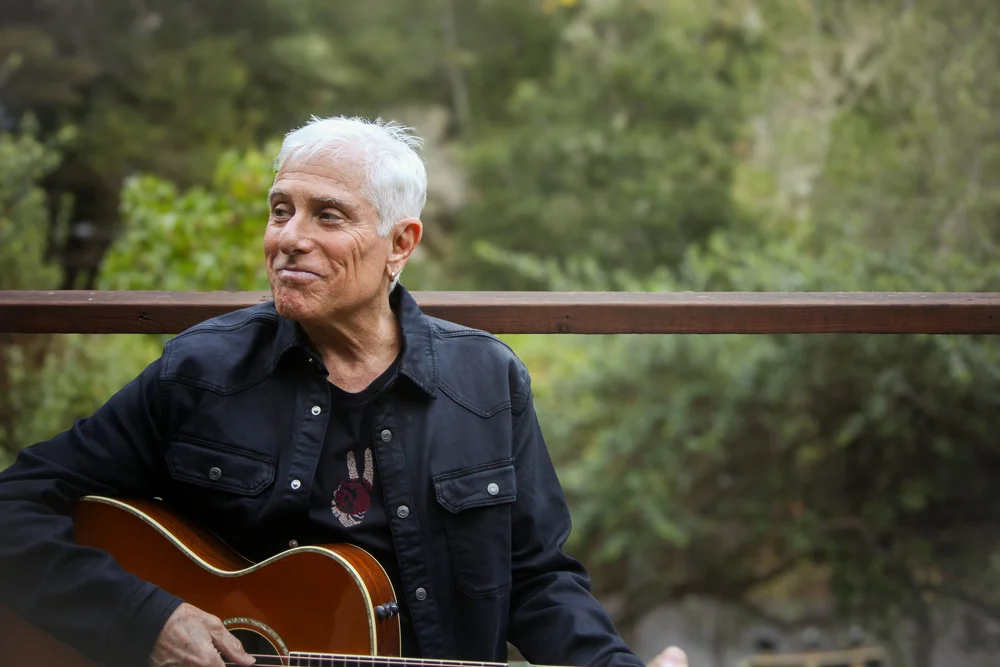
American kirtan singer, multi-instrumentalist, and pioneer of devotional sound in the West — one of the central figures, alongside Krishna Das, Snatam Kaur, and Deva Premal, in the…

View profileWebsite
Explore Topics
MantraDevotionNeem-karoli-babaSarnathJai-uttal

Got Questions?

Frequently Asked Questions

Jai Uttal is a musician and devotional figure who, in this nine-part video series, shares stories, music, teachers, challenges, and moments of grace that have shaped his path of devotion. In Episode 5, Part 3, he recalls his early years in India, including his time with Neem Karoli Baba, whom he calls Maharaji.
After an intense dose of bhang, Jai climbed a Buddhist stupa at Sarnath to watch the sunrise and meditate. He says he heard Maharaji's voice repeating the word "Ram" inside his head, and that this single mantra replaced the complicated chakra-based meditation he had been practicing.
Jai says he had not realized how attached he had become to his teacher until the gatekeeper told him Maharaji had left in the middle of the night. The loss revealed a deep well of grief he had been carrying without knowing it.
Jai describes the mantra as a simple three-letter word that drained away his conceptual ideas about spirituality and enlightenment. He calls it the mainstay of his inner temple, a support that has remained with him since that morning in Sarnath.
Jai does not claim a formal initiation. He says, with humility, that he doesn't want to be presumptuous, but feels that the moment at Sarnath was when Maharaji initiated him.
Jai describes a demanding method learned from yogis who came to the United States, with a visualization, sound, and color for each chakra, plus an associated fruit, vegetable, and dessert. Each chakra had to be fully visualized and heard before moving to the next.
Continue Reading

More from Jai

View All
Om Namah Shivaya Chant: Ecstatic Trance Meditation
Inspire

Om Namah Shivaya Chant: Ecstatic Trance Meditation

Jai Uttal guides listeners into an ecstatic chant trance with Om Namah Shivaya, the Sanskrit invocation of Shiva consciousness. A 91-second …

1 min read
Om Namah Shivaya: Inside a Live Maha Shivaratri Chant
Inspire

Om Namah Shivaya: Inside a Live Maha Shivaratri Chant

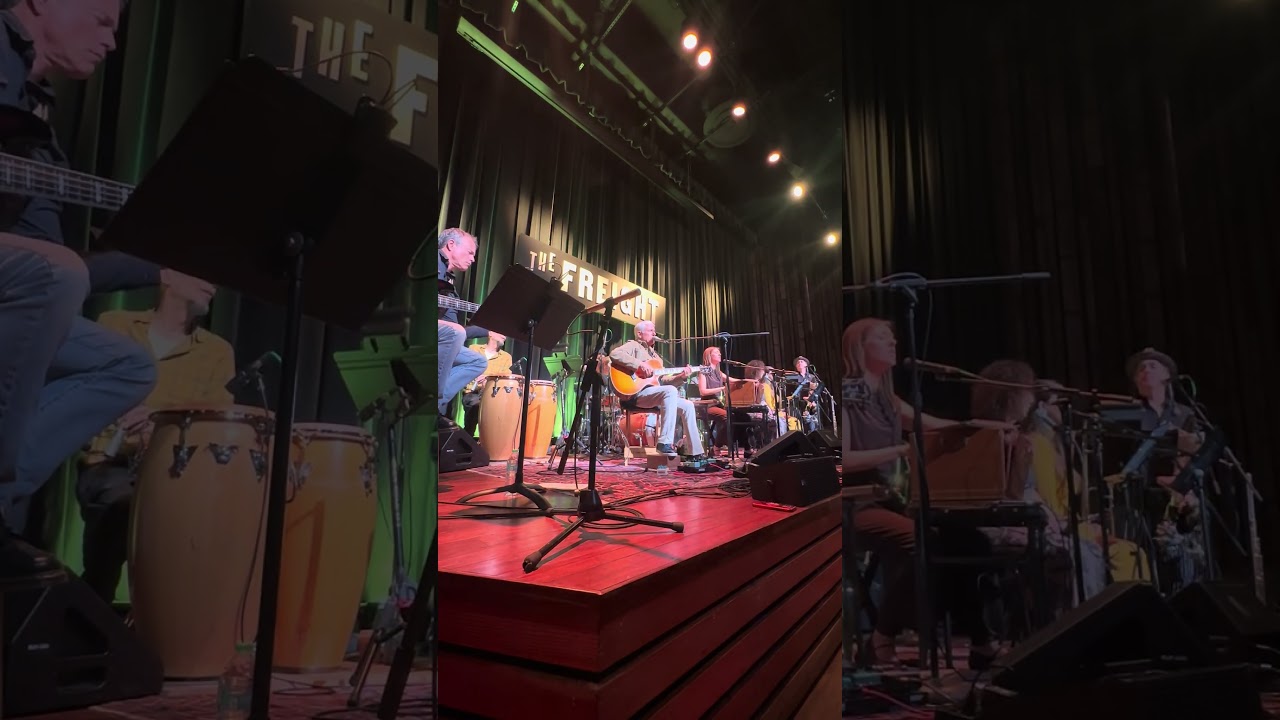
A two-and-a-half-minute recording of Om Namah Shivaya, captured live at The Freight in Berkeley on Maha Shivaratri 2020. Here is what the ch…

1 min read
Why Feeling Lazy After Awakening Is Normal: Being vs. Doing
Inspire

Why Feeling Lazy After Awakening Is Normal: Being vs. Doing

Feeling deeply connected yet strangely lazy after a spiritual awakening is more common than it seems. Eckhart Tolle explains why it happens …

1 min read
Opening a Lighthouse: Gratitude, Seva and Song in Mumbai
Inspire

Opening a Lighthouse: Gratitude, Seva and Song in Mumbai

A three-hour live ceremony in Borivali West reopens a Brahma Kumaris service center. Here is how gratitude, seva and devotional song shape t…

1 min read

Keep exploring

Continue your journey

More wisdom and gatherings from across the BrightStar directory.

More Articles

Browse the full library of teachings, interviews, and guides.

Back to all articles →

Teachers & Artists

Explore the lineages, musicians, and guides of the conscious world.

Explore artists →

Find an Event

Kirtan, retreats, sound baths, breathwork, festivals — happening soon.

Browse events →