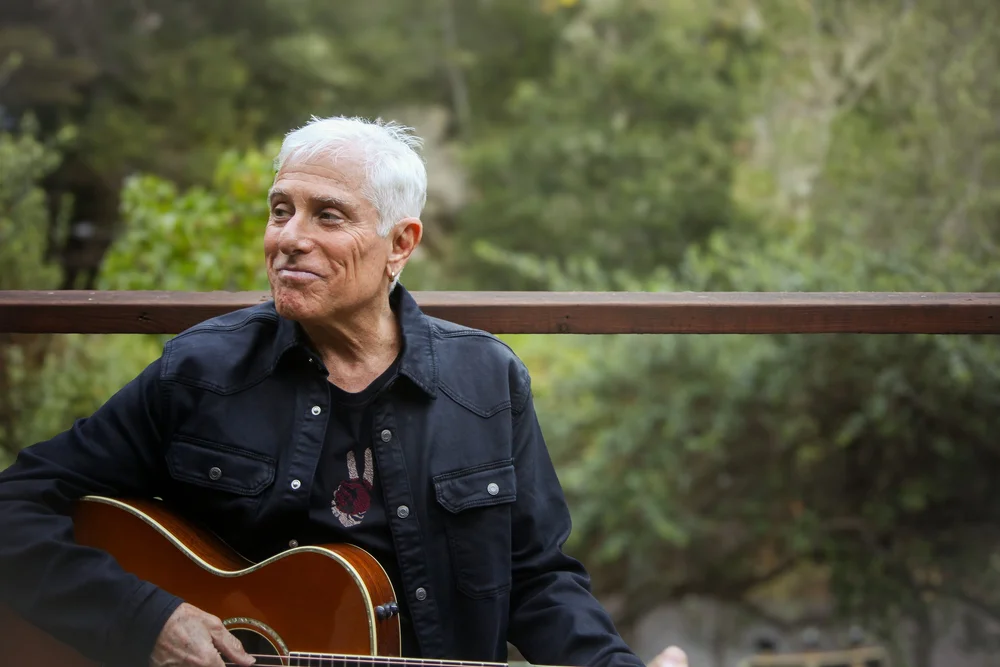
Two minutes and fifty-six seconds of recorded sound, a room in Berkeley, and five syllables handed back and forth until they stop feeling like words at all. This is Jai Uttal's live recording of "Om Namah Shivaya," captured at The Freight in Berkeley, California, on February 19, 2020, for Maha Shivaratri, the festival dedicated to Shiva. There is no lecture in it, no introduction, and almost no spoken word. What the listener gets is the chant itself: a sung phrase, a hum of instruments underneath, and a group voice that rises, returns, and rises again. Read closely, the recording is a lesson in how a devotional chant works when it is sung in community rather than played back on a screen.
The recording opens on instrumental texture before the first voice enters. Around the twelfth second the word "Om" comes in, sung on its own, and then "Namah Shivaya" follows. From there the pattern repeats with small variations: a sung "Om," a sung "Namah," a sung "Shivaya," and sometimes the phrase is broken so that a single syllable is stretched across a breath. Music fills the gaps between the vocal lines, so the sound never fully drops out.
The structure is call and response, the basic architecture of kirtan, the devotional chanting tradition in which a leader sings a phrase and a group answers it. In this recording the answer and the call blur together, and it is hard to tell where one singer's line ends and the next begins. That blurring is the point. A kirtan is not a performance that people watch; it is a sound that everyone in the room is making.
Listen for the places where the voices seem to drop out and the music carries on alone for a moment, around the seventy-second mark and again near the one-hundred-and-thirty-first. Those gaps give the ear a rest before the phrase picks up again. They also make the return of the voices feel like something arriving rather than something continuing.
"Om Namah Shivaya" is one of the most widely sung mantras in Shaiva devotion. The phrase is built from five syllables, na-ma-shi-va-ya, and is commonly rendered as "I bow to Shiva" or "salutations to Shiva." It is often called the Panchakshari mantra, from the Sanskrit for "five-syllable." The word "Om" that opens it is traditionally understood as a sacred sound placed before the name, and it is sung here as its own held note.
Why repeat so short a phrase? Repetition is the working method. When the same five syllables go around a room many times, the attention that began by parsing the words has to let go of them. The mind stops translating and starts listening. This is the reason kirtan leaders keep the lines simple: the phrase is short enough to be carried by anyone present, including people who have never sung it before and do not know its meaning. The meaning does not disappear, but it moves from the head into the breath and the body.
Notice too how the rhythm of the chant shifts from one pass to the next. Some lines are sung in a steady pulse, others float with more space between words. A kirtan of this kind does not hold one tempo for its full length. It breathes, speeds up and slows down with the energy of the room, and returns to the phrase when the room needs grounding.
Around the one-hundred-and-forty-eighth second a spoken line cuts through the sung texture: "One more time." It is the only moment in the excerpt where the leader's voice speaks plainly instead of singing. It matters for two reasons. First, it shows that the chant is being guided live, with someone calling the room back into the phrase when attention drifts. Second, it reveals the chant's built-in logic. The practice does not end when it feels complete. It ends when the group has given the phrase one more pass than felt necessary.
That habit of going one more time is one of the quieter disciplines in devotional singing. It asks the singers to stay with the same five syllables past the point where novelty has worn off, and that is where the phrase starts to do its work on the room. A chant that stopped at its first satisfying moment would never reach the state the repetition is designed to open.
The recording is tied to a specific occasion. Maha Shivaratri, often described as the great night of Shiva, is observed in the Hindu calendar as a night devoted to Shiva, and devotees mark it with prayer, fasting, and chanting through the hours of darkness. Holding a Shiva mantra in a public room on that night places the singing inside a long calendar of observance rather than a single concert. The date on the recording, February 19, 2020, anchors it to one particular gathering in Berkeley, and it is the place and the year that give this two-and-a-half-minute clip its historical fixity.
The video was published on YouTube in September 2026, more than six years after it was recorded, and the description supplied with the upload carries no further commentary. That silence is useful. It means the recording stands on its own sound, and the listener's job is to meet it there.
Give it the full two minutes and three seconds without doing anything else. If you can, sing along quietly, even if you do not know the tune. Keep your attention on the five syllables rather than on who is singing which line. When the music drops out for a moment, let the silence it leaves register before the next voice arrives. Then try the same experiment with a friend: one of you calls "Om Namah," the other answers "Shivaya," and you trade back and forth until the phrase begins to feel lighter.
What you are practicing is what the recording itself models: returning to a short, shared phrase, again and again, and letting the repetition carry you past the stage where you are thinking about the words.
Listen to the recording a second time, this time focusing only on the gaps where the voices fall away and the instruments continue. Then sing the phrase with someone else in the room, trading the call and the response. If you want to explore the wider tradition, look for other Shiva mantras and devotional kirtan recordings, and notice how each one builds its own rhythm from the same basic pattern of call, response, and return. This excerpt is short, but the practice it captures is one people have carried for a very long time.


