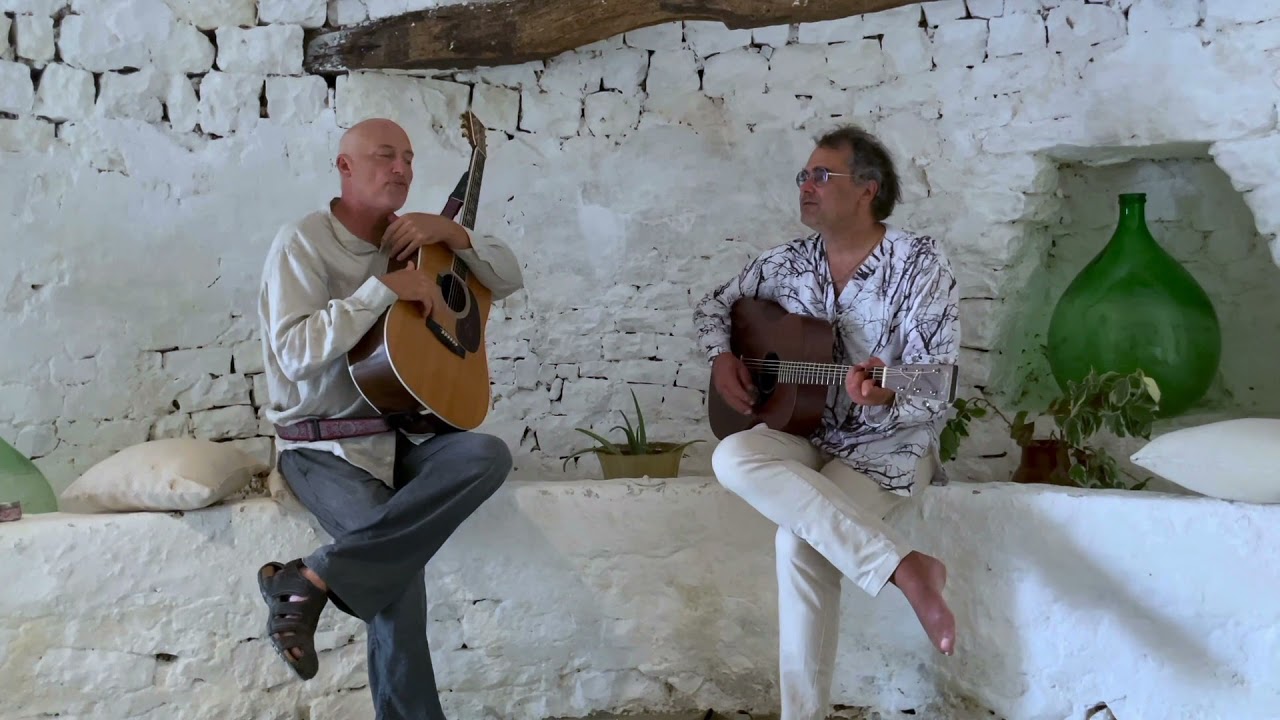
On a Diwali evening at Parmarth Niketan in Rishikesh, the sacred Ganga receives a gift of song. As the sun sets and the aarthi ceremony unfolds—that ancient ritual where light and devotion merge at the river's edge—Saul David Raye, Jim Beckwith, and Chase Nichter offer "The River is Flowing," their voices joining thousands of years of devotional practice at one of Hinduism's holiest sites. In ninety seconds, the video captures something essential to kirtan, the Sanskrit term for call-and-response chanting where the boundary between singer and listener dissolves, becoming a vehicle for prayer itself.
Rishikesh, nestled where the Ganga emerges from the Himalayas, has drawn pilgrims for thousands of years. The evening aarthi—literally a wave of light—is performed daily on the ghats (stone steps) where the river flows. During Diwali, the festival of lights, the ceremony carries amplified weight: thousands of oil lamps flicker on the water, the air fills with prayer and song, and the entire landscape becomes an altar to the principle of light overcoming darkness.
Parmarth Niketan ashram, which hosts this moment, has opened its evening aarthi to people of all faiths and backgrounds—a significant choice that keeps the ancient practice alive while inviting modern seekers into its embrace. When Western musicians participate, they continue a lineage extending centuries back: visiting devotees and teachers bringing their own voices to sacred sites, making the devotional impulse portable across geography and culture.
The song itself, "The River is Flowing," carries one of kirtan's simplest and most profound affirmations: "I love you." That declaration, repeated with melody and breath, stops being words and becomes an invocation, a prayer, a surrender. In the context of the Ganga—understood in Hindu tradition as the physical embodiment of the divine mother—the song's metaphor becomes literal. The river does flow. Devotion flows. And if you listen closely, grace flows through the moment and into you.
This ninety-second clip documents a moment within a much longer ceremony and tradition. To explore kirtan more deeply, understand the spiritual significance of Rishikesh and the Ganga, and follow the ongoing work of these musicians, seek out Jim Beckwith's channel and the growing community of Western practitioners who've devoted themselves to devotional traditions rooted in Indian spirituality. The teaching here isn't intellectual—it's in the listening, the participation, the opening of your own voice to the river.