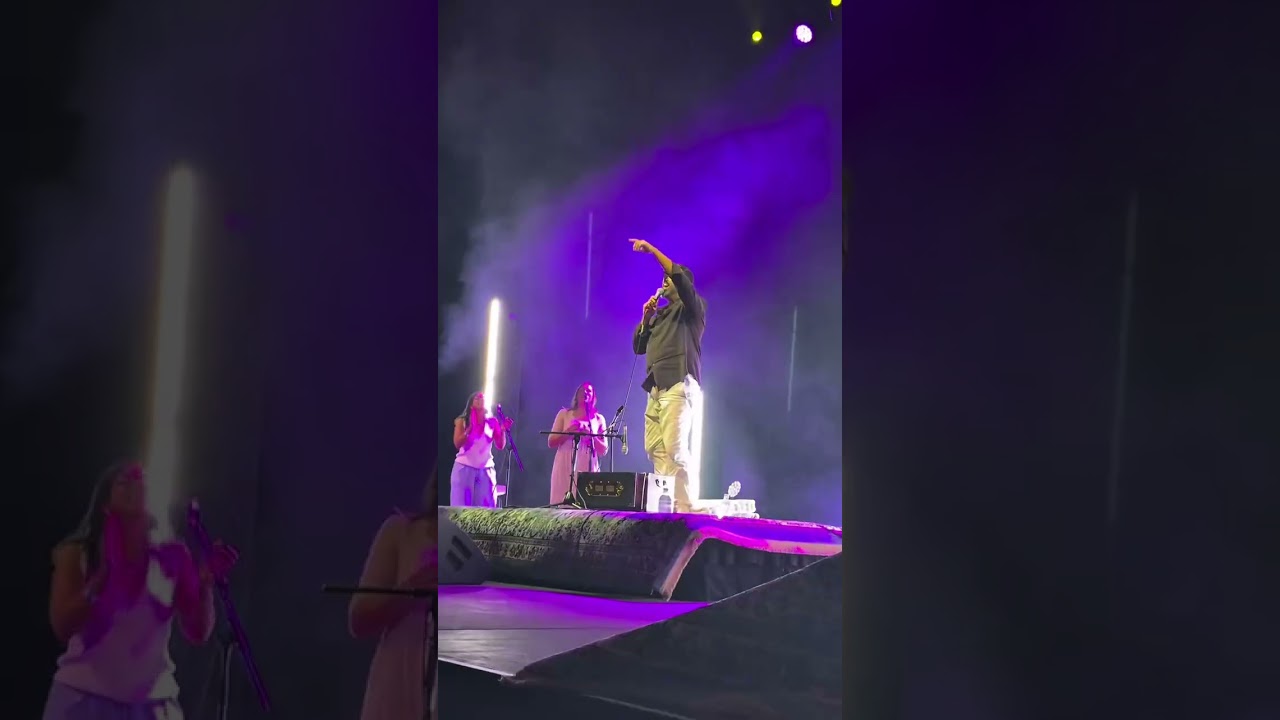
What happens when psychedelic music meets visionary art?
This 2012 live performance at Rock N Roll Resort brings together two major voices in contemporary visionary culture: Shpongle, the British psychedelic electronic duo known for their intricate, otherworldly soundscapes, and Alex Grey (also credited as Allyson Grey), the renowned visionary artist whose paintings explore consciousness, spirituality, and the interconnection of all beings. The collaboration centers on the theme of "Devine Moments of Truth," a phrase that echoes Shpongle's 2012 album of the same name and suggests the event's focus on altered states of consciousness and direct experience of the sacred.
The performance format—music paired with projected visionary artwork—creates a multi-sensory environment designed to facilitate what participants might call transcendental or visionary experience. This approach reflects a longstanding tradition in consciousness exploration: the use of synchronized sound and image to access deeper states of awareness. Unlike typical concert experiences, this setup intentionally uses audio-visual synergy as a tool for contemplative or psychedelic insight.
Who are Shpongle and what do they represent?
Shpongle is the collaborative project of Simon Posford and Raja Ram, electronic musicians who emerged from the UK psytrance and psychedelic music scene in the 1990s. Their signature sound blends organic instruments (strings, woodwinds, percussion from various world traditions) with digital synthesis, creating densely layered compositions that evoke states of vastness and inner exploration. Rather than dance-floor energy, Shpongle's music typically emphasizes introspection and journey—listeners often describe their work as cinematic and psychologically immersive.
The title "Devine Moments of Truth" points toward Shpongle's thematic interests: consciousness itself, the boundaries between material and non-material reality, and the possibility of direct gnosis or knowing beyond conceptual thought. In psychedelic and visionary communities, a "moment of truth" typically refers to an unmediated encounter with reality—a dissolution of the habitual self-boundary that allows access to broader awareness or transcendent perception.
What is Alex Grey's visionary art tradition?
Alex Grey is best known for his anatomical, energetic, and visionary paintings that depict the human body as a transparent vessel through which light, chakras, meridians, and spiritual energy flows. His work draws from multiple traditions: Western anatomical science, Eastern chakra systems, Christian mysticism, and psychedelic phenomenology. Grey's paintings often show the skeleton, organs, and nervous system alongside geometric light patterns and what he describes as the "spiritual anatomy" underlying physical form.
Grey's visual language suggests that consciousness is not confined to the brain or body but pervades all matter and connects all beings. His art serves as both documentation of his own visionary experiences and as a tool for viewers to access similar states. By presenting the human form as transparent and luminous, Grey invites viewers to see themselves and others as fundamentally unified with light and cosmic energy. This vision aligns closely with experiences reported in psychedelic states, where boundaries dissolve and consciousness appears to extend beyond the individual.
How does music synchronize with visionary imagery?
The pairing of Shpongle's elaborate compositions with Grey's paintings creates a feedback loop: music provides temporal structure and emotional contour, while visuals offer spatial and conceptual anchoring. This technique has deep roots in visionary and shamanic practice, where rhythm, melody, and imagery work together to guide consciousness through specific states or landscapes.
Psychologically, the combination exploits a principle known as cross-modal perception—the brain's tendency to integrate information from multiple sensory channels into a unified experience. When sound and image are coordinated, listeners report heightened vividness, emotional intensity, and sense of coherence or meaning. In the context of a psychedelic or contemplative experience, this synchronization can deepen the felt sense of significance or access to deeper layers of awareness.
Shpongle's music, with its intricate melodic detail and layered textures, provides plenty of variation to sustain attention while creating space for internal processing. Grey's paintings—which themselves contain enormous visual complexity and symbolic density—match this quality, allowing the eye and mind to move through multiple levels of meaning and perception simultaneously.
What does "Divine Moments of Truth" signify in consciousness work?
In spiritual and psychedelic communities, a "moment of truth" typically describes a direct, non-conceptual knowing—an experience where the usual boundaries between self and world, or between individual and infinite, temporarily dissolve. The word "divine" (spelled "Devine" in the event title, possibly as a playful reference or intentional variation) suggests recognition of the sacred or transcendent dimension of such moments.
These experiences are described across traditions: the Vedantic concept of moksha (liberation), the Sufi notion of fana (annihilation of the self), the Christian mystic's union with God, or the psychologist William James's "noetic quality" in mystical experience—a sense that one has encountered something fundamentally real and true. In each case, the moment is characterized by its authority: it feels absolutely real and true in a way that overrides skepticism or doubt.
Shpongle and Grey both work within this framework, treating artistic and musical expression as invitations to such encounters. Rather than asserting doctrine or belief, they offer environments—sonic and visual—designed to support the emergence of direct experience.
What does this collaboration reveal about contemporary visionary practice?
This 2012 Rock N Roll Resort performance exemplifies how visionary culture has evolved in the 21st century. Rather than underground subculture, events like this represent an emerging ecosystem where artists, musicians, and consciousness explorers gather in public, semi-public, or festival settings to explore expanded states of awareness and spiritual understanding. The performance is documented in high definition and shared online, suggesting a normalization of visionary practice and a desire to make these experiences more accessible.
The collaboration also reflects a democratization of tools for consciousness exploration. Whereas historically such experiences might have required a guru, shamanic practitioner, or institutional religious context, contemporary visionary culture makes them available through art, music, and technology. A person without formal training in meditation or spiritual practice can enter a venue, be immersed in synchronized sound and image, and access states or insights that previous generations might have required years of disciplined practice to achieve.
However, this raises questions about the nature of such experiences and their lasting impact. Direct sensory stimulation and cross-modal perception can certainly evoke profound states and insights. Whether these translate into sustained transformation or understanding depends on integration—whether the person has practices, community, or frameworks to make sense of and embody what they've experienced.
Where to go from here
If this exploration of visionary art and psychedelic music resonates with you, consider exploring the work of both artists independently. Alex Grey's books and paintings offer ongoing visual studies in consciousness and interconnection, while Shpongle's discography provides rich sonic territory for contemplation. You might also investigate the broader world of visionary festival culture—events like Burning Man, Lightning in a Bottle, and dedicated consciousness festivals that similarly merge music, art, and spiritual practice.
For deeper understanding of the traditions underlying visionary experience, explore contemplative practices like meditation, which offer more gradual and self-directed approaches to expanded awareness. Reading in mysticism—whether Christian, Islamic, Hindu, or Buddhist traditions—can provide conceptual frameworks for understanding and integrating visionary states. Finally, if you find yourself drawn to events that blend music, art, and consciousness exploration, approach them with both openness and discernment: such experiences can be powerful gateways to insight, but their value depends on how thoughtfully you engage with and integrate what arises.