BrightStar

Browse All Events

Discover conscious gatherings

events

Yoga
Meditation
Breathwork
Qigong
Tai Chi
Sacred Music
World Music
Medicine Music
Sound Healing
Ecstatic Dance
Popular Destinations
BaliSedonaLos AngelesCosta RicaNew YorkSan FranciscoAustinMiamiJoshua TreeTulum
View All CategoriesView All Destinations

Explore All Features

Powerful tools to grow your events

Platform Features

Smart Dynamic Pricing
Ticket Categories
Assigned Seating
Abandoned Cart Recovery
Visitor Recovery
Donations & Sliding Scale
Affiliate Engine
Ticket Scanner
Coupon Codes
Custom Questions
Ticket Sharing
Upsells & Add-ons
Analytics & Reporting
Email Sequences
Waitlist / Notify / Remind
People & Places
Artists & TeachersEvent OrganizersVenues & StudiosKnowledge BaseGlossaryInspiration
View All FeaturesAbout Us
PricingBlog
Language
Saved events
Browse All Events

events

YogaMeditationBreathworkQigongTai ChiSacred MusicWorld MusicMedicine Music

Popular Destinations

BaliSedonaLos AngelesCosta RicaNew YorkSan Francisco

People & Places

Artists & TeachersEvent OrganizersVenues & StudiosKnowledge BaseGlossaryInspiration

Platform Features

Smart Dynamic PricingTicket CategoriesAssigned SeatingAbandoned Cart RecoveryVisitor RecoveryDonations & Sliding ScaleAffiliate EngineTicket ScannerCoupon CodesCustom QuestionsTicket SharingUpsells & Add-onsAnalytics & ReportingEmail SequencesWaitlist / Notify / Remind
View All FeaturesAbout Us
PricingBlog
Log inFind EventsHost Events
  • Browse All Events
  • For Seekers
  • Yoga
  • Meditation
  • Breathwork
  • Qigong
  • Tai Chi
  • Sacred Music
  • World Music
  • Medicine Music
  • Sound Healing
  • Ecstatic Dance
  • Retreats
  • Workshops
  • All Categories →
  • Bali
  • Sedona
  • Los Angeles
  • Costa Rica
  • Tulum
  • Byron Bay
  • San Francisco
  • Austin
  • New York
  • San Diego
  • Denver
  • Seattle
  • Portland
  • Miami
  • All Cities →
  • Join the Movement
  • Why we list
  • Sell Globally
  • For Creators
  • For Teams
  • For Writers
  • For Teachers
  • For Kirtan Artists
  • For Studios
  • For Festivals
  • For Retreat Centers
  • For Nonprofits
  • Brand Ambassador
  • Case Studies
  • Free Ticketing
  • Elevate
  • Amplify
  • 500K+ Buyer Network
  • Abandoned Cart Recovery
  • Smart Dynamic Pricing
  • Ticket Categories
  • Recurring Events
  • Assigned Seating
  • Affiliate Engine
  • Waitlist / Notify
  • Ticket Scanner
  • Embed Widget
  • Event Syndication
  • Message Center
  • Integrations
  • Reports
  • All Features →
  • About
  • The Ecosystem
  • Blog
  • Glossary
  • Inspiration
  • Help Center
  • Contact
  • API Docs
  • Brand Assets
  • Careers
  • Press
  • Terms of Service
  • Privacy Policy

Events

  • Browse All Events
  • For Seekers
  • Yoga
  • Meditation
  • Breathwork
  • Qigong
  • Tai Chi
  • Sacred Music
  • World Music
  • Medicine Music
  • Sound Healing
  • Ecstatic Dance
  • Retreats
  • Workshops
  • All Categories →

Destinations

  • Bali
  • Sedona
  • Los Angeles
  • Costa Rica
  • Tulum
  • Byron Bay
  • San Francisco
  • Austin
  • New York
  • San Diego
  • Denver
  • Seattle
  • Portland
  • Miami
  • All Cities →

For Creators

  • Join the Movement
  • Why we list
  • Sell Globally
  • For Creators
  • For Teams
  • For Writers
  • For Teachers
  • For Kirtan Artists
  • For Studios
  • For Festivals
  • For Retreat Centers
  • For Nonprofits
  • Brand Ambassador
  • Case Studies
  • Free Ticketing
  • Elevate
  • Amplify

Features

  • 500K+ Buyer Network
  • Abandoned Cart Recovery
  • Smart Dynamic Pricing
  • Ticket Categories
  • Recurring Events
  • Assigned Seating
  • Affiliate Engine
  • Waitlist / Notify
  • Ticket Scanner
  • Embed Widget
  • Event Syndication
  • Message Center
  • Integrations
  • Reports
  • All Features →

Company

  • About
  • The Ecosystem
  • Blog
  • Glossary
  • Inspiration
  • Help Center
  • Contact
  • API Docs
  • Brand Assets
  • Careers
  • Press
  • Terms of Service
  • Privacy Policy
BrightStar
© 2026 BrightStar. All rights reserved.
Inspiration

Raag Kirwani Signature Phrases: Melodic Building Blocks

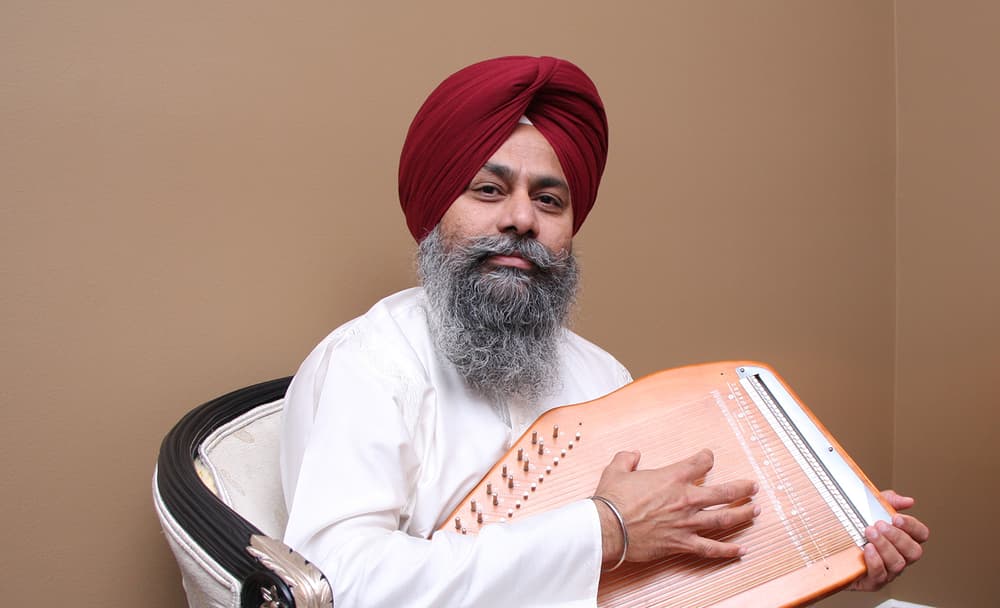
Professor Paramjeet Singh
Apr 8, 2022
7 min read

Raag Kirwani is a nocturnal raga in Hindustani classical music characterized by specific melodic phrases and patterns that define its emotional and structural identity. Professor Paramjeet Singh breaks down the signature phrases—the recurring melodic motifs that musicians use as building blocks—to establish the raga's distinct character. These phrases are not merely ornamental but constitute the grammar of the raga, teaching practitioners and listeners how Kirwani moves through its scale space and expresses its particular mood.

Read · 7 sections

What Is Raag Kirwani?

Raag Kirwani belongs to the Asavari thaat, one of ten foundational frameworks in Hindustani classical music. It is classified as a nocturnal raga, performed during evening hours, and is known for its somber, introspective, and deeply emotive character. The raga uses specific notes from the Indian solfège system (sa, re, ga, ma, pa, dha, ni), and these notes are combined according to rules that govern which notes ascend, which descend, and which combinations are permitted or forbidden.

Unlike Western musical scales where any note can follow any other, raag music operates under strict melodic constraints. These constraints are not limitations but rather the source of the raga's identity. A raga is recognized not primarily by its notes but by its characteristic melodic phrases—the specific patterns in which those notes are assembled.

Why Do Signature Phrases Matter in Raag Performance?

Signature phrases, also called mukhras or characteristic phrases, are the recognizable melodic patterns that define a raga. When a listener hears a particular phrase, they immediately recognize the raga, even if isolated from the larger composition. For musicians, these phrases serve as anchors during improvisation, providing consistent reference points around which to build complex elaborations.

In Hindustani classical music, a performer does not simply play through a scale. Instead, they explore a raga by developing its characteristic phrases over the course of a performance. A brief bandish (composition) or a simple melodic idea is expanded through a process called aalap—a free-form, improvised exploration of the raga's melodic space. Within this exploration, signature phrases recur, providing structure and maintaining the raga's identity.

Understanding these phrases is essential for several reasons:

  • Recognition: They allow a listener or student to identify the raga definitively and distinguish it from similar ragas.
  • Improvisation: They provide musicians with a scaffold for creativity, allowing them to elaborate within a clear framework.
  • Tradition: They represent the accumulated musical wisdom of generations of performers, encoding centuries of aesthetic choices.
  • Teaching: They make the raga teachable by breaking it into learnable units rather than treating it as an abstract collection of permissible notes.

The Role of Raag Kirwani in the Classical Repertoire

Kirwani holds a special place in Hindustani classical music. It is performed regularly in concert settings and is considered sufficiently accessible for serious students while remaining sophisticated enough to challenge advanced musicians. The raga's emotive quality makes it particularly suited to vocal performance, though it is also played on instrumental ragas such as sarangi, bansuri (flute), and sitar.

The raga's nocturnal classification connects it to traditional performance contexts—it was historically performed during night concerts (baithak style) where the mood and intimacy of the setting complemented the raga's meditative and inward-turning character. Even in modern concert contexts, Kirwani is often performed later in a recital, after lighter or more energetic ragas have been explored.

How Signature Phrases Encode Musical Structure

The signature phrases of Raag Kirwani function as a kind of musical vocabulary. Just as a writer builds sentences from vocabulary words, a raga musician constructs performances from phrase units. These units can be combined, varied, extended, or contracted according to the musician's interpretation and the demands of the moment.

A single signature phrase might occupy just four to eight beats in a rhythmic cycle (taal), or it might be stretched across multiple cycles through repetition and ornamentation. The way a musician interprets, ornaments, and extends these phrases—their personal touch or style (gharana)—distinguishes one performer's interpretation from another while maintaining the raga's essential identity.

The phrases encode several kinds of information simultaneously: the notes of the raga, the direction of melodic movement (ascending or descending), the intervals between notes (which can be subtle microtonal variations), and the emotional or aesthetic mood associated with particular note combinations. This multivalent encoding is why written notation alone cannot fully capture raag music—the phrases must be heard, learned through listening and imitation, and internalized through practice.

How to Study Raag Kirwani's Signature Phrases

For students beginning to study Kirwani, Professor Paramjeet Singh's approach involves isolating and repeatedly hearing these signature phrases in context. Rather than simply learning the notes of the raga in ascending and descending order, a student learns through exposure to recordings and live instruction how the raga actually moves and sounds when performed by accomplished musicians.

The learning process typically involves:

  • Listening: Repeated listening to professional performances to internalize the characteristic phrases and their feel.
  • Identification: Learning to recognize and name the signature phrases and understanding their role in the raga's structure.
  • Repetition: Practicing the phrases on one's instrument until they become muscular and intuitive.
  • Variation: Understanding how the phrases can be ornamented, extended, or combined with other phrases while preserving the raga's identity.
  • Performance: Incorporating the phrases into more complex improvisations and compositions.

Professor Paramjeet Singh's instructional approach emphasizes the primacy of sound and listening. Rather than teaching music primarily through notation or music theory, traditional training relies on oral transmission and imitation. A student hears the phrase, sees it demonstrated on the instrument, and replicates it until it becomes part of their intuitive musical vocabulary.

The Emotional and Aesthetic Dimension of Kirwani

Beyond their structural function, the signature phrases of Kirwani carry emotional and aesthetic weight. The raga is traditionally associated with a particular mood or rasa—in Kirwani's case, a quality of melancholy, introspection, yearning, or tender emotion. The signature phrases are composed in such a way that they naturally express this mood. The intervals chosen, the emphasis on particular notes, and the direction of melodic movement all contribute to this emotional communication.

A listener may not consciously analyze the phrases, but they receive the emotional communication that the phrases encode. This is part of what makes raag music resonate with audiences across centuries and cultures—the phrases function as emotional and aesthetic vehicles, not merely as structural or technical units.

Where to Go from Here

To deepen your understanding of Raag Kirwani beyond this article, seek out recordings of accomplished Kirwani performances by vocalists such as Jasraj or Prabha Atre, or instrumentalists such as Ali Akbar Khan. Listen actively and repeatedly to the same performance, beginning to notice the recurring phrases and how they shape the raga's development over the course of thirty minutes or more.

If you are interested in learning to sing or play Kirwani yourself, pursue traditional training under an experienced guru or through online instruction that emphasizes listening and imitation over notation. The signature phrases are best learned not from a description but from the living demonstration and guidance of an experienced musician.

Continue exploring other ragas in the Asavari thaat family, such as Asavari itself, Darbari, and Jogiya. Comparing how different ragas within the same thaat use overlapping note sets but create distinct identities through different signature phrases will deepen your understanding of how raag construction works.

Comments

Loading the conversation…

Professor Paramjeet Singh
ArtistProfessor Paramjeet Singh

Professor Paramjeet Singh is an Indian classical vocalist and Sikh kirtan artist who has mastered over 125 ragas and devoted his career to preserving the devotional music of saints…

View profileWebsite
Explore Topics
Raag-kirwaniHindustani-classical-musicSignature-phrasesRaga-structureMelodic-patterns

Got Questions?

Frequently Asked Questions

Signature phrases, or characteristic melodic patterns, are the recognizable motifs that define a raga. They allow listeners to identify the raga immediately and serve musicians as anchors during improvisation and structural development of a performance.
Raag Kirwani is a nocturnal raga in the Asavari thaat known for its emotive, introspective character. Its specific signature phrases, note relationships, and melodic constraints distinguish it from other ragas while allowing it to maintain identity across different performances and interpretations.
No. Raag music must be learned primarily through listening and imitation under guidance from an experienced musician. Written notation cannot capture microtonal variations, timing subtleties, ornamentation, and the emotional nuances embedded in the signature phrases.
These rules define the raga's identity and emotional character. The constraints are not limitations but rather the source of the raga's distinctiveness. The characteristic phrases that arise from these rules encode centuries of accumulated aesthetic wisdom and express the raga's particular mood.
Musicians improvise by elaborating, extending, ornamenting, and recombining the signature phrases within the raga's structural constraints. This creates infinite variation while maintaining the raga's essential identity—similar to how a writer can create unlimited sentences from a finite vocabulary.
Nocturnal ragas like Kirwani are traditionally performed during evening hours and are characterized by inward-turning, introspective, meditative qualities suited to that time of day. This classification connects to historical performance contexts and the raga's emotional and aesthetic associations.
Traditional training takes years of dedicated practice under a guru. Students begin by internalizing the signature phrases through listening and repetition, then gradually develop the ability to improvise and perform. The timeline varies significantly depending on the student's prior musical experience and daily practice.
Kirwani is considered accessible enough for serious students while remaining sophisticated for advanced musicians. It is regularly taught in classical music schools, though students typically begin with simpler ragas and progress to Kirwani once foundational skills are established.

Continue Reading

More from Professor

View All
Raag Rageshwari Practice: How Sargam Phrases Build a Raag
Inspire

Raag Rageshwari Practice: How Sargam Phrases Build a Raag

A classroom Raag Rageshwari drill built from sargam phrases shows how sur, voice control, taal and riyaz come together. Here is what the pra…

1 min read
Raag-Based Gurbani Kirtan: The Beauty of Mere Laalan Ki Sobha
Inspire

Raag-Based Gurbani Kirtan: The Beauty of Mere Laalan Ki Sobha

Learn how raag-based Gurbani kirtan preserves authentic Sikh devotional music through the shabad "Mere Laalan Ki Sobha," performed in classi…

1 min read
Awareness Beyond the Person: The Direct Path to Universal Consciousness
Inspire

Awareness Beyond the Person: The Direct Path to Universal Consciousness

At Monte Sahaja, a seeker discovers that consciousness itself—not the person—is the unchanging witness of all experience. A radical shift in…

1 min read
Return to Love: A Guide to Healing Through Kindness
Inspire

Return to Love: A Guide to Healing Through Kindness

A meditation-centered gathering focused on loving-kindness practice, breathwork, and dharma teaching. Explore how community and conscious pa…

1 min read

Keep exploring

Continue your journey

More wisdom and gatherings from across the BrightStar directory.

More Articles

Browse the full library of teachings, interviews, and guides.

Back to all articles →

Teachers & Artists

Explore the lineages, musicians, and guides of the conscious world.

Explore artists →

Find an Event

Kirtan, retreats, sound baths, breathwork, festivals — happening soon.

Browse events →