Transcript
[0:01] Welcome to the Journal. I want to
[0:03] introduce you to two people whose
[0:05] combined age is 172
[0:08] years. They've lived full and original
[0:10] lives, and they're still going strong.
[0:13] Reminding me of the iconoclast H.L.
[0:15] Mencken, who once said, "I go on working
[0:18] for the same reason that a hen goes on
[0:20] laying eggs." He had nothing on Grace
[0:23] Lee Boggs and Robert Bly.
[0:26] I first met Robert Bly back in 1979. He
[0:29] was reading from his portrait at Cooper
[0:31] Union here in New York. How amazed I am,
[0:34] after working hard in the afternoon,
[0:37] that when I sit down at the table with
[0:39] my elbows touching the elbows of my
[0:41] children, so much love flows out and
[0:44] around in circles.
[0:46] It wasn't hard to figure out why Bly was
[0:48] exerting such influence on aspiring
[0:50] American poets. He already enjoyed a
[0:53] large following, appealing to poetry
[0:55] lovers with powerful images of intimate
[0:58] subjects. More of the fathers are dying
[1:00] each day.
[1:02] It's time for the sons and the
[1:04] daughters.
[1:06] Bits of darkness are gathering around
[1:09] them.
[1:10] And the bits of darkness appear as
[1:13] flakes of light.
[1:16] Bly was daring in word and example. He
[1:18] was also controversial. In 1966, he had
[1:22] co-founded American Writers Against the
[1:24] Vietnam War. And when he won the
[1:26] National Book Award two years later for
[1:28] The Light Around the Body, he
[1:30] contributed the prize money to the
[1:31] resistance.
[1:33] Over the years, Robert Bly has ranged
[1:35] far and wide in his poems, with 30 or
[1:38] more books touching on spiritual
[1:39] insights and deep and dark truths about
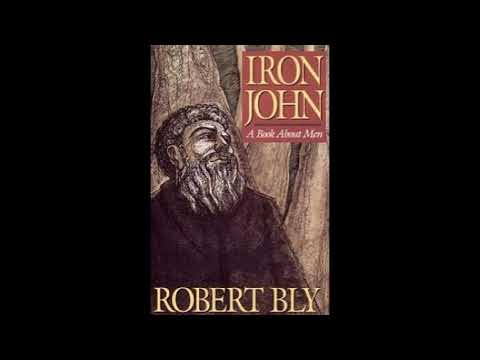
[1:42] American culture. His Iron John became
[1:45] an international bestseller and brought
[1:47] untold numbers of men to poetry.
[1:50] It is a massive masculine shadow, 50
[1:53] males sitting together in hall or
[1:56] crowded room, lifting something
[2:00] indistinct up into the resonating night.
[2:05] I've encountered Robert Bly again and
[2:06] again at poetry festivals and
[2:08] interviewed him about the passions of
[2:10] his life, including his work as an
[2:12] interpreter of the Islamic poets Rumi
[2:14] and Hafez.
[2:16] My ego is stubborn,
[2:19] often drunk,
[2:21] impolite,
[2:24] my loving
[2:26] finally sensitive,
[2:28] impatient,
[2:29] confused.
[2:32] Please take messages from one to the
[2:34] other.
[2:36] He was in town recently and I invited
[2:39] him over to the studio. He came bearing,
[2:41] as always, a satchel of books and eager
[2:44] to talk, as always, about poets and
[2:47] poetry. Welcome to the journal. Thank
[2:49] you.
[2:50] I love what the English professor said
[2:53] about you last year. He said, "Robert
[2:54] Bly is an important guy. He's so famous,
[2:56] I'm sometimes surprised to find he's
[2:58] still alive."
[3:00] I am surprised, too. You ever wake up
[3:02] surprised that you are still here?
[3:03] Yes, I do, very much. Present company
[3:06] accepted, who do you think's been the
[3:07] greatest American poet up to now? Well,
[3:10] Walt Whitman.
[3:11] You have to bring him in immediately.
[3:14] Why?
[3:15] Uh he does everything and and whenever
[3:18] you have a
[3:19] a person in another culture, like India,
[3:22] who is trying to make us understand what
[3:25] religion just in life is like in India,
[3:27] they quote they quote Whitman. When he
[3:29] begins
[3:31] uh calling out his beautiful lists of of
[3:35] people that he loves and things that he
[3:37] loves,
[3:38] uh the divine always comes into it. So,
[3:41] you just feel he is pretending to write
[3:44] about human beings.
[3:46] That he's some sort of messenger from
[3:49] the from God. You know, when I first met
[3:51] you, you were just barely 50 and you
[3:54] read this little poem.
[3:56] You remember this one?
[3:59] I live my life in growing orbits
[4:02] which move out over the things of the
[4:03] world.
[4:05] I have wandered in the face for hours
[4:07] passing through dark fires.
[4:10] And I have gone to the desert, to the
[4:11] parched places, to the landscape of
[4:13] zeros.
[4:15] And I can't tell if this joy is from the
[4:17] body or the soul or the third place.
[4:22] Well, that's very good you find that
[4:23] because when you say, "What is the
[4:25] divine?" it's much simpler to say,
[4:27] "There is the body, then there's the
[4:29] soul, and then there's a third place."
[4:30] Have you figured out what that third
[4:31] place is 30 years later? It's a place
[4:35] where
[4:36] all of the geniuses and the lovely
[4:40] people and the brilliant women and the
[4:43] all they all go there and they watch
[4:45] over us a little bit. And once in a
[4:46] while they'll say, "Drop that line, it's
[4:49] no good." Sometimes when you do poetry,
[4:51] especially if you do
[4:53] translate people like Hafez and Rumi,
[4:55] you go almost immediately to this third
[4:57] world.
[4:59] But we don't go there very often. Why?
[5:01] And I suppose it's because
[5:03] we think too much about our houses
[5:07] and our places.
[5:10] Maybe I should read a Kabir poem here
[5:12] which might
[5:14] Kabir is a poet from India.
[5:18] 14th century.
[5:20] Friend, hope for the guest while you are
[5:22] alive.
[5:24] Jump into experience while you are
[5:25] alive.
[5:26] Think and think while you are alive.
[5:28] What you call salvation belongs to the
[5:31] time before death.
[5:33] If you don't break your ropes while you
[5:35] are alive, do you think that ghosts will
[5:37] do it after?
[5:39] The idea that the soul will join with
[5:40] the ecstatic just because the body's
[5:42] rotten,
[5:44] that's all fantasy.
[5:46] What is found now is found
[5:49] And if you find nothing now,
[5:51] you will simply end up with an apartment
[5:53] in the city of death.
[5:55] I was going through Chicago one time
[5:56] with a young poet and and we were we
[5:58] writing it and he said, "If you find
[6:00] nothing now, you will simply end up with
[6:02] a suite in the Ramada Inn of death."
[6:06] It's very interesting to see how that
[6:09] thing really comes alive when you read
[6:10] it in terms of your own country. You'll
[6:12] end up with a suite in the Ramada Inn of
[6:14] death. If you make love with the divine
[6:16] now, in the next life you will have the
[6:17] face of satisfied desire.
[6:20] So, plunge into the truth, find out who
[6:22] the teacher is, believe in the great
[6:24] sound. Kabir says this, "When the guest
[6:27] is being searched for,
[6:30] he didn't use the word God.
[6:32] Capital G guest.
[6:34] When the guest is being searched for,
[6:36] it's the intensity of the longing for
[6:37] the guest that does all the work."
[6:40] And he says, "Look at me and you'll see
[6:41] a slave of that intensity."
[6:44] So,
[6:45] he's the first one that I ever went into
[6:47] who wrote two
[6:49] religious ones. You've been working a
[6:51] lot lately in Islamic poems of Islam,
[6:53] right? And the Muslims have a great
[6:56] literature.
[6:58] And a fantastic poets.
[7:00] Uh
[7:01] Rumi and Hafez have been
[7:03] the guiding lights, Rumi especially, of
[7:06] American poetry for the last five or 10
[7:07] years.
[7:09] But also, it seems to me that if we're
[7:11] doing so much attack upon the Muslim
[7:13] world,
[7:14] criticize the Muslim world so much, we
[7:16] should be able to give thanks for the
[7:18] genius that is there.
[7:20] So, this is Persian poetry or poetry in
[7:22] Farsi.
[7:23] The foods turned out by the factories of
[7:25] time and space are not all that great.
[7:28] Bring some wine because the good things
[7:30] of this world are not all that great.
[7:33] The true kingdom comes to you without
[7:35] any breaking of bones.
[7:36] If that weren't so, achieving the garden
[7:39] through your own labors wouldn't be all
[7:40] that great.
[7:43] In the five days remaining to you in
[7:44] this rest stop
[7:46] before you go to the grave, take it
[7:47] easy.
[7:48] Give yourself time because time is not
[7:51] all that great.
[7:53] Two more. You Puritans on the stone
[7:55] floor, you are not safe from the tricks
[7:57] of God's zeal. The distance between the
[7:59] cloister and the tavern we love is not
[8:02] all that great.
[8:03] And last stages, the name of our faith
[8:05] has been well inscribed in the books.
[8:08] But in our clan of disreputables the
[8:10] difference between profit and loss is
[8:12] not all that great.
[8:14] Do you see how he's withdrawing all our
[8:16] obsessions? I've got to get this done. I
[8:19] don't have much time left.
[8:22] So, he is a tremendous spiritual poet.
[8:25] Help me understand the popularity of
[8:26] Rumi, the 13th century mystical poet.
[8:29] Yes. I like geniuses.
[8:31] And um Rumi was a genius.
[8:33] Yeah, he was. I'm going to give you one
[8:35] that I
[8:36] I did
[8:37] translated? Yeah.
[8:39] I don't like it here, but I want to go
[8:40] back.
[8:42] According to the old knowers, if you're
[8:44] absent from the one you love even for 1
[8:46] second, that ruins the whole thing.
[8:49] There must be someone. Just to find one
[8:51] sign of the other world in this town
[8:52] would be helpful.
[8:54] I feel that in Minneapolis. Just to find
[8:56] one sign of the other world in this town
[8:58] would be helpful.
[8:59] You know the great Chinese Simurgh bird
[9:01] got caught in this net. What can I do?
[9:03] I'm only a man.
[9:05] My desire body, don't come strolling
[9:06] over this way. Sit where you are. It's a
[9:08] good place.
[9:10] When you want dessert, you choose
[9:12] something rich.
[9:13] When you choose wine, you look for
[9:14] what's clear and firm. What is the rest?
[9:20] Talking about what is the rest. The rest
[9:21] is television. What is the rest? The
[9:23] rest is mirages and blurry pictures and
[9:26] milk mixed with water. The rest is
[9:28] self-hatred and mocking other people and
[9:30] bombing.
[9:32] So, just be quiet and sit down.
[9:35] The reason is you're drunk. And this is
[9:38] the edge of the roof.
[9:40] Hm?
[9:41] It's a good poem even for the United
[9:43] States right now. Why?
[9:47] Um look for what's clear and firm. What
[9:48] is the rest? The rest is mirages and
[9:50] blurry pictures and milk mixed with
[9:52] water. That is a way to cheat in the old
[9:53] days.
[9:54] The rest is self-hatred
[9:56] and mocking other people
[9:58] and bombing.
[10:00] So, just be quiet and sit down.
[10:04] That'd be a good thing to say to both.
[10:06] Just be quiet and sit down. The reason
[10:08] is, you're drunk,
[10:10] and this is the edge of the roof.
[10:12] Hm?
[10:13] Your mature life has been bracketed by
[10:15] two wars, two long wars, Vietnam and
[10:19] Iraq. And you wrote poems against Iraq,
[10:21] and you wrote poems against Vietnam, and
[10:23] both of them went on. Yeah.
[10:25] Poetry didn't stop the war. No, it's
[10:28] never been able to do anything of that
[10:30] sort. It merely speaks to the soul so
[10:32] the soul can remember.
[10:35] So, it's quite proper to have all the
[10:37] poems against the war, and it's proper
[10:40] not to be disappointed if nothing
[10:41] changes. Would you like me to read the
[10:43] poem I have against the
[10:47] This is probably the first poem written
[10:48] against the
[10:50] Iraq war
[10:51] in August of 2002. This was before the
[10:54] invasion. Yeah.
[10:57] Tell me why we don't lift our voices
[10:58] these days and cry over what is
[10:59] happening.
[11:01] Have you noticed the plans are made for
[11:02] Iraq
[11:04] and ice cap is melting.
[11:07] I say to myself, go on crying.
[11:09] What's the sense of being an adult and
[11:11] having no voice? Cry out. See who will
[11:14] answer. This is call and answer.
[11:18] We will have to call especially loud to
[11:20] reach our angels
[11:21] who are hard of hearing.
[11:23] They are hiding in the jugs of silence
[11:26] filled during our wars. I was thinking
[11:29] of Grenada. I remember when we invaded
[11:31] Grenada, and why did we do that?
[11:33] We'll have to call especially loud to
[11:35] reach our angels who are hard of
[11:36] hearing. They are hiding in the drugs of
[11:38] silence filled during our wars. Have we
[11:40] agreed to so many wars that we can't
[11:42] escape from silence?
[11:45] If we don't lift our voices, we allow
[11:47] others who are ourselves to rob the
[11:49] house.
[11:51] How come we listen to the great criers?
[11:54] Neruda, Akhmatova, Thoreau, Frederick
[11:57] Douglas and now we're silent as sparrows
[12:00] in the little bushes.
[12:03] It's a very bad pun, but I left it in.
[12:06] We are silent as sparrows in the little
[12:08] bushes.
[12:10] Some masters say our life only lasts 7
[12:12] days.
[12:13] Where are we in the week? Is it Thursday
[12:15] yet? Hurry, cry now. Soon Sunday night
[12:19] will come.
[12:20] And Sunday night came when we bombed
[12:21] Baghdad.
[12:25] Where are we in the week? Is it Thursday
[12:26] yet? Hurry, cry now. Soon Sunday night
[12:29] will come.
[12:30] Why
[12:31] isn't there more outcry? If there were
[12:34] draft, then the outcry would be just as
[12:37] great as it was in the in the Vietnam
[12:39] War.
[12:40] Many of the in the in the people getting
[12:42] killed are the sons of of people in
[12:44] northern Minnesota or somewhere who
[12:46] don't have any access to protest.
[12:50] But it was a disaster choice like most
[12:52] of the other decisions he made and
[12:55] I go back to that acceptance speech you
[12:57] made in 1969 when you
[12:59] accepted the National Book Award, but
[13:01] you gave your $1,000 prize to the
[13:04] resistance against Vietnam. You said,
[13:06] quote, "As Americans, we have all
[13:08] Remember this is 1969.
[13:10] As Americans, we have always wanted the
[13:12] life of feeling without the life of
[13:15] suffering. We long for pure light,
[13:17] constant victory. We've always wanted to
[13:20] avoid suffering and therefore we are
[13:22] unable to live in the present." Mhm.
[13:26] You think that's still true today?
[13:28] So, isn't that amazing that it's
[13:29] happening that that the people in
[13:31] Washington are not suffering at all, but
[13:33] the ones who are suffering are those
[13:35] those young men who had bad education
[13:37] and and need to escape somehow from the
[13:39] trap of American life, and so they go
[13:41] there and get their legs and arms blown
[13:42] off.
[13:44] You went to Iran a few months ago. Tell
[13:45] me about that.
[13:46] Yes. They flew us to um
[13:49] to Shiraz, where Hafez's grave is.
[13:53] So, we get up in the morning, and we
[13:55] went to the grave. And about 8:00 in the
[13:57] morning, uh children started to come.
[14:00] Maybe a third-grade children.
[14:02] And they stood around the little tomb
[14:05] and sang a poem of Hafez's.
[14:08] Yeah, really charming. And then they
[14:09] went away, and now some fifth-graders
[14:11] came, and they stood around the tomb and
[14:13] sang a poem of Hafez's. And uh of
[14:15] course, every poem of Hafez's is
[14:17] connected with a tune. So, you teach the
[14:19] children the tune, and then they have
[14:21] the poem.
[14:22] So, I said to him, "Safi, isn't that
[14:24] unbelievable? And why don't we do that?
[14:26] Why don't we go to the grave of Walt
[14:28] Whitman
[14:29] and have children come there?" You know
[14:31] what I'm saying when I say that? I do. I
[14:32] don't have an answer. Why don't we?
[14:34] Because we don't we don't love we don't
[14:36] bring in Walt Whitman and love him in
[14:38] the way that the Iranians bring in their
[14:41] poets and love them.
[14:42] So, that'd be great if children could go
[14:44] to Walt Whitman's grave
[14:46] and recite little poems. What do you
[14:48] think it would mean if we
[14:50] went to the graves of our poets?
[14:51] You'd bring the poets into heart instead
[14:54] of having them in your head in graduate
[14:56] school.
[14:57] And that's what you do with children.
[14:59] You bring children in, and they get
[15:00] associated with the heart when they're
[15:02] very small. And then they can feel it
[15:04] all through their lives. You've been
[15:06] talking and writing a lot lately about
[15:08] the greedy soul. I'm glad you caught
[15:11] that. Read this.
[15:13] All right, thank you.
[15:15] More and more I've learned to respect
[15:16] the power of the phrase a greedy soul.
[15:18] We all understand what is hinted at with
[15:20] that phrase. It's the purpose of the
[15:22] United Nations to check the greedy soul
[15:24] in nations.
[15:25] It's the purpose of police to check the
[15:27] greedy soul in people.
[15:29] We know our soul has enormous abilities
[15:31] and worship and intuition coming to us
[15:33] from a very ancient past, but the greedy
[15:35] part of the soul
[15:37] what the Muslims call the nafs also
[15:39] receives attention from a very ancient
[15:41] past. The nafs is the covetous,
[15:44] desirous, shameless energy that steals
[15:47] food from neighboring tribes.
[15:49] Wants what it wants and is willing to
[15:51] destroy anyone who receives more good
[15:53] things than itself.
[15:55] In a writer, it wants praise.
[15:58] I wrote these three lines. I live very
[16:00] close to my greedy soul. When I see a
[16:02] book published 2,000 years ago, I check
[16:04] to see if my name is mentioned. This is
[16:06] really true. I've done that. Yes, I've
[16:08] checked that.
[16:09] So, in in writers, the nafs often enters
[16:13] in in the issue of how how much do
[16:16] people love me, how many people are
[16:18] reading my books, do people like it
[16:20] about me? Do you understand that? It
[16:22] probably affects you too in that way. Us
[16:24] journalists, never. Never. Okay. If the
[16:27] covetous soul feels that its national
[16:29] sphere of influence is being threatened
[16:30] by another country,
[16:32] it will kill recklessly and brutally.
[16:34] Impoverish millions, order thousands of
[16:36] young men in its own country to be
[16:38] killed, only to find out 30 years later
[16:40] that the whole thing was a mistake.
[16:42] In politics, the fog of war could be
[16:44] called the fog of the greedy soul.
[16:46] You know, the reason that that one says
[16:49] things like the greedy soul
[16:50] psychologically, there's no point in
[16:51] this war at all. It's not achieving
[16:53] anything, never would achieve anything.
[16:55] Only something as mad as the greedy soul
[16:58] could want it to begin and continue.
[17:01] It doesn't make any sense. As you say,
[17:03] the insanity of empire. Uh-huh.
[17:06] You know, Robert, you told me once many
[17:08] years ago that you tried to write a poem
[17:10] every day. Do you still do that? Yes,
[17:13] it's a joyful thing.
[17:16] Especially when I'm doing the ghazals
[17:17] because then I can do a poem um
[17:21] and and I get a few stanzas done every
[17:23] day anyway. Here are a couple of beers
[17:25] that I like. Read Read both of those.
[17:29] Think in ways you've never thought
[17:30] before.
[17:31] If a phone rings, think of it as
[17:33] carrying a message larger than anything
[17:34] you've ever heard, vaster than 100 lines
[17:36] of Yeats.
[17:39] Think that someone may bring a beer to
[17:40] your door, maybe wounded or deranged.
[17:43] And think that a moose has risen out of
[17:45] the lake and he's carrying on his
[17:47] antlers a child of your own whom you've
[17:49] never seen.
[17:51] When someone knocks on the door,
[17:54] think that he's about to give you
[17:55] something large,
[17:57] tell you you're forgiven,
[18:00] or that it's not necessary to work all
[18:02] the time,
[18:03] or that it's been decided that if you
[18:05] lie down, no one will die.
[18:08] So, that's for you, too, isn't it?
[18:11] When someone knocks at the door, think
[18:12] that he's about to give you something
[18:14] large,
[18:15] and then to tell Bill Moyers that you've
[18:17] been forgiven,
[18:19] that it's not necessary for you to work
[18:20] all the time,
[18:22] or that it's been decided that if you
[18:24] lie down, no one will die.
[18:27] So, well, that's a beautiful quality in
[18:29] you, the feeling that you that it isn't
[18:32] right for you to lie down, and I'm glad
[18:33] you're still working all the time.
[18:36] What about this one?
[18:37] This is one of your earliest that that
[18:40] you read to me many years ago, and I
[18:41] wonder if it still resonates with you.
[18:45] For my son Noah, 10 years old.
[18:48] Night and day arrive, and day after day
[18:50] goes by, and what is old remains old,
[18:53] and what is young remains young and
[18:54] grows old.
[18:56] The lumber pile does not grow younger,
[18:58] nor do the 2 by 4s lose their darkness.
[19:00] But the old tree goes on. The barn
[19:02] stands without help so many years. The
[19:04] advocate of darkness and night is not
[19:06] lost.
[19:07] The horse steps up, swings on one leg,
[19:10] turns its body. The chicken flapping
[19:12] claws onto the roost its wings ramping
[19:14] and walloping. But what is primitive
[19:17] is not to be shot out into the night in
[19:19] the dark.
[19:21] And slowly the kind man comes closer,
[19:23] loses his rage, sits down at table.
[19:28] That's the second stanza and the end of
[19:29] it I can feel that when I was about 35
[19:32] or 40 or so and I had children
[19:35] I I realized that what is primitive is
[19:38] me in me is not to be shot out all the
[19:40] time into the dark.
[19:42] Slowly the kind man comes closer
[19:44] loses his rage
[19:46] some of it
[19:47] sits down at table.
[19:49] So I am proud only of those days that
[19:51] pass in undivided tenderness.
[19:55] When you said drawing or making books
[19:58] stapled with messages to the world
[20:02] or coloring a man with fire coming out
[20:03] of his hair.
[20:05] This is my for my son Noah. Or we sit at
[20:08] the table with small tea carefully
[20:10] poured.
[20:11] So we pass our time together, calm and
[20:15] delighted.
[20:17] How do you reconcile that in the end?
[20:20] Well, what I've learned from the Muslims
[20:22] about the nafs
[20:24] helps me to understand
[20:26] that if I am demanding or or
[20:30] hopelessly aggressive with my children
[20:34] whatever
[20:35] that isn't me.
[20:37] It's it's the nafs.
[20:39] The greedy soul. The greedy soul. And
[20:41] that greedy soul is very powerful and
[20:43] doesn't want to be
[20:44] to be looked at. And
[20:47] my hope is that the greedy soul
[20:49] will hear my words
[20:52] and understand it.
[20:54] Um it isn't necessary. I'm 80 years old.
[20:56] How much more do I need a hat to obey
[20:58] the greedy soul? Isn't this enough?
[21:01] You got a point.
[21:02] Aren't I famous enough? Haven't I
[21:03] published enough books? I remember the
[21:05] first time I came to see you back in the
[21:06] late 70s, you were living in Moose Lake
[21:09] Yeah.
[21:09] Minnesota. You still there? Yeah, I
[21:11] still am. We have a house in
[21:12] Minneapolis, but I sometimes go back up
[21:14] to Moose Lake when I want to be by
[21:16] myself. Do you have a favorite from up
[21:18] there?
[21:19] A favorite from Moose Lake? How about
[21:20] after drinking all night with a friend?
[21:23] It says
[21:24] Oh, that's good.
[21:25] That sounds like Moose Lake.
[21:28] This is a poem from the 60s, really.
[21:31] Uh
[21:31] friend and I went up to a lake up north
[21:34] and
[21:36] After drinking all night with a friend,
[21:38] we go out in the boat at dawn to see if
[21:39] you can write the best poem.
[21:41] This is Bill Duffy. These pines, these
[21:43] fall oaks, these rocks, this water dark
[21:46] and touched by wind. I am like you, you
[21:48] dark boat, drifting over waters fed by
[21:51] cool springs.
[21:53] Beneath the water, since I was a boy, I
[21:55] have dreamt of strange and dark
[21:57] treasures, not of gold or strange
[21:59] stones, but the true gift beneath the
[22:02] pale lakes of Minnesota.
[22:04] This morning also, drifting in the dawn
[22:06] wind, I sense my hands and my shoes in
[22:09] this ink. Drifting is all of the body
[22:12] drifts above the clouds of the flesh and
[22:15] the stone.
[22:16] A few friendships, a few dawns,
[22:20] a few glimpses of grass,
[22:22] a few oars weathered by the snow and the
[22:24] heat. So, we drift toward shore
[22:27] over cold waters,
[22:29] no longer caring if we drift or go
[22:32] straight.
[22:34] So, the last line is pretty good, cuz
[22:36] it's got some You see something of the
[22:38] the hope that my nostrils get smaller. I
[22:40] didn't even know the word at that time,
[22:41] but So, we drift toward shore over cold
[22:43] waters, no longer caring if we drift or
[22:46] go straight. I I like these three lines
[22:48] from a poem in your book My Silence Was
[22:51] a Thousand Years of Joy. You say,
[22:53] "Robert, those high spirits don't prove
[22:55] you are a close friend of truth,
[22:58] but you have learned to drive your buggy
[23:00] over the prairies of human sorrow."
[23:01] Oh, good. Good.
[23:03] You like that one?
[23:03] Yeah, I do.
[23:05] So, what now for you?
[23:06] Well, I'm going to read something else
[23:08] here. I want to read this one poem
[23:10] before we quit.
[23:11] Stealing sugar from the castle, this has
[23:13] the word joy.
[23:14] We are poor students who stay after
[23:16] school to study joy.
[23:18] We are like those birds in the Indian
[23:20] mountains. I'm a widow whose child is
[23:22] her only joy.
[23:24] The only thing I hold in my ant-like
[23:26] head is the builder's plan of the castle
[23:28] of sugar.
[23:29] Just to steal one grain of sugar is a
[23:31] joy.
[23:32] Translating great poetry in his way of
[23:34] stealing sugar.
[23:36] The only thing I hold in my ant-like
[23:37] head is the builder's plan of the castle
[23:39] of sugar. Just to steal one grain of
[23:41] sugar is a joy.
[23:43] This is from the Beowulf. Like a bird we
[23:45] fly in the darkness into the hall, which
[23:47] is lit with singing, then fly out again.
[23:50] Being shut out of the warm hall is also
[23:52] a joy.
[23:54] I'm a laggard, a loafer, and an idiot.
[23:56] My one of my boys said to me, "Dad,
[23:58] you're not a loafer."
[24:00] I'm a laggard, a loafer, and an idiot,
[24:03] but I love to read about those who
[24:04] caught one glimpse of the face and died
[24:07] 20 years later in joy.
[24:10] I don't mind you saying I will die soon.
[24:12] Even in the sound of the word soon, I
[24:14] hear the word you, which begins every
[24:17] sentence of joy.
[24:19] "You're a thief," the judge said. "Let's
[24:21] see your hands." I showed my calloused
[24:23] hands in court. My sentence was 1,000
[24:27] years of joy.
[24:30] Are you happy at 80? Yeah, I'm happy.
[24:34] I'm happy at 80. And um
[24:38] I can't stand so much happiness as I
[24:41] used to.
[24:42] You're a good Lutheran.
[24:44] And sometimes, maybe one day out of the
[24:47] week, I'll become depressed.
[24:49] But the rest of the time, especially if
[24:51] I'm writing poetry, I'm never depressed.
[24:53] What depresses you? Who knows?
[24:55] Depression comes up from underneath.
[24:57] It just grabs you. It's an entity on its
[25:00] own. We're built for depression in a way
[25:03] because of the nafs is so strong in us.
[25:06] It doesn't want us to be happy and give
[25:07] away things. It wants us to pull back
[25:10] inside and say, "My mother wasn't good
[25:11] enough to me. My father wasn't good
[25:13] enough to me." You know, that whole that
[25:14] whole thing. Let's bring the circle
[25:16] round because when I first met you 30
[25:18] years ago, you told me this was a poem
[25:21] that had marked you. Remember it?
[25:24] Yeah.
[25:31] I live my life in growing orbits.
[25:34] Which move out over the things in the
[25:36] world.
[25:37] Perhaps I will never achieve the last,
[25:39] but that'll be my attempt.
[25:44] Well, that's the very of 60s, isn't it?
[25:45] I live my life in growing orbits, which
[25:48] move out over the things of the world.
[25:50] Perhaps I can never achieve the last,
[25:52] but that'll be my attempt. This is
[25:54] writing by Rilke translated from the
[25:55] German.
[25:56] I am circling around God.
[26:00] So, the word made him nervous. So, he
[26:01] said, "Around the ancient tower."
[26:04] And I have been circling for a thousand
[26:05] years.
[26:07] And I still don't know if I am a falcon
[26:11] or storm
[26:12] or a great song.
[26:14] Genius poem, isn't it? Genius. Rilke.
[26:17] Rilke. I am circling around God, around
[26:19] the ancient tower. And I have been
[26:21] circling for a thousand years.
[26:24] There's a part of you that has been
[26:25] circling for a thousand years.
[26:26] And you? Yeah.
[26:28] Yeah.
[26:28] you thinking?
[26:30] And then those echoes we
[26:32] don't know the source of. That's right.
[26:34] And that wonderful energy that you can
[26:36] see in a human face even when walking
[26:38] down the street in New York. You see
[26:39] this incredible energy that's inside
[26:42] there and is being blocked all the time
[26:44] by family and business and all of that,
[26:46] but it's still there. Circling around
[26:48] God, around the ancient tower. And I
[26:50] have been circling for a thousand years
[26:53] and I still don't know
[26:55] if I am a falcon
[26:58] which means someone who goes in and
[26:59] grabs things and steals them
[27:03] or storm
[27:05] Mhm, storm circle too.
[27:07] Or great song. Mhm.
[27:10] We both hope that we're a great song.
[27:13] Well, I'm glad I've heard song.
[27:15] Thank you. It was so wonderful to be
[27:17] with you.
[27:18] Same here. Thank you.