BrightStar

Browse All Events

Discover conscious gatherings

events

Yoga
Meditation
Breathwork
Qigong
Tai Chi
Sacred Music
World Music
Medicine Music
Sound Healing
Ecstatic Dance
Popular Destinations
BaliSedonaLos AngelesCosta RicaNew YorkSan FranciscoAustinMiamiJoshua TreeTulum
View All CategoriesView All Destinations

Explore All Features

Powerful tools to grow your events

Platform Features

Smart Dynamic Pricing
Ticket Categories
Assigned Seating
Abandoned Cart Recovery
Visitor Recovery
Donations & Sliding Scale
Affiliate Engine
Ticket Scanner
Coupon Codes
Custom Questions
Ticket Sharing
Upsells & Add-ons
Analytics & Reporting
Email Sequences
Waitlist / Notify / Remind
People & Places
Artists & TeachersEvent OrganizersVenues & StudiosKnowledge BaseGlossaryInspiration
View All FeaturesAbout Us
PricingBlog
Language
Saved events
Browse All Events

events

YogaMeditationBreathworkQigongTai ChiSacred MusicWorld MusicMedicine Music

Popular Destinations

BaliSedonaLos AngelesCosta RicaNew YorkSan Francisco

People & Places

Artists & TeachersEvent OrganizersVenues & StudiosKnowledge BaseGlossaryInspiration

Platform Features

Smart Dynamic PricingTicket CategoriesAssigned SeatingAbandoned Cart RecoveryVisitor RecoveryDonations & Sliding ScaleAffiliate EngineTicket ScannerCoupon CodesCustom QuestionsTicket SharingUpsells & Add-onsAnalytics & ReportingEmail SequencesWaitlist / Notify / Remind
View All FeaturesAbout Us
PricingBlog
Log inFind EventsHost Events
  • Browse All Events
  • For Seekers
  • Yoga
  • Meditation
  • Breathwork
  • Qigong
  • Tai Chi
  • Sacred Music
  • World Music
  • Medicine Music
  • Sound Healing
  • Ecstatic Dance
  • Retreats
  • Workshops
  • All Categories →
  • Bali
  • Sedona
  • Los Angeles
  • Costa Rica
  • Tulum
  • Byron Bay
  • San Francisco
  • Austin
  • New York
  • San Diego
  • Denver
  • Seattle
  • Portland
  • Miami
  • All Cities →
  • Join the Movement
  • Why we list
  • Sell Globally
  • For Creators
  • For Teams
  • For Writers
  • For Teachers
  • For Kirtan Artists
  • For Studios
  • For Festivals
  • For Retreat Centers
  • For Nonprofits
  • Brand Ambassador
  • Case Studies
  • Free Ticketing
  • Elevate
  • Amplify
  • 500K+ Buyer Network
  • Abandoned Cart Recovery
  • Smart Dynamic Pricing
  • Ticket Categories
  • Recurring Events
  • Assigned Seating
  • Affiliate Engine
  • Waitlist / Notify
  • Ticket Scanner
  • Embed Widget
  • Event Syndication
  • Message Center
  • Integrations
  • Reports
  • All Features →
  • About
  • The Ecosystem
  • Blog
  • Glossary
  • Inspiration
  • Help Center
  • Contact
  • API Docs
  • Brand Assets
  • Careers
  • Press
  • Terms of Service
  • Privacy Policy

Events

  • Browse All Events
  • For Seekers
  • Yoga
  • Meditation
  • Breathwork
  • Qigong
  • Tai Chi
  • Sacred Music
  • World Music
  • Medicine Music
  • Sound Healing
  • Ecstatic Dance
  • Retreats
  • Workshops
  • All Categories →

Destinations

  • Bali
  • Sedona
  • Los Angeles
  • Costa Rica
  • Tulum
  • Byron Bay
  • San Francisco
  • Austin
  • New York
  • San Diego
  • Denver
  • Seattle
  • Portland
  • Miami
  • All Cities →

For Creators

  • Join the Movement
  • Why we list
  • Sell Globally
  • For Creators
  • For Teams
  • For Writers
  • For Teachers
  • For Kirtan Artists
  • For Studios
  • For Festivals
  • For Retreat Centers
  • For Nonprofits
  • Brand Ambassador
  • Case Studies
  • Free Ticketing
  • Elevate
  • Amplify

Features

  • 500K+ Buyer Network
  • Abandoned Cart Recovery
  • Smart Dynamic Pricing
  • Ticket Categories
  • Recurring Events
  • Assigned Seating
  • Affiliate Engine
  • Waitlist / Notify
  • Ticket Scanner
  • Embed Widget
  • Event Syndication
  • Message Center
  • Integrations
  • Reports
  • All Features →

Company

  • About
  • The Ecosystem
  • Blog
  • Glossary
  • Inspiration
  • Help Center
  • Contact
  • API Docs
  • Brand Assets
  • Careers
  • Press
  • Terms of Service
  • Privacy Policy
BrightStar
© 2026 BrightStar. All rights reserved.
Inspiration

Namo Guan Shi Yin Pusa: Invoking Bodhisattva Compassion Through Kirtan

Owen & Ezra Landis
Owen & Ezra Landis
Sep 28, 2020
6 min read
Watch · 5

This live kirtan explores the mantra Namo Guan Shi Yin Pusa, a Sanskrit-Chinese invocation of Guan Yin, the bodhisattva of compassion and mercy. The performers guide participants through a call-and-response chant, teaching the syllables and their meaning while establishing a communal experience of devotion. The song evolved from musical composition meeting textual discovery—the chord progression needed a mantra, and reading Sebene Selassie's meditation teaching on this very chant revealed the perfect fit.

Read · 6 sections

What Does Namo Guan Shi Yin Pusa Mean?

The mantra breaks into four Sanskrit and Chinese components, each carrying specific spiritual significance. Namo is a Sanskrit salutation meaning we are revering or bowing to what follows. It establishes an attitude of respect and homage, commonly used across Hindu and Buddhist traditions as a way to honor the sacred.

Guan Shi Yin is the Chinese name for the bodhisattva also known as Avalokiteshvara in Sanskrit. She is the embodiment of compassion and is esteemed across Mahayana Buddhism—so much so that the second part of her name, Yin, refers to her elevated spiritual status. Referring to her as Guan Shi Yin is a way of honoring and invoking her directly.

Pusa means "wise being" and is the transliteration of bodhisattva, a being on the path to enlightenment who delays final liberation to help all sentient beings. Together, Namo Guan Shi Yin Pusa translates to "Salutations to Guan Yin Bodhisattva of mercy and compassion who hears the cries of the world."

How Does This Mantra Connect to Compassionate Presence?

The principle behind invoking Guan Yin is that she represents not just an abstract quality of compassion, but a living, responsive presence that actively listens to the suffering of the world. Her epithet—she who "hears the cries of the world"—suggests that her compassion is not passive; it is alert, attentive, and action-oriented.

The performer notes an interesting parallel with Christian tradition: Guan Yin shares qualities with the Virgin Mary—both are feminine figures associated with loving-kindness, mercy, and a compassionate presence that transcends sectarian boundaries. This cross-tradition resonance suggests that the principle of merciful compassion is woven into multiple wisdom traditions, each expressing it through their own mythology and practice.

By chanting this mantra, practitioners are not worshipping an external deity in the theistic sense, but rather invoking and aligning with the principle of compassion within themselves and calling upon that quality to manifest in the world. The act of communal chanting amplifies this intention, creating what Guan Yin herself is known for: presence that hears and responds to need.

What Is the Kirtan Practice Structure Here?

The performers teach the chant as a call-and-response, a foundational structure in kirtan and congregational mantra singing. The leader (in this case, the vocalist) begins with the initial syllable or phrase, and the respondents—the other practitioners—come in at a designated moment, creating an interlocking rhythm and melody.

In this recording, the call-and-response is tightly coordinated: the vocalist initiates with Pusa, and as the "sa" syllable lands, that is the cue for listeners and participants to respond with Namo. This rhythmic interplay serves multiple functions:

  • Synchronization: It unifies the group into a single vocal body, dissolving the sense of isolation.
  • Attention: The back-and-forth keeps the mind engaged and present, preventing mental drift.
  • Embodied rhythm: The exchange creates a felt sense of dialogue—not singing at the bodhisattva, but singing with her, or in response to an invitation from her.
  • Musical sophistication: The chord progressions evolved specifically to support this mantra, suggesting that the music was composed in service of the spiritual intention, not the other way around.

How Did the Song and Mantra Come Together?

The performer describes a creative process rooted in both musical intuition and textual study. Beginning at the piano, a chord progression began to emerge organically—a practice the artist describes as impulse-driven, almost channeled. An initial mantra idea arose alongside the music, but it did not fit. Rather than forcing it, the artist set it aside.

The breakthrough came through reading Sebene Selassie's recent book You Belong: A Call for Connection, a meditation teaching that addresses this exact mantra, Guan Shi Yin. Upon encountering the teaching, the artist immediately recognized it as the missing piece—"what I was waiting for" to read and then know that it was the right mantra for the tune. This reflects a principle in sacred arts: sometimes the creative process requires both effort (composing, studying) and receptivity (allowing the right elements to arrive when they are ready).

Why Invoke Guan Yin in Communal Chanting?

Chanting a bodhisattva's name is not about requesting favors from an external power. Rather, it is a form of aspiration and alignment. By repeatedly invoking the qualities Guan Yin embodies—mercy, compassion, presence, responsiveness to suffering—the chanter internalizes and cultivates those qualities within themselves. The communal aspect amplifies this: when a group chants together, they are not only invoking these qualities individually but collectively affirming a shared commitment to compassionate awareness and action.

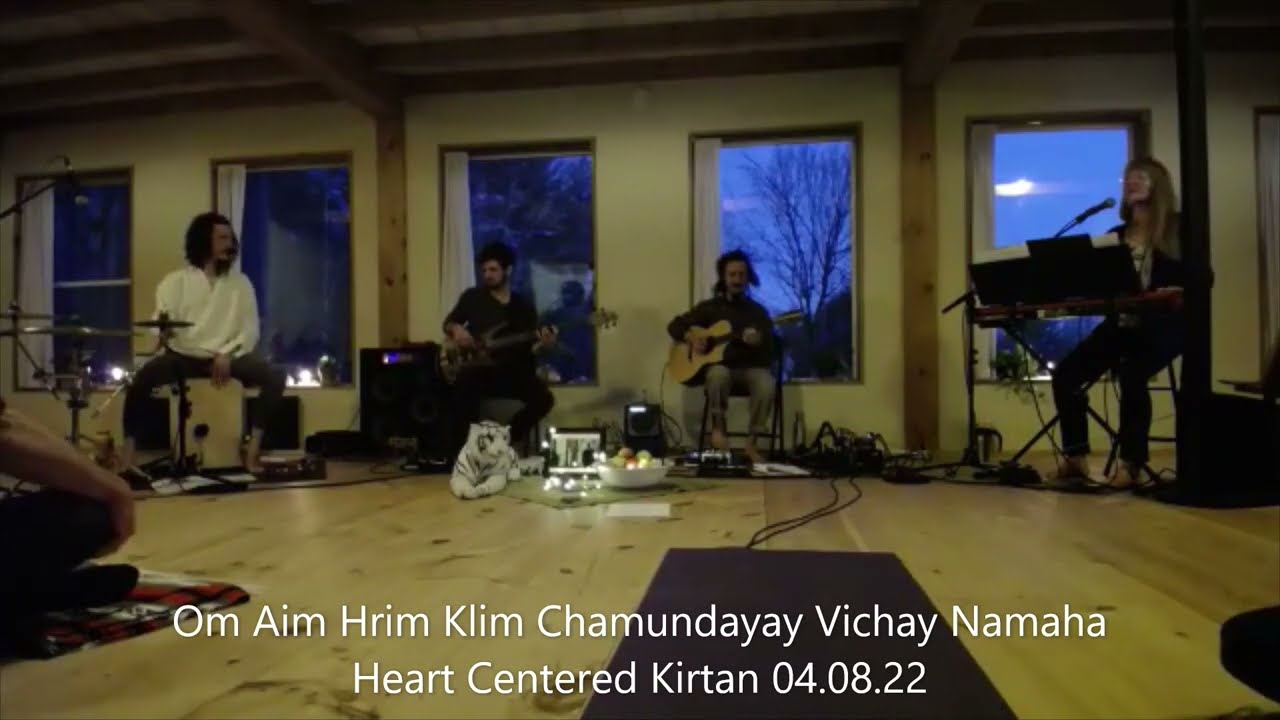
The performer's opening gratitude—thanking those present and acknowledging that they are "not just me and my tiger all alone in the barn"—signals that this is fundamentally an act against isolation. Guan Yin, who hears the cries of the world, invites practitioners into a web of interdependence and mutual care. The chant is both a petition and a promise: to hear the cries of others as Guan Yin does, to embody that merciful responsiveness, and to know that one is held within a larger field of compassion.

Where to Go from Here

To deepen this practice, consider exploring Sebene Selassie's You Belong: A Call for Connection, which contextualizes this mantra within Buddhist teachings on interconnection and belonging. Study the iconography of Guan Yin across East Asian traditions—her thousand arms represent her infinite capacity to respond to need; her crown often depicts Amitabha Buddha, linking her to the wisdom of boundless light.

If you are new to kirtan, practice the call-and-response at a manageable pace. The mantra need not be chanted at high speed; what matters is presence and intention. You can chant alone, using recordings like this one as a guide, or seek out live kirtan communities where you can experience the collective resonance of group practice. Each time you invoke Guan Yin, you are not just reciting syllables—you are training your heart to listen, your mind to attune to compassion, and your presence to become responsive to the world's need.
Comments

Loading the conversation…

Transcript

[0:00] so thank you for being here so i know

[0:02] i'm not just me and my tiger all alone

[0:04] in the barn

[0:07] all right uh so here's this new song and

[0:10] i'm super excited

[0:12] because it it involves like so many of

[0:15] the songs that i'm blessed to have

[0:17] kind of come through me i had

[0:21] as i often do this impulse to go to the

[0:23] piano and the song

[0:25] the chord progression sort of evolved

[0:28] and i was sort of

[0:32] i had an idea for a mantra when i

[0:35] started writing

[0:36] but then the mantra didn't really fit

[0:38] with the music

[0:40] and then i started reading this great

[0:41] book i don't know if any of you know

[0:43] somebody

[0:44] 7a selassie she's a meditation teacher

[0:48] she wrote a book came out recently

[0:49] called you belong and in it she talks

[0:51] about this

[0:52] chinese mantra de juan yen and

[0:56] it fit perfectly that was obviously

[0:59] what i was waiting for is to read that

[1:03] and then know that it was the right

[1:05] mantra that went with the tune

[1:07] so here we go it's pretty simple it's

[1:09] namo

[1:10] which is we say this in sanskrit and

[1:12] pali so we're

[1:14] revering guanyin it's guanxi yen

[1:18] so it's elevating her she's so esteemed

[1:21] and then pusa means wise being

[1:25] so we're just invoking this bodhisattva

[1:28] this principle of mercy and compassion

[1:32] a friend of mine who's catholic had

[1:33] asked me about it

[1:35] and i don't know if i read this or if i

[1:37] just knew this

[1:40] but my understanding of guanine is that

[1:42] there's a similarity between her and

[1:44] mother mary

[1:45] in terms of sort of like that

[1:47] compassionate loving

[1:49] merciful presence

[1:53] so that's what we're gonna do and just

[1:55] hold on one second i have a little thing

[1:56] to

[1:57] term

[2:03] okay let's see if this works

[2:08] ah it's working

[2:12] [Music]

[2:18] so this first line or this first part

[2:22] you're gonna

[2:22] start you're gonna kind of step on me

[2:26] so i'm gonna say pussa and when i say sa

[2:29] that's when you do your namo see how

[2:32] this works

[2:37] [Music]

[2:49] so

[2:51] [Music]

[3:31] she

[3:33] [Music]

[3:45] she

[3:46] [Music]

[4:13] oh

[4:15] [Music]

[4:55] so

[4:57] [Music]

[5:23] no

[5:26] [Music]

[6:03] number one she

[6:08] [Music]

[6:19] oh

[6:21] [Music]

[6:47] so

[6:52] [Music]

[7:01] is

[7:03] [Music]

[7:34] [Music]

[7:43] oh

[7:45] [Music]

[8:38] number one

[8:40] [Music]

[8:53] she

[8:56] [Music]

[9:22] [Music]

[9:30] [Music]

[9:35] on

[9:38] [Music]

[10:03] foreign

[10:05] [Music]

[10:31] i

[10:34] [Music]

[10:45] person

[10:50] [Music]

[10:59] so

[11:02] [Music]

[11:27] so

[11:30] [Music]

[11:41] sun

[11:45] [Music]

[12:00] you

Owen & Ezra Landis
ArtistOwen & Ezra Landis

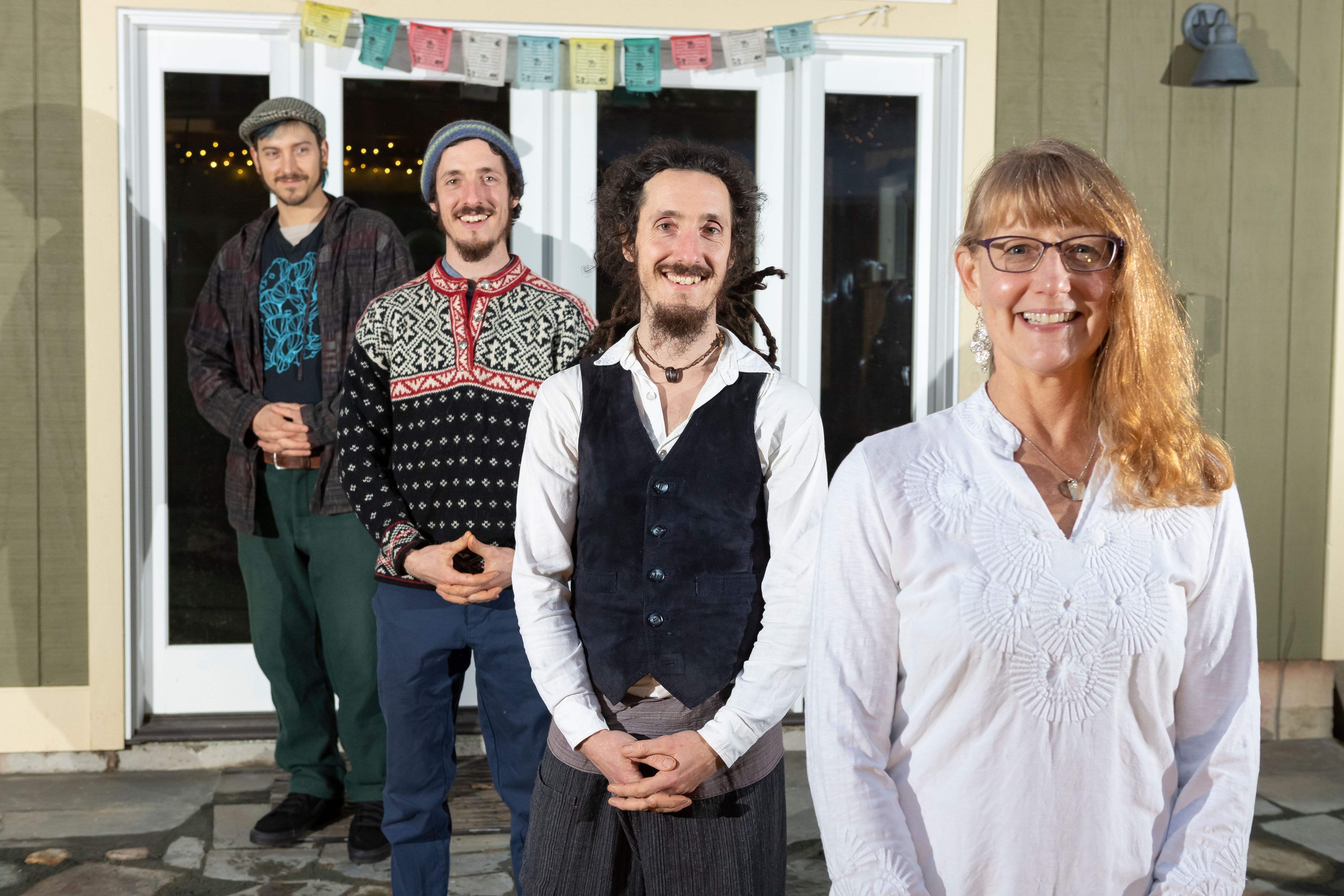
Owen and Ezra Landis are twin-brother musicians and workshop facilitators known for blending folk, ambient, and world music with storytelling and spiritual development. They lead w…

View profileWebsite
Explore Topics
Kirtan-practiceGuan-yinBodhisattvaCompassion-mantraSacred-chanting

Got Questions?

Frequently Asked Questions

Guan Yin is the bodhisattva of compassion and mercy who is believed to hear the cries of the world. She embodies responsive, attentive compassion and is invoked to align practitioners with those same qualities. Her name literally means 'she who hears the cries,' emphasizing active, listening presence rather than passive compassion.
The mantra is chanted in kirtan (congregational call-and-response singing), where practitioners invoke and embody the principle of compassion that Guan Yin represents. By repeatedly chanting the name, singers cultivate merciful awareness within themselves and affirm a shared commitment to compassionate presence in community.
Guan Yin is the Chinese name for the bodhisattva known as Avalokiteshvara in Sanskrit. Both refer to the same principle of compassion, expressed through different cultural and linguistic traditions—Avalokiteshvara in South Asian Buddhism, Guan Yin in East Asian Buddhism and beyond.
Call-and-response creates synchronization among practitioners, keeps attention focused on the present moment, and establishes a felt sense of dialogue with the invoked principle or being. It transforms individual singers into a unified vocal body, counteracting isolation and creating collective resonance.
Chanting Namo Guan Shi Yin Pusa is not worship of an external deity but an aspiration and alignment practice. By repeatedly invoking the qualities Guan Yin embodies—mercy, responsiveness, hearing the cries of others—practitioners train their own hearts and minds to cultivate and express those same qualities.
The performer references Sebene Selassie's book 'You Belong: A Call for Connection,' a meditation teaching that contextualizes the Guan Shi Yin mantra within Buddhist teachings on interconnection and belonging. This text inspired the musical composition of the kirtan.

Continue Reading

More from Owen

View All
Chamunda Mantra: Destructive Power of the Divine Feminine
Inspire

Chamunda Mantra: Destructive Power of the Divine Feminine

The Chamunda mantra invokes a fierce aspect of the Divine Feminine that destroys negative forces. This practice builds confidence, inner str…

1 min read
Om Namo Bhagavate Kirtan: Heart-Centered Chanting Practice
Inspire

Om Namo Bhagavate Kirtan: Heart-Centered Chanting Practice

A live kirtan performance featuring Om Namo Bhagavate chant with keys, guitar, bass, and percussion. Heart-centered kirtan blends devotional…

1 min read
Be Here Now Mantra Medicine: How a Chant Trains Presence
Inspire

Be Here Now Mantra Medicine: How a Chant Trains Presence

A six-minute "Be Here Now" chant set over music, read through its own description: how the repetition works, how the phrase shifts across th…

1 min read
Guru Ram Das Healing Chant: Mantra Music Explained
Inspire

Guru Ram Das Healing Chant: Mantra Music Explained

"Guru Ram Das (Healing Miracles)" is a mantra recording from the Mantras for Healing collection. Here is what its credits reveal about the s…

1 min read

Keep exploring

Continue your journey

More wisdom and gatherings from across the BrightStar directory.

More Articles

Browse the full library of teachings, interviews, and guides.

Back to all articles →

Teachers & Artists

Explore the lineages, musicians, and guides of the conscious world.

Explore artists →

Find an Event

Kirtan, retreats, sound baths, breathwork, festivals — happening soon.

Browse events →