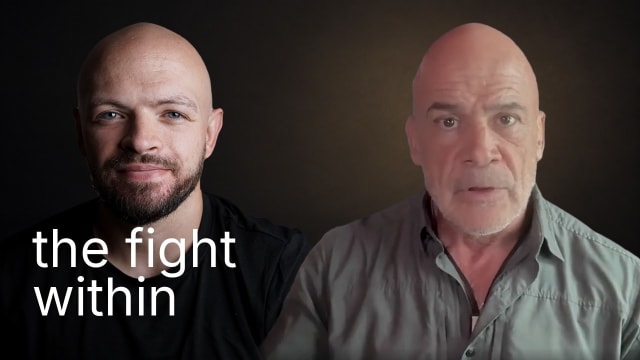
Picture a man in his sixties, chained with thousands of other prisoners, swinging a pickaxe through solid rock on the Isthmus of Corinth because an emperor wanted a canal for his own glory. That is the scene Jon Brooks of The Stoic Handbook opens with in his video on Musonius Rufus, the first-century Roman Stoic who taught Epictetus and who, Brooks argues, set the standard that Stoicism is only real when it shows up in conduct. Brooks walks through Musonius's life, three of his teachings (women's right to study philosophy, the test of practice, and the training of body and mind together), the limits of his views, and a handful of modest exercises for anyone who has read the books and still loses their temper over something small. The core question he puts to the viewer is blunt: reading has a place, but what happens afterwards is the whole point.
Musonius Rufus was a Roman equestrian, born around 30 AD, and by his thirties he was among the most respected Stoic teachers in Rome. Brooks cites the orator Dio of Prusa, who said Musonius enjoyed a reputation greater than any one man had attained for generations. Later writers called him the Roman Socrates, and Brooks thinks the comparison holds up: neither man wrote his own works down, both drew followers through moral example, both were persecuted by the state, and both put practice ahead of theory.
The most striking fact in Brooks's account is the lineage. Epictetus, a former slave who became the author of the Discourses and the Enchiridion, sat at Musonius's feet during a window when Musonius was allowed back in Rome. Brooks traces the dichotomy of control, the idea that our judgments about things disturb us more than the things themselves, and the Marcus Aurelius passages that drew on Epictetus back to that classroom. Musonius, in other words, is the through line for a whole generation of Stoic thought.
So why is he so little known? Brooks says it comes down to luck, specifically to the question of who wrote things down. Epictetus was recorded by Arrian, a best-selling author and public official whose celebrity helped those teachings survive. Musonius had no such advocate. His teachings survived only as excerpts, and there was no English translation until 1947. "He's not forgotten because his ideas weren't good," Brooks says. "He's forgotten because his student wasn't famous enough." The comparison he draws is pointed: what would we know of Socrates if Plato had never written?
Brooks recounts two exiles. In 65 AD, Nero's purge after the Pisonian Conspiracy sent Musonius to Gyaros, a barren rock in the Aegean that Brooks says the Romans called the Alcatraz of the Mediterranean. Musonius had not been part of the plot. He was exiled for teaching philosophy, which Nero found inconvenient. According to Brooks, Musonius found a spring on a rock the Romans considered waterless, farmed the land, and drew students who crossed the sea to study with him. Brooks's summary is the one that sticks: he turned a prison into a school.
The lecture Brooks quotes on this, which he names "That Exile Is Not an Evil," contains the line that anchors the whole episode: "Why should anyone who is not devoid of understanding be oppressed by exile? It does not in any way deprive us of water, earth, air, or the sun." Brooks reads it as a discipline rather than a consolation. Musonius did not pretend that things had not been taken away. He refused to let what had been taken count for more than what remained.
Later, Nero put Musonius to work on a vanity project, a canal through the Isthmus of Corinth dug by thousands of chained laborers. The philosopher Demetrius came to visit and was distressed by the sight. Brooks quotes the exchange as Philostratus recorded it: "Does this pain you, Demetrius, to see me digging through the Isthmus for Greece? What would you have felt if you had seen me playing the lyre like Nero?" Brooks's point is that the man with the pickaxe was still the most dangerous person in the conversation, because his values had not been chained.
"Does this pain you, Demetrius, to see me digging through the Isthmus for Greece? What would you have felt if you had seen me playing the lyre like Nero?" (Musonius Rufus, as recorded by Philostratus and quoted by Jon Brooks, around 5:33)
Brooks also describes the year of the four emperors in 69 AD, when Musonius, back from exile, joined a peace embassy that walked into the camp of an advancing army to lecture on the blessings of peace. Brooks reads Tacitus's account, which describes many soldiers laughing at him and a few ready to knock him down. Brooks calls it untimely wisdom: the right idea delivered in the wrong room. He reads the episode as proof of commitment rather than caution, and notes that even Vespasian, who banished the other philosophers from Rome in 71 AD, hesitated before exiling Musonius.
This is the teaching Brooks calls radical, and it deserves to be taken seriously in its own setting. In first-century Rome, women could not vote or hold office and rarely received more than basic literacy. Brooks points to Seneca the Elder, a contemporary of Musonius, who forbade his own wife from studying philosophy. Against that background, Musonius argued that women should study philosophy too, on the grounds that reason is a gift from the gods and that the capacity for virtue is not sex-specific.
Brooks is careful about the limits. He says plainly that Musonius "wasn't a modern feminist." Musonius, as Brooks reads him, still held that men should take on the heavier tasks, and the argument was about access to moral education rather than full equality in public life. Brooks's view is that the teaching is significant precisely because it crosses a line that most of his contemporaries would not, while still falling short of what a modern reader might hope for. Both things can be true, and he thinks an honest reader should hold both.
The most useful section of the video is about the gap between knowing and doing. Brooks sets up Musonius's comparison of two physicians from his Lecture V, which he links in the video description. Imagine two doctors. One is a brilliant speaker with no clinical experience who can explain the theory of disease in beautiful terms. The other is an ordinary practitioner who has treated patients and knows how to heal them. Which do you trust with your body?
Brooks's answer, and Musonius's, is the second. A philosopher who can explain the Stoic virtues but cannot apply them under pressure is like the speaker with no patients. The knowledge is real but unproven. Brooks gives the familiar example of someone who can recite the dichotomy of control and still loses their temper over a minor slight. The test is not whether the idea sounds right in the study. The test is what you do when the situation arrives uninvited.
This is where the viewer's own life becomes the laboratory. Brooks frames practice as the way knowledge becomes trustworthy, and he insists that reading alone does not complete the job. The philosophy is meant to change decisions. If it doesn't, the reading has not yet done what it was for.
In Lecture VI, which Brooks also points viewers toward, Musonius treats training as something that involves the body as well as the intellect. Brooks says Musonius saw theory and practice as hand in hand, with the aim of aligning what a person understands with how they act and how they hold themselves in the world. The point is not to memorize doctrine and then wait for the right mood. It is to rehearse the conduct until it becomes habitual, the way a physician's skill is built through repeated contact with patients.
Brooks also warns against a particular distortion of modern self-improvement: the habit of punishing yourself in order to become better. He suggests that this approach misreads Musonius. Practice, in his telling, is patient and repetitive, closer to training than to self-punishment. The aim is excellence of character, and mistakes are data for the next repetition rather than occasions for contempt.
Brooks ends with modest, concrete suggestions rather than a grand program. The first is to take one Musonius teaching and test it against a single ordinary decision in the coming week, then notice what happened. The second is to watch yourself as you act, rather than only as you plan to act, and to ask whether your conduct matched the idea you claim to hold. The third is to read Musonius directly, using the free online translation Brooks links in the video description, and to keep reading as a way of preparing for the next test rather than as the finish line.
Each of these is small by design. Brooks is not promising transformation. He is asking for a smaller, more honest question: after you have learned something good, what changed in how you behaved on a difficult afternoon? That is the standard Musonius set, and it is the one that a rock in the Aegean and a canal on the Isthmus both made visible.
Start with the excerpts. Read Musonius's Lecture V on the two physicians and Lecture VI on training, both available through the links Brooks gives in the video's description, and pick one passage to test against a single real decision this week. Then watch the full video for its treatment of the exile lecture and the Tacitus account of the embassy, both of which carry more context than a summary can. The question Brooks leaves you with is not whether Musonius was right. It is whether you are willing to find out, one ordinary afternoon at a time.