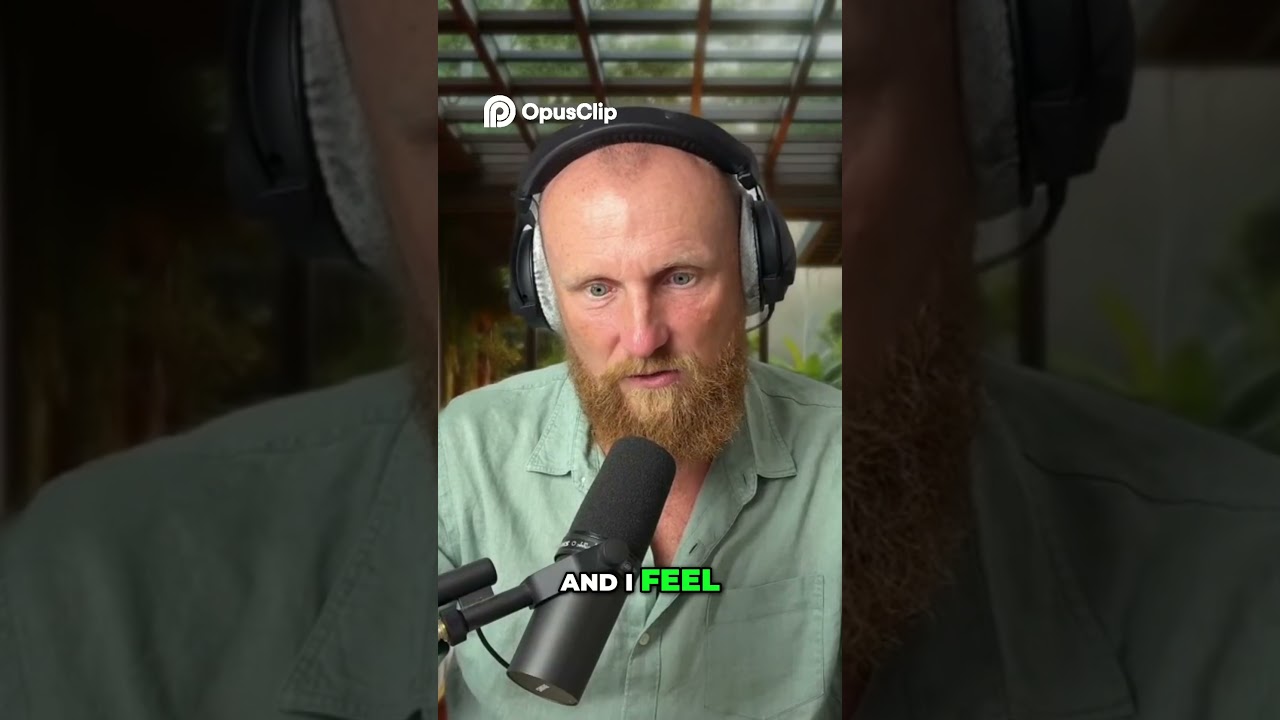
We are all storytellers, whether we know it or not. Every day, our minds spin narratives about how things should work, how people should behave, how our lives should unfold. "We all are storytellers and we all create our personal stories," Tomek Wyczesany, Ph.D. explains in a guided meditation on releasing mental narratives for stress relief. "This should work this way and that should work that way. She should behave herself and she should not have done that." Many of these stories, he notes, were not constructed by us alone—parents and others helped weave them into the fabric of who we believe ourselves to be.
The trouble begins at a precise moment: when one of these carefully constructed narratives encounters reality, and reality refuses to match. The story says things should happen a certain way. The world, indifferent to our expectations, goes its own way. "The problem starts when one of the stories that we've so carefully created in our mind happened to be different from the reality," Wyczesany teaches. "We get disappointed the satisfied even angry." That gap—between what we believed would happen and what actually occurred—is where suffering enters.
Most of us, faced with this gap between expectation and fact, do something counterintuitive. We do not release the story. We cling harder to it. We rehearse it. We justify it. We defend it endlessly in our minds, compiling evidence, building arguments, proving ourselves right. This is not a flaw in reasoning; it's a protection mechanism gone rigid. "Many of us including myself cling to our story so hard that even when we are hurting we don't want to let go," he explains. "The harder we cling trying to justify them in our mind the more we suffer."
This cycle—the more tightly we grasp, the more we hurt—can persist for years or a lifetime. We fight so hard for so long that we become completely exhausted, our energy depleted, our reserves empty. "Sometimes we fight so hard for so long that we get completely exhausted with no energy left," Wyczesany says. At this moment, something shifts. There are no more arguments left to make. No more evidence to gather. No more strength to defend. "There's nothing else to do but surrender."
That moment of utter depletion, when all defenses have fallen away, is paradoxically where transformation becomes possible. Wyczesany describes it with striking tenderness: "In this brief moment as we wait to be swallowed by the world we become completely vulnerable and this is a beginning of a new story." Not the end of stories, but a new one—one written not by defensive clinging but by openness to what actually is.
This is the psychological and spiritual landscape his meditation maps. It's not abstract philosophy—it's a laboratory. The practice is designed to test, in a contained and safe way, what happens when we temporarily release our grip on the narratives that normally define us. "Today I invite you to drop only for a moment all the stories that you've been telling yourself and see if you can survive," he invites. The question embedded in that offer is radical: Who are we when we're not telling ourselves stories about who we are?
The invitation is not to permanently erase your stories or to become someone else. It's simply to notice: can you exist for even a few minutes without actively reconstructing them? Can you discover that you survive the release?
The practice begins with something deceptively simple: settling your body into genuine comfort. "Make yourself at ease. Allow your body to take a comfortable position. Relax your jaw. Drop your shoulders away from your ears." This isn't casual relaxation. "I'm here to hold this space for you so you can feel safe and protected," Wyczesany says. Physical ease is the gateway. When your body feels safe, your nervous system downregulates. When you're not in survival mode, you can afford to release your defensive stories.
The core anchor of the meditation is deliberately unpretentious: lying on soft grass under a blue sky, without worry or chores. It's not a complex visualization requiring effort. It's a return to a state you may have known in childhood, before accumulating layers of narrative armor. "Imagine lying on the soft grass staring at the blue sky in this moment there are no worries no chores to be taken care of." Simplicity itself becomes the refuge.
The practice then teaches what to do when the mind—as minds do—begins to spin narratives again. "It may happen that your mind will try to create a narrative. So when your mind jumps in simply come back to that place of comfort where you are worry free lying on the soft grass staring at the sky." This isn't meditation as thought-suppression. The teaching acknowledges the mind's nature: it will try to reconstruct its familiar stories. That's what minds do. The skill isn't making it stop. The skill is the gentle, repeated return to something simpler than story—to sensation, breath, and the imagined ease of the grass and sky.
Each time you notice you've been swept back into thinking and come back to physical sensation, you're rehearsing the same capacity that ultimately leads to freedom from suffering. You're strengthening the ability to notice the difference between the mind's narrative activity and the spacious awareness that observes it.
Wyczesany anticipates a question his students will face: what happens when resistance arises, when emotions or more complex thoughts surface? "It may happen that there are so many options that come to the surface and that's okay to surrender to everything that comes your way." There's no requirement to clear your mind. There's no failure if feelings emerge. "Step outside for a moment outside of the usual story that you've been telling yourself," he suggests, and when the mind returns—as it will—"you come back to your safe place."
The language here is crucial. Not push the thoughts away. Not fight them off. Come back. Return. This is an invitation to notice where you've drifted and gently redirect attention, again and again, without judgment. This repetition—the soft returning—is the actual medicine. Each return is practice in non-attachment.
As the meditation deepens, instruction becomes sparser. Eventually, there is mostly silence and space. "Just be as I hold the space for you. Create a new state of being, worryfree." The teacher's role shifts from active guidance to container. You're given permission to simply exist without having to accomplish or understand anything. The nervous system, no longer in defense mode, begins to reorganize itself around safety rather than story.
The return to ordinary consciousness is intentional and somatic, never jarring. Wiggle the toes. Move the fingers. Notice the sounds around you. Feel your feet on the floor, the clothing on your skin. This deliberate re-anchoring in physical sensation prevents the disorientation that can come from shifting states. It grounds you gently back into your body and the room.
The final teaching carries essential meaning: "It's not just you and me but so many other meditators co-creating this space in which you can be yourself worryfree." You don't do this work in isolation. Thousands of others are practicing release at the same moment. That collective field of intention becomes part of what holds you safe. Your individual vulnerability is held by a larger human effort toward freedom.
This meditation is particularly effective for overthinking and anxiety because it addresses the root mechanism: the gap between story and present reality. Anxiety lives in that space. Overthinking is the mind's attempt to close the gap by creating more stories, more scenarios, more justifications. But the gap can't be closed by adding more thinking. It dissolves only when you step outside of thinking altogether, even if just for twenty minutes.
What makes this practice powerful is that it doesn't ask you to believe anything. It doesn't require faith or philosophical agreement. It simply invites you to test-drive the experience: Can you exist without your story for a moment? What remains? The answer, discovered directly through your own nervous system, is more persuasive than any teaching could be.
This meditation can be returned to whenever overthinking or anxiety surfaces—whenever you notice yourself clenching around a story that reality won't support. There's no schedule, no requirement of daily practice. The practice is available whenever you need it.
Beyond this particular meditation, the teaching points toward a larger inquiry: How much of your suffering is actually caused by events themselves, and how much is caused by your mind's narrative about those events? What would become possible if you could step outside that narrative-creation machinery, even briefly, again and again? The meditation is a beginning of that investigation—a laboratory in which you can discover, for yourself, that you can survive the release of your stories. That discovery, lived in the body rather than merely understood intellectually, is the seed of lasting freedom.