BrightStar

Browse All Events

Discover conscious gatherings

events

Yoga
Meditation
Breathwork
Qigong
Tai Chi
Sacred Music
World Music
Medicine Music
Sound Healing
Ecstatic Dance
Popular Destinations
BaliSedonaLos AngelesCosta RicaNew YorkSan FranciscoAustinMiamiJoshua TreeTulum
View All CategoriesView All Destinations

Explore All Features

Powerful tools to grow your events

Platform Features

Smart Dynamic Pricing
Ticket Categories
Assigned Seating
Abandoned Cart Recovery
Visitor Recovery
Donations & Sliding Scale
Affiliate Engine
Ticket Scanner
Coupon Codes
Custom Questions
Ticket Sharing
Upsells & Add-ons
Analytics & Reporting
Email Sequences
Waitlist / Notify / Remind
People & Places
Artists & TeachersEvent OrganizersVenues & StudiosKnowledge BaseGlossaryInspiration
View All FeaturesAbout Us
PricingBlog
Language
Saved events
Browse All Events

events

YogaMeditationBreathworkQigongTai ChiSacred MusicWorld MusicMedicine Music

Popular Destinations

BaliSedonaLos AngelesCosta RicaNew YorkSan Francisco

People & Places

Artists & TeachersEvent OrganizersVenues & StudiosKnowledge BaseGlossaryInspiration

Platform Features

Smart Dynamic PricingTicket CategoriesAssigned SeatingAbandoned Cart RecoveryVisitor RecoveryDonations & Sliding ScaleAffiliate EngineTicket ScannerCoupon CodesCustom QuestionsTicket SharingUpsells & Add-onsAnalytics & ReportingEmail SequencesWaitlist / Notify / Remind
View All FeaturesAbout Us
PricingBlog
Log inFind EventsHost Events
  • Browse All Events
  • For Seekers
  • Yoga
  • Meditation
  • Breathwork
  • Qigong
  • Tai Chi
  • Sacred Music
  • World Music
  • Medicine Music
  • Sound Healing
  • Ecstatic Dance
  • Retreats
  • Workshops
  • All Categories →
  • Bali
  • Sedona
  • Los Angeles
  • Costa Rica
  • Tulum
  • Byron Bay
  • San Francisco
  • Austin
  • New York
  • San Diego
  • Denver
  • Seattle
  • Portland
  • Miami
  • All Cities →
  • Join the Movement
  • Why we list
  • Sell Globally
  • For Creators
  • For Teams
  • For Writers
  • For Teachers
  • For Kirtan Artists
  • For Studios
  • For Festivals
  • For Retreat Centers
  • For Nonprofits
  • Brand Ambassador
  • Free Ticketing
  • Elevate
  • Amplify
  • 500K+ Buyer Network
  • Abandoned Cart Recovery
  • Smart Dynamic Pricing
  • Ticket Categories
  • Recurring Events
  • Assigned Seating
  • Affiliate Engine
  • Waitlist / Notify
  • Ticket Scanner
  • Embed Widget
  • Event Syndication
  • Message Center
  • Integrations
  • Reports
  • All Features →
  • About
  • The Ecosystem
  • Blog
  • Glossary
  • Inspiration
  • Help Center
  • Contact
  • API Docs
  • Brand Assets
  • Careers
  • Press
  • Terms of Service
  • Privacy Policy

Events

  • Browse All Events
  • For Seekers
  • Yoga
  • Meditation
  • Breathwork
  • Qigong
  • Tai Chi
  • Sacred Music
  • World Music
  • Medicine Music
  • Sound Healing
  • Ecstatic Dance
  • Retreats
  • Workshops
  • All Categories →

Destinations

  • Bali
  • Sedona
  • Los Angeles
  • Costa Rica
  • Tulum
  • Byron Bay
  • San Francisco
  • Austin
  • New York
  • San Diego
  • Denver
  • Seattle
  • Portland
  • Miami
  • All Cities →

For Creators

  • Join the Movement
  • Why we list
  • Sell Globally
  • For Creators
  • For Teams
  • For Writers
  • For Teachers
  • For Kirtan Artists
  • For Studios
  • For Festivals
  • For Retreat Centers
  • For Nonprofits
  • Brand Ambassador
  • Free Ticketing
  • Elevate
  • Amplify

Features

  • 500K+ Buyer Network
  • Abandoned Cart Recovery
  • Smart Dynamic Pricing
  • Ticket Categories
  • Recurring Events
  • Assigned Seating
  • Affiliate Engine
  • Waitlist / Notify
  • Ticket Scanner
  • Embed Widget
  • Event Syndication
  • Message Center
  • Integrations
  • Reports
  • All Features →

Company

  • About
  • The Ecosystem
  • Blog
  • Glossary
  • Inspiration
  • Help Center
  • Contact
  • API Docs
  • Brand Assets
  • Careers
  • Press
  • Terms of Service
  • Privacy Policy
BrightStar
Get the app
Download on theApp StoreGet it onGoogle Play
© 2026 BrightStar. All rights reserved.
Inspiration

Meditation as Transformation: Intention, Breath, and Waking Up

Michael Beckwith
Michael Beckwith
Oct 4, 2026
10 min read
Watch · 7

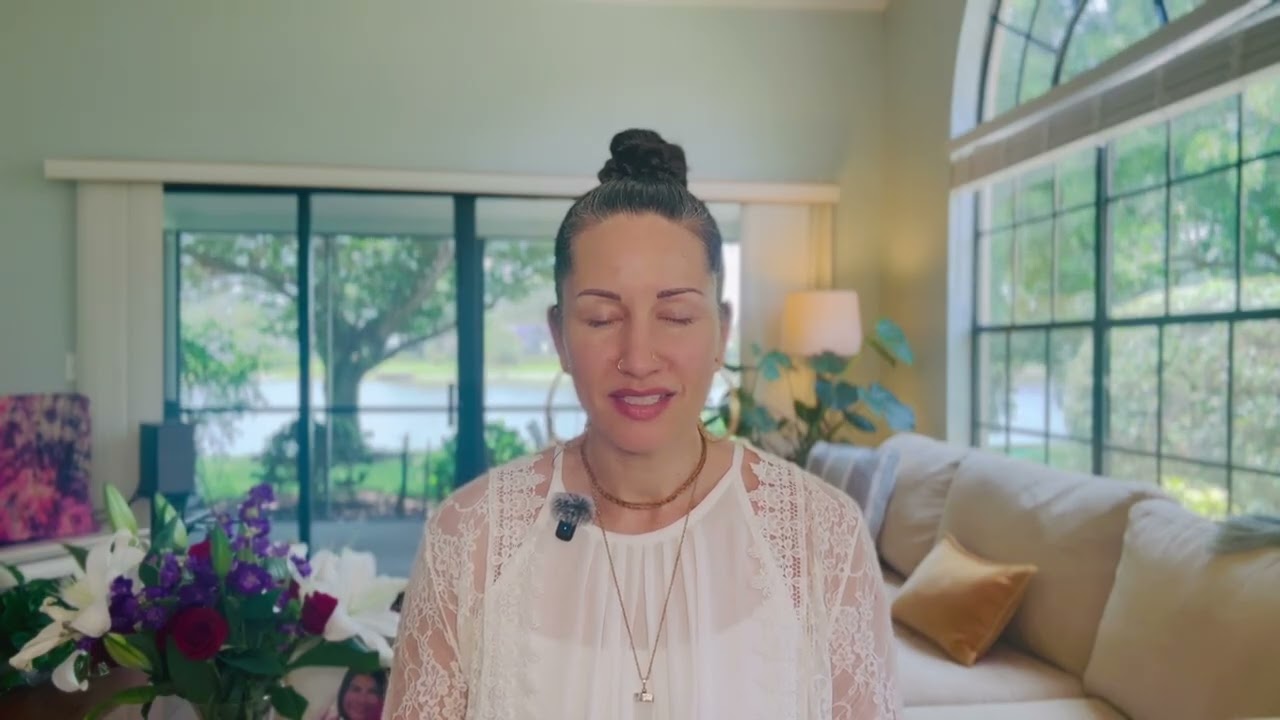
Hands rest on the thighs, palms turned upward. The eyes close. A voice, unhurried and warm, says that this is the part of the program where you have a few moments to practice, and for the next five minutes you are asked to do something most of the day never allows: set an inner intention, notice whether it carries a feeling, and let the breath hold it steady. The teacher is Michael Beckwith, and the practice comes from a portion of his program Take Back Your Mind, posted to his YouTube channel in October 2026. It runs just over seven minutes, and it is built like a good piece of music: a theme stated plainly, a development that deepens it, a long held note, and a resolution that sends you back into the room changed in a small but definite way.

What makes the session worth a closer listen is not its length or its vocabulary. It is the sequence of ideas underneath it. Beckwith argues that meditation is a vehicle, that your present life is a structure built out of unexamined habits, and that the way out is not to fight the structure but to go beneath it to a sense of who you were before the structure formed. Each instruction in the recording puts that argument into practice. Below, we take the pieces one at a time.

Read · 7 sections

What does "transportation to transformation" actually mean?

Beckwith opens with a wordplay that does real work. "You may have heard me say this over the years that meditation is the transportation to transformation," he says at 0:22 of the video. The pun is deliberate. "Trans means to go beyond," he continues. "Beyond what? The present formation of your life."

The word "formation" is the hinge of the whole talk. A formation is a shape that has set, the way a rock forms from sediment or a pattern forms from repeated movement. Beckwith frames the self the same way: a life that has hardened around a particular version of who you were. The meditation, in his account, is a pact you make with yourself to discover who you are at a deeper level, and to let that discovery reshape the formation.

Notice what he refuses to do. At 0:52 he says, "We're not labeling good or bad. We're just labeling who you previously were." That distinction matters. Plenty of self-help language asks you to judge your habits, classify them as flaws, and correct them. Beckwith's frame is archival rather than punitive. The old formation is not a crime. It is simply the previous shape of you, and a shape can be outgrown without being condemned.

Why does the world feel like it was built by your mind?

The middle of the talk supplies the mechanism. Beckwith says that "the world as it appears to be and your personal world is a coagulation" of several ingredients: "Your perceptions, your beliefs, your points of view, your positionalities, thoughts that have become dominant in your awareness consciously and unconsciously have formed your world." (1:06 in the video.) The word "coagulation" is chemically precise. Coagulation is what happens when separate liquids thicken into a single mass. Your experience of reality, in this reading, is not a window onto a fixed world. It is a set of mental and emotional materials that have clumped together until they look like the way things simply are.

He then names the consequence: you learn to navigate that world with different aspects of your personality. You become skilled at managing the mass you have formed. Meditation, by contrast, opens you "to an insight into who you really are before you were imprinted." That phrase, before you were imprinted, carries the core claim. The teaching holds that beneath the coagulated mass is an original clarity, and that the insight into it does not add something new so much as reveal something prior. As that insight grows more active, Beckwith says, life begins to "reflect and reveal the ineffable presence of love and light and beauty and intelligence that you really are."

Whether one accepts the metaphysics or not, the practical logic is testable. If your daily world is assembled from your beliefs and habitual attention, then changing what you attend to changes what the world seems to be. That is the bet the rest of the practice makes.

How do you set an intention in meditation?

The recording's first physical instruction is to close the eyes and rest the hands palms up, "as a sign of receptivity." The posture is a small gesture of openness, the body announcing that it is not gripping. Then comes the central act: "establish an inner intention." Beckwith gives it a precise function. "Intention is like a rudder that basically signals where you want to go." (2:16.)

A rudder is a useful image because it is small relative to the hull and yet determines the heading. You do not steer a ship by shoving the whole vessel; you turn a thin blade and let the water do the rest. An intention works similarly in meditation. You are not forcing a result. You are indicating a direction.

Then Beckwith adds the paradox that gives the practice its spiritual charge: "in the absolute sense, you already are where you want to go. You just don't know it." The intention, then, is less an effort to arrive somewhere than a way of recognizing where you already stand. The sentence the speaker suggests you whisper, or simply think, is "I'm intending to wake up to my glorious nature." He repeats it, adds "my real nature of being," and states the reason for the sitting plainly: "That's why I'm sitting. Sitting to wake up."

The instruction that follows is subtle and, for many practitioners, the most important. "Notice if that intention has a feeling." (3:04.) Beckwith distinguishes the words from the felt sense underneath them. "Even beyond the words you're saying," he says, the phrase "starts to develop a feeling as you sit in meditation." The move is from repeating an idea to tuning into its tone. Is the intention heavy or light, eager or quiet, skeptical or warm? Embracing the feeling, not only the sentence, is what turns an affirmation into an experience. Musicians will recognize the principle: the notes matter, but the phrasing is where the meaning lives.

What should you do when your mind wanders during meditation?

The talk includes long stretches of silence, and the most practical line arrives in the middle of one. "If mental drift occurs, it's okay." (4:45.) Beckwith does not present wandering as failure. He gives the return a clear instruction: "Just come back to your intention. Come back to your breath."

This two-step correction, return to the intention and return to the breath, gives the wandering mind two anchors. The intention provides direction, and the breath provides presence. Notice that Beckwith places the breath in the present moment explicitly: "Notice that that breath is present. It's not in the future or the past." Mental drift almost always pulls attention into a past replay or a future rehearsal. The breath is the one thing that is always happening now, so it works as a return point.

The silence also carries a larger claim. In the midst of stillness, he says, "this grand presence is in the midst of you and you are an emanation of this presence." The phrasing is lofty, but its practical implication is simple. The sitter is invited to stop treating presence as something to be acquired and to notice it as already operating within the attention that is doing the noticing.

Why does the breath work as a talisman?

The meditation ends with a breath practice, and here Beckwith uses the language of a musician counting a phrase. "Take a deep in breath sustained at the apex." (6:05.) The inhale rises to a peak, and the held note is taken there. "Intend to wake up. Release the breath. Sustain it on the exhale. Don't let any air come in. Just sustain it and embrace the intention to wake up." Then, with a light instruction to return to normal, the breath is released.

He calls the breath "a talisman keeping you present to your intention." A talisman is an object that carries protective or focusing power, something you keep close so it can keep you oriented. The metaphor reframes the breath from a background function into an active companion for the intention. When you hold the breath at the top and then at the bottom, you are briefly asking the body to dwell in a single held state, and the intention is carried along in that holding. The practice does not require special experience. It asks only that you pay attention to the pause between breaths, which is where many people first notice how much they had been hurrying past.

Can you really become a world shaper instead of being buffeted by life?

The final minute is where the practice turns outward. Beckwith says that "as you move into the world, you're moving into the world with an overarching intentionality." (6:46.) The phrase overarching is important. It implies that the intention from the sitting is not confined to the cushion. It becomes a kind of canopy that shapes how you meet the day.

He then sets up a sharp contrast: "Rather than being buffeted by the world, you're becoming a sovereign being connected to your intention and the presence." (7:03.) The image of being buffeted, pushed around by wind and water, names the default condition of a life run by its formations. The alternative is sovereignty, which Beckwith ties not to control but to connection. The sovereign self is anchored in the intention and the presence, and so it is not simply reacting.

He closes with the line that gives the session its title in spirit: "So the world is not shaping you. You become a world shaper." (7:03.) It is a bold reversal, and it is also a claim the practice tries to test. If the world has been forming you through coagulated habit, then a daily return to intention and breath is a way of reversing the direction of influence, one sitting at a time.

Where to go from here

The most useful next step is the simplest: sit with the recording. Play it once to hear the structure, then play it again and pause at the moments that caught you. Notice what the word "rudder" does to your sense of your own intention, and whether it changes when you feel the intention rather than only saying it. Keep a short note after each sitting describing what you noticed, which is the kind of simple record that makes insight easier to recognize over weeks.

If you want to go deeper, Beckwith's own words are the best map. Listen for how he moves between the language of transformation, the diagnosis of coagulated formations, and the claim that you already are where you want to go. Those three ideas can be held separately, and you can test each against your own experience. The video's description also lists Beckwith's live Sunday services, including a 6:45 am PT Way of Meditation service and meditation periods preceding the fellowship services, for those who want to sit with a group.

Above all, take the closing instruction literally. The sitting is not an end in itself. It is a way of entering the world with what Beckwith calls an overarching intentionality, so that the day becomes something you shape rather than something that shapes you. Five minutes is enough to begin.

Comments

Loading the conversation…

Transcript

[0:05] dynamic blessings to you. And this is

[0:07] obviously the portion in our particular

[0:10] program, take back your mind, in which

[0:13] you have a few moments to actually

[0:14] practice something. Practicing the art

[0:16] and science of meditation.

[0:18] You may have heard me say this over the

[0:20] years that meditation is the

[0:22] transportation to transformation.

[0:25] It's a way by which you embrace the

[0:27] transformation of your life. What do I

[0:30] mean by that? Well, trans means to go

[0:34] beyond. To go beyond what? The present

[0:36] formation of your life. So that means

[0:39] that you're entering into a pact with

[0:41] yourself that you're going to discover

[0:43] who you are at a deeper level and allow

[0:46] it to transform the different formations

[0:48] of your life that have coagulated around

[0:52] who you previously were. We're not

[0:54] labeling good or bad. We're just

[0:55] labeling who you previously were. So

[0:58] when you have an insight in meditation

[1:00] that's then embodied the formation of

[1:02] your life changes by law. Why? The world

[1:06] as it appears to be and your personal

[1:08] world is a coagulation of a combination

[1:13] of things. Your perceptions, your

[1:15] beliefs, your points of view, your

[1:17] positionalities,

[1:19] thoughts that have become dominant in

[1:20] your awareness consciously and

[1:22] unconsciously have formed your world.

[1:26] and you have learned how to navigate

[1:28] your world with different aspects of

[1:31] your personality.

[1:32] But when you go into meditation, you're

[1:34] opening yourself up to an insight into

[1:37] who you really are before you were

[1:40] imprinted. And that as that insight

[1:43] becomes more and more active in you,

[1:46] your life changes to reflect and to

[1:48] reveal the ineffable presence of love

[1:51] and light and beauty and intelligence

[1:53] that you really are. your real nature in

[1:56] being. And so I'm going to invite you to

[1:59] uh close your eyes for a moment.

[2:03] Let's allow for your hands to be on your

[2:05] lap facing upward as a sign of

[2:06] receptivity

[2:12] and establish an inner intention.

[2:16] Intention is like a rudder that

[2:19] basically signals where you want to go.

[2:22] Now, of course, in the absolute sense,

[2:24] you already are where you want to go.

[2:25] You just don't know it. But you're going

[2:27] to intend at this moment.

[2:31] Let's intend to wake up to our glorious

[2:34] nature. You may want to whisper that to

[2:36] yourself or think it. I'm intending to

[2:40] wake up

[2:43] to my glorious nature. I'm intending to

[2:45] wake up to my real nature of being.

[2:48] That's why I'm sitting. Sitting to wake

[2:50] up.

[2:54] I become conscious of that.

[3:00] Conscious of the intention.

[3:04] Notice if that intention has a feeling.

[3:09] So that even beyond the words you're

[3:12] saying

[3:13] when you say I am intending to wake up

[3:16] to my real nature and being it starts to

[3:19] develop a feeling as you sit in

[3:22] meditation.

[3:25] Embrace the intention. Embrace the

[3:27] feeling.

[3:32] Notice that your body temple is

[3:33] breathing.

[3:39] Notice that that breath is present. It's

[3:41] not in the future or the past.

[3:45] So you are present

[3:48] with the awareness

[3:52] that you're intending to wake up.

[4:01] Sit in the silence with this for a

[4:03] moment.

[4:45] If mental drift occurs, it's okay.

[4:50] Just come back to your intention.

[4:52] Come back to your breath.

[5:28] Be still

[5:31] and know

[5:34] this grand presence is in the midst of

[5:37] you and you

[5:40] are an emanation of this presence.

[5:43] This is your real self.

[5:47] You're intending to wake up to your real

[5:49] self.

[5:52] And the breath is a talisman keeping you

[5:55] present to your intention.

[6:05] Take a deep in breath

[6:09] sustained at the apex.

[6:15] Intend to wake up. Release the breath.

[6:19] Sustain it on the exhale. Don't let any

[6:21] air come in. Just sustain it

[6:26] and embrace the

[6:28] intention to wake up.

[6:32] Allow your body temple to breathe

[6:33] normally.

[6:35] Open your eyes

[6:38] and you may see me thanking you for

[6:42] stopping for the pause that refreshes.

[6:46] So as you move into the world, you're

[6:49] moving into the world with an

[6:50] overarching intentionality.

[6:53] Rather than being buffeted by the world,

[6:56] you're becoming a sovereign being

[6:58] connected to your intention and the

[7:00] presence. So the world is not shaping

[7:03] you. You become a world shaper. Peace

[7:06] and blessings.

Michael Beckwith
ArtistMichael Beckwith

Michael B. Beckwith is a spiritual teacher and founder of Agape International Spiritual Center in Los Angeles, where he leads weekly services and teaches a practice he calls "Consc…

View profileWebsite
Explore Topics
MeditationIntention-settingBreath-practiceMichael-beckwithTransformation

Got Questions?

Frequently Asked Questions

Beckwith uses the pun to describe meditation as a way to go beyond the present formation of your life. He says that by discovering who you are at a deeper level, you allow that discovery to transform the habits and identities that have hardened around who you previously were.
He argues that your personal world is built from your perceptions, beliefs, points of view, and dominant thoughts, both conscious and unconscious. Those ingredients clump together until they appear to be the way the world simply is.
Beckwith suggests resting your hands palms up, establishing an inner intention, and whispering or thinking a phrase such as 'I'm intending to wake up to my glorious nature.' He then asks you to notice whether the intention carries a feeling, and to embrace both the words and the feeling.
Beckwith says mental drift is okay and advises you to come back to your intention and then to your breath. He notes that the breath is always present, not in the future or the past, which makes it a reliable anchor.
You take a deep inhale and sustain it at the apex, then release and hold the breath on the exhale without letting air in, while embracing the intention to wake up. Beckwith describes the breath as a talisman that keeps you present to your intention.
Beckwith contrasts being pushed around by circumstances with becoming a sovereign being connected to your intention and to presence. He suggests that carrying an overarching intentionality into daily life shifts you from being shaped by the world to shaping it.
The recording runs just over seven minutes and is framed as a practice for anyone who wants to sit with intention, breath, and awakening. Beckwith presents it as part of his program Take Back Your Mind, and it works as a short, self-contained sitting.

Continue Reading

More from Michael

View All
Can Consciousness Be Measured in the Lab? Superhuman Research
Inspire

Can Consciousness Be Measured in the Lab? Superhuman Research

What if consciousness can be tested? Caroline Cory's path from a childhood light-filled room to Superhuman 2's experiments with blind partic…

1 min read
Infinite Opportunities Await—How to Choose Right
Inspire

Infinite Opportunities Await—How to Choose Right

When faced with multiple good paths, the universe conspires for you no matter which you choose. Learn why alignment with source matters more…

1 min read
Yoga Nidra for Wholeness: Sankalpa and Body Scan Guide
Inspire

Yoga Nidra for Wholeness: Sankalpa and Body Scan Guide

A 35-minute guided Yoga Nidra rest that moves from breath to sankalpa to a full body scan and back to waking. Here is how its structure work…

1 min read
Awareness Beyond the Person: The Direct Path to Universal Consciousness
Inspire

Awareness Beyond the Person: The Direct Path to Universal Consciousness

At Monte Sahaja, a seeker discovers that consciousness itself—not the person—is the unchanging witness of all experience. A radical shift in…

1 min read

Keep exploring

Continue your journey

More wisdom and gatherings from across the BrightStar directory.

More Articles

Browse the full library of teachings, interviews, and guides.

Back to all articles →

Teachers & Artists

Explore the lineages, musicians, and guides of the conscious world.

Explore artists →

Find an Event

Kirtan, retreats, sound baths, breathwork, festivals — happening soon.

Browse events →