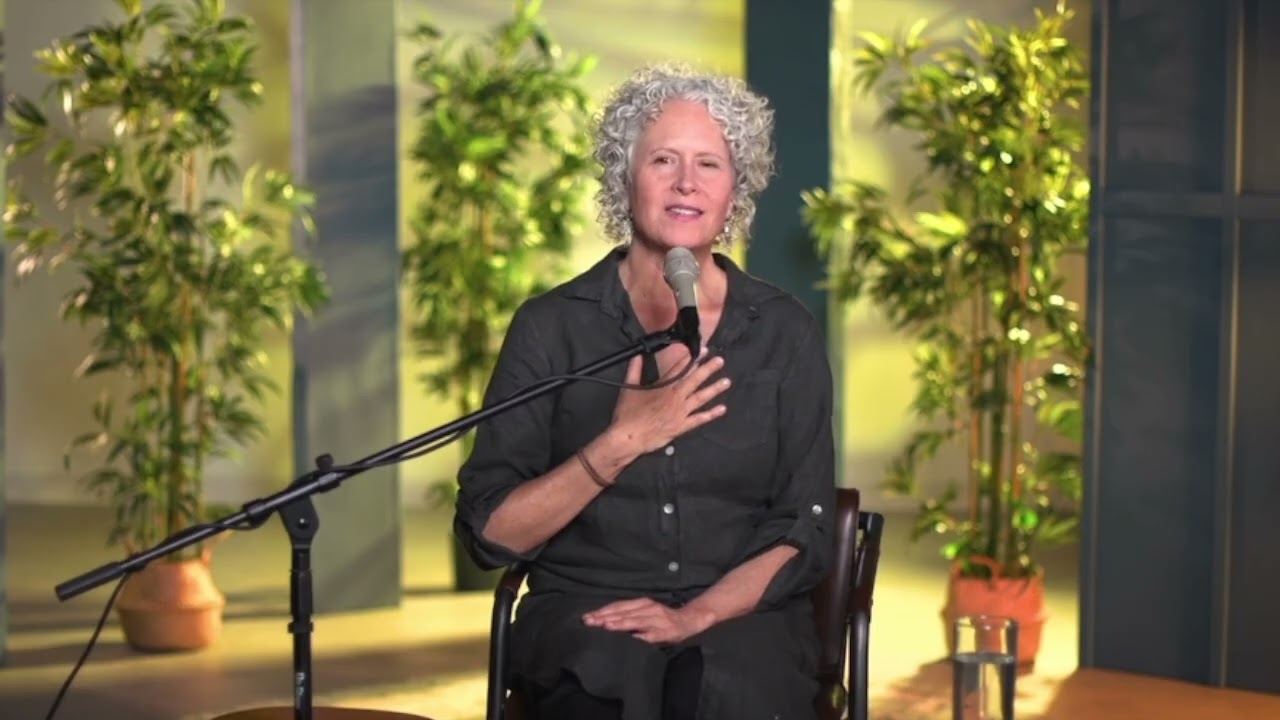
Seven minutes into the world of a soft wash of sustained tones, a single voice rises out of the music, sings "Oh," and then settles into a phrase that returns, in nearly every variation, until the track ends: "I release. I really release." That is the whole of "Mantra Medicine: Release," the Beautiful Chorus upload that runs 7 minutes and 23 seconds. It contains no spoken teaching, no origin story, and no account of the tradition it might draw on. What it offers is a short affirmation, sung again and again, presented as a way to let go of what a listener no longer needs. This piece takes that offer seriously and reads the track for what is actually on it.
The track opens on music alone for roughly the first twenty seconds. The first sung syllable, "Oh," arrives at about 26 seconds, and the first recognizable words follow within the next half-minute: "really," then "I release" at about 56 seconds. The sequence is gradual. Nothing is announced. The voice simply enters the sound that is already there, which makes the phrase feel less like an instruction and more like something the listener is overhearing.
That gradualness matters for how the piece works. A listener who presses play expecting a spoken guide gets none. Instead the attention is drawn into the texture first and the words second. By the time "I release" is clearly audible, the ear has already settled into the pitch and pulse of the track, so the phrase lands inside a state of listening rather than as a command.
Repetition is the basic mechanism of most mantra practice. A short phrase is sung or spoken many times so that the mind has less to hold and more room to notice what happens around the words. Here the repetition is tight. Across the track, the core words are "I release" and "I really release," with occasional fragments: "release" alone, and a single "feel" sung in the middle of a phrase. The variation is small on purpose. Changing the words would pull attention toward meaning; keeping them nearly fixed lets the listener stay with the act of releasing itself.
The vocal and the instrumental bed also trade places often. Around the 103-second and 164-second marks the transcript shows the voice singing over music rather than alone, and in several stretches the words thin out to leave the sound itself. Those openings are where a listener can stop tracking the lyric and simply breathe.
The video's description frames the track with a question: "What if I could release what I no longer need?" That question changes the affirmation from a statement into an inquiry. Singing "I release" is one thing. Asking what, specifically, you are ready to put down is another, and the description leaves that open.
A practical way to use the track follows from that. Before pressing play, name one thing you are carrying that no longer serves you, without trying to solve it. Then let the repetition run. Notice where the phrase catches, where it feels true, and where it feels hollow. The track does not tell you what to release; it gives the listener a steady sound in which to find out.
The title calls the upload "Mantra Medicine," and the description uses hashtags such as #Healing and #HighFrequencyMusic. Those are the channel's own framing. The material provided makes no claims about physical or psychological effects, and nothing here should be read as a medical promise. The honest way to hold it is as a meditation and listening piece: a short phrase, a patient arrangement, and seven minutes of attention spent on the idea of letting go.
Listen once straight through with eyes closed. Listen again and sing along, quietly, if that feels natural. Listen a third time and pay attention only to the moments when the words drop away.
If the phrase stays with you, the next step is to return to the same question the description poses and see whether the answer changes over days rather than minutes. The video itself is brief and self-contained, so there is little more to mine in its transcript. Its value lies in repetition and in the simple question it leaves behind: what would you release, if you could?