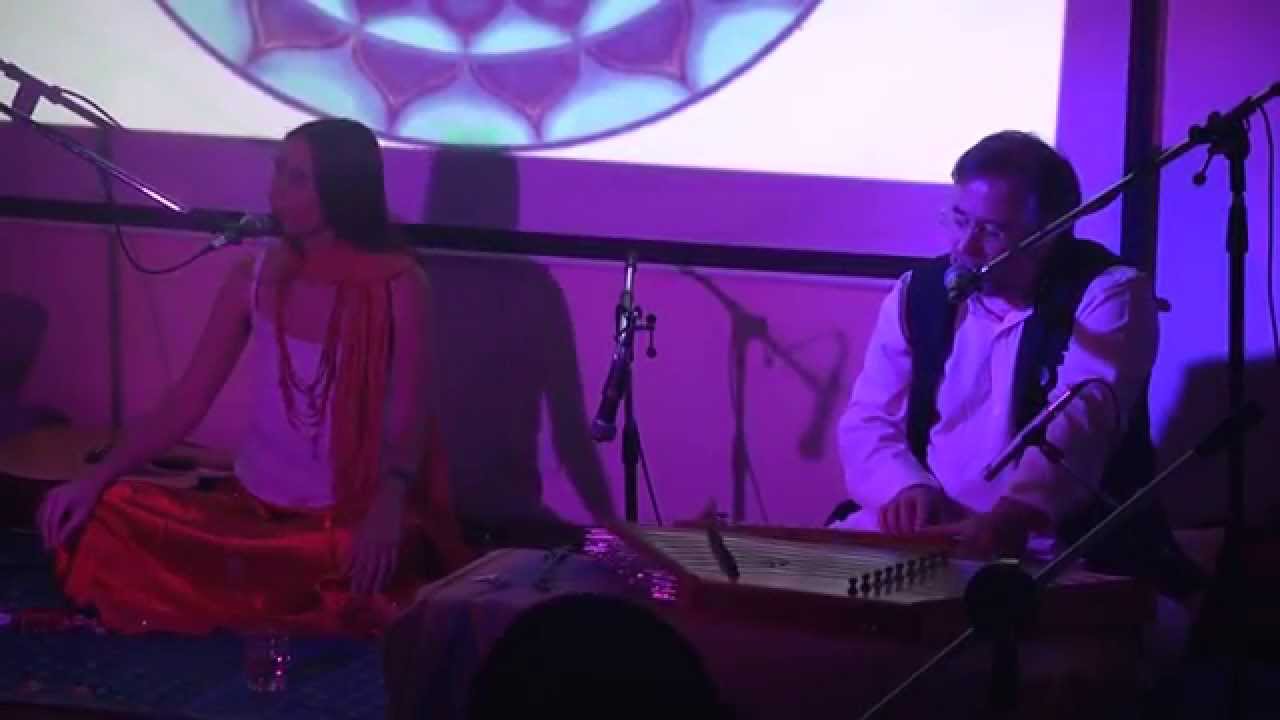
In Sanskrit, mangalam means auspicious—specifically, an auspicious conclusion or blessing. The word arrives at the end of kirtan circles, meditation sessions, and spiritual ceremonies across Hindu, Buddhist, and contemporary contemplative traditions. To intone it is to mark a threshold: the space between effort and grace, between the practice ended and its fruits unfolding. Carolina Chrem's track "Mangalam," released in 2010 on the album Trance Ancestral, meets this word not as mere invocation but as sonic field—a musical space where closure becomes opening.
The track exists within a lineage older than its recording date suggests. Trance, in the contemporary spiritual music context, refers to a state of deep absorption—the same etymological root as Sanskrit samadhi, the meditative unity sought across yoga traditions. "Ancestral" signals something equally deliberate: a reaching backward to sources, to lineages that predate the modern wellness industry, to forms of ecstatic practice embedded in culture rather than extracted from it. At just over four minutes, "Mangalam" functions as a benediction itself—a container for the listener's own journey inward and, implicitly, outward into the world transformed.
Mangalam carries weight in its placement. In the morning practices called mangalam in South Indian temples, the word announces the auspicious dawn. In the closing mangalam of a kirtan, it seals the space created. The repetition of the word—often sung on a single pitch, sometimes with rhythmic variation—becomes a tuning fork for the nervous system, a sonic anchor that says: This moment is complete. This is blessing.
The spiritual music tradition Chrem's work inhabits understands that not all sound is decoration. The drone of a sitar, the breath in a chant, the silence between notes—these are technologies of consciousness. They work on the body and mind not through meaning alone but through frequency, through rhythm, through the neurological attunement that happens when sound enters a listening human. "Mangalam," as both word and musical structure, participates in this tradition.
The concept of "trance ancestral" rejects the idea that ecstatic music is a modern invention. Indigenous traditions worldwide have used rhythm, drone, and harmonic entrainment for thousands of years—for healing, for rite, for communion. Contemporary spiritual music practitioners like Chrem work consciously within this continuity, honoring the lineage while responding to present-day listeners seeking tools for presence and transformation. There is no contradiction between ancestral form and contemporary release: the track, made available through digital means, participates in an ancient conversation about how sound shapes consciousness.
To experience "Mangalam" is to sit with the simplest and most profound of spiritual gestures: closure that opens. Listeners drawn to the intersection of trance, kirtan, and contemporary spiritual music may explore the broader context of the Trance Ancestral album and Carolina Chrem's other work. The practice itself—listening with full attention to a Sanskrit invocation sung as music—is available to anyone willing to meet the work with receptivity. The benediction, in the end, works because it names something true: that this moment, whatever it contains, is auspicious, and we are blessed to be here.