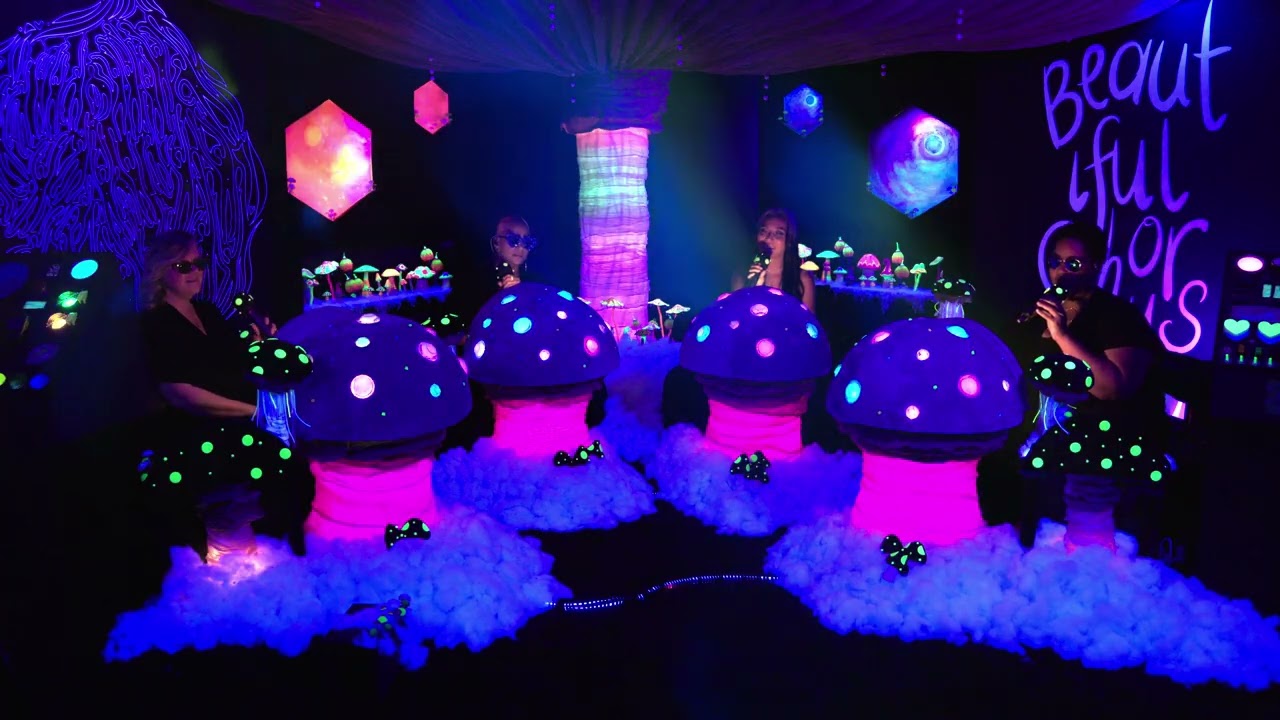
"Sun and Moon Meditation" is a little over an hour of handpan and guitar, posted by Malte Marten in October 2023 and, by the time of this writing, past 7.5 million views. The video comes with a short, deliberate framing in its description: light and darkness may not be as different as they seem, and deeper relaxation comes from breathing into one's shadows instead of turning away from them. The music, Marten writes, is "channeled from that place." This piece explains those ideas, the instrument at the center of the recording, and how to get the most out of a long, mostly wordless listen.
The recording begins without ceremony. There is no spoken introduction in the caption track at the top of the video, just music from the first second. What you hear is a handpan: a steel instrument built from two shells bonded together, with a set of tuned notes raised on the top surface and played by hand. The attack is soft and round. Each note blooms, hangs in the air for a long time, and dissolves into the next one, so the silence between strikes is part of the instrument's voice rather than an absence of it.
That sustain is the reason the handpan has become a meditation instrument. A plucked string dies quickly and asks the ear to chase it. A handpan note, struck with the fingertips, lets the listener stay in one tone long enough to notice what the tone is doing to the body. Players and listeners often describe the overtones as layered rather than piercing, which is why an hour of it can feel less like a performance and more like weather. Whatever you think of the spiritual language around it, the craft question is simple: how do you make a small set of notes carry an hour without repeating itself into boredom? Marten's answer, in this recording, is patience with the spacing of phrases and a willingness to let a single figure return, changed slightly, until you notice it has moved.
The title is a pairing, and the description spells out what the pairing is meant to hold. It opens with a question rather than a claim: "Light and darkness - are they so different?" It then offers the piece as "an invitation to breathe into your shadows," and adds an instruction that is easy to read past: "Let them be - welcome them as your friends."
The argument underneath is a familiar one in contemplative music, though it is stated plainly here. Relaxation, on this account, is not reached by pushing away the uncomfortable parts of experience. It is reached by allowing them. The description makes the condition explicit:
"Only who's able to face their darkness and embrace it, will reach deeper levels of relaxation and self love." (Malte Marten, video description, 2023)
That is a strong claim, and it is worth holding it as what it is: the teacher's stated intention for the recording, not a finding a listener can verify by pressing play. What the music can do, and what a listener can test, is make the request concrete. The sun-and-moon pairing gives a useful image. A sun-lit room and a moonlit one are not two different buildings. They are the same space at different hours, and the same eyes adjust to both. Listening with that image in mind shifts the question from "Is this pleasant?" to "Can I stay with what arises while the notes keep coming?"
The most practical reading of the framing is also the simplest. Sit or lie down where you will not be interrupted. Let the first note land, then notice your breath, without adjusting it. When a feeling you would prefer not to have rises, which it will during an hour of unstructured sound, do not reach for the volume control. Name it to yourself if that helps. Let the next handpan note arrive as the thing that follows it, not as a rescue.
This is where a long-form video differs from an album. A three-minute track gives you a shape to hold. A sixty-six-minute recording gives you the opportunity to lose your shape, and to find out what the mind does when nothing demands that it finish a thought. Many listeners use a piece like this for sleep or for winding down; the framing suggests that the same stillness can be used for sitting with difficulty. Neither use is asked of you by the music itself. The music simply stays open.
Alongside the handpan, the description credits Luna Mando, whom Marten calls "an exceptional guitar player." He writes that she "blessed me with some new riffs and melodies," and closes the note with thanks. That single line tells us the guitar is not a background bed but a contributor of new musical material, offered into a handpan-led piece.
The pairing is a sensible one in acoustic terms. A handpan's tone is bright, round, and bell-like, with a fast-decaying attack that gets softened by the sustain. A guitar, depending on how it is played, can supply a plucked edge, a sustained melodic line, or a harmonic bed under the steel. The description does not say which passages are guitar, or how the two instruments were arranged in the recording, and this article will not guess. What the credit confirms is that the melodic ideas in the track were developed in collaboration, and that the guitar's contribution was described by the person who made the record as a gift.
The transcript available for this piece is not a reliable guide to the content. Most of it is marked as music, and the words it does catch are fragments that auto-captioning tends to produce from wordless material. We should not read a meaning into them. The timestamped segments show a spoken-sounding "thank you" around the sixteen-minute mark (982 seconds), another near the thirty-eight-minute mark (2314 seconds), and one near the fifty-seven-minute mark (3431 seconds). Taken together, they suggest the recording contains very little speech, if any that the captions can parse, and that the hour is carried by the instruments.
That absence is itself a design fact. There is no lecture to follow, no guided script to reconcile with the sound. If you come to the video hoping for step-by-step instruction in shadow work, the recording will not supply it. The instruction, to the extent there is one, lives in the description and in your own attention while you listen.
The view count, over seven and a half million, is the one hard number the material provides, and it does not explain itself. Long-form ambient and meditation music has a large and steady audience that uses it as a companion for sleep, study, and rest, and the sheer length of a video like this fits how people actually play it in the background. The description's language about light, darkness, and self-love gives the recording a clear emotional frame without requiring the listener to accept any doctrine to enjoy the sound. That combination, an accessible instrument and a short, open invitation, is a plausible reason for its reach. It is a reason, not a documented one.
- Choose a single session of the full hour rather than dipping in and out, so the recording's long arc can register.
- Use headphones if you want the overtones and the spacing between strikes; speakers in a room will blur the quiet passages.
- When your attention wanders, return to the next note rather than trying to hold the last one.
- Treat the description's invitation as a question you can carry out of the session, not a conclusion you must reach during it.
If the video opened a door, the most direct next step is the music itself. Malte Marten's album "Healing Frequencies" is available on Spotify, and the description also points to his handpan learning resources, the Malte Marten Method, for listeners who want to try the instrument. The description credits the handpan in the recording as an F# Low Pygmy 21 made by Ayasa Instruments, a useful detail if you are researching the instrument's sound and tuning. Luna Mando's guitar work is a second thread worth following if the melodic passages caught you. And the simplest practice the framing suggests is also the oldest: sit with the next sound, and let the shadows be part of the room.