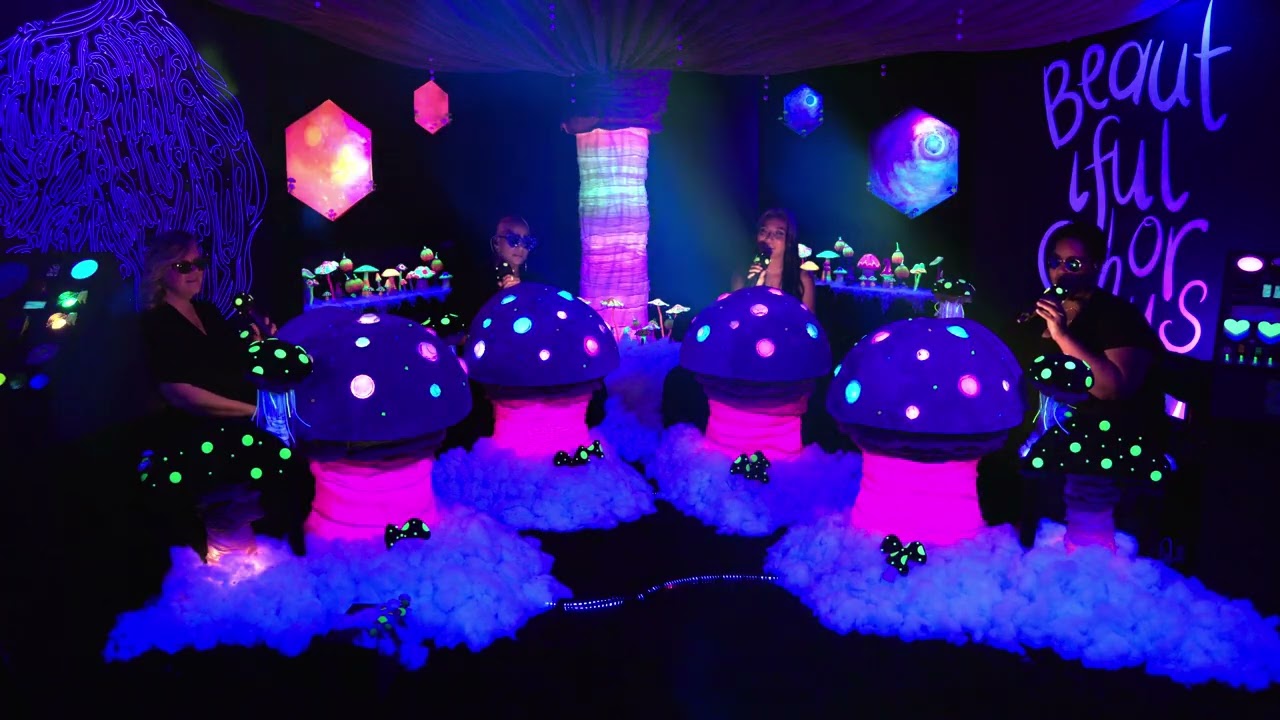
"Eastern Slide" is a seven-minute track from The Rise of Downtempo, an album presented as a single 55-minute continuous journey through slow, heavy-grooved music made for yoga, meditation and dance. The track sits where four strands meet: breakbeats, dub reggae, Eastern mantras and harmonious chanting. Each of these has its own history and its own job in a room full of people trying to slow down, and the interest of this piece lies in how a producer can braid them into one pulse that a body can follow without effort. Because this article is built from the upload's title and description rather than a full transcript, it stays close to what the recording is said to contain, and it explains the musical ideas behind those names so you can hear the track with more precision.
Picture the first minute of a session. The lights are low, the mats are down, and somebody presses play before anyone has spoken. What arrives first is rarely a melody. It is a rhythm that sounds like it is moving under the floor, and then a tone that seems to come from far away. That opening gesture is the whole logic of downtempo music: it asks the listener to lower their internal speed before it asks for anything else.
Downtempo is a loose term for electronic and hybrid music that moves at a relaxed pace, usually well under the tempo of dance floor club music, and that often leans on atmosphere, texture and repetition rather than a single hook. The label covers a wide family of sounds, but the working principle is consistent. A slow, steady pulse gives the body a reference point. Nothing needs to peak. The music is designed to hold a state rather than climax out of it.
That is why downtempo has become a common companion for yoga and meditation. A teacher moving a class from standing postures into seated breathwork needs music that will not hurry anyone. The album's own description frames The Rise of Downtempo exactly this way, as music "for yoga, meditation, and dance," which tells you that the makers were thinking about the body as much as the ear. Dance is included on that list on purpose. Slow music can still move people; it simply asks them to move from the hips and the breath rather than the feet.
The first named influence in the description is breakbeats. A breakbeat is, at its root, a drum passage, usually a short section of percussion, pulled from a recording and looped so that it can carry a new piece of music. The idea began in the sampling culture of hip-hop and its neighbors, where producers stitched the most useful few seconds of a drummer's performance into an endless groove.
In a downtempo context, the breakbeat does something different from its dance-floor role. Instead of driving the crowd to a higher energy, it provides a patient, slightly syncopated structure that the mind can settle into. Syncopation, where the accents fall off the expected beats, keeps attention from drifting into sleep. The result is a pulse that is alive without being insistent. For a practitioner, this matters: a steady, slightly unpredictable rhythm gives the attention something to rest on, the way a breath does.
Dub reggae is the second named ingredient, and it may be the most important for understanding why a track like this feels spacious rather than busy. Dub grew out of Jamaican reggae recording practice, in which engineers stripped songs down to bass and drums and then used echo, delay and reverb as instruments in their own right. Sounds were sent out into the mix and allowed to fade, return and fade again. The studio itself became part of the performance.
For a listener in a meditative setting, dub's most useful property is its sense of space. A delayed note does not disappear at once; it trails off and is replaced by the next. That trailing is close to what happens when attention returns to the breath: each arrival fades, and the next one replaces it. Bass-forward low end also grounds the body, which is one reason dub-influenced music often sits well with people who find faster electronic styles overstimulating.
The third and fourth named influences, Eastern mantras and harmonious chanting, move the music from rhythm and space into the realm of spoken or sung sound. A mantra is a short phrase or syllable repeated as a focus for the mind, and it is one of the oldest tools in contemplative practice across South and East Asian traditions. Chanting, in the sense the description uses, is the sung or spoken delivery of that phrase, often in a way that blends several voices into a single resonant tone.
When mantra and chant are placed over a breakbeat and dub-style delay, the words stop being lyrics to follow and become textures to inhabit. Repetition is the key. A phrase sung again and again, with each repetition echoing into the next, asks the listener not to parse meaning but to stay with the sound. That is the same discipline a meditator practices with a mantra in silence: return, return, return. The electronic framework simply makes the repetition last longer and feel wider.
The word "harmonious" in the description is worth noticing. It suggests that the chanting is meant to blend with the instrumental bed rather than sit on top of it as a separate event. In practice, a producer who wants a chant to disappear into a groove tends to choose pitches that sit comfortably with the underlying harmony and to shape the vocal's echo so that it belongs to the same space as the delay on the drums. Whether that is precisely what happens on this recording is a question for the ear, but the stated intention is clear.
"A 55-minute continuous journey of downtempo music for yoga, meditation, and dance featuring worldwide influences of breakbeats, dub reggae, Eastern mantras and harmonious chanting."
— Dub Sutra, YouTube description of the upload, 2012
That sentence is a compact map of the whole project. Note the phrase "worldwide influences." The description does not present the music as belonging to one place. It presents a set of traditions, American and Jamaican studio practice on one side and Eastern devotional sound on the other, as parts of a single conversation.
The description calls the album "a 55-minute continuous journey," and the track "Eastern Slide" is one piece of it. That framing matters for how the music is used. A single seven-minute track can serve as an introduction, a pause or a closing gesture, but a continuous set is designed to carry a room through time. Transitions are part of the composition. A listener who only samples one track gets a fragment of an arc; a listener who stays with the whole album experiences a slow change of pace, temperature and texture across nearly an hour.
This is also why the seven-minute length is a useful practical unit. For a teacher or a home practitioner, it is long enough to establish a state and short enough to fit a sequence of postures or a short breathing exercise without overstaying. It is a manageable container for a single mood.
If you are new to downtempo music for contemplative use, start by treating the track as a timekeeper rather than a soundtrack. Match your breath to the pulse for the first minute or two. Notice where the breakbeat lands and let your exhale follow it. Then shift your attention to the trailing delays of the dub effects, letting each sound fade before you go to the next. When the mantras or chants enter, choose one short phrase to return to, and let the echoes be the reminder to come back if your mind wanders.
For dance, reverse the emphasis. Let the rhythm move your hips and spine first, and treat the chanted voice as a melodic line to ride. Because the tempo stays relaxed, there is room to notice small movements rather than rushing through them.
The broader lesson of this music is that slowness is not the absence of energy. It is a different organization of energy, where repetition, space and patience do the work that speed usually does. "Eastern Slide" makes that argument in seven minutes, and the larger album extends it across an hour.
To hear the track in full, the upload is available on YouTube and the recording is also available to stream on Spotify. Listen once with no purpose at all, then listen again with one of the practices above. If you want to go deeper, read about the history of dub reggae studio technique, since it explains much of the spatial feel in the mix, and look into the basic practice of mantra repetition in a contemplative tradition you trust. Those two threads, the studio and the sacred phrase, are the two things this track is built to hold together.