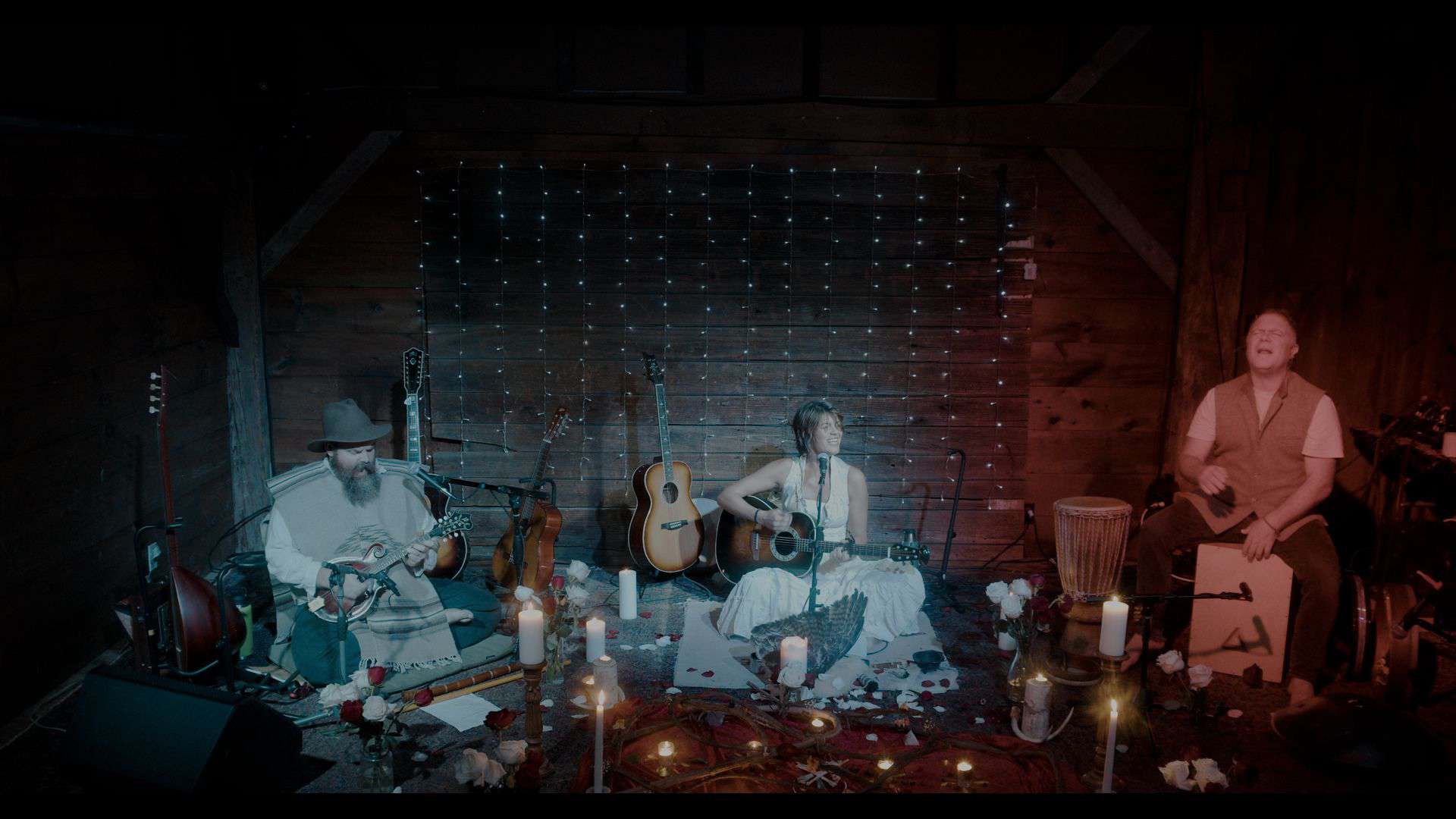
Club Passim, born as Club 47 in Harvard Square in 1959, became America's most important folk venue by maintaining an intimate relationship between audience and performer. Beginning with Joan Baez singing barefoot to calm her stage fright, the club became a star-making engine for the 1960s folk revival while also hosting blues and bluegrass elders. After the revival faded, the Donlin family preserved folk music during its commercial nadir through an innovative "Passim ladder" system that turned unknown openers into headliners. Through nonprofit restructuring and visionary leadership, Club Passim has evolved into a 500-show-per-year institution with a music school, grant fund, and festivals that serve 30,000 annual attendees and over 900 students.
The origin story of Club Passim begins not with ideology but with barefoot vulnerability. Club 47, named for its address at 47 Mount Auburn in Harvard Square, hired 17-year-old Joan Baez on slow nights. She sat on a small stage, barefoot, singing ancient ballads with a raven-haired presence and haunting soprano. The documentary notes that Baez went barefoot not for theatrical effect but "to calm her stage fright, like she was just singing in her living room." Slow nights quickly became sold-out nights, and this detail—the reduction of performance anxiety through physical simplicity—became emblematic of what the club would remain for 60 years: folk music's living room (44s).
The venue's genius lay in its mixture of youth and age, invention and tradition. After Baez's success, Club 47 rapidly became a star-making engine for the 1960s revival. Yet it also featured legendary blues and bluegrass elders in the same intimate space. This intergenerational approach meant that young musicians could learn directly from tradition-bearers while audiences experienced continuity between folk's deep roots and its contemporary reinvention. The proximity was so literal that performers later joked about audiences stealing their french fries (136s).
The concept of Club Passim as folk music's living room was not metaphorical—it was operational. The physical intimacy between stage and audience created a different kind of social contract than larger concert halls. Anaïs Mitchell, a Tony-winning songwriter, describes the club as "committed to a sense of community and helping new artists find expression" and calls it "a compassionate place" (146-155s). The living room framing meant that audience members were not passive consumers but witnesses and participants. Music became what Betsy Siggins, a driving force at the club, called "the common denominator" that dissolved class and educational barriers. As she noted, "It was a place where kids who had very little education could sit in the audience with people who had enormous educations, but music was the common denominator. It still is a common denominator here today... folk music does something very good for the soul because you don't have to want to be a musician to get an awful lot out of it" (255-274s).
The intimacy also shaped how artists developed. When performers asked Bob Donlin (who later ran the club with his wife Rae Anne) about soundchecks, he would tap the red light on the board and say, "It's on, all set"—a deliberately casual response that emphasized connection over technical preparation (370s). John Gorka's experience illustrates this. He lost his voice, which forced him to develop stagecraft beyond vocal power. "The voice wasn't there for me," Gorka said, "but the audience was. A different kind of communication took over" (375-380s).
Club 47's impact on American music history extended far beyond hosting established artists. The venue was where musicians discovered themselves and where collaborations born in its small room influenced entire genres. When Vanguard Records mogul Maynard Solomon told a lanky kid jamming with friends, "I'd like to sign your band," the kid—Jim Kweskin—replied, "That's no band, but give me a couple months, I'll get one." This exchange led to the formation of the Jim Kweskin Jug Band, described as "the most influential jug band of the 1960s" (180-195s).
Tom Rush's discovery followed a similar pattern. When the weekly hootenanny ran out of performers, its shy host had to borrow a guitar and sing. This improvisation revealed that audiences responded to Rush, launching his career (195-204s). The Charles River Valley Boys recorded a bluegrass cover of Beatles songs that inspired an entire movement called newgrass, showing how the club's cross-pollination of styles generated innovation (216-218s).
When the folk revival commercially collapsed and Club 47 closed in 1968, the city reopened the space first as McCarthy for President headquarters, then as Passim, a bookstore gallery. Beat poets Bob and Rae Anne Donlin took over as managers and, responding to fans' pleas, began hosting folk music again. But the commercial conditions were dire. The revival had faded, and major labels had moved on. The Donlins faced a practical problem: how to keep folk music alive when the external star system no longer existed to generate reliable headliners and audiences.
They invented the "Passim ladder" (335-364s). The system was elegantly simple but powerful. Headliners performed six shows from Friday through Sunday with the same opening act. As audiences got to know the opening acts, those performers became the headliners, bringing along the next crop of unknown openers. During lean years, local headliners sometimes called themselves the Passim All-Stars as a joke about the ladder's slow progression. Yet this system became "a powerful force in building the stars who drove the next revival" (357-364s). The Passim ladder was neither a star system nor a lottery—it was a meritocracy based on audience response and repeated exposure.
This approach transformed how folk artists learned their craft. Rather than being discovered in a competitive market and thrust onto a stage, musicians developed their stagecraft, repertoire, and connection to audiences over months and years. The Donlins "kept the light on" for folk music when commercial forces had abandoned it. Chris Smither said simply: "They kept it burning" (329-335s).
By 1995, Passim was broke. The folk revival had returned commercially, but competing venues had proliferated. The Donlins retired, and the club faced closure—a repeat of the pattern that had ended Club 47 decades earlier. At this critical moment, Betsy Siggins, who had been a driving force in the earlier period, reappeared. Siggins, whom Judy Collins called "the fierce energy that made this all work," forged the legacies of both Club 47 and Passim into a powerful nonprofit structure called Club Passim. Also crucial was Matt Smith, who Anaïs Mitchell calls "the most evolved, kind-hearted, funny promoter I've ever known," who wandered into the club one night and never left (231-238s).
The nonprofit model fundamentally changed how the venue could operate. Rather than living or dying on the appeal of any single artist or series of artists, Club Passim could develop multiple revenue streams: ticket sales, donor support, memberships, tuition from its music school, and food service. This financial diversification meant the venue could "take more chances" and invest in artists at earlier stages of development without immediate commercial payoff. By 2019, when this documentary was produced, Club Passim hosted 500 shows per year, including 90 outdoor shows, for an annual audience of 30,000. Its music school offered 700 classes to over 900 students. The club's Iguana Music Fund had distributed $400,000 in grants to promising artists, while Memorial and Labor Day weekend campfire festivals had given opportunities to over 1,700 budding musicians (81-113s).
The documentary's central insight is that folk music—unlike some genres that can survive in large concert halls or recording studios—requires intimacy to do what it does best: connect humans across difference through shared tradition and vulnerability. Folk music doesn't hide behind production; it relies on presence. Betsy Siggins explained this plainly: "Folk music does something very good for the soul because you don't have to want to be a musician to get an awful lot out of it" (269-274s).
This is why the club survived three evictions, two closures, economic collapse, and genre cycles. The living room wasn't decoration—it was infrastructure. It was how folk music maintained its spiritual and social function even when commercial forces tried to turn it into something else.
Club Passim's 60-year history offers a case study in how cultural institutions survive through crisis. The club succeeded not by chasing commercial trends but by maintaining a stable commitment to intimacy, intergenerational connection, and artist development. The Passim ladder system, born from scarcity, became a model for how unknown musicians could become significant artists through repeated engagement with the same audience. The nonprofit transformation allowed the club to weather commercialization and competition by building diverse financial support.
For musicians, the club's history demonstrates how staging, accessibility, and sustained presence matter as much as talent. For venue operators and cultural institutions, Club Passim shows that mission clarity—remaining a "living room" even as the external world expands—can outlast market pressures. The club's expansion into education, outdoor festivals, and direct grants to artists suggests that folk music's infrastructure now extends beyond the single room, yet the beating heart remains that little stage where "the audience is so close" that the boundary between performer and witness dissolves.