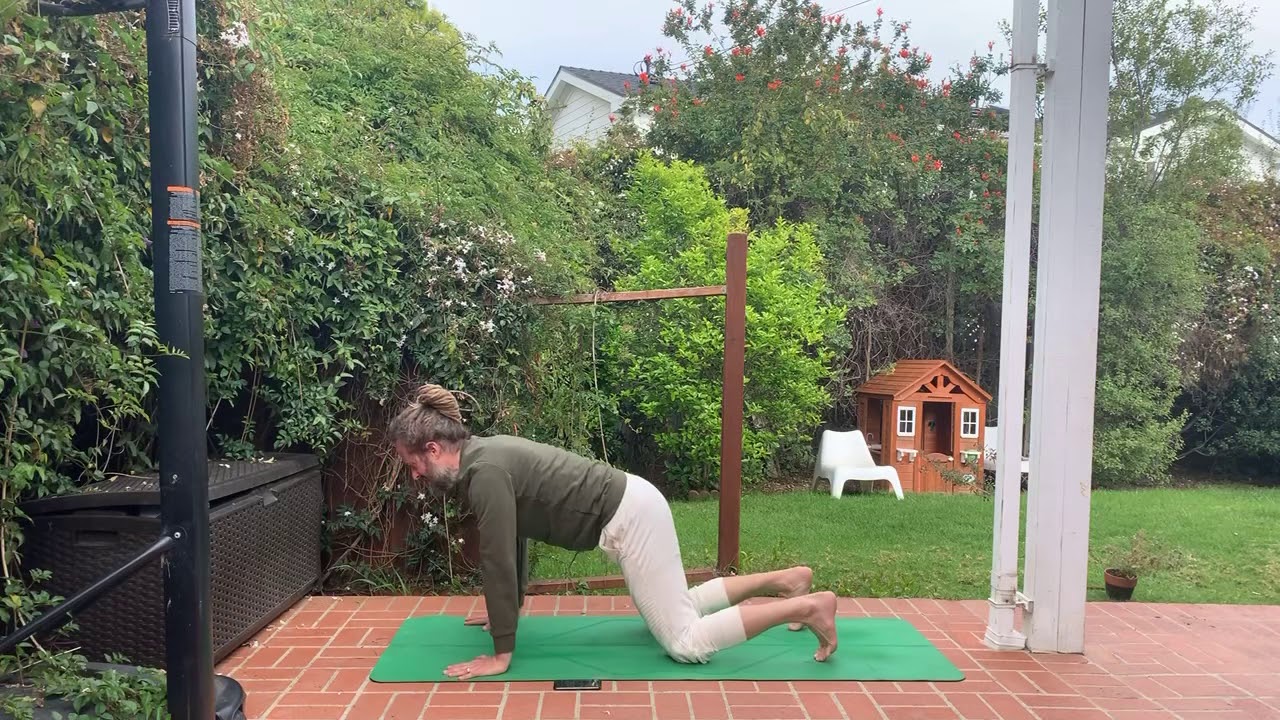
Picture a living room in late April 2020, a mat unrolled between the sofa and a bookshelf, and a laptop balanced on a stack of books so the screen sits at eye level. For most people that spring, the studio had gone quiet and the class had moved onto a screen. A 56-minute practice titled "Bhakti Vinyasa Yoga With Radha," posted by the Bhakti Yoga Shala channel on April 27, 2020, was built for exactly that moment: a teacher on camera, a student on the floor, and a framework that asks for more than good posture. It is a yoga session that describes itself through two words that do not always sit together in the same sentence. Bhakti is the path of devotion. Vinyasa is the style of linking each movement to a breath. This article explains both halves, what their combination asks of a practitioner, and how to get real value out of a recorded session when you cannot see the whole thing at a glance.
Start with the word bhakti. In the Sanskrit tradition it is usually translated as devotion, a loving relationship with the divine that can be expressed through prayer, chanting, service, or simply attention. Bhakti is one of the classic paths in Indian philosophy, and it has never been limited to a single posture or instrument. A devotee might sing a name of God while sweeping a floor, or bow before an image while cooking. The emphasis is on the heart's orientation rather than on technical accomplishment.
Now the word vinyasa. In modern yoga it generally refers to a flowing sequence in which movement and breath are synchronized: an inhale lifts the body, an exhale folds or steps it into the next shape. The term is often used loosely, but the core idea is continuity. Instead of holding a pose until the body shakes, the practitioner keeps the breath moving and the transitions alive. Many teachers describe vinyasa as a kind of moving meditation, which is one reason it sits comfortably beside devotional practice.
Put together, bhakti vinyasa is a flow practice in which the breath-and-movement architecture of vinyasa is held inside an intention of devotion. The asanas are not performed as an athletic display; they become offerings. The breath is not merely a mechanism for keeping rhythm; it is a way of staying present with something larger than the ego that wants to judge the pose. The name tells you what the teacher is trying to hold together: the discipline of the body and the warmth of the heart.
Most people encounter yoga first as exercise. That is a legitimate entry point, and many practitioners never go further. But the yogic traditions that gave rise to asana practice were, for the most part, not designed for fitness. They were designed to prepare the body for long periods of seated meditation, and they were embedded in devotional and ethical frameworks. When modern studios strip out the devotional layer, the physical practice can start to feel like a set of targets: deeper, longer, more balanced, more impressive. The mind keeps score.
Bhakti-oriented practice offers a different scorecard. The question shifts from "How well did I do the pose?" to "Where was my attention, and to whom or what was it offered?" That shift can be quietly radical. A wobbling tree pose becomes an occasion for humility rather than frustration. A difficult transition becomes a small act of trust. Students who come to vinyasa already hungry for something beyond sweat often find that devotion gives the flow a reason to exist.
There is also a practical benefit to the pairing. Devotional language, whether it is a mantra, a name, or a simple phrase repeated on the exhale, gives the mind something to rest on while the body moves. In a flow sequence that changes shape every few breaths, that anchor can keep the practice from becoming a scramble. The breath sets the tempo; the devotion sets the direction.
The published description for this video is brief. It introduces the session as a bhakti vinyasa practice led by Radha, identified there as co-director of Bhakti Yoga Shala, and it points viewers toward the channel's online membership, Instagram, and Facebook pages. The video runs 56 minutes and 34 seconds. Beyond that, the listing does not itemize the sequence, the chants, or the cues. The transcript is not available, so this article does not claim to know which poses were taught or which phrases were sung.
What a session of this length typically asks of a practitioner is worth spelling out, because it shapes how you should approach it. Fifty-six minutes is long enough for a warm-up, a sustained middle section where the body finds its groove, and a cool-down where the mind is invited to settle. In a vinyasa context, the middle is where most of the work happens. The breath is asked to keep pace with the movement for a long stretch, and the student is asked to keep returning to that pace when fatigue or distraction pulls them out of it.
If you are new to flow practice, a long recorded class can feel relentless. A useful approach is to treat the first pass as reconnaissance. Let the teacher's cues tell you the rhythm, and allow yourself to take modifications: a knee down, a shorter stance, a child's pose whenever the breath asks for a pause. Devotional practice does not require perfect form. It asks that you show up, and that you keep showing up even when the sequence outpaces you. Many students find the second or third time through a sequence reveals what the first one hid.
The channel listing names Govind Das as the speaker, while the description introduces Radha as co-director of Bhakti Yoga Shala and the person leading the practice. Both names appear in the source material, and this article reports them as they are presented rather than resolving the difference. What the listing does establish is the institution behind the video: Bhakti Yoga Shala, which points to a website, a membership offering, and social channels. That structure matters for a viewer deciding whether to go deeper. A single recorded class is a sample; a membership is an ongoing relationship with a teaching community.
It is also worth noticing the way the channel frames itself. The word "Shala" means a place of learning or a hall, and the combination with "Bhakti" signals that the institution sees its teaching as rooted in devotion rather than in fitness alone. Whether a given student finds that framing meaningful is a personal question, and it is one a recorded practice can help answer. Pay attention to how the session makes you feel by the end. Does the devotional element feel like decoration, or does it change the texture of the movement? That is the test a sincere teacher hopes you will run on yourself.
The timing matters. Posted in late April 2020, this video arrived when many yoga studios were closed and many teachers were moving their work online. Recorded practice became, for a stretch, the default way many people encountered yoga. That context shaped the medium: a single camera, a practice space at home, and a teacher speaking to a viewer who was alone with the same challenges. A devotional flow practice carries a particular resonance in such a season, because it offers structure and meaning when the external supports have thinned.
It would be easy to overstate that connection, and this article does not claim to know the teacher's intentions for the video. But the coincidence of a devotional vinyasa session and a moment of collective isolation is worth noting, because it illustrates why these practices persist. People turn to devotion when they need something to hold, and turn to breath-linked movement when the body needs to move without fear. The combination answers both needs at once.
Clear a space at least as wide as your arm span in each direction, and keep a block or folded blanket nearby. Set the laptop or tablet where you can see it without craning your neck, and turn the volume up enough that the teacher's breath cues carry over your own. Before you begin, take three slow breaths and state, silently or aloud, what you are offering the practice. The offering does not need to be grand. "This hour is for steadiness" is enough.
During the flow, let the breath lead. If you lose the rhythm, return to a comfortable pose and resume when the breath feels even again. Treat any chanting or devotional phrase as an anchor rather than a performance. If you do not know the words, listen, and let the sound settle you. If the sequence becomes too intense, lower the intensity without judgment; the devotional frame exists precisely to remind you that the practice is not a contest.
Afterward, do not rush to the next task. Lie in a relaxed pose for a few minutes and notice what has shifted. A sincere devotional practice tends to leave a residue of softness, and that is a better measure than how sore your hamstrings feel the next morning. If the session moved you, consider returning to it. Repetition is part of the discipline, and a recorded class rewards students who come back to it with a little more trust each time.
If this article has made you curious about bhakti vinyasa, begin with the video itself and give it a full 56 minutes on a quiet day. Then look at the teaching community behind it: the Bhakti Yoga Shala website at bhaktiyogashala.com lists the channel's online membership, and its social pages are linked from the video description. Read the description, watch with a notebook nearby, and write down one line after the practice about what you noticed. Over a few weeks, those lines will tell you more about your own relationship to devotion and flow than any article can.
Bhakti vinyasa is less a style to master than a way to bring attention and affection into the body. The video is an invitation to try that, not a final word on it. Come to the mat as you are, breathe, and let the offering be simple.