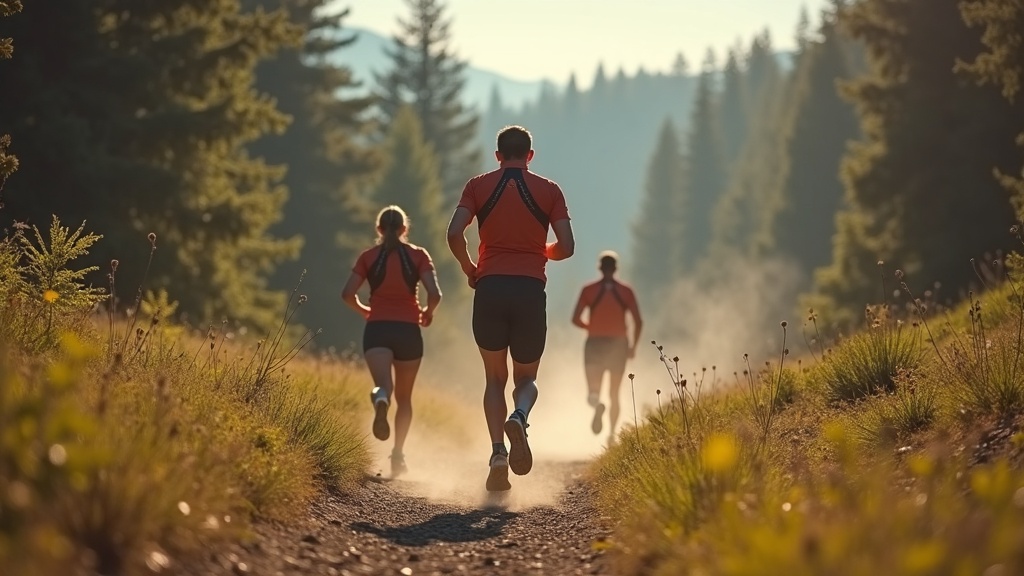
In Bergen, Norway, a small group of athletes under coach Olav Aleksander Bu has accomplished what triathlon experts once considered impossible: dominating both Olympic distance and IRONMAN racing at the highest level. Kristian Blummenfelt and Gustav Iden have shattered conventional wisdom about specialization, proving that with the right training methodology, athletes can excel across the sport's entire distance spectrum.
Their achievements read like fiction. Blummenfelt won Olympic gold in Tokyo 2020, then became IRONMAN World Champion in St. George in 2022, and broke the sub-7-hour barrier at IRONMAN Cozumel. Iden won back-to-back 70.3 World Championships in 2019 and 2021, then claimed the IRONMAN World Championship in Kona in 2022. Together, they've redefined what's possible in triathlon and sparked a global revolution in training philosophy.
Kristian Blummenfelt's trajectory seemed destined for Olympic specialization. After years of developing as an elite junior, he emerged as one of the world's top Olympic distance racers, known for his devastating running ability and tactical intelligence. His gold medal performance in Tokyo—pulling away from the field in brutal heat and humidity—marked him as the planet's best at 1500m swim, 40km bike, 10km run.
What happened next shocked the triathlon world. Rather than defending his Olympic title through the Paris 2024 cycle, Blummenfelt announced his intention to race IRONMAN. Critics questioned the decision. Olympic and IRONMAN racing demand seemingly contradictory physiological adaptations: explosive anaerobic power versus steady-state aerobic endurance, sprint finishes versus eight-hour efforts, tactical positioning versus time-trial pacing.
Blummenfelt proved the critics wrong spectacularly. At the IRONMAN World Championship in St. George in May 2022—less than ten months after his Olympic triumph—he dominated, winning by nearly five minutes in conditions that devastated competitors. His bike split was aggressive, his run was controlled perfection, and his victory margin was emphatic.
The Sub-7 Project: Redefining Possible
Not content with a world championship, Blummenfelt set his sights on breaking the mythical 7-hour barrier for the full IRONMAN distance. At IRONMAN Cozumel in November 2022, with pacing support and ideal conditions, he stopped the clock at 6:44:25—obliterating the previous world record and proving that the 140.6-mile distance could be completed at paces once considered sustainable only for Olympic racing.
The Sub-7 performance revealed the true extent of Norwegian training methodology. Blummenfelt averaged 41.7 km/h (25.9 mph) on the bike—IRONMAN bike course record pace—then ran a 2:35 marathon, faster than most age-groupers can run a standalone marathon. His performance reset expectations across the sport.
While Blummenfelt captured headlines with his Olympic-to-IRONMAN transition, Gustav Iden was writing his own revolutionary story. After winning consecutive 70.3 World Championships in 2019 (Nice) and 2021 (St. George), Iden was considered the planet's most dominant middle-distance racer—but questions remained about his full-distance potential.
Those questions were answered emphatically at the 2022 IRONMAN World Championship in Kona. On the punishing lava fields where IRONMAN legends are forged, Iden delivered a masterclass. He pushed the pace on the bike, breaking away with a select group, then unleashed a stunning 2:36 marathon—the fastest Kona run split in history at that time—to win by more than three minutes.
Iden's victory was notable not just for its margin but for his racing style. Unlike traditional IRONMAN champions who conserve energy and negative-split, Iden raced aggressively from the front, dictating the pace rather than responding to it. His approach reflected the Norwegian philosophy: superior fitness makes tactical caution unnecessary.
The Repeat Performance
Iden's 2022 Kona victory could have been dismissed as perfect-day execution. His 2023 defense removed all doubt. Despite mechanical issues on the bike, Iden fought back with another sub-2:40 marathon to finish second, proving his IRONMAN prowess was no fluke. His consistency across multiple full-distance races validated the Norwegian training approach at sport's highest level.
What separates Norwegian triathlon training from traditional approaches? Volume, intensity, and scientific rigor combined to a degree previously untested in the sport.
35-40 Hour Training Weeks
Norwegian athletes regularly log 35-40 hours of training weekly—volume that would break most professionals. This isn't junk miles; every session has specific physiological targets. The volume builds massive aerobic engines while the varied intensity develops the full spectrum of energy systems.
For context, most professional triathletes train 20-30 hours weekly. The Norwegian approach adds 50-100% more training load, requiring extraordinary recovery protocols, nutrition precision, and lifestyle optimization. Athletes treat training like a full-time job because it is one—but the results justify the commitment.
Double-Threshold Sessions
Perhaps the most distinctive Norwegian innovation is the double-threshold workout: training at or above lactate threshold twice in a single day. A typical week might include threshold bike intervals in the morning followed by threshold run intervals in the afternoon, repeated multiple times weekly.
Traditional endurance training wisdom warns against excessive high-intensity work, citing injury risk and overtraining. The Norwegians flipped this paradigm, discovering that athletes with sufficient aerobic base can handle far more intensity than previously believed. The key is balancing those threshold sessions with adequate easy training, recovery protocols, and monitoring.
These double-threshold days produce remarkable physiological adaptations: elevated lactate threshold, improved neuromuscular efficiency, and mental toughness that translates directly to race-day performance. When Blummenfelt and Iden push the pace during IRONMAN races, they're drawing on months of training at similar intensities.
Heat Training Protocols
Norwegian athletes train extensively in heat chambers, preparing their bodies for competition in conditions far warmer than Bergen's temperate climate. They spend hours cycling and running in controlled 95-104°F (35-40°C) environments, building heat adaptation that provides enormous advantages in races like Kona or Middle Eastern events.
Heat training expands plasma volume, improves thermoregulation, and increases sweat rate—all crucial for sustaining high power output in hot conditions. When competitors wilt in Kona's heat, Norwegian athletes maintain power because they've trained their bodies to function in even harsher conditions.
Altitude Camps
The Norwegian squad spends significant time at altitude, typically in locations like Sierra Nevada, Spain, or Font Romeu, France. These camps combine the aerobic stimulus of hypoxic training with high-volume loading, creating compounding adaptation effects.
Altitude training increases red blood cell production and mitochondrial density, boosting oxygen-carrying capacity and utilization efficiency. Combined with Norwegian volume and intensity, altitude camps supercharge the athletes' physiological engines.
Data-Driven Sports Science
Every Norwegian training session generates data: power output, heart rate, lactate levels, core temperature, training load metrics. Coach Olav Aleksander Bu and his team analyze this information continuously, adjusting training plans based on objective physiological markers rather than subjective feel.
This scientific approach minimizes guesswork. If lactate testing reveals insufficient threshold adaptation, intensity is adjusted. If heart rate variability indicates inadequate recovery, training is modified. The result is precisely calibrated training that maximizes adaptation while minimizing injury and illness.
For decades, triathlon featured distinct specialization tracks. Olympic distance athletes developed anaerobic power, drafting skills, and sprint speed. Long-course athletes built aerobic endurance, steady-state power, and mental toughness for solo suffering. Rarely did athletes excel at both—the physiological and training demands seemed mutually exclusive.
The Norwegians proved otherwise. By building massive aerobic engines through volume, then adding Olympic-specific intensity and long-course-specific endurance, they developed complete athletes capable of excelling across all distances.
Blummenfelt can surge in Olympic races and sustain IRONMAN power. Iden can kick in 5000m races and maintain sub-threshold watts for 112 miles. Their versatility stems from training that develops all energy systems rather than overspecializing for single distances.
This cross-distance dominance has profound implications. It suggests that traditional specialization may leave performance on the table—that athletes willing to embrace Norwegian-level training loads can achieve more than previously imagined.
Blummenfelt and Iden's success has triggered global emulation. Professional triathletes worldwide are increasing training volume, adding double-threshold sessions, incorporating heat training, and adopting data-driven approaches. Coaches are rethinking what athletes can handle. Age-groupers are experimenting with Norwegian principles scaled to their available training time.
The results are visible in race results. Winning times across IRONMAN events have dropped significantly. Sub-8-hour finishes, once rare, are increasingly common among professionals. Course records fall regularly. The Norwegian effect has raised the sport's entire performance ceiling.
Challenges and Criticisms
Not everyone embraces the Norwegian approach. Critics note that Blummenfelt and Iden are genetic outliers with extraordinary work capacity and recovery ability. Attempting to replicate their training without similar physiological gifts risks injury, illness, and burnout.
Others question whether the approach is sustainable long-term or whether it accelerates career-ending breakdown. Some athletes who've attempted Norwegian-style training have suffered stress fractures, overtraining syndrome, and chronic fatigue.
These concerns are valid but don't diminish the Norwegian contribution. The lesson isn't that every athlete should train 40 hours weekly—it's that most athletes can probably handle more than they currently do, with proper progression, recovery, and monitoring.
The Norwegian revolution has permanently altered triathlon's landscape. Future champions will likely train with higher volume and intensity than previous generations. Cross-distance racing will become more common as athletes recognize that Olympic and long-course success aren't mutually exclusive. Scientific monitoring will become standard rather than exceptional.
For age-groupers seeking to improve, the Norwegian approach offers scalable lessons. You don't need 40-hour weeks, but perhaps you can handle 15 instead of 10. You don't need daily double-threshold sessions, but maybe one per week builds beneficial adaptations. You can't live at altitude, but heat training is accessible to anyone with appropriate equipment.
Resources like EnduranceFinder help athletes find races and training approaches that align with evidence-based methodologies like the Norwegian system, connecting the sport's cutting edge with everyday participants.
As of 2026, Blummenfelt and Iden continue competing at the highest level, with younger Norwegian athletes following their path. The Bergen training group has expanded, with additional athletes adopting the methodology and achieving international success.
Their legacy extends beyond race results. They've proven that limits are often psychological rather than physiological, that conventional wisdom deserves questioning, and that the right training approach can achieve what experts consider impossible.
In a sport defined by pushing boundaries, the Norwegian revolution represents perhaps the most significant training advancement since triathlon's inception. Kristian Blummenfelt and Gustav Iden didn't just rewrite the playbook—they proved a new playbook was possible, inspiring a generation of athletes to dream bigger, train harder, and achieve more than ever before.