
The shape of a session
Wah! teaches in several formats, and they overlap more than they differ. There are lectures at expos and conferences, training that helps students learn to lead sound healing events, private sessions in sound healing, life coaching and health coaching, and the Friday night online programs that have become a sustained teaching container of their own. The available record does not describe the internal structure of a session or retreat, so no play-by-play can honestly be given. What can be said is that her work is participatory. Call-and-response chanting is the center of it, and instruction and singing appear to be intertwined rather than separated into a talk followed by a practice.
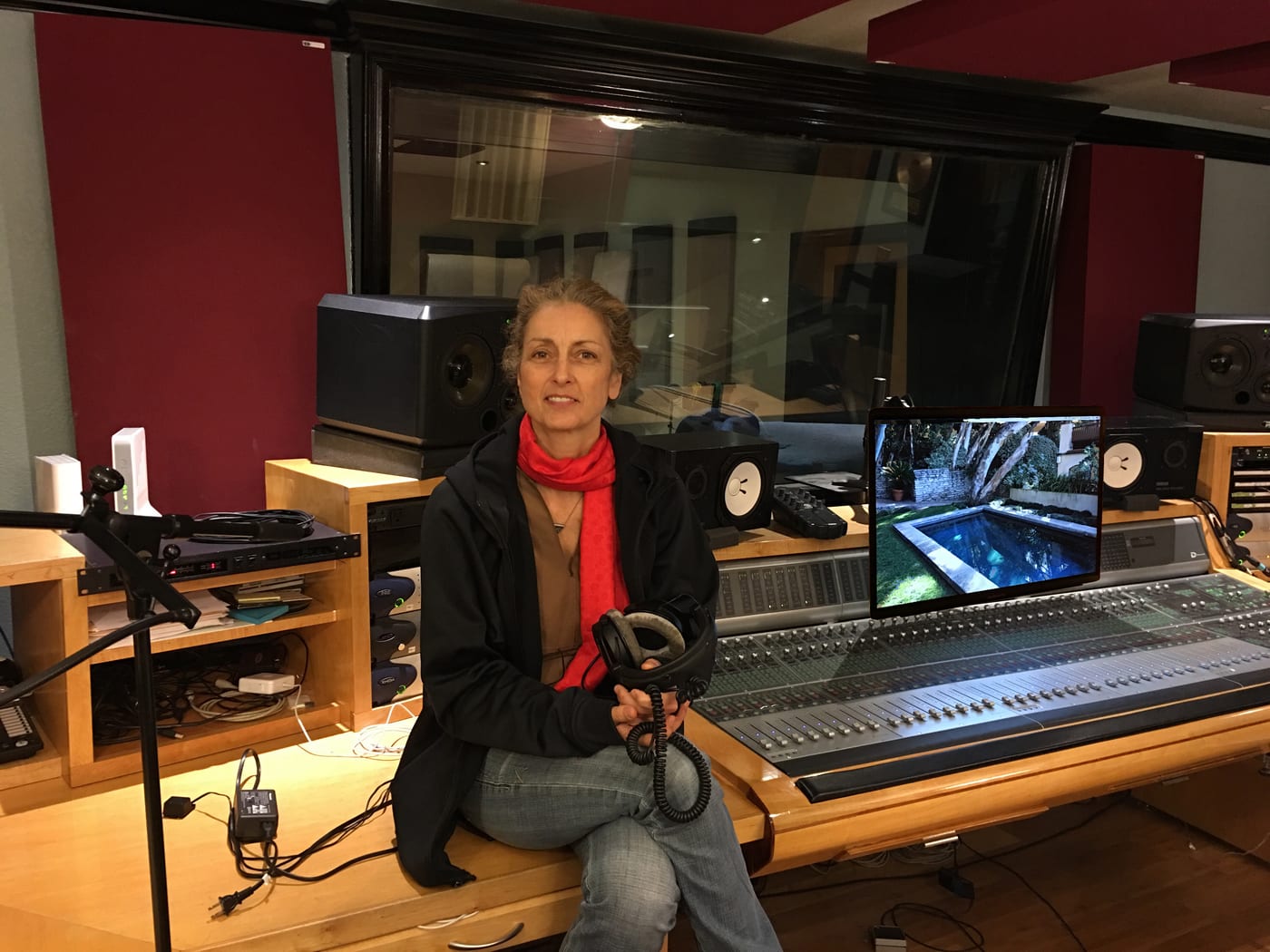
The sound of the room is likely to surprise anyone expecting hushed, unamplified devotion. Her online kirtan concerts combine Sanskrit mantra, vocals, harmonium and Ableton Live, and her background as a bass player in a rock band, which she has led at yoga festivals and centers since 1997, gives the work a pulse closer to a concert than a meditation sit. Her Healing Concert, begun in 2012, adds projections and slow-moving laser lights to live music. It has been staged in planetariums and science museums, among them Fiske Planetarium, the Franklin Institute and the Reuben H. Fleet Science Center. Students attend as much to be inside a designed sonic and visual environment as to be told something.
Recurring themes
Sound as a means of healing is the thread that runs through everything. Her first book, Healing: A Vibrational Exchange (2013), introduced the ideas behind her music, and the vocabulary of vibration, peace within and peace in the world recurs in how the Healing Concert is described. Her second book, Self Care: Building a Smarter, Stronger, More Peaceful Self, is a book and card deck of practical tools: tapping, meridian stimulation, breathing and humming. It is written for people recovering from illness, injury and trauma, and for those managing stress, burnout and depression.
Stress relief is the other constant. The fan-made bumper sticker "Less Stress More Wah!" is as good a summary of the promise as any. Beneath it sits bhakti, the devotional practice in which sung names of the divine carry the work, visible in titles like Prabhuji and DEVOTION and in a 2024 single invoking Saraswati.
The questions she asks students to sit with
The record contains no quoted prompts, so it would be dishonest to supply any. The questions can only be inferred from the work's structure. A student who chants in call-and-response is asked to listen and answer, and to stay with repetition rather than novelty. A student working with the Self Care deck is asked, in effect, what daily practice would steady them, since the cards are meant as a repeatable structure rather than a single read. And the Healing Concert's stated aim, peace within and peace in the world, poses the question of how the two relate. These are readings of the format, not reported teachings.
The aesthetic of delivery
The defining feature is joy delivered through production. Humor is suggested by the bumper-sticker affection and the "joyful rock band" description, though no jokes or anecdotes are documented here. Silence is present in a particular form: the Healing Concert moves slowly to match its laser and projection design, and the Savasana CDs, which her bio says have sold over 100,000 copies, are built for the closing rest pose. Story and scripture enter mainly through Sanskrit mantra and named deities, such as Ganesha and Saraswati in her singles, rather than through documented commentary on texts. The English-language song on It's Friday Night, her 2026 album marking 30 years in the music industry, is a deliberate exception in a catalog otherwise sung in Sanskrit. The overall effect is warm, polished and measured rather than ecstatic or austere.
Who it lands for, and who may bounce off
It lands for people who want devotional practice without formality: yoga students, listeners seeking stress relief, those comfortable with repetition and sincerity, and people drawn to wellness-education settings such as Omega Institute, where she is listed to appear on August 30, 2027. Her lectures have also been welcomed at Princeton University and Loyola Marymount University, which suggests an ability to speak outside purely devotional rooms.
It will likely frustrate several groups. Those who want purely traditional, unaccompanied kirtan may find the band arrangements, studio production and laser light too much. Skeptics of sound-healing language, including claims about vibrational exchange and meridian work, will find assertions for which the available data offers no clinical evidence. Anyone recovering from illness or trauma should treat the Self Care book as a complement to professional care, not a replacement. Students wanting philological depth in Indian devotional texts will find the work practice-oriented rather than scholarly. Listeners wanting variety or ironic distance, or high-tempo electronic music, will find the catalog measured and earnest.
The wider tradition
Her work belongs to bhakti, the devotional path, and specifically to kirtan, the call-and-response chanting of India. Her yoga-teaching frame ties it to the postural and breath traditions Western students associate with yoga. Her bio names no teacher, guru or line of succession, and none should be assumed. Her own website describes her as the first female to bring kirtan to the West in the 1990s; that is her account, not an independently documented fact. Her extension of the tradition into sound-healing and wellness vocabulary, and her willingness to remix mantra into dance and dub forms, is exactly what some purists of Indian kirtan may read as a departure from older forms. How far that is innovation and how far dilution is a live question in how she is discussed, and a serious reader should hold it open.