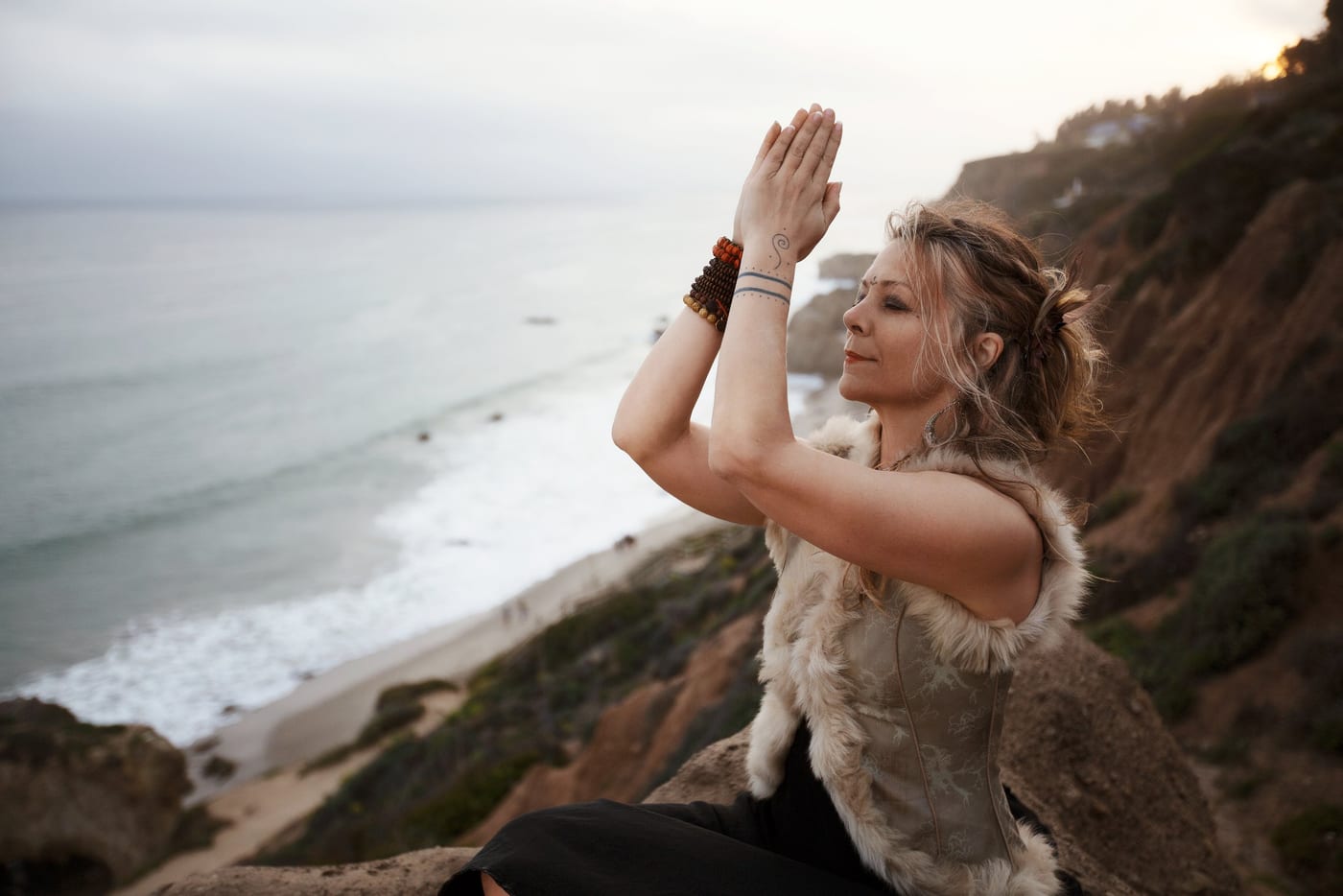

Dub Mantra Sangha (Remix), released July 16, 2018, is a nine-track album that reworks an earlier project. Her catalogue lists Dub Mantra Sangha as a 2015 release, and the remix follows it three years later. That makes this record a second look at material she had already put into the world, not a fresh start.
Sterling is a singer, ritual leader and activist who has spent more than 25 years teaching workshops built on sound, song and sacred ritual. She has released five solo albums and appears as a guest on many others. Her catalogue runs from ambient practice music like Chakra Flow and The Yoga Sessions: Hang With Angels to chant-centered work like Kirtan: The Bhakti Yoga of Chanting Mantras, plus earth-based ritual compilations. The Dub Mantra titles are the outliers. The artist's own sources call them the most distinctive in her catalogue because they bring mantra into dub production, a style uncommon in kirtan circles.
The premise is mantra inside reggae-style echo and space. Her voice remains the central instrument, as it does across her work, and the production exists to support chant and breath rather than compete with them. In dub, that means the studio itself becomes part of the performance. A phrase is sung, then it trails off and returns in the space around it.
The pacing suits both traditions. Kirtan relies on repetition: a phrase returns, a melody settles, and the listener is asked to stay rather than wait for a climax. Dub also builds its meaning through repetition and spaciousness. The two approaches reinforce each other. Expect a spare, slow-moving record with a warm, meditative mood. If you want fast tempos or dense electronic layering, this is not that album.
The title's word "sangha" (community) points to the communal texture of kirtan, where the people singing alongside the leader are part of the sound. The record does not name specific collaborators or players, so check the Spotify or Apple Music credits if you want exact personnel.
I can't responsibly name individual tracks here. The available record gives the album's nine-track count but no track list, and I won't guess at titles. That shapes how this album is best approached: as a single continuous arc rather than a set of standouts. Listen from the first track to the ninth and note which moments pull you in, such as a vocal phrase that echoes longer than you expect, or a bass-heavy stretch where the chant seems to float above the rhythm. Those moments are where the dub treatment does its work. Once you've found your own favorites, you'll have a better guide than any list.
Sterling's work sits primarily within bhakti, the Indian devotional path in which song and repeated sacred names become a direct route to the divine. Her catalogue also references japa, the quiet repetition of a mantra. A second strand comes from more than 25 years with the International Reclaiming Community, co-creating public ritual in earth-based spirituality. Her lineage is better read as a set of practices than a single guru line, and the record names no specific teachers.
Within that frame, Dub Mantra Sangha (Remix) is an experiment in carrying devotional repetition into a contemporary sound world. It doesn't abandon the devotional purpose. It asks whether the same practice of staying with a sacred phrase can live inside a different groove.
This album suits listeners who already feel at home with mantra and are curious about hearing it differently. It also works for people who find traditional kirtan recordings too sparse or too formal but still want devotional content. Skeptics of devotional or ritual language will find that language central rather than decorative.
Life-moment wise, it fits transitions and decompression: the end of a workday, a slow weekend morning, or a stretch where you want music that holds you without demanding attention. Sterling's work is generally tied to community practice, so some listeners will find a recording alone only part of the picture.
Listen in the evening with headphones, since dub depends on spatial detail, the tails of echo and the low end. Play the album straight through without skipping, and let the repetition do its work. Try singing quietly under your breath on the second pass, since kirtan is meant to be participatory. If you want to place it in a ritual or practice context, preview it first on Spotify, since the record doesn't include track-by-track descriptions. And if the album resonates, treat it as an invitation: live kirtan or one of Sterling's workshops is the logical next step.