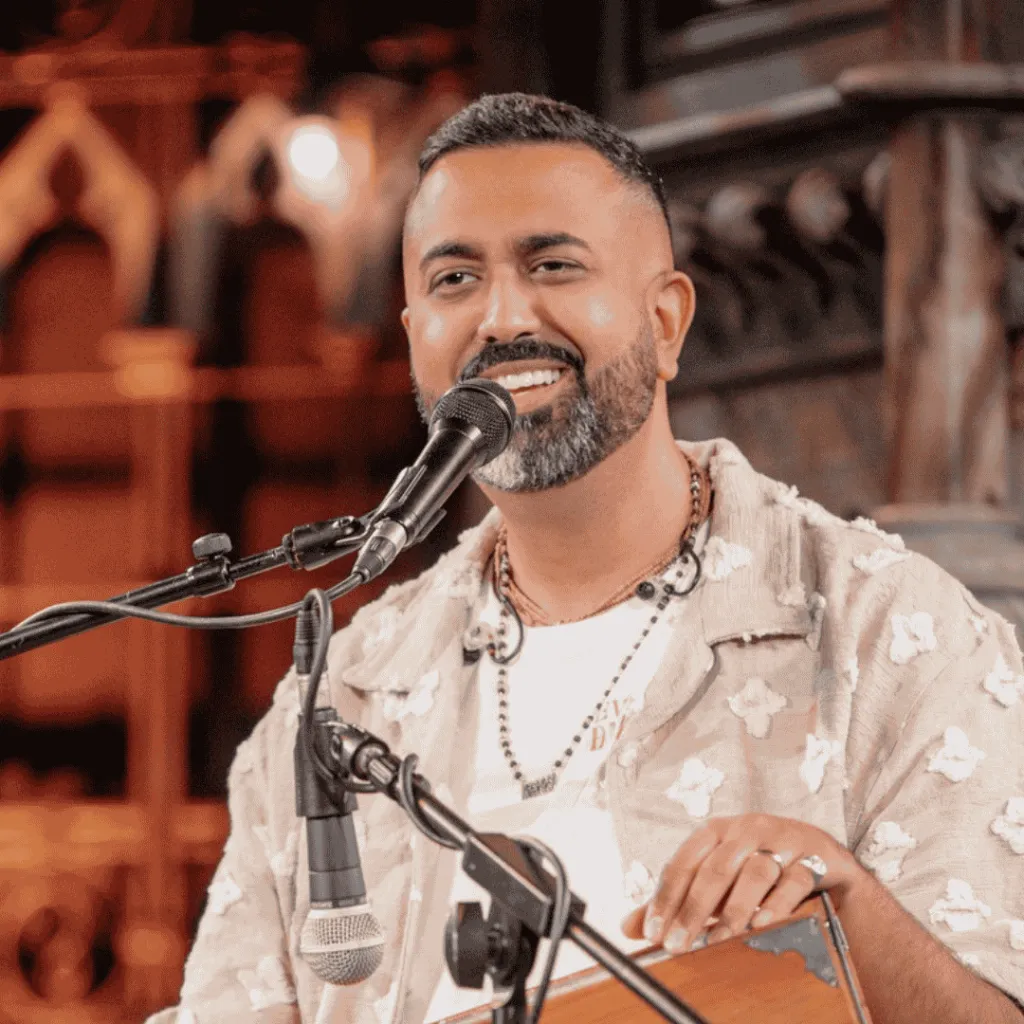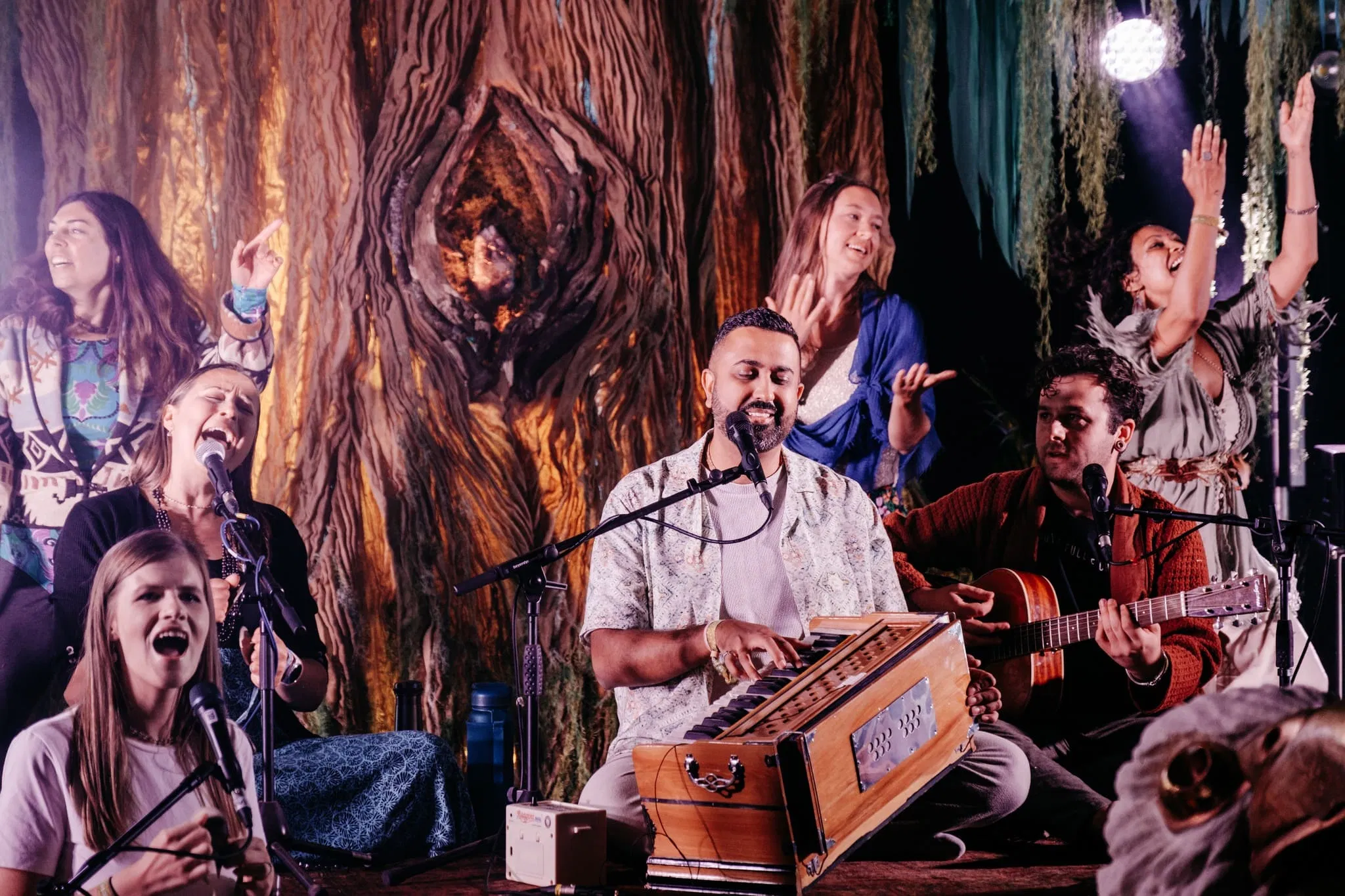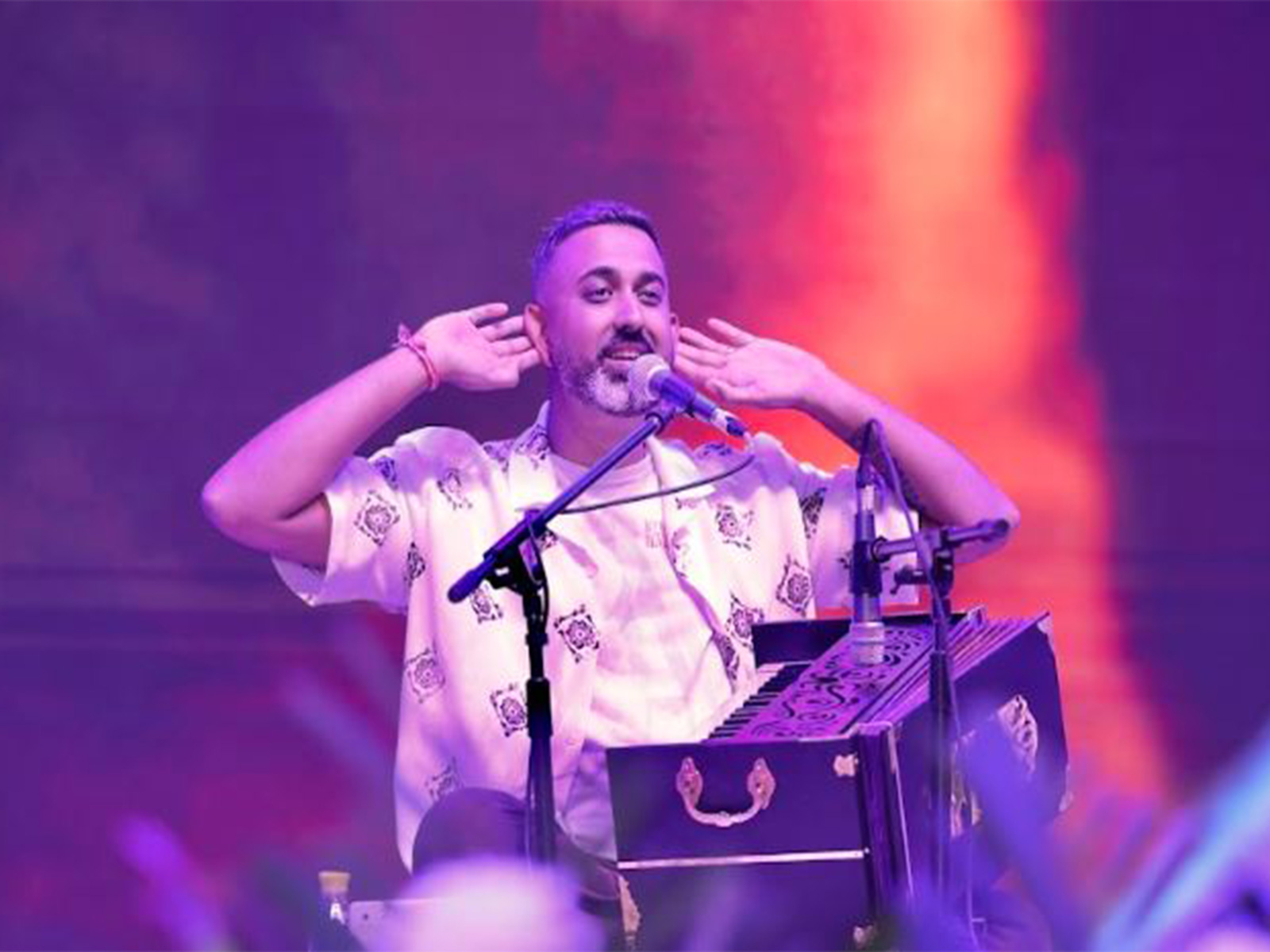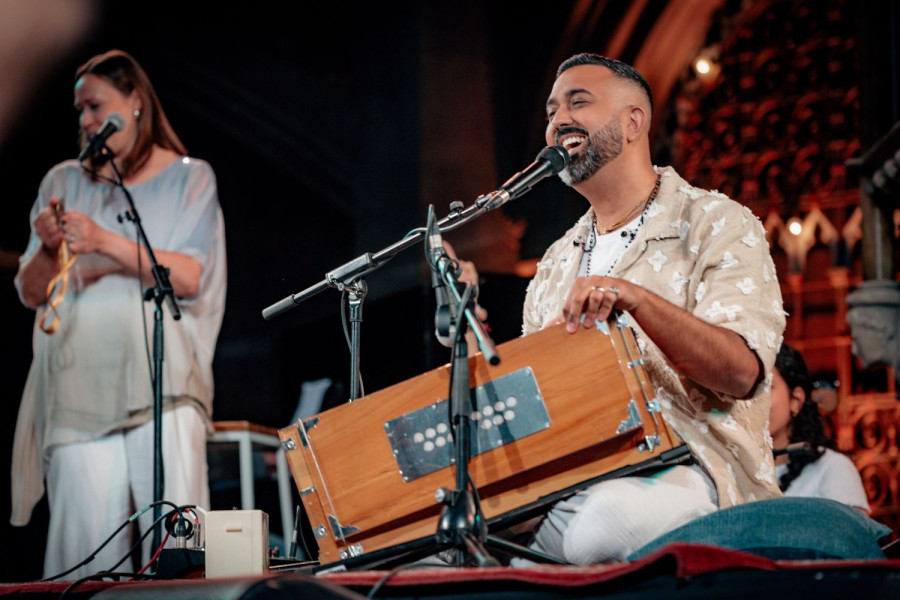
Heartland 5 (Live) arrives as a threshold document in Radhika Das's journey. By 2025, he has already moved from intimate London gatherings to stadiums and sacred venues across continents—a kirtan leader who has helped restore the ancient practice of devotional chanting to contemporary consciousness. This live album doesn't mark a beginning; rather, it captures a particular moment of maturity, where the raw spiritual hunger that first drew him to mantra practice has crystallized into something transmissible, shareable, communal.
A live recording is essential to Das's practice. Kirtan, at its heart, is not a solitary art form—it is call-and-response, breath and echo, the singer and the sung-to. In capturing five moments from the live experience, this album honors what kirtan actually is: a collective remembering, a room full of voices finding their way back to the heart together.
What strikes immediately about Heartland 5 (Live) is its restraint. This is not a maximalist production. Instead, Das's voice—warm, unhurried, deeply present—sits at the center, accompanied by a band that understands the power of space. You will hear acoustic guitar, harmonium, tabla, and voices in call-and-response, but each element knows its role: to support the mantra, not to eclipse it.
The pacing is deliberate. Kirtan works through repetition—a mantra is offered, then built upon, layered with variations in melody and rhythm, allowed to deepen its groove into the listener's nervous system. There is no rush here. A single phrase might unfold over minutes, accumulating texture and emotional weight. The mood throughout is contemplative but never static; there is movement underneath the stillness, a gentle current.
Das's voice carries a particular quality: it is not operatic or showy, but rather intimate—as if he is singing into your ear, inviting you into a secret already known to your own heart. The live audience is present but respectfully understated in the mix; you sense the gathering without being overwhelmed by crowd noise.
While the album contains five tracks, each represents a distinct emotional and devotional territory. The live format means these pieces breathe and build in real time. What makes them land is their refusal to resolve too quickly—they court patience, asking the listener to meet them in their own duration rather than rushing toward climax.
The opening pieces establish the album's primary invitation: to slow down, to attune. Das's voice enters with a clarity that feels like a bell struck in stillness. The harmonium and tabla follow, establishing a gentle pulse. This is kirtan in its purest form—not entertainment, but practice. Not performance, but prayer.
Mid-album, the energy shifts subtly. Rhythms deepen, the call-and-response becomes more pronounced. The band seems to cohere more tightly around Das's voice, as if the collective meditation is finding its depth. This is where you sense the gathering most acutely—the room breathing together.
By the album's conclusion, there is a sense of arrival. The mantras have been thoroughly inhabited; the repetition has done its work. There is a settling, a completion, though not a finale in the conventional sense. The album ends as kirtan often does: not with applause or resolution, but with a gentle diminishment, as if the singers are slowly releasing their hold on the sound, allowing it to dissolve back into silence.
Radhika Das works squarely within the Bhakti tradition—the ancient Hindu devotional lineage emphasizing love, surrender, and service to the Divine. Kirtan is bhakti's primary expression: the singing of sacred mantras as a path to remembering what is already present within. This is not new-age ambient spirituality, though contemporary listeners often encounter it that way. It is a lineage thousands of years old, practiced by saints and seekers, adapted here for 21st-century ears.
Heartland 5 (Live) sits at the intersection of this ancient practice and the contemporary hunger for genuine spiritual experience. Das's innovation is not in changing kirtan, but in making its invitation accessible—creating spaces where people of any faith (or none) can participate in collective chanting as a form of meditation and remembrance.
This is essential listening for several kinds of seekers: those already committed to meditation or contemplative practice; those grieving or in transition, needing to return to their center; those curious about bhakti but intimidated by unfamiliar traditions; and anyone whose heart feels distant and needs permission to come home.
It will resonate most deeply during solitude, during evening hours when the world has quieted, during moments when you need to remember that beneath the noise of living, something sacred persists.
Enter this album as you would enter a temple: with intention, without haste. Use headphones if possible; the album's intimacy demands them. Listen in the evening, or early morning. Better still, listen as a ritual—light a candle, sit upright, allow the mantras to work on you across their full duration. Don't skip ahead. Let each piece do its work completely.
This is not background music. This is medicine for a heart in need of remembering.