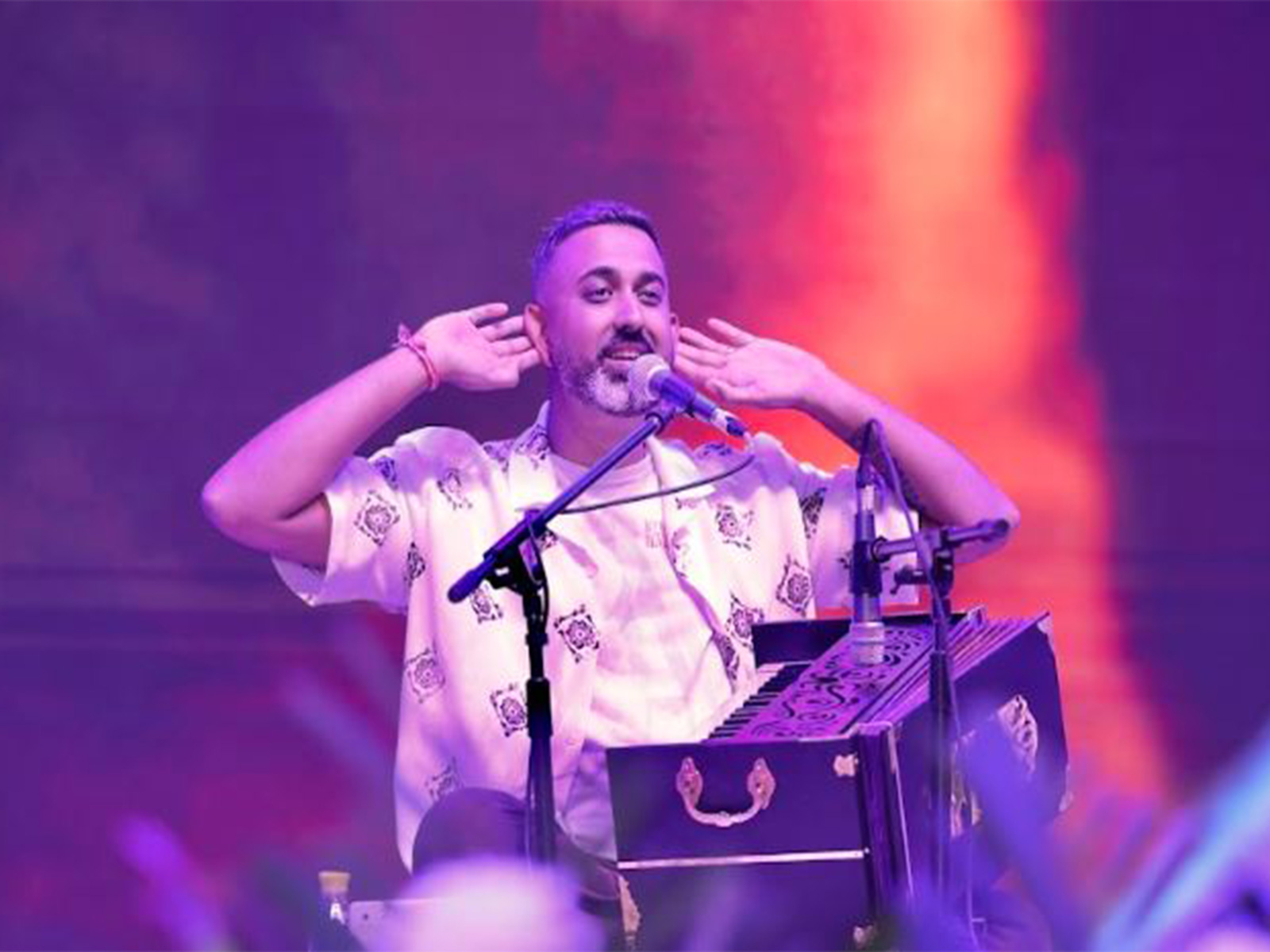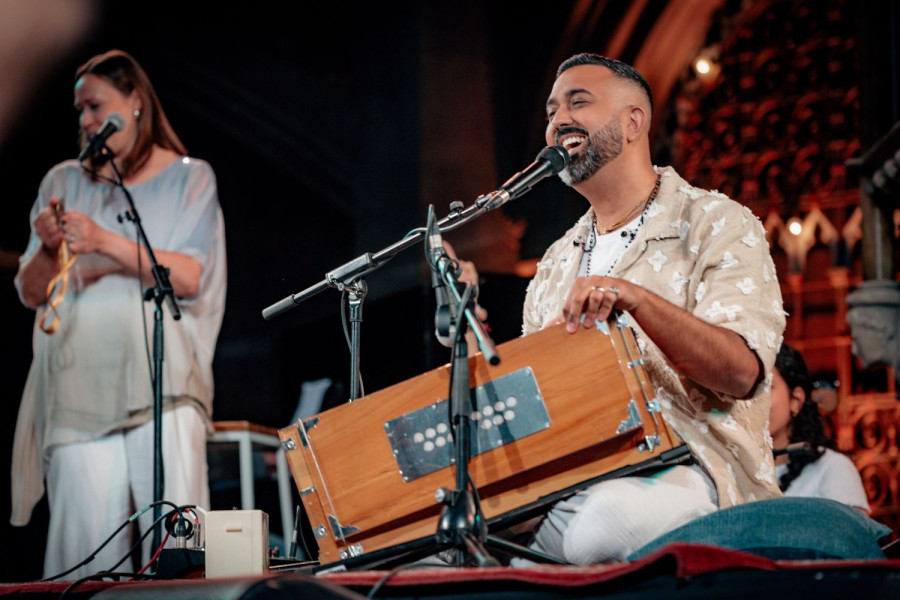
Hara Mahadeva arrives at a crystalline moment in Radhika Das's unfolding path. After more than a decade of building kirtan nights from intimate London gatherings into global ceremonies that draw thousands across continents—from the British Museum to New York to Mumbai—this single marks a deliberate step inward. Not away from his mission, but deeper into it. Where his live presence thrives in collective chanting and the electrifying feedback of shared breath, Hara Mahadeva is an invitation to solitude and interior devotion. It is Radhika Das offering not the ecstatic call-and-response of the kirtan hall, but the whispered prayer, the private altar, the midnight chant when the world has gone quiet. For listeners who have only encountered him in the context of mass gatherings, this single reveals the contemplative spine that holds all his work together.
The production of Hara Mahadeva is restrained and intentional—a far cry from the full-band energy of his live ceremonies. Here, the soundscape is spacious, almost austere. Radhika Das's voice occupies the center, warm and unhurried, with the grain of genuine devotion rather than polish. The instrumentation is minimal and carefully chosen: traditional elements like harmonium and tabla sit alongside subtle ambient textures, creating a bridge between classical bhakti tradition and contemporary meditation practice. There is generous use of silence—not emptiness, but breathing room, space for the listener's own heart to join the chant.
The pacing is deliberately slow. This is not music designed to carry you through a commute or fill background time. It asks something of you: attention, presence, a settling. The mood is one of intimate longing and surrender. Each phrase unfolds like a single breath held and released. There is an ache in the register Radhika Das chooses, a quality that speaks to seeking rather than arrival, question rather than answer.
With two tracks on this single, each carries substantial weight. The work centers on the invocation of Shiva—Hara (the remover of suffering) and Mahadeva (the great god)—a mantra that in the bhakti tradition addresses the transformative power of the divine to dissolve what obscures the heart. The sonic journey between these two pieces creates the arc of the release: a deepening, a rotation inward, a return.
What makes Hara Mahadeva land is the specificity of its devotion. This is not generic meditation music or world-music ambience designed to sound "spiritual." The mantras are rooted in centuries of lineage and lived practice. Radhika Das's voice carries the weight of his own surrender—you can hear the difference between singing about devotion and singing from it. The production gives space for that authenticity to breathe without obscuring it under layers of effect.
Hara Mahadeva sits at the intersection of several sacred traditions. It is rooted in bhakti—the yoga of devotion that emphasizes the heart's longing for the divine. It draws on kirtan, the call-and-response chanting practice that has sustained Hindu and yogic communities for centuries. But it also speaks the language of contemporary meditation and ambient music: it understands silence as a tool, space as sacred, and the listener's interior landscape as a valid temple.
What's notable is that Radhika Das does not present these as separate traditions in conversation. Rather, he inhabits them simultaneously—honoring the ancient mantra while making space for the modern meditator; keeping the discipline of kirtan while embracing the introspective possibilities of studio production. The album sits comfortably in neither camp and both at once.
Hara Mahadeva will land hardest for the listener in transition—someone grieving, questioning, or in the midst of spiritual seeking. It reaches those who have tasted devotion but feel they're practicing alone. It speaks to insomniacs and night-shift contemplatives, to people sitting in hospital rooms or empty apartments, to anyone for whom the question "What do I long for?" has become urgent.
It also reaches the seasoned practitioner seeking a bridge between the ecstatic and the intimate, between the choir and the cell.
Come to this alone, in the evening or deep night. Use headphones—this is intimate enough to require them. Light a candle if that feels natural. Do not multitask. Let the first track settle you, and allow the second to deepen whatever emerges. This is not background music. It is an offering, and like all offerings, it asks for presence in return.