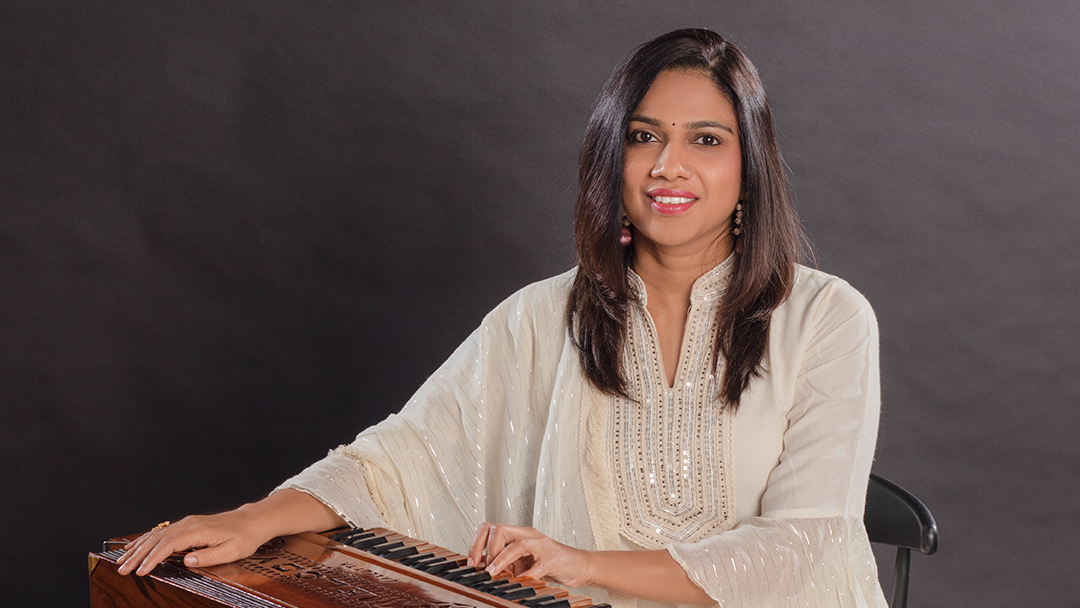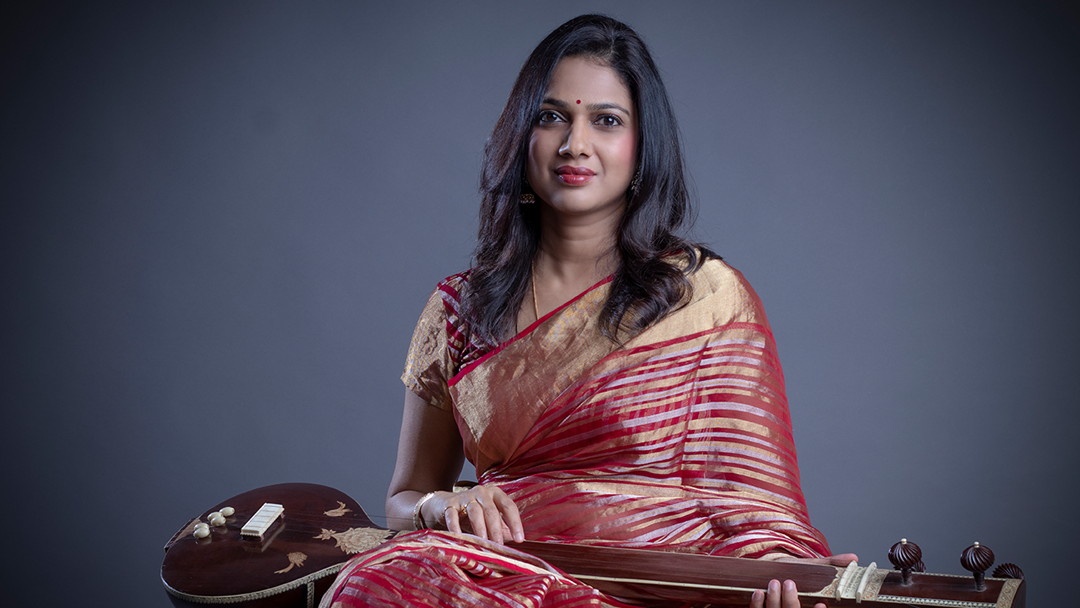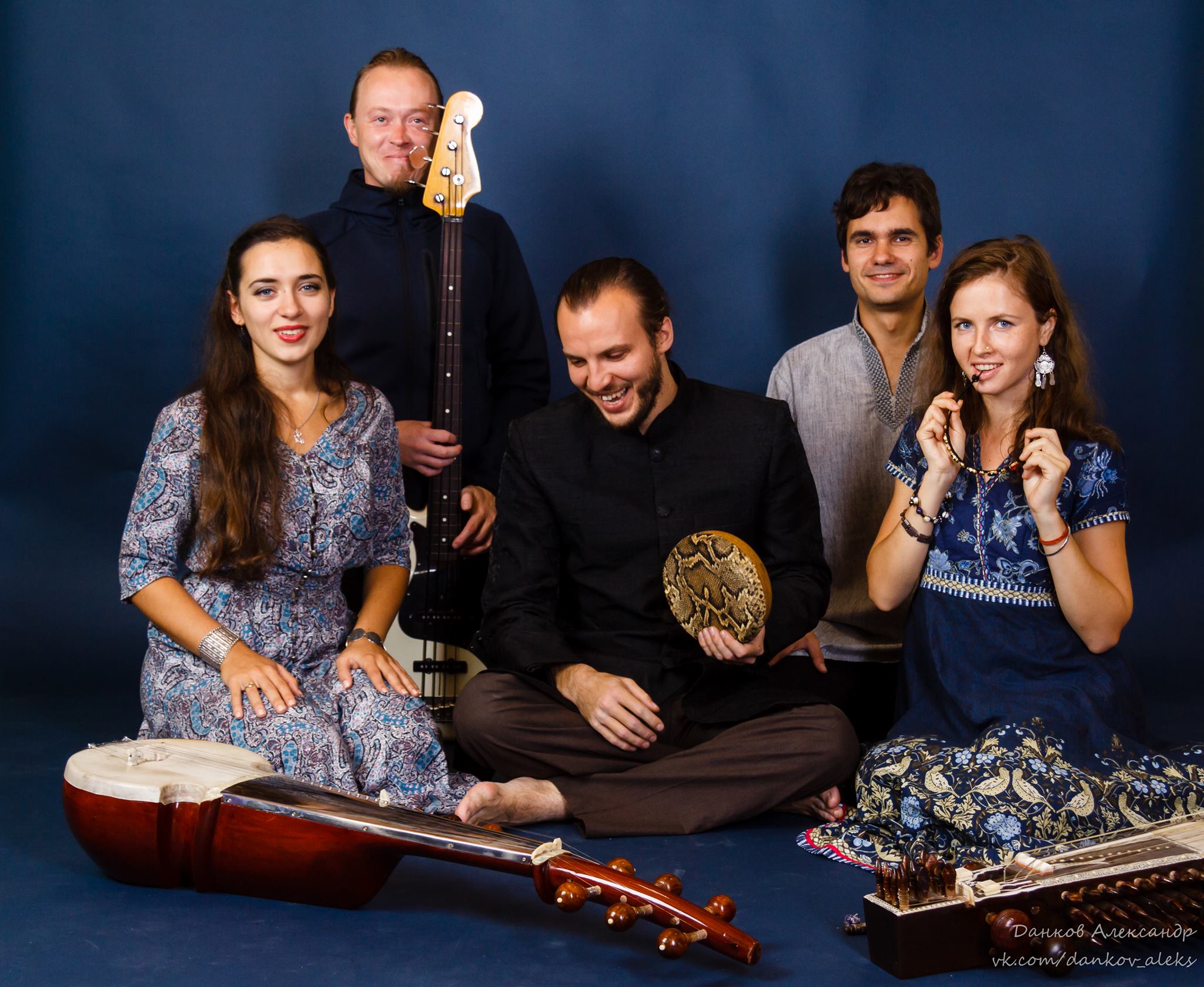

Nastya Saraswati occupies a rare space in contemporary music: she is neither a Russian violinist who dabbles in world music nor an Indian classical musician who happens to be European. She is something more integrated, more difficult to classify—an artist whose work represents a genuine synthesis between the classical traditions of Russia and India, two cultures with vastly different approaches to melody, improvisation, and the spiritual purpose of sound.
Her stage name, invoking the Hindu goddess of knowledge and the arts, signals her intentions clearly. This is not cultural tourism. Saraswati has spent years moving between St. Petersburg and Mumbai, ashrams and concert halls, studying both the European string repertoire she was trained in from childhood and the Hindustani classical forms that now shape her artistic identity. The result is a body of work that challenges conventional categories while remaining grounded in technical rigor and deep reverence for both traditions.
Saraswati's foundation was built in Russia, where she received classical violin training in the European tradition. The details of her early years remain largely private, but her technical command of the instrument reflects the kind of conservatory education that Russia is known for—precise, disciplined, steeped in the repertoire of Bach, Tchaikovsky, and the great violin concertos.
The turning point came when she relocated to India, a decision that would fundamentally reshape her relationship to music. This was not a brief residency or cultural exchange. Saraswati committed to extended immersion in the country's devotional traditions, spending time in ashrams and pilgrimage sites across India—Varanasi, Rishikesh, rural Maharashtra. She studied with traditional vocal and instrumental teachers, learning not just the mechanics of raga performance but the philosophy that underpins it: music as a path to transcendence, improvisation as spiritual practice, sound as a vehicle for devotion.
This period of study transformed how she understood her own instrument. The violin, with its capacity for sustained tone and expressive slides, became a bridge between worlds—capable of both the bel canto phrasing of European opera and the microtonal ornaments of Indian classical music.
What sets Saraswati apart is her willingness to fundamentally adapt the violin to serve Indian classical music, rather than simply playing Indian melodies on a Western instrument. She integrates slides, gamakas, and drone-based improvisation—techniques more commonly associated with the sarangi or esraj—into her violin technique. This requires both technical mastery and a deep understanding of how raga unfolds: the slow revelation of a melodic framework, the emotional nuance of each microtonal inflection, the interplay between structure and spontaneity.
Her performances often combine instrumental work with vocals in Sanskrit, Hindi, and Russian, creating layered soundscapes that reflect her bicultural identity. She collaborates with tabla players and sitar accompanists in traditional settings, but also works with electronic producers in ambient and world fusion genres, suggesting an artist uninterested in preserving tradition as museum piece. Instead, she treats both her Russian and Indian inheritances as living languages, capable of evolution and unexpected combinations.
In 2017, Saraswati reached a different kind of audience when she appeared as a finalist on Dil Hai Hindustani, a televised singing competition on Star Plus that drew millions of viewers across India. The program, judged by playback singers Badshah, Shalmali Kholgade, and Shekhar Ravjiani, placed her in front of a mainstream Indian audience more accustomed to Bollywood repertoire than Hindustani classical music.
Her performances on the show demonstrated remarkable range: she could deliver devotional bhajans with the gravity they require, then shift into popular film songs, always bringing her distinctive vocal approach—trained in both Russian classical singing and Indian devotional forms—to whatever material she touched. The exposure expanded her following well beyond the classical and spiritual music circuits, introducing her work to listeners who might never attend a raga concert or kirtan session.
Saraswati matters because she represents a form of cultural exchange that goes beyond appropriation or superficial fusion. Her work requires something that few artists are willing to invest: years of disciplined study, genuine respect for lineage and tradition, and the humility to be a perpetual student of forms that are not native to her. She reaches audiences in both Russia and India, classical music purists and spiritual seekers, listeners drawn to world fusion and those who come for devotional kirtan.
In an era when "world music" often means a diluted hybrid designed for maximum palatability, Saraswati offers something more challenging and more rewarding: music that maintains the integrity of its sources while creating something genuinely new. Her violin sings in two languages at once, and in doing so, suggests possibilities for how traditions might speak to each other—not through shallow borrowing, but through deep study, respect, and synthesis.
The current chapter of her work continues this exploration, moving between performance contexts that would seem incompatible: concert halls and ashrams, recording studios and pilgrimage sites. She remains an artist in motion, geographically and aesthetically, committed to a path that honors both her Russian foundations and her Indian training, finding in the space between them a sound that belongs fully to neither and completely to both.